The lonely courgette
 Oh poor, little, stuffed courgette. Why are you all alone?
Here you are with all the other courgettes, fresh from the farmers’ market, being stuffed:
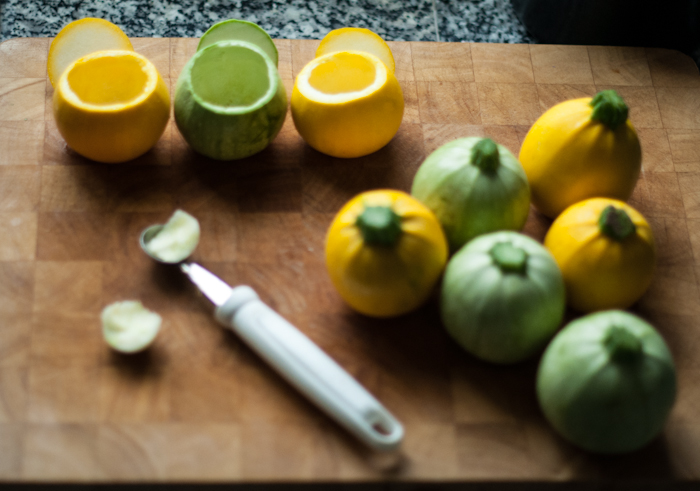
And here are more veg, all stuffed and ready to cook:

And more:
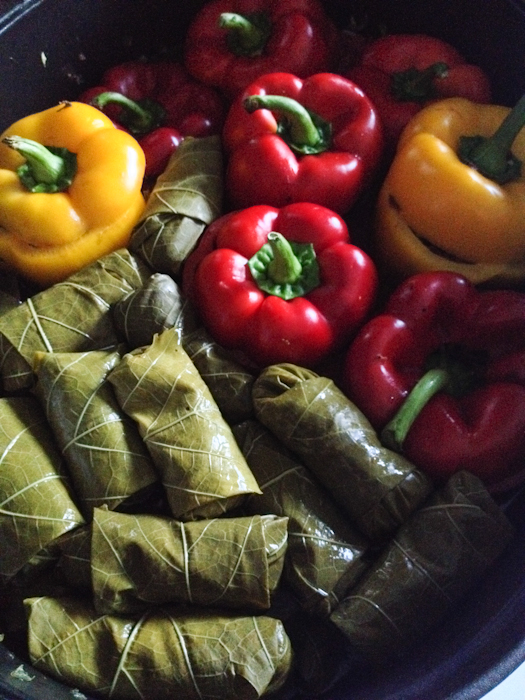
So why just a picture of just you; a solitary, cooked, stuffed veg?
Is it because you’re not so pretty once you’ve simmered away with tomatoes, spices and sometimes lamb chops, becoming tender, absorbing the juices? Perhaps.
Or is it because stuffed vegetables are irresistible and possibly the most delicious way of eating vegetables on this planet?


Stuffed courgettes*
Ingredients for the filling
9 medium courgettes, long or round
400g minced lamb or beef
180g short-grain rice (I used half Arborio and half Basmati because that’s what I had)
2 tablespoons tomato purée
1 teaspoon ground cumin
1 teaspoon ground coriander
1/2 teaspoon ground turmeric
1/4 teaspoon ground cinnamon
1/4 teaspoon chilli powder
1 large bunch of fresh coriander, leaves picked and chopped
2 cloves of garlic, crushed
1 level teaspoon sea salt (or to taste)
freshly ground black pepper
Ingredients for the sauce
1 tablespoon olive oil
6 cloves of garlic
4 tablespoons (or one whole carton) tomato purée
2 x 400g cans of chopped tomatoes (or 1 kilo fresh tomatoes chopped)
25g unsalted butter
1/2 teaspoon sea salt
Approx 600ml water
Method
1. Mix all the ingredients for the filling together in a bowl (it’s easiest to use your hands to make sure it’s well combined).
2. Wash and dry the courgettes. Slice the stem end off to make a lid and scoop out the middle leaving a thin layer as a wall. If using round courgettes use a melon baller, if long use an apple corer. Use the courgette flesh for another recipe (e.g. fritters or courgette bread or cake).
3. Stuff the courgettes with the filling. Don’t pack too firmly and leave at least 5 mm clear of the top as it will expand as the rice cooks.
4. In a wide pan with a tight-fitting lid (enamelled cast iron is perfect) heat the olive oil over a medium heat and sauté the garlic cloves until they start to change colour but do not go brown. Stir in the tomato purée and cook for a couple of minutes, then add the chopped tomatoes, butter and sea salt. Stir until combined and the sauce starts to bubble.
5. Remove from the heat and gently place your stuffed courgettes into the sauce replacing their ‘lids’ (do not press down on them, they just need to balance). Put back onto the heat and bring back to a simmer. Pour in enough water to nearly cover the courgettes (I rinse out the tomato cans with the water before I pour it in). Bring up to the boil, then lower the heat and simmer gently with the lid on for about 45 minutes. Check about halfway through that it is not drying out and add a little more boiling water if necessary. Test that the courgette is cooked with a small knife – it should be soft enough to pierce easily but not mushy.
6. Serve hot or warm with bread if you like (this is a one-pot meal).
*I use a method based on how my Mother-in-law cooks stuffed veg but referred to Claudia Roden and Nadia Sawalha‘s recipes as a guide for quantities – who could resist a cookbook called Stuffed vine leaves saved my life…certainly not me).


Do you have a favourite veg to stuff? Has stuffed veg ever saved your life?
Related articles


Ever changing seasons of vegetable soup


Thursday afternoon is ‘clear out the fridge time’. I find it satisfying to take everything out, assess the remains of the week and have a tidy up. There is one single-minded purpose; not to waste a single thing. Plus it’s a test of ingenuity. How to transform the last of my weekly farmers’ market haul into something delicious that everyone will want to eat (and to make room for tomorrow’s new bounty). Vegetables are sorted and chopped – it’s always easier to start thinking with a knife in your hand rhythmically cutting onto a wooden board. There is rarely anything that needs to be discarded because it’s past its best – even lettuce – because the veg is picked on the morning of the market
This week I made a soup, started while drinking my first cup of tea of the weekend (Friday, Saturday here in the United Arab Emirates) and finished off after I got back from the market. You might call it refrigerator soup but that never sounds very appetising to me. The recipe is a vague one, I neither weighed nor measured, but here’s a sort of recipe if you need one:

Farmers’ Market vegetable soup
Heat a splash of olive oil in a really large pot and soften chopped onion, celery and fennel. When it has lost its crunch and looks a bit golden, tip in a lot of chopped fresh tomatoes and raise the heat. Skins go in as well – life’s too short to skin a tomato when you’re making a rustic soup. After a while the tomatoes lose their shape and sort of melt down.
Boil a kettle and add about the same volume of water as tomatoes and a couple of good vegetable stock cubes (Marigold Swiss Vegetable Bouillon) and a piece of Parmesan rind (straight from the freezer). Once back to the boil throw in some shredded green cabbage (about a quarter), a scant handful of small pasta (orzo in this case) and plenty of green beans and cook for about 10 minutes until tender.
Serve with good fresh bread (in my case Pain de Campagne made with organic flour by Baker & Spice and bought at the market), a grinding of black pepper, and some fresh herbs. I used curly parsley from the garden.


Reading about tackling food waste this week, I like Charmian Christie’s idea of calling them ‘seconds’ rather than leftovers. It’s also a liberating way of cooking; I find it easier to experiment with flavours than if I’ve just gone out and bought a lot of expensive ingredients.
After a busy morning at the market this soup was the perfect lunch to come home to.
What’s your favourite way of using up odds and ends of vegetables?
My friend Ren Behan’s Simple and in Season event is back on and I’m so glad I’m able to join this month. It’s an indication that I’m on track with my resolution to write more about what we actually shop and eat for at home (rather than eating out events). P.S. I’ve just found out about another event that’s spot on too: Extra Veg hosted by my dear friend Helen of Fuss Free Flavours and Utterly Scrummy. This also fits into an amazing long-running event called ‘No Croutons Required‘ which showcases vegetarian soups and salads.


B and B in Bexhill – a jaunt to East Sussex
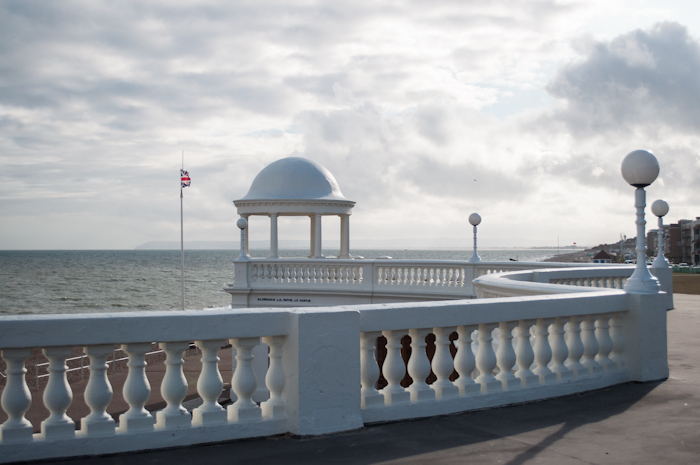 Bexhill-on-sea was the site of the second death in the A.B.C. Murders by Agatha Christie, and that was all I knew about the place. It was many hours drive from Cheltenham – but I’d bought tickets for a concert last July due to my younger daughter’s enthusiasm for Regina Spektor. Flashing through the villages of Kent on the way there, the winding country lanes were dotted with fruit stalls of strawberries, raspberries and cherries, befitting a county known as the garden of England.
We (my sister and the teens) were given a warm welcome at the slightly old-fashioned, but spotlessly clean Park Lodge Bed & Breakfast (run by Liverpudlians). It was very central, next to a lovely park and one street back from the sea front. We strode out to explore, noting the queue at Di Paolo’s tea room for homemade gelati.
The town has seen better days and its obscurity is underlined by the fact there was not a branded chain name to be seen. Too sleepy and run-down for multi-national coffee houses to consider. However, the faded nature was not depressing or threatening and Bexhill must have been a hot spot at some point to justify the building that dominates the seafront. A jewel of a 1930’s Modernist building – The De La Warr Pavilion. We went in for a cuppa and the tea was almost blown out of our cups by the wind on the narrow outside terrace; very amusing.


Even more entertaining for all the wrong reasons was the exhibition curated by Turner prize winner Mark Leckey called The Universal Addressability of Dumb Things. I am well-known in my family for my enthusiasm and will find an inspiring angle about nearly anything, especially if it’s related to art. Maybe I was in the wrong mood for this, but it left me cold. Stone cold. I felt it was such a random collection of really terrible things. There was no beauty for sure, but I didn’t even find it thought-provoking. To quote my teens “the objects weren’t odd enough to mean anything” and “they were too mundane to provoke any reaction bar confusion.” It was almost as if that was the point for me; the universal inaccessibility of dumb objects arranged in a big white space. The only thing that remains in our consciousness is a video of ‘jelly bean’ man which was like ‘Telly Tubbies on acid’ (another teen quote). I did love the sculpture on the roof because they juxtaposed with the incredible sea view and you had to fight the wind to stay upright.


Eating out in Bexhill on Sea
Trattoria Italiana
….is the best place to eat by far if the hoards of happy diners filling the place is anything to go by. I can only go on impressions as it was fully booked from 6pm in the evening. It was the only place that wouldn’t look out of place in more affluent town and there was a terrific buzz about it.
De La Warr Pavilion Café Bar and Kitchen
Avoid eating here if there is a big event. They really couldn’t cope on the night of the Regina concert and people were waiting for over an hour. However the food was simple, well-cooked hot and good from a limited menu for that evening – ‘Brighton Rock’ battered local fish served with seasoned chips, pea puree and homemade tartare sauce, roasted tomato and olive pasta and homemade pizza, served in a clean open space by nice, friendly, young staff with the best view. The menu changes often and ranges from homemade sausages to tagines plus it’s licensed.


Sawasdee Thai
…looked bright, clean, modern and welcoming (I’m afraid the Nepalese restaurant opposite didn’t). Closed on the day we were there or it would have been our next choice. Well reviewed on Trip Advisor too.
Di Paolo’s Restaurant
…go there for their homemade ice-cream.
Tea Beside the Sea
A charming shabby chic tea room with a great selection of homemade cakes and a fantastic view as it’s inside the colonnade right on the beach below the pavilion.


Things I liked about Bexhill on Sea
Walking along the beach early in the morning and this selfie.

The blocks of retirement flats named after Caribbean islands.
Miles of beach huts, some ramshackle and labyrinthine, some resembling garages, many unused.
The old, red brick rowing club building, now sadly in decline (although the club itself thrives).
Small wind-swept dogs being walked along the pebble beach.
Modern planting and driftwood-inspired landscaping along the front (promenade?)
Egerton Park, next to our B&B, which had an outdoor gym: such a brilliant idea.
The beautiful clean lines of De La Warr Pavilion beautifully restored as an arts centre (narrowly saved from becoming a JD Weatherspoons). Good venue for a concert too (my daughter loved Regina).
St Mark’s church, Little Common which we found on our way out of the town. We dashed in out of the rain and a warden opened the church, leaving us alone for a peaceful time admiring the stained glass and the frescoes.


Where we could have gone next:
Hastings – Famous for the battle, it has more tourist attractions than Bexhill including ruins of a castle, an abbey, an aquarium, and a shingle beach called The Slade which has the largest fleet of beach-launched fishing boats in Europe.
Lamb House, Rye – I longed to go here, not because Henry James lived there but because E.F. Benson did. Miss Mapp‘s house Mallards was modelled on it and the town of Tilling based on Rye.
Where we did go next:
After loading up with bags of fresh cherries from a market stall, we set off for Bodium Castle. More about this to follow very soon.
I don’t know the South East of England very well. Which other faded gems should I visit?


Mystery tour

Kvevri or qvevri in the snow. Image: Living Roots
Being brought up as a Catholic, one of the tales from the Bible we were taught very often was the miracle of Jesus turning water into wine at a wedding in Cana. With or without an omnipotent figure involved, the transformation of the watery juice of grapes into intriguing alcohol is pretty mysterious. The influence that the soil, bedrock, roots, climate, grape variety, micro-organisms in the air, the material of the containers, the phases of the moon (if you believe some people) and many other elements, all combine, like the ingredients of an alchemist, to produce thousands and thousands of wines and vintages which have different subtle effects on the senses, mind, body and soul. These permutations in combination with each drinker’s unique palate means that until you actually sip a glass of wine, even if you think you know what to expect, the exact aromas, flavours and textures will remain a mystery until actually experienced. It’s what makes wine so beguiling to some and bewildering to others.
The wines at the wedding in Galilee would have been stored in large clay urns; a little farther North-East on the other side of Turkey, wine-making in urns is still in practise, in fact the Georgian winemaking method of fermenting grapes in earthenware, egg-shaped vessels called qvevri (or kvevri) has been added to the UNESCO world heritage list.

Great image about understanding orange wines by wakawakwinereviews.com
Ever since I read about Georgia (here, here and here) I’ve been longing to visit. A unique Eastern Mediterranean cuisine, a traditional way of life, the markets, the hiking, the monasteries …. and, of course, the wine. It’s a place still off most people’s radar; everyone I’ve mentioned it to thinks it’s part of Russia and while modernisation of cities and winemaking is taking place at fairly rapid pace, old ways are valued too. While many vineyards in Europe are turning back to natural wine making, in Georgia they never stopped, and have been producing it in the same way for 8,000 years.
When I mention to friends that I’m going to Georgia, I have to qualify it with “not the one in the US”. Intriguingly, the state of Texas was once located near the country of Georgia prior to the earth’s plates separating into our modern day continents. Even more mysteriously the most well-known Georgian red grape variety Saperavi, and a Texan grape Lenoir have many similarities even though they are from different vine species.
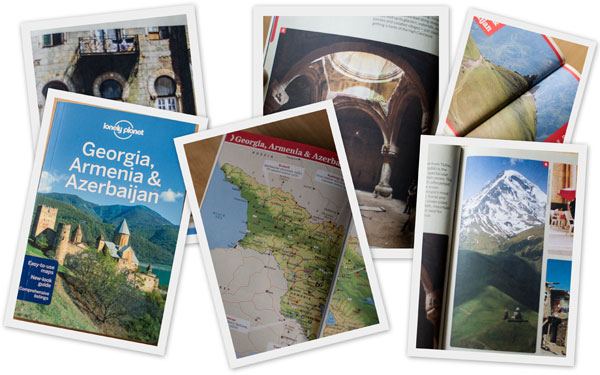 And yes, I am going to Georgia at last, in March of this year, to attend the International Wine Tourism Conference in the capital Tbilisi. With speakers from Georgia, Italy, Uruguay, the US and India they’ll be an interesting perspective on making and marketing wines from many different parts of the world, as well as lots of tasting. After the conference I’ll be seeing different parts of the country, tasting the local food and visiting many winemakers too. Someone from the group worked out we’d get to taste over 17 new (to us) grape varieties. No mystery as to how I’m feeling about this.
This is my entry for the 6th Monthly Wine Writing Challenge (#MWWC6), the theme of Mystery set by The Drunken Cyclist this time. Check out the rules deadlines and other entries here and here. I’ve come in well under the general 1000 word limit but as I far exceeded this in other entries I’m hoping I’ve got some words in the bank so to speak.

Related articles


Inspiration for the new year in my kitchen


The last slice of Christmas cake sits looking a little forlorn, vermillion cranberry sauce catches my eye when I open the fridge, I’m wondering what to do with half a jar of mincemeat, the scent of basil fills the air and I’m trying to find enough room to store all the freshly-picked, organic vegetables from the farmers’ market.
January is a kind of crossroads in my kitchen where the rich tastes of the festive season give way to fresher, healthier, lighter ingredients in line with new year resolutions. I’m finding inspiration in new cookery books on my wooden shelves, especially these:


Smart Tart by Tamasin Day Lewis
This book excites me for so many reasons. For one, it’s the follow up to The Art of the Tart, one of my favourite cook books. Tamasin is one of my ‘go t0’ references for cookery advice. Her ‘All you can eat’ compendium of recipes covers everything from cauliflower cheese to Christmas cake. She used the Unbound publishing platform to raise the funds for this book. It’s based on crowd sourcing and in April 2013 I pledged to buy the book which would be published if enough people did the same. By the end of last year it was printed and as an early ‘supporter’ includes my name – I’m thrilled. It’s beautifully made, with a thick, embossed hard cover but small enough to fit in your hand. The photography is tempting but informal, the fillings from the pies oozing from their pastry carapaces. The format is heavy on memoir and as each chapter unfolds you discover how food memories are woven into a fairly extraordinary family (Tamasin’s father was Irish poet Cecil Day-Lewis and her brother the actor Daniel). She’s always been uncompromising in tone but here are some ‘no holds barred’ chapters on food production, the sexual revolution and food, modern day eating and cookery – truly a smart tart. I devoured this book in one sitting as keenly as sinking my teeth through pastry into custard.


West Country Cook Book – home cooking from the chefs of South West Britain, photography by David Griffen
My family didn’t have many holidays, we never went abroad, and our most exciting journeys were to visit my cousins in Cornwall. As my Aunt and Uncle ran a small hotel this couldn’t be in high season summer but in the wild depths of winter. We negotiated winding B roads in our old, unreliable car with my Mother on high-stress mode all the way, making regular stops for sandwiches, our hands wiped with a damp flannel kept in a plastic bag (my Mum’s pre-cursor to wet wipes). Bilbo Baggins had nothing on us as children as we felt we were on the most thrilling adventure. The dark, brooding sea with crashing white, foamy waves, the rain stinging your face, was a world away from the estuary of the Bristol Channel (our previous experience of a beach in Weston-Super-Mare). Born in Cheltenham, married to KP from Plymouth, a time living in Bath, friends and family throughout the South West, this is my part of England and where I spend every July and August (and where I will return home to).
The book is a portrait of the South West of England through a lens of an outsider (a grockle or an emmet) who loves good food. That lens is wielded by one of the most brilliant photographers I have had the pleasure to meet and one of the nicest. David Griffen is from Australia but has made the West Country his home. At a workshop with him in 2012 I learned more about light in photography in two hours, ensconced in a railway arch lit by a fluorescent tube, than from any other course or book. Although he brought along his professional kit, he made sure that every single one of us achieved the best shot we could from our varying equipment. He’s a very practical man, with loads of boyish energy and a genuine appreciation of accomplished chefs regarding their cookery as an art form. He works closely with many top names and this book is a mission to interpret their appreciation of the bounty of the fertile South West counties. I’m not a fan of cheffy books but this is not one of them. There’s nothing over complicated here, either in the recipes or the photography. There are many fish recipes befitting a place with 702 miles (1,130 km) of rich coastline, and simple classics like Cornish rarebit with Doom Bar beer, Cornish pasties (with sweet and savoury filling) and bread and butter pudding with blackberries. I received this as a Christmas gift and would recommend it for any food lover who enjoys superb ingredients and the beauty of nature in its simplest, purest form.


Crust by Richard Bertinet
My foodie bucket list for 2013 included making sour dough. Not only did I fail even to make a starter but my usual regular bread making took a nose dive and fell off the dough wagon in the frantic schedule of those twelve months. Crust, a gift from my daughters, is just the kick start I need to get back on track. I’ve bought bread and pastries from the Bertinet Kitchen in Bath and love just gazing into its tempting windows. Richard brings his French bread-making expertise to the heart of England. He advocates a more gentle and intuitive approach to dough (shared by Dan Lepard) than our traditional British pummelling technique. A friend lent me his first book, Dough, which covers the basics. This book has even more in-depth information about working with dough, proving, shaping and outside influences such as the weather and of course achieving a really good crust. It covers sour dough and ferments extensively and uses unusual flours like spelt and cabernet grape flour. As well as traditional recipes such as Breton bread made with sel gris from Brittany there are innovations like Japanese ‘sushi’ rolls made with sake, nori and sesame and his interpretation of the Bath bun. Both books come with a very useful DVD and makes me long to attend a bread making course by him. In these times where bread seems like ‘the enemy’ to many people, I love his philosophy:
Good bread is good for you; bad bread is less good for you – it’s as simple as that. The same applies with any food – a burger made freshly with brilliant beef is a great thing; a cheap, processed burger full of additives and fillers isn’t.


Savory Baking from the Mediterranean by Anissa Helou
I’ve had this since the Emirates Festival of Literature in March but haven’t got round to cooking from it. As well as breads there are some excellent recipes for pies and tarts. If my sour dough making goes well maybe I can test it out instead of dried yeast with some of the flat breads. The cover of the book features a picture of Palmyra in Syria; a tragic reminder that just a few hours by plane from my home people are reduced to eating domestic pets as there is not even bread to eat.


Sweet Delights from a Thousand and One Nights: The Story of Traditional Arab Sweets by Habeeb Salloum, Muna Salloum & Leila Salloum Elias
I was really excited to be sent this book as a review copy. Always keen to learn more about the vibrant and varied food of the region that I live in (which is so wrongly lumped together as homogeneous Middle East cuisine so much of the time). If you are not familiar with Arabic sweets, don’t think of candy; these little delicacies range from the lightest layered miniature pastries, to crumbly date biscuits to milk puddings. In an age of mass production, we’ve lost sight of how rare these treats were in the past due to the rarity of the ingredients (honey, butter) and the time consuming nature of how they are made. They were mainly used for times of special occasion or celebration.
The authors sketch a fascinating background including poetry and tales, for each recipe and the source from ancient texts often from Medieval times (historical recipe), a traditional recipe and a modern version for today’s methods, ingredients and cooks. A fascinating historical read plus an extensive treasury of recipes from a vibrant region; the only thing that lets this book down is the few colour plates in the middle with very poor photography – it would have been better to leave it out. I’m also surprised that there is no mention of om ali (or umm ali) a very popular milk pudding – literally translated as Mother of Ali.
A couple of the recipes I’ve bookmarked are Lugaymat (which I know as lgeimat) which are doughnuts from the U.A.E. and Ka’b Ghazal from Morocco (I tasted some which were light as a feather at a recent festive cookie exchange with Tavola). This book comes from IB Tauris the same publishers as Sherbet and Spice; their whole list is really interesting especially if you want to know more about topics in the Middle East.


Unexpected treats
Premier Inn Gatwick were asking expats which special food items they missed at Christmas. I was a bit hard pressed to think of anything as Dubai is so cosmopolitan, however I knew that KP loves really good pickled onions and liquorice toffees. To my surprise they sent me some (and some other goodies as well – including a tiny bottle of port which somehow evaded the post office).
Pop over and see what’s in Celia’s kitchen (at Fig Jam and Lime Cordial) as well as links to a whole host of other kitchens.
What’s in your kitchen this January?
Related articles


 What do you feel about looking back on 2013? My year had a certain amount of craziness about it. Lots achieved but perhaps not always the things that are most important. I’m going to try to slow things down a bit. As it is my elder teen’s last year before she goes off to university this Autumn I’m going to make the most of her being here. I cooked a lot as usual last year but not much ended up on this page. More recipes using local, fresh, simple ingredients are on the way and getting back to bread making for sure. Travel plans include Jaipur, Georgia and Lebanon so I hope you’ll join me for those visits. So here’s another quick look back before I seize knife, fork and pen and face the challenges of the new year.


January
I woke up to the New Year with a house full of friends and family. Big projects frighten me into ridiculous perfectionism and procrastination but finally I pressed the publish button on a Desert Island Discs-style food article which quoted some of my favourite foodie friends and most revered food heroes.
In retrospect the culinary bucket list I set myself was over ambitious; eating oysters and truffles was not on it but both accomplished with gusto – and I made a lovely loaf. Some wonderful women in wine gazed into a glass that was crystal ball shaped (part 1 and part 2). The annual Jack Daniel’s golf dinner was held on a beautiful beach, one of my best travelling buddies left Dubai for Canada and The Hedonista showed us what we should be nosing, swishing and tasting at my house. I escaped to a hidden, candlelit corner of Desert Palm with Lime and Tonic for a private dinner experience and lots of fine wine.


February
More visitors arrived and loved every minute of the Dubai Desert Classic especially meeting Lee Westwood in the club house. Taking 20 good friends on a food tour of Bur Dubai and Deira led by Frying Pan Food Adventures, I celebrated a milestone birthday. Nigella’s How to eat has been parallel to our lives and was the first to kick off reviews of the cook books on my shelf. My sister and I always have a good time but a Secret Venetian supper club with Lime and Tonic, a superb but surreal evening of cocktails at Asha’s, a visit to the Grand Mosque in Abu Dhabi and another wine tasting session with The Hedonista made it extra special. Chilled Champagne sipped on a sand dune while watching the sun go down was the prelude to my birthday dinner in a tented village at Al Maha. Somehow I squeezed in a visit to Taste of Abu Dhabi, a Taste of Dubai preview at Carluccios, dinner at the D Bar and Grill and a fantastic concert by the Stone Roses. And then there was the horse meat scandal.


March
Taste of Dubai is beginning to dull the senses whereas blind tasting seems to sharpen them. All those visitors in Jan and Feb (and since 2000) prompted my most visited post of the year. Every speaker about food at The Emirates Festival of Literature could be described as charming including the incomparable Anissa Helou, Ken Hom, Willie Harcourt Cooze and lovely Rachel Allen (again). My weekly shop got fresher, tastier and cheaper as the original farmers’ market reopened again in a new venue (Emirates Towers).


April
Making tarts is an art which I’d like to master (elusive pastry) but when time is short roast tomato soup whizzed up in a Vitamix is more likely to be lunch. Fiona Beckett has inspired me since I first met her at Food Blogger Connect and my first ever guest post was for her brilliant site on food and wine matching.
Not all smoked salmon is the same, and neither is Chardonnay. I went for afternoon tea with the founder of Dilmah tea and discovered a true philanthropist. I learned to make cocktails at OKKU and had a blast – more on this I promise.


May
Temperatures started to rise and another month of a photo a day got more challenging, I shared my kitchen with Annie Bell (from the pages of a book) and raised a glass along with many others around the world and much more merriment.


June
I learned more about matching cheese and wine, Robert Mondavi, and I started to prepare for my annual visit to the UK.


July
London was a wonderful place to be in the sunshine and to meet old friends and new at Food Blogger Connect with a fabulous cook book launch too. The first thing I asked my vegetarian daughter when she came back from Mongolia was ‘what did you eat?’. While missing the calm that descends on Dubai during Ramadan there were many things to keep me occupied like the Foodies Festival in Bristol.


August
An invite to Fifteen gave me an excuse to go back to London and I finally visited Borough Market. I entered my first Wine Writing Challenge and won so set the next theme of Possession. My favourite walks on Dartmoor helped me work up an appetite.


September
I unpacked rather a lot of cheese from my suitcase as well as a clutch of cook books. And packed lunches of Spanish omelette, lentil soup and keftedes for UAE Saves Week. Eating in the dark was an interesting experience. The whole month was pretty crazy but amazing (especially dinner with Shannon Bennett).


October
After the craziness of September cooling weather and a pink lunch provided a relaxing escape, an irresistible new icing came out of a cake baking session, and my third annual Blog Action Day post was about taking back control of our food. Two whirlwinds and a great bunch of people met at the Miele Gallery for two days of photography and food.


November
Rib bones for a Vincent Price Halloween cookalong and a vegetarian mushroom pate marked a much quieter month. The Farmers Market was back – hooray…


December
…my kitchen was filled with good things for the festive season. Two highlights from this busy month were a Guns + Butter pop up at Baker and Spice and a festive cocktail masterclass at Gaucho. Just in time to raise a glass to toast the end of another fun and food-filled year round a camp fire on a beach in Fujairah.
As we start a New Year I just want to thank you all – whether you’ve read a single sentence or kept coming back. I’m truly grateful when I know someone has read something I’ve written and pushed the button to send it into the blogosphere. My own box is packed, there are never enough hours in the day and the internet is crowded with so much content that I really appreciate when you stop by my own little corner of the web. I’d love to know what you’ve enjoyed most and what you’d like to see more of. Wishing everyone a fantastic 2014.
Happy New Year
A glance over my shoulder – top 10 posts of 2013
 Real life got in the way of blogging over December but it’s always fun to look back over the past year and take stock before moving forward. I’ve learned not to pore over statistics too much – it’s comforting when they are on the up and up but it has a stultifying effect when they take a dip. The pleasure from reading a thoughtful comment is much more rewarding anyway (I take no advertising).
However, you might be interested in this list of what was most visited here on My Custard Pie in 2013. There were quite a few surprises:
The 10 most visited blog posts on My Custard Pie in 2013
- Where to take visitors to eat in Dubai – on a budget was my most popular post by far. It’s about tried and tested places my own visitors (over the last 13 years) have liked best, where the bill will suit everyone’s pocket.
- Saffron, tin mines and an accident – Fresh from the oven received gazillions of visits (ok, slight exaggeration) as it was mentioned in a Buzzfeed article called 18 Weird And Wonderful British Foods You Need To Try. Alongside my saffron (or tea treat buns) were a Bedfordshire clanger, Cullen Skink and stargazy pie.
- French oysters; a quick guide to choosing, shucking and eating An evening at Rostang in Atlantis cleared the muddied waters of my oyster understanding. It seems many others are equally at sea with these marine molluscs.
- Who can resist a pie? I’m so glad that this post was popular because it’s a subject I adore. Much more pie-making ahead in 2014 I promise, and a resolution to become a pastry-making maestro (ongoing project!).
- Simple roast tomato soup – iphone style I went a bit off-piste on this post (off-poste?) and I know it divided some of my readers. It addressed the issue of cooking (and blogging) around a full-schedule of work, family and other commitments, and all the photography was taken on my iphone. The main image was accepted by Tastespotting which shows it can be done (without DSLR).
- A jar of sunshine – home-made lemon curd is an enduring favourite written in 2011 and the distillation of my lemon obsession. The ‘ten uses for lemon curd’ is probably what has made it so popular.
- The many sides of Ramadan and Iftar in Dubai is as much about life here in the Middle East as it was about the rituals of food. It’s so easy to neglect writing about what you take for granted.
- Homemade rose creams – think pink was written in 2011 and I’m a bit cringy about the images (although still like the one of Hazel under the table). These simple sweets are impossible to resist.
- Waka waka – this time for Africa has a recipe for piri piri prawns (on the barbecue), a visit to Tribes restaurant in Dubai, a bit about South Africa heritage day, and my first taste of tripe. Maybe it tapped into a surge of interest in African food?
- Lamb rice with crispy potato base from The Jewelled Kitchen is a review of a new book which is now much-thumbed, written by a good friend, and a recipe which takes a fair bit of time but is absolutely the kind of food I like to eat. It got the most visits on a single day too (in July).


Thank you to everyone who visited, liked, commented and supported My Custard Pie in 2013. As always, it’s a labour of love writing about topics that compel me to put my fingers to the keyboard. I’m so glad that you’ve enjoyed them too.
What were your culinary highlights of 2013?
Administer brandy – in my kitchen
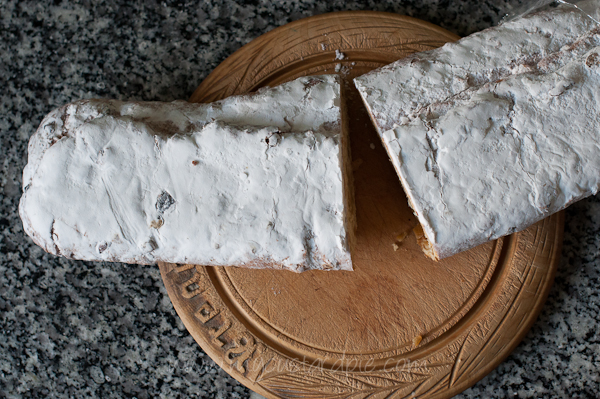 Christmas cooking is made special for me by the rituals of marinating, bathing, sousing and macerating various foodstuffs in alcohol. So no surprise that my kitchen is full of the aromas of brandy, whisky, bourbon, rum and orange-scented liqueurs this December.
My kitchen space, however, is a strange place to be right now. My oven finally packed up and a second-hand replacement gifted from a friend stands in splendid isolation waiting….waiting….waiting for an electrician to keep his promise to connect it. Frank – where are you? This is ominous as Christmas looms.
If my maths are correct I have 0.1% of the Christmas stollen baked in aid of charity by the Kempinski Hotel, Mall of the Emirates. I bought a whole stollen (60cm) out of an enormous 600 metres of stollen (made with 2,210 eggs, 600 kilograms of flour, 278 kilograms of raisins and 55 kilograms of marzipan, 120 kilograms of lemons and 131 kilograms of oranges). Staff from the hotel give up their time voluntarily to sell the stollen and give tastes to passers by. They ring a bell and give a massive cheer every time someone buys a piece (a slice is only 5 AED). It’s one of my favourite festive events in Dubai. As my family are dried fruit haters this marzipan-laden loaf needs to be shared; thank goodness half is pledged to I Live in a Frying Pan or I would end up eating the whole thing myself (not a bad thing in theory).


Thankfully my oven-deficiency hasn’t affected all my cooking as only the hob is needed for Christmas puddings and mincemeat. Adding Grand Marnier, orange juice and zest to mincemeat imbibes future mince pies with a warm spiciness and I’m confident that sploshing in an amount of rather nice Caribbean rum (Pyrat) into the pudding mix will impart smooth vanilla tones (hope KP isn’t reading this).


At last the growing season is bearing fruit here in Dubai – actually not fruit but veg – and early on a Friday morning I’m down at the Farmers’ Market at Jumeirah Emirates Towers. Planning my menu around the local, organic veg I buy from the farmers saves me money (it’s incredibly cheap and fresh), keeps my family healthy and it challenges me to think differently about what we eat. It’s the shortest supply chain too; knowing where my food comes from is so important. Getting up early on a weekend has more than one reward; the market now offers a mean organic breakfast courtesy of Baker and Spice.
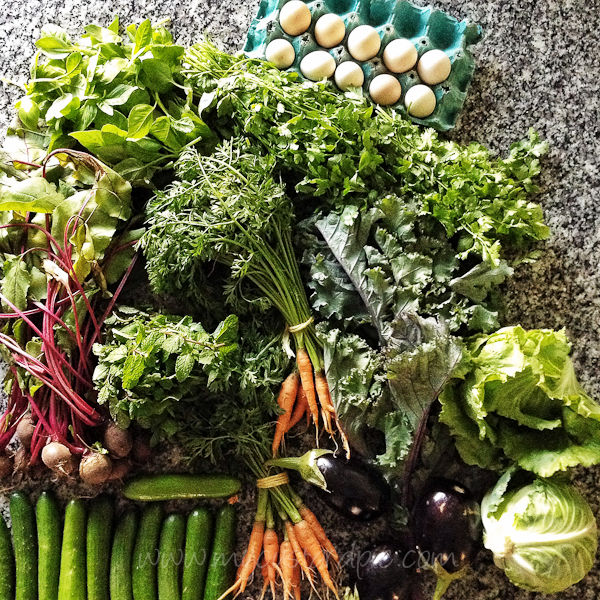
My weekly haul from the market – taken on my iphone
The dried fruits inside my Christmas cake are plump from steeping in brandy since September. Since baking, I administer extra spirit every ten days. This is not as lavish as it sounds as I’ve discovered that this brandy is perfect for cooking (from MMI at only 25 AED per bottle – ex.tax).


The moment I saw the blue jug in Ren’s picture I was on a mission to find one (PIP studio from Holland, bought in Galeries Lafayette); you could say I have a thing about blue jugs. Younger teen and KP definitely have a thing about Lindt chocolate as this is all that’s left from my Food Photography and Styling workshop goodie bag. These Christmas bears are good for tucking into stockings and scattering on tables as decoration.


Being a golf widow sometimes has its advantages and the Jack Daniels annual golf day is one of them. The dinner in the evening is set on the beach at The Westin, looking out over the lights of The Palm. KP makes a mean Lynchburg lemonade but the new JD Tennessee Honey is really smooth and a lovely long drink mixed with ginger ale and very sippable neat over ice (perhaps I did have a little glass in my hand as I was writing this).


Chocolate keeps creeping into my kitchen in different guises. The strange truffle in a jar is a crunchy praline chocolate given to me at a wine tasting event at Rare, Desert Palm, Dubai (the food was superb).
Celebs at the Dubai International Film Festival (who one presumes can afford to buy anything they like) are led through a series of rooms where they are given a range of luxury goods. While having a sneak peak in the VIP lounge, I forgot to ask whether they all receive one of the 16 kilogram camels displayed by Al Nassma but was very happy with my mini-version. As a historic trading hub, Dubai offers very few souvenirs which are actually made here so this range has become incredibly popular with visitors – and rightly so. What a handsome beast.


Are you inspired to get sorted with your seasonal cooking? Christmas Sorted – 23 recipes to take you from freaked out to festive is just what you need. This online magazine is the brain-child of The Hedonista with a few additions from me. Simple recipes that work ranging from homemdade truffles, cranberry sauce to gingerbread plus Winter and Summer Christmas menus (for those like us in warmer climes). Sarah is a great cook with an exceptional palate (here’s what she did for Come Dine with Me) and I love her recipes.
How do you get this? Simply subscribe to my posts (this is easy – it’s over there, in the column to the right) or Sarah’s at The Hedonista. You’ll receive an email with the secret link. If you already a subscribe or follow, email me at sally(at)mycustardpie.com and I’ll send it to you.

Kudos to Celia of Fig Jam and Lime Cordial who tapped into an innate desire to have a nosey round other people’s kitchens. Nearly fifty bloggers joined in for November’s ‘In My Kitchen’ and there are sure to be plenty in December – imagine the collective scent of Christmas spices. Do tell me what’s in your kitchen this December?
Mushroom pate and contemporary art
Originality is for people with short memories
This saying came up in one of the brilliant series of four Reith lectures by Grayson Perry who explored topics such as what makes good art, who should judge art and how to become a contemporary artist. Grayson is a cross-dressing potter who by his own admission protects his ball of creative energy “with a shield made of jaded irony. A helmet of mischief and a breast plate of facetiousness,” and wields a “carefully crafted blade of cynicism”. His extensive knowledge, sparkling wit, honesty and great delivery meant I forcibly clamped my headphones onto my youngest teen’s ears and have been urging anyone with the slightest interest in creativity to listen ever since.
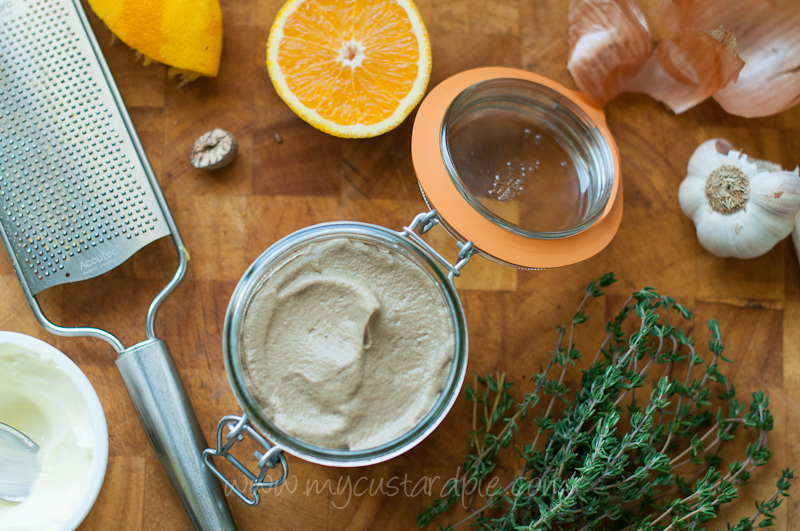
The fashion equivalent of this paté wouldn’t get near Grayson’s wardrobe; it’s resolutely beige as opposed to his peacock colours (he attributes his cross dressing to being poppered into a PVC pottery smock at the age of nine). On my visit to Borough Market one of the things I tasted was mushroom pate from Pate Moi. I was reminded of just how good a simple purée of funghi with something creamy and something spicy can be. It was tucked away in my food memory and resurfaced when I returned to Dubai. Now I’m sure that this recipe is far from original, (just how many variations on mushrooms with cream can there be?) but it’s what I created in my kitchen. I was almost going down the classic lemon, garlic and parsley route but had some thyme in the fridge that needed using up and a bowl full of oranges.


As for my teen, when I told her I’d linked Grayson Perry to a recipe for mushroom pate she enquired, “Did you serve it in a pot?”! So the question is, if I served this paté in a Turner prize winning pot would food be art?

Mushroom paté (vegetarian)
Ingredients
4 tablespoons of butter or ghee plus extra to cover
1 medium onion, chopped finely
1 large clove of garlic, chopped finely
440g chestnut mushrooms, sliced thinly
1 orange, zest finely grated plus half the juice
2 tablespoons cognac (optional)
2 sprigs of fresh thyme, leaves picked
1/4 whole nutmeg, finely grated
3 tablespoons
créme frâiche
sea salt and black pepper
Method
- Melt the butter or ghee in a large flat pan and lightly fry the onion until soft. Add the garlic and stir through, then add the mushrooms to the pan and fry until they begin to brown, soften and shrink. Cook until any mushroom juices have evaporated. Pour in the orange juice and zest, and cognac, cook for a couple of minutes, stirring until the liquids reduce. Add the thyme and stir for a further minute, then add a good grating of nutmeg.
- Remove from the heat and spoon the contents of the pan into a blender or food processor*. Add the créme frâiche, along with sea salt (approx. 1 teaspoon) and freshly ground black pepper. Blend until smooth. (*If you want a chunkier texture, add half at a time and give a whizz for a quick burst only for the second batch.)
- Spoon the mixture into small ramekin dishes or a jar, smooth the top of the paté level with a knife or spatula. Melt a large knob of butter or ghee and pour carefully over the paté. Cool and leave in the fridge for at least an hour before serving. It will keep for at least a week.
Serve with butter on brown bread or crackers with gherkins, add to pasta as a sauce or as a baked potato topping. Tastes great on rye bread or brioche with chutney. As a lover of meat-based paté I can say honestly that this was equally satisfying – maybe due to the cognac.
So pate/ modern art – love it or loathe it?


Related articles
- The Reith Lectures (bbc.co.uk)
- Grayson Perry’s Reith Lectures (digital-diva.co.uk)
- Borough Market (mycustardpie.com)
- Grayson Perry and the ‘national treasure’ problem | Lisa Jardine (theguardian.com)
Devilled rib bones for a Vincent Price Halloween cookalong


“I am Frederick Loren, and I have rented the house on haunted hill tonight so that my wife can give a party. She’s so amusing. There’ll be food and drink and ghosts, and perhaps even a few murders. You’re all invited. If any of you will spend the next twelve hours in this house, I will give you each ten thousand dollars, or your next of kin in case you don’t survive. Ah, but here come our other guests.”
You know how it is when you meet someone and like them immediately? I met Jenny Hammerton at a conference in London and was immediately won over by her infectious sense of humour, broad smile which extends to her twinkly eyes and a sense of flying in the face of convention. A film archivist by day, she’s enthralled by an earlier era of old-fashioned glamour and stardom at all times. She’s a quarter of ‘The Shellac Sisters‘, ‘four glamorous retrochics’ who spin the decks with 78s and a wind up gramophone. On her brilliant blog called Silver Screen Suppers, she cooks her way through recipes shared by movie stars of the past. Gwyneth Paltrow is doing nothing new by branching out into cook books; Hollywood idols of the 30s, 40s and 50s shared their love of cooking in magazines, newspapers and books. On Silver Screen Suppers you’ll discover that Marlene Dietrich was partial to whipping up a loaf of banana nut bread, Jean Harlow stuffed celery with shrimp for a starter, Cary Grant was not averse to a dish of tuna fish pie and Marilyn Monroe was a cook with flair who served carrots and peas together as she liked the colour combination!


So who better to inspire a spooky Halloween cook along than Vincent Price? While grizzly ghouls from every tomb were closing in to seal our doom on 31st October, cooks around the globe were sharpening knives in the kitchen and bubbling up a cauldron or two with recipes from Vincent. Banquets were served, eaten on knocking knees in front of House on Haunted Hill (the quote above is from the start of the movie). Victoria Price – Vincent’s daughter – gave her seal of approval to the whole event. How super cool is that?
Jenny gave me this recipe by Vincent – ‘Deviled rib bones’ based on a dish that Mr Price ate at The Ivy in London. He says:
In a country that consumes a lot of roast beef there are bound to be rib bones left over. And sooner or later a clever chef will think of something good to do with them. At The Ivy the Deviled rib bones are almost a better by-product than the original roast. They tell me that this recipe was an old club favorite, and since the ribs must be eaten with the fingers, it is possible that English clubs are a lot less stuffy than we think.


I’ve adapted the recipe as cooking a whole rib roast was out of the question this week. It did give me the excuse to buy some beautiful short ribs (from Prime Gourmet in Dubai) and roast them in the oven until soft and melting before grilling a la VP.
The frugal nature of this recipe really appeals to me, as does his suggestion that the same treatment could be given to the bones of a roast capon. This is a window to a by-gone era with a recipe that’s just as good today.
Serve with a green salad, but dispense with cutlery. Bare your incisors and act like a werewolf. Gnaw those bones.
And though you fight to stay alive, you start to shake and moan,
Cause no mere mortal can resist a deviled roast rib bone.


Deviled rib bones
Recipe by Vincent Price (instructions slightly modified by me into a modern recipe format ).
Ingredients
4 roasted rib bones*
Salt
Pepper
2 tablespoons English mustard
3 tablespoons single cream
75g fine breadcrumbs (sourdough or firm bread)
3 tablespoons butter, melted
Method
- Preheat the grill (broiler).
- Take 4 freshly roasted rib bones. Trim them but leave a fairly generous portion of meat on the bones.
- Sprinkle with salt and pepper.
- Make a thin paste with 2 tablespoons of English mustard and 3 tablespoons of cream.
- Coat rib bones all around with the mustard paste.
- Sprinkle generously with fine breadcrumbs, covering bones completely.
- Dot generously with 3 tablespoons melted butter.
- Place under broiler (grill) until crisp and crusty, turning to brown all sides.
Presentation: Serve hot and, says the chef, come to terms with fingers.
* I used 3 beef short ribs which I cooked in a 200C oven, in a baking tray covered with foil, for 1 hour 20 minutes. I poured off the fat and roasted for about 10 minutes on either side with the foil off. The verdict? Short ribs are very rich (they suit braising best) and roasted rib bones (which are leaner) would be better deviled. This is a carnivore’s treat.
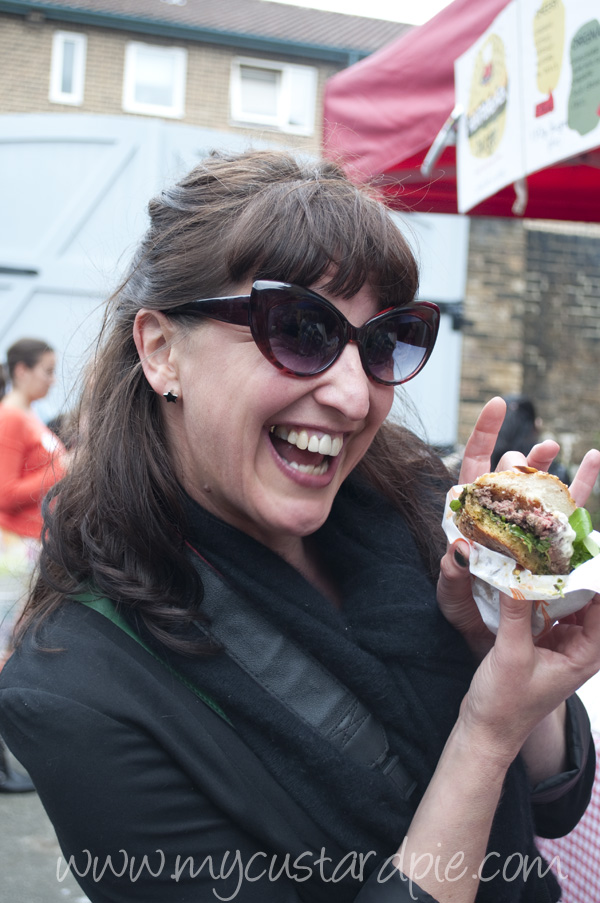
Jenny from Silver Screen Suppers
For further fiendish feasts in this virtual pot luck party visit: Dinner is Served 1972 – Beef Heart Stewed, Caker Cooking – Fish Fillets Nord Zee, Battenburg Belle – Deviled Shrimp and Rice and Pumpkin pie, Mid Century Menu – Unwealthy Wellington, Bloody Mary and Pumpkin Pie, Glamorous Glutton – Steak Moutarde Flambe, The Past on a Plate – Ayrshire Poacher’s Roll, The Retro WW Experiment – Chinese Chicken, Craftypants Carol – Deviled Crab, Retrorecipe – Cucumber Crocodile and Melon Monster, Beyond the Fringes – Calves liver Marinee , Saucy Cherry – Chicken liver risotto and Bittersweet Susie – Carolina Deviled Clams. Jenny from Silver Screen Suppers made Bloody Marys and cooked Oxtail Creole.
Plus they’ll be a round up on Silver Screen Suppers with additional Vincent Price recipes such as Champignons Grilles Marie Victoire, Chicken Livers Sauteed with Apples and Onion Rings, Liver and Bacon Pate and Shropshire Fidget Pie (I presume you can’t sit still for this).
Related articles
- In the Kitchen with Vincent Price (moviemorlocks.com)
- Greatest Films of Vincent Price (houseofgeekery.com)
- Halloween, gingerbread and two kinds of pumpkin (mycustardpie.com)







 My Custard Pie