In my kitchen by Annie Bell: review
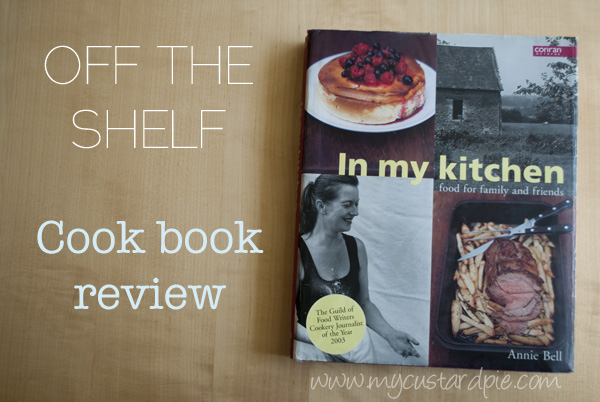 In my kitchen. Do you ever get those harried moments when you try to think what you cook on a regular basis, every single day of the year, and your mind goes totally blank? Your cupboards and fridge are full, but seem bereft of anything that could be transformed into supper. It’s a strange kind of amnesia that strikes me at the most inconvenient times. Apart from the staples that probably grace the table of a great many British families – chilli con carne, pasta ragu, sausages and mash, spaghetti carbonara and Spanish omelette – what on earth DO I cook for two particular eaters, one vegetarian and myself? And what shall I cook tonight? It’s on moments like these, more often than not, that I turn to Annie Bell’s In my kitchen. “Oh YES, that’s what I cook” and ideas come flooding back, the cupboard no longer looks bare . Take a deep breath, put on an apron, clasp my knife, face the chopping board and get cracking.
The book is organised, like life, into catering occasions. So there’s a chapter for grazing, one for weekday suppers, another for Sunday lunch and one for summer eating. Two chapters are dedicated to different celebrations and two for baking and puddings respectively. There’s nothing brash or flash here. No bragging e.g. best ever. Just recipes that work really well with a great balance of flavours, all revolving around family life.

There is a sentence in the introduction which sums up exactly why I feel the need to have a recipe book like this, when presumably after all these years, I can cook (and more than just spag bol).
‘There are two schools of thought as to whether we need recipes at all, but personally I’ve always found comfort and reassurance in the smaller details that guide you towards a particular end. Even after years of cooking, I prefer to consult a recipe telling me exactly how long I need to roast my potatoes for or how much cream to add to my mash, because sadly I don’t have an encyclopaedic memory and see no point in leaving good results to chance.”
Now, before you hold up your hands in horror and never darken the door to this blog again, let me reassure you that I can add cream to mashed potatoes without measuring it, but it’s the gist of this statement that I agree with. It’s the small details that make a clutch of fairly familiar recipes deliver in terms of taste and keep me returning to cook from them. It’s the helpful reminders when you are pushed for time and inspiration that are so valuable. I don’t need someone to tell me that adults and children alike love a plate of caramelised golden brown cocktail sausages to nibble on, but the suggestion of an easily made, creamy, mustard dip spiked with lemon juice elevate them for having with pre-dinner drinks. The mustard element in her Devils on Horseback and sausage roll recipes is what makes them special too.

For weekday suppers she suggest things like chicken saltimbocca and toad in the hole, frankfurter and potato goulash and a divine kleftiko. Sunday lunch solves the problem of catering for meat-eaters and vegetarians in one sitting by pairing roast chicken with a giant dish of macaroni cheese. There are some low effort, but equally satisfying alternatives to the full on roast with all the trimming such as roast beef, chips and aioli plus some excellent non-meat alternatives like Gruyère and wild mushroom gratin. A pea, feta and basil tart has become a firm favourite and which I now make in individual tart sizes as my vege daughter’s Christmas dinner.
There’s a trace of lifestyle that creeps in too, Annie’s summers in Normandy, celebrations for her children’s birthday, ‘grazing’ in the garden with friends and the glimpse a Champagne bottle. Her choice of elegant Muji bowls and Kaj Franck’s Kartio glasses, an Eero Saarinen Knoll table in her kitchen is mentioned as an appreciation of well-designed equipment that is as beautiful and timeless as it is functional, rather than brand-name dropping. There isn’t a trace of smugness or showing off; to quote from her blog, which has food-centred accounts of her time in France “Now in our house the teenager is dressing maestro (I’d like to think if he has to do something thirty times during the summer holidays it will have stuck by the end)”. Her writing is refreshingly down-to-earth without a trace of ‘domestic science teacher’ dullness about it (which can permeate other practical home cook writers). There is a page on her website entitled Simplicity which has nothing to do with deprivation. She’s deliberately low-key, the antithesis of the celebrity chef and has crafted a writing career (Vogue, The Independent, You Magazine) in a way that is becoming nearly impossible to follow.

In the preparation for Christmas I leaf through magazines, drool over Nigella’s Christmas, but this book is permanently open on my counter. No ‘over-egging’ of classic recipes by adding superfluous flavours; I don’t want ‘everything but the kitchen sink spices’ into cranberry sauce, exotic sprout purée or vodka gravy. If I was put in one of those impossible ‘either/or’ scenarios that my teens seem to be intent on asking me, given a choice between the turkey and Annie Bell’s bread sauce I would choose the latter. Christmas pudding gratin is such marvellous perfection i.e. Christmas pudding cooked in brandy-laced custard, that I had to overcome a miserly inclination not to even mention it here. I want to save it for the off-chance you might come round to my house on Boxing Day for supper and watch your face as you take the first spoonful.
I’m keener on the cake recipes in another Annie Bell book I own – Gorgeous Cakes; but there are ‘bankers’ for every day like raspberry and almond tray bake as well as more elaborate fare for parties. Key to this is that Annie Bell’s recipes work – and this is central to what she does:
I wouldn’t be so rash as to make a claim that you will never go wrong with one of my recipes, there are too many variables involved in cooking. But, I can hand on heart say that a huge amount of effort, testing and retesting goes into getting the recipes right – a little like applying polish to wood, you will only ever get that sheen if you keep on buffing. It is the single most important aspect of what I do.
With more than one hundred cook books , this is part of a series of quick reviews to see why they’ve earned their place on my shelves, in my kitchen and sometimes in my heart. Love to know what you think.

Related articles
- The Art of the Tart by Tamasin Day-Lewis: review (mycustardpie.com)
- How to eat by Nigella Lawson: review (mycustardpie.com)
- Annie Bell’s Baking Bible (mellycooksthebooks)
- Top 10 baking tips from Annie Bell (yuppiechef.co.za)
What’s in a name? Chardonnay
 What have these bottles got in common?
The two on the left are some of the most revered (and expensive) white wines in the world from Burgundy, the middle is from an area in France which has become synonymous with premium white wines which express the minerality of the Kimmeridgian clay on which they are grown and the last is a Chardonnay from a New World producer. You may or may not know that they are all made from the Chardonnay grape.
What’s your reaction to the word Chardonnay? Drink it often? Won’t touch it with a barge-pole? Indifferent? Well, today is international Chardonnay day (read more about varietal days and their hashtags here). I’m going to take you on a little trip down memory lane (especially if you are British and over a certain age, like me).

Baked Brie with garlic. Wine tasting in the garden.
The evolution of the UK’s wine-drinking habits is inextricably linked with Chardonnay. Two things helped the UK to become a regular wine drinking nation; wine in supermarkets and varietal labelling (i.e the grape variety listed on the bottle). In the 1970s people who knew about (and could afford) wine had a cosy arrangement with a wine merchant; everyone else latched onto a few wine names that dripped exotically off tongue ‘Leibfraumilch’ ‘Piesporter’ ‘Blue Nun and Bull’s Blood. By the booming 1980s we’d seen the error of our ways and were ordering bottles of ‘Chardonnay’ in wine bars and restaurants, increasingly from the New World Wine makers who weren’t limited by any geographic areas or rules and made varietal labelling king. As a grape, Chardonnay is famed for being expressive of where it is grown, it is not an aromatic variety and its flavours need to be coaxed out in wine making. The flavour that consumers were favouring in the 80’s had little to do with this, they were hooked on the vanilla, caramel tastes of oak, from the barrels that the wine was matured in. New World wine makers in particular responded to this trend. In cheaper wines oak barrels were replaced by immersing oak chips in the wine or even adding essence of oak. The world went mad for Chardonnay. Vines were ripped up and replanted. A character in Footballer’s Wives was named after it.

The UK (led by the press) has a reputation for building things up and then knocking them down. When Chardonnay’s reign started to fall its crown tipped quite dramatically. The ABC movement ‘anything but Chardonnay’ advocates took hold in the mid-90’s and its place as first choice was swept away in a tide of crisp, searingly acidic, fresh, unoaked whites such as Pinot Grigio and Sauvignon Blanc. Geographical labelling worked in favour of wines such as Chablis, Poully Fuisse and even Montrachet.
This is all a great simplification of white wine drinking trends over the last forty years and Chardonnay remains one of the most widely planted grape variety in the world (160,000 hectares). However, take a straw poll of your friends and I bet you’ll find a fair old few who screw their noses up at the mere mention of this once revered grape.
The Hedonista has started a new monthly tasting get together and suggested we do a Chardonnay comparison. This was going to interesting. We all have prejudices but with blind tasting you leave them at the door.
Six wines from five regions; what difference would region, winemaking styles, price and vintage (meaning made from the produce of a single year) have on the taste of wines all grown from a single grape variety?
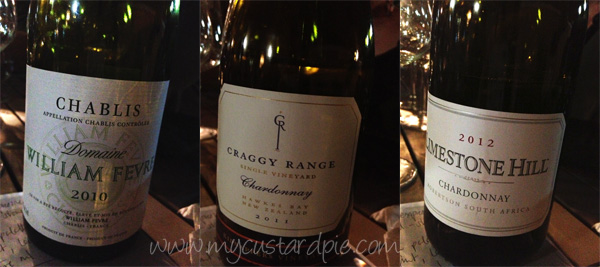
First up we compared William Fevre Chablis 2010, Craggy Range Kidnappers Block Chardonnay 2011 and Limestone Hill Chardonnay 2012.
These three were tasted blind and were grouped together as having most in common with Chablis style of wine-making and expression i.e. little oak, some malo-lactic fermentation (leading to butteriness), perhaps some minerality. Strangely the Craggy Range from New Zealand had most austerity combined with high acidity leading me to think it was the Chablis (despite having tasted the Chablis earlier in the evening). I should have guessed as the William Fevre had citrus and honey notes on the nose and a buttery palate with a long-finish, although there were convincing mineral notes in the Craggy Range. The South African Limestone Hill was the least liked with more overt tropical fruit flavours. It did pair amazingly well with Dina’s delicious fresh crab, avocado and mango dip.

Next we blind tasted Terrazas Altos Del Plata Chardonnay 2010, Shaw and Smith M3 Chardonnay 2010 and Ballot Millot Meursault 2010, grouped for their central Burgundian characteristics. The Altos Del Plata was the least well balanced, lacking enough acidity to make it really interesting, although a well-made, easy drinking wine. Shaw and Smith wines seem to have a house-style which I can only describe as clean. The flavours are well-defined and I absolutely loved this wine with vanilla and citrus and all sorts of nuances on the nose, a smoky, nutty, ethereal palate with an enduring finish. The Meursault wasn’t everyone’s favourite which goes to show that the best wine is the wine you like. We were sitting outside and the warmth had started to emphasise the vanilla, almost caramel notes from the percentage of new oak used in the wine-making and the full-bodied yet elegant citrus and stone fruit palate with complexity and length. A wine to savour.
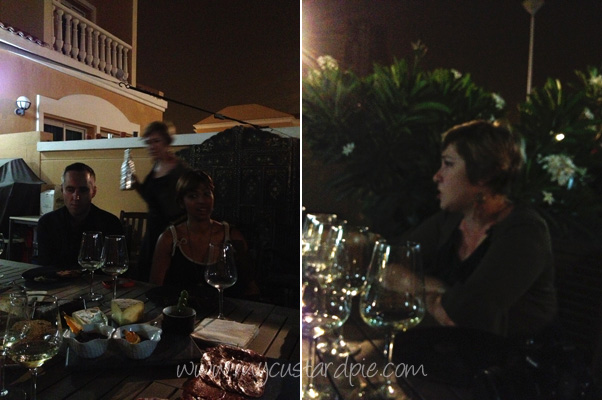
The Hedonista pours and guides our tasting
Our tasting group of seven was very divided about which we liked best and it had little to do with price. South Africa and Argentina failed to thrill me but the tasting proved that good quality Aussie and NZ Chardonnay is righting any wrongs of past heavy handed wine-making. All wines were bought from MMI and here’s general guide to cost (before tax and in AED). William Fevre Chablis 2010 100 AED, Craggy Range Kidnappers Block Chardonnay 2011 120 AED, Limestone Hill Chardonnay 2012 49 AED, Terrazas Altos Del Plata Chardonnay 2010 55 AED, Shaw and Smith M3 Chardonnay 2010 AED 155, and Ballot Millot Meursault 2010 210 AED
Some quick facts about Chardonnay
- Chardonnay is one of the three main grape varieties used to make Champagne.
- Chablis, Puilly Fuisse and Blanc de Blanc Champagne are all made of Chardonnay.
- Some Californian wines used to be called ‘Chablis’ until a trade agreement with Europe put an end to it in 2005.
- Classic food pairings with Chardonnay are fish and shellfish; oysters and Chablis a particularly good match.
- Aromas of this grape can be difficult to pin down; cool climate wines may show apples, citrus, smokiness ;warm climate pineapple, and tropical fruit.
- May 23rd is #Chardonnay day – Please join me on Twitter #chardonnayday
Thanks to Sarah from The Hedonista for an excellent choice of wines and expert tuition, Drina from Eaternal Zest for hosting in her lovely garden and Chirag, Matt, Hamish and Radhika for great company.
Related articles
- Chardonnay declining? I don’t think so (steveheimoff.com)
- A global toast (mycustardpie.com)
- Tour de Burgundy and Rhone Wines – Part 2 – Meursault, Montrachet (eatwithnamie.com)
A global toast
 Have you ever been to the cinema on your own? It’s quite nice to sit there undisturbed, in the dark; a guilty pleasure. After the film is over you want to discuss what you’ve just seen. Share opinions. Perhaps you spot someone you know coming out of the cinema; you start to compare notes. You decide to go on for a drink together and at the bar there’s a group discussing the same film. Somehow you join the conversation and there’s a debate about the storyline and whether it was a good or bad experience for you.
This is what I like about Twitter; it unites you in a topline discussion about a topic among people with whom you share an interest. Before Twitter you are sitting in the dark alone with no one to talk to; on Twitter you are in the bar swapping one-liners.
One of the first community events I joined on Twitter was the inaugural Chardonnay day in May 2010 initiated by Rick Bakas.
For the uninitiated, to follow a conversation you use a filter so you see all the tweets with the same hashtag in one place, in this case #chardonnay. I opened a column in Tweetdeck in the morning and watched wine bars in Australia coming on board. By lunchtime the French were joining in, with viticulturists and wine lovers tweeting direct from the vineyards in Chablis, Burgundy and other areas. They were drinking wine for breakfast and I could hardly wait for the end of my day to join in. I was hooked and have participated in many events both wine related and otherwise (the most nail biting was listening to Nigel’s imminent fall from the roof while watching #thearchers tweets spin like the lemons on a slot machine).
The fun of the events lie not just online but offline as well and I have bent the ear of many people suggesting that Dubai, with all its bars and restaurants, would be a great place to host something. At last the day arrived and this week I went to #sheratontoast – a worldwide happy hour Twitter and instagram event launch #social hour. The Sheraton Mall of the Emirates describes it as follows: ‘The Social Hour concept is designed to be a catalyst for social interaction, especially important in Dubai’s melting pot where travellers from all over the world meet.’

It was very social from my point of view as several food blogger friends had been invited to Vantage at the Sheraton Mall of the Emirates, Dubai. The name is well-chosen as the wide windows behind the bar frame a view of the Burj Al Arab and other Dubai landmark seafront properties. There’s well-sized terrace too which would be a great place to watch the sunset but it was a bit warm for wine tasting on this evening so we stayed nattering around some cocktail tables as waiters brought tapas and wines. We tried all eight wines as it was the launch event, however normally it’s 25 AED for three tasting-sized pours. For a further 25 AED you can have a cheese board or tapas selection – perfect for an after work meet up or an early evening get together.
JP Kavanagh, the very new General Manager of the hotel (he’d been in Dubai for eight days) joined in; we chatted about concerts in Dubai, golf, rugby and wine among other things and it was refreshing that he socialised rather than ‘networked’. More of this in Dubai please.

In North America, as well as the standard wines, they have a premium wine menu with eight or more wines by the glass, all rated above 85 points by Wine Spectator with at least four rated 90+. In Dubai there is a selection of wines mainly from the New World. I did ask if there were any with Parker points but the waiter said no. However, when looking up Columbia Crest Grand Estates Merlot 2009 to write this up, I see it was given 89 points by Wine Spectator. I will ask if this is served on a regular basis because it was a beautifully smooth wine, well-balanced with a velvet texture. The rest of the wines range from a fruity Vina Sol, a light, dry False Bay rosé to a really well made and very drinkable Peter Lehman Shiraz which is more restrained than most spicy, Aussie fruit bombs.
The live Twitter stream was on a smallish screen and we were having such a good time socialising that the international activity remained in the background. I’m not sure that #sheratontoast or #socialhour had the same unifying effect as the varietal hashtags but it’s an enjoyable initiative. There are many cheese and wine nights around Dubai (more on this soon) but this is the most accessible with the lowest entry-level in price.
Social hour is between 6pm-8pm every day at Vantage in the Sheraton Mall of the Emirates, Dubai. 25 AED for three tasting sizes of wine, and 25 AED for a cheese board or tapas. Social hour is also held in 400 Sheraton Hotels around the world. Follow the #socialhour hashtag.


If you fancy joining in a global wine event online, here are some of the main ones:
#MalbecWorldDay – April 17th
#SauvBlanc Day – May 17th
#Chardonnay day May 23rd
#CabernetDay End of August – follow Rick Bakas on Google + for details
#Champagneday End of October
Have I missed any? Have you been involved in a virtual food or wine experience (or does it sound bonkers to you)? Parker points a good or bad thing? Love to hear your comments.
P.S. Cheers to Fooderati Arabia chums who socialised @The_Hedonista @IshitaUnblogged @BettyBooDubai @CookNPlayGeetar and thanks to @SheratonMOE who invited me as a guest that evening.
What happens in a smokehouse and making blinis
 Note: Since writing this article Salmontini has changed its name and expanded the business.
Having a tour of a smokehouse might not be everyone’s cup of tea but I’d been badgering Jason of Salmontini for a visit since last November. Partly because of the story behind it – his Dad had started the business in Beirut smoking five fish a week on their balcony in a home-made smoker made out of a cupboard due to the introduction of a huge tax on smoked goods (which he was then importing). Partly also in awe that someone could actually be bothered to fly fresh Scottish salmon to Dubai and smoke it here and make it taste absolutely sublime. Finally because I was refused entry to a kipper smokehouse in Craster – “against rules and regulations you know. We supply Waitrose.” Yes the inner rebellious teenager in me is alive and kicking; if someone says I can’t do something it makes it even more compelling.
So here I was on an industrial estate, not improved in any way by being in a place called ‘the Green Community’, meeting the next generation of Bassili salmon smokers. I had some vague romantic vision in my head of wooden sheds with large dangling creatures suspended in the smoky gloom. Of course it was nothing like that, gleaming white surfaces and modern machinery, but even more impressive when you get down to it.


First I met the fish. Three year old handsome beasts with a sharp-toothed snarl and a gleam in their eyes. It’s the gleam that’s important. From being shuttled off this mortal coil (by a humane and instantaneous method) to arriving in Dubai is around three days. In fact it takes longer for them to get to the markets in Paris (as they go by road haulage). These glistening creatures stared up out of their bed of ice looking like they would jump up at any moment. Most of the six tonnes had already been cleaned, heads, tails and backbone removed by hand, each salted by hand with rock salt and were in the curing rack, the moisture gently leaching out of them.
One batch was already in the smoker, the flesh gently permeated by the scent given off by the oak chips (sent from German forests). I’d expected to see the fish hanging but the shelves and air flow are designed so that there is a very even smoke. The Bassili family have become good friends with the German manufacturer of the smoking machine, ‘Mr Reich’, over the last 20 years and visit each other’s homes. Salmontini usesa simple smoke, Jason says they are confident of the taste – heavy smoke usually disguises faults in the fish.


The next room was bright and clinical, like a huge operating theatre. Gowned and masked people worked in hushed concentration, using fine pliers to extract tiny bones, scalpels to remove the smallest of imperfections and long straight filleting knives to slice the smoked salmon flesh into the finest, even, transparent pieces. They even remove the first domed slice (called the pinnacle) which absorbs more smoky flavour than the rest of the fish; (later I checked Jason’s recommendation that it tastes great accompanied by Scottish single malt whisky (I tried a very peaty Kilchoman). It does.) Finally, the slices of fish are interleaved with nylon and vacuum packed – by hand of course.
There is an Arabic word ‘zelcher’ which translates as ‘fishy stink’ which is produced when the fat of the salmon converts in to oil. There was not a trace of fishy smell anywhere in the smokery – it was hard to imagine that there was fish in there at all, despite visual evidence to the contrary.

I met Jason’s Dad Joe Bassili, who started his fish-smoking apprenticeship in Beirut in 1992 starting with trial and error methods on his balcony with pipes and a cupboard, controlling the smoke with wet towels. He then spent several months in the Shetland Isles of Scotland working with a couple called Debbie and David who had a traditional stone smokehouse where he learnt the traditional process from start to finish. Their smokehouse no longer exists and production of smoked salmon in Scotland is largely mechanised or fragmented. Richard Lochhead, Minister for Food, Drink, Agriculture, Fish and the Environment in Scotland commended Salmontini for continuing Scottish traditions and pronounced their salmon the best he’d ever tasted. From selling five fish a week, Salmontini now import twelve tonnes into Dubai and Beirut.


It’s the understanding of the smoking process and care and attention to detail built up through years of experience that makes Joe a bit rueful and dejected when he talks about the current market conditions for smoked salmon. Some products retail for the same price or less that he buys his unsmoked salmon. Many chefs understand the taste and quality, but it’s surprising which five star properties choose the cheapest option.
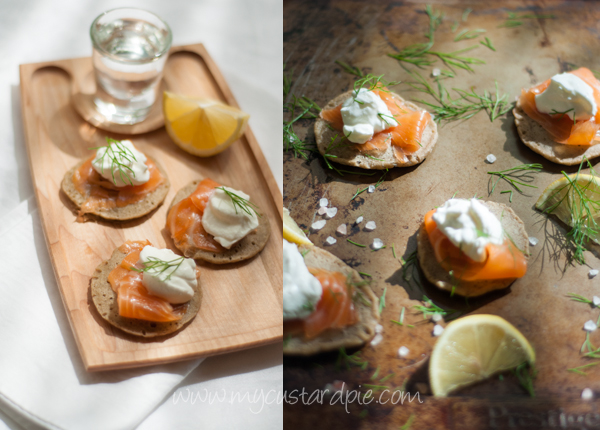
Does all this make a difference to the taste? Jason, very kindly, sent me off with a generous quantity of Salmontini smoked salmon. The first difference is the smell, or lack of it. The metallic, oily scent, the product of the fat converting to oil, simply isn’t there. It just smells fresh and smoky. The texture is silky, again lacking any trace of oil; I usually coat smoked salmon in a mass of lemon juice to cut through it but was happy to eat this unadorned by anything. The taste is light and fresh with a subtle smoke – it kept luring me back for more and I ate an inordinate amount in one week. Some I took to a Fooderati Arabia wine evening disappeared quickly; the clean flavours were an ideal accompaniment to our varietal tasting of Chardonnay. I took blinis to a friend’s house where her husband ate the lot on the spot.
True artisan food producers are rare in Dubai and I came away with enormous admiration for Joe, Jason and the other highly skilled workers in their small operation. They run a modern operation, seeking to produce the absolute best that they can, using 100 year old methods. There’s a passion, an almost obsession, that seems to unite all artisans. Jason says he eats smoked salmon every day. Open the fridge of a Lebanese person and you will find smoked salmon – it’s as essential as eggs; I now understand why.
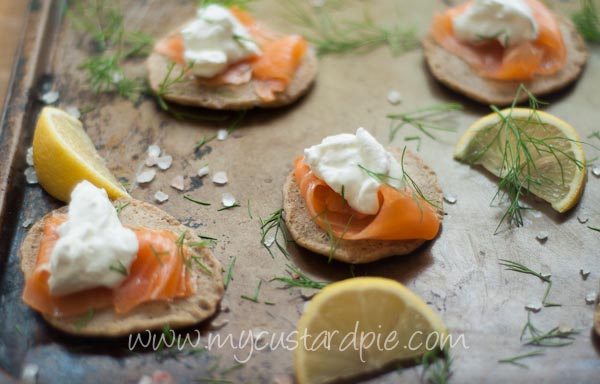
Making blinis
This was my first try at making blinis – I thought you needed a special pan and the whole process looks complicated. You don’t and it isn’t. The batter was forgiving – after the overnight ferment I dashed in and out of the house doing the next stages between teen social life drop offs. The recipe recommends horseradish cream but I wasn’t aware that you could get fresh horseradish in Dubai then (I now know you can thanks to the Rivington Grill chefs) and to be honest this quality of smoked salmon needs simple accompaniments. I used labneh, a kind of yoghurt cheese popular in the Middle East, which was perfect (no need to add lemon).
I followed a recipe from All You Can Eat by Tamasin Day-Lewis which you can find here (scroll down). A scant dessertspoonful of batter was the right amount for a bite-sized blini.

More about Salmontini smoked salmon
- They buy fresh salmon from small Scottish producers in Lewis, Harris and the Shetland Isles, as they believe that it has just the right balance of fat for smoking
- It takes only a day and a half for the fresh salmon to reach Dubai; it needs this time to go through rigor mortis as it’s better for the absorption of the salt and the smoke
- The fish are strong and mature at three years old weighing between 4-5 kg per fish and they arrive on ice
- They buy them whole so they can check for freshness. The heads and backbones are taken by the staff to make soup.
- Each piece of fish is salted by hand as the thinner sections, on the tail for example, need less salt
- They mature in the fridge for a day to take our the moisture
- Smoking for 24 hours, then resting for another day and a half means that the smoke permeates evenly through the whole piece of fish.
Salmontini smoked salmon is available in Dubai from Carrefour Hyper Markets, Choitram, Lifco and Jones the Grocer.
They also have restaurants in Beirut and Dubai (overlooking the ski slope) which serve signature salmon dishes, steaks, salads and a range of bistro-style dishes.

More about salmon
Since the publicity (in 2003) surrounding a study that pointed to high levels of carcinogenic chemicals contained in farmed salmon from feed, environment and treatment against parasites, I have rarely eaten it. I voiced these concerns to Jason who talked me through the life cycle of the farmed fish bought by Salmontini. In brief, they source from a small trusted producer where the stages of the fish development mimic conditions in the wild; very different from highly industrialised bulk farmers. The eggs are hatched in pure clean water, then they are introduced to saltier conditions as they grow before being released into vast nets in a loch. The natural currents purify the nets and keep the fish moving (so they are fitter and leaner). At the age of a year and a half they are given one injection of anti-biotic against sea-lice and are not harvested until over three years old (unlike most Norwegian salmon which have higher fat levels due to the colder water conditions and shorter lives at two years old). Beacons in the loch scare away predators such as seals. Their food contains vegetable oil (rather than contaminated fish oil slammed in the earlier report). The ‘swim ashore’ method where the fish swim into pipes and are killed with a blow on the head and a simultaneous spike in the gills, is humane and keeps stress to a minimum. While the debate about sustainability and safety continues, it’s clear that not all farmed salmon is the same and that Salmontini sources from a high quality supplier. As demonstrated time and time again, the demand for cheap food available all year round has had a negative impact so it’s best to buy the best you can.
Have you ever made blinis? How do you like to eat your smoked salmon? Have you got a view on farmed vs wild?
Related articles
- Well farmed salmon is key to sustainability (TheTelegraph.co.uk)
- my go-to recipe – buckwheat blinis with smoked salmon and scrambled eggs (lifestylegypsy.wordpress.com)
- My quick visit to a salmon farm in Norway; a quick report (foodpolitics.com)
- Fish Farms; Salmond’s salmon (economist.com)
The Art of the Tart by Tamasin Day-Lewis: review
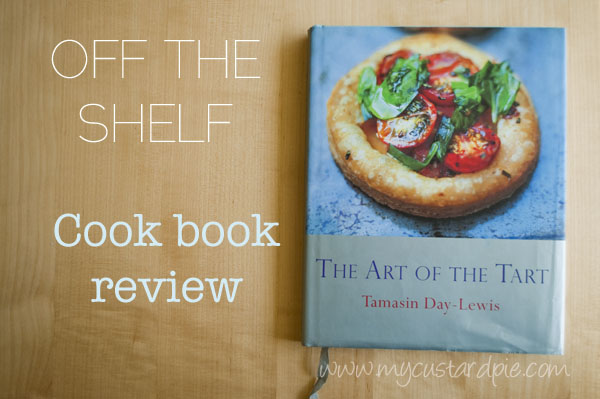 The Art of the Tart. Not the by-line to “Fifty Shades of Grey” but a slender volume dedicated to the delights of pastry cases filled with sweet or savoury things. You may be surprised to hear that a book covering such a niche area of cookery is one I use very, very often; that is until you turn the pages and find recipes that evoke nursery suppers, summer picnics, family gatherings and something indefinable but deeply appealing. Tarts, though easily made for everyday eating, always feel like a special occasion. Sometimes it seems like Tamasin Day-Lewis’s entire life has been encased in pastry; homity pies taken in the car on the journey to Ireland, eating cheese strata with her cousin Deborah, mjuk toscakaka with her Swedish neighbour in Somerset or making a pear and ginger tarte tatin for a friend coming for the weekend from London.
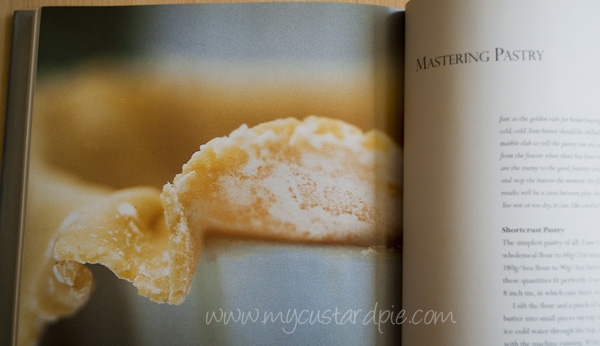
I’m glad I read Tamasin Day-Lewis before she appeared on television. Her writing is forthright and confident. She takes you by the hand and escorts you firmly into the kitchen, promoting the best ingredients and the simplest combination of flavours. You are left in no doubt that her recipes will work – and they do. Ingredients of the best provenance are at the heart of everything, organic free-range eggs, Jersey cream, Montgomery or Keen’s unpasteurised Cheddar; she takes time to find, nurture and champion producers. She weaves in the recipes of friends too and is warm in her praise of them; in her introduction she says ‘It is difficult to meet an ungenerous cook’. When I finally saw her on-screen, she was slightly larger than life, a bit frenetic, speech clipped and hurried, more pantomime dame than diva (although that sounds cruel and I don’t mean to be); she’s softer and more approachable in print. She’s from an illustrious family, her father was the Irish poet Cecil Day-Lewis, her brother the actor Daniel, but any mention of her celebrity connections are rare, in passing and with affection (when Julia Roberts comes to stay she makes the pastry lattice for treacle tart). For all the happy childhood memories her food evokes, I can’t help feeling there as a dark side and life is not always easy; she finds solace in food, its preparation and sharing.

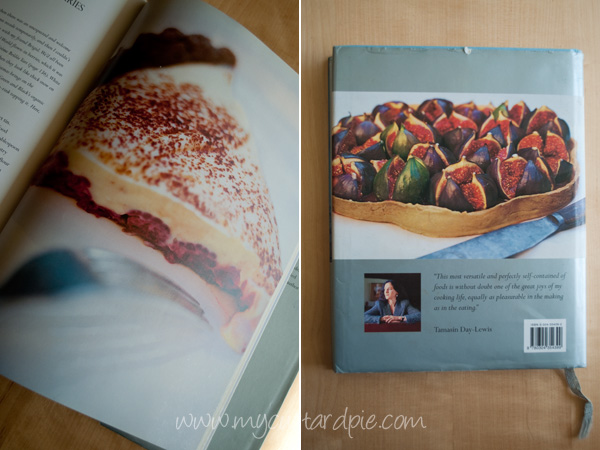
The book has four sections: savoury tarts; other people’s tarts; sweet tarts; mastering pastry. All recipes have a paragraph giving the story behind them, the reason they have a place here. You could buy this book on the strength of this alone for reading in bed, never making a recipe and be satisfied. When you do venture into the kitchen, the typography for the recipes is clear and the layout straight forward. Not all have photographs and this doesn’t matter a jot. Like the recipes, the images are unpretentious and captured in an understated way by David Loftus (who went on to work with Jamie Oliver for years). My favourites are the simple ones that I’ve made time and time again:
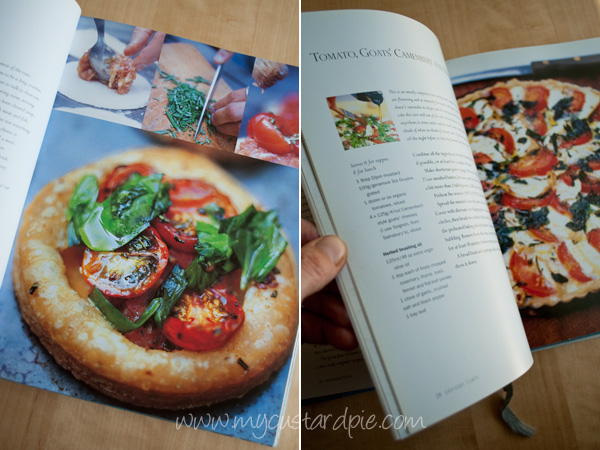
Savoury tarts
- Onion tart – meltingly soft onions mixed with egg and cream
- Quiche Lorraine – no cheese, just eggs, the best bacon, cream and black pepper
- Souffléd cheese tart – a cloud of Gruyère and mustard flavoured with bay
- Mascarpone and bacon tart – one of the easiest and tastiest in the book
- Flamiche – slowly cooked leeks enveloped in eggs yolks and cream
Looking at that list I’ve revealed my love of eggs, cream and cheese. Other tarts in the book include tomato and prosciutto tarts, smoked haddock and watercress tart and cherry tomato tarte tatin.
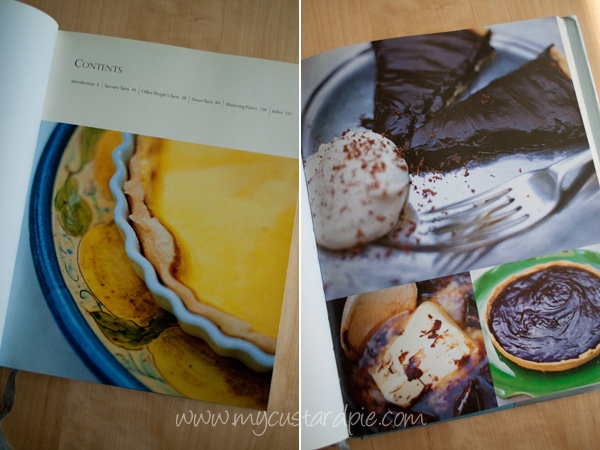
Sweet tarts
- Chocolate and apricot tart – rich soft chocolate over melted apricot paste (a bonus as this is a Middle Eastern ingredient found in my supermarket but you can use jam). If I have a signature dish, this is it; I’ve made it scores of times and it’s requested by family and friends time and again.
- Lemon meringue pie – a classic recipe from her Grandmother’s cook Rhoda, “the gloopy lemon filling was never too sweet, never too cornfloured, and the top rose cloud-like, stepped, a breath of weightless meringue with that final, brittle brown top that a spoon had to crunch through before meeting the gooey middle and the smooth, tart lemon.” Can you resist? I can’t.
- Apple crumble tart – a hybrid of classic favourites of the highest order.
- White chocolate tart with raspberries – with a chocolate pastry crust, this is the true-definition of a show-stopper due to the genius combination of flavours.
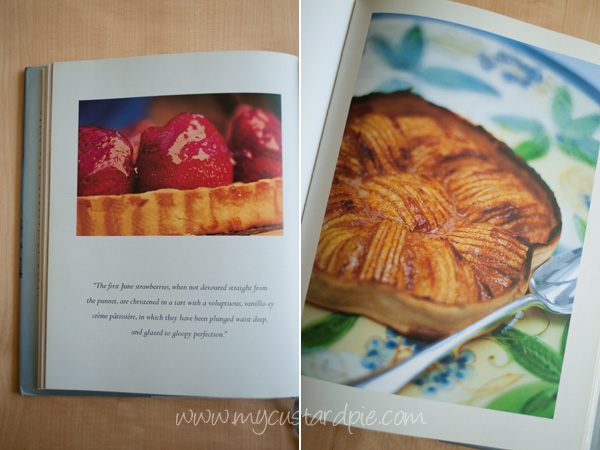
Other books written by Tamasin earn their keep on my cook book shelf but this has pride of place. Strangely, her follow-up book Tarts with tops on or how to make the perfect pie isn’t nearly as satisfying.
Yes, she has a recipe for a custard tart, although as a non milk drinker it is something she cannot abide so was tested by ‘an all-time custard tart fiend who did not pronounce it wanting.’ No, inconceivably, I have not tried it and I feel like I have let down an old friend by admitting it.
“Cooking is always about shared memory and experience, and tarts seem to have both fuelled and inspired my passion for food and cooking for longer than I can remember.”
With more than one hundred cook books , this is part of a series of quick reviews to see why they’ve earned their place on my shelves, in my kitchen and sometimes in my heart. Love to know what you think.
Related articles
- How to eat by Nigella Lawson: review (mycustardpie.com)
- Chocolate frangipane plum tart (jothetartqueen.wordpress.com)
- Oscars 2013: ‘I can’t believe Dan has done it again’ (telegraph.co.uk)
Simple roast tomato soup – iphone style
 Some days are minestrone days. My favourite recipe takes the best part of a morning to make. Of course there’s the home made chicken stock as a base, then the vegetables have to be cut to just the right size and added separately so they have the correct texture at the end. There’s chopping of onions, dicing of carrots, trimming beans, shredding of cabbage, finding a rind or two of parmesan to give texture and more flavour, and a finish of freshly made pesto. When I have time there is nothing I like better to shut myself away in the kitchen in the pursuit of minestrone perfection – served with warm, crusty, home made bread of course.
On minestrone days, I’ll put a bowl aside for shooting later; I’ll search for the right lighting conditions in my house, choose a background, some props and garnishes, experiment with settings on my camera, try different angles to reflect the light. These shots will be downloaded, sorted, resized, edited, watermarked and uploaded here.
Then there are tomato soup days. Life has been pulling me in many directions lately and I still have the urge to put home made soup on the table to share with my family. I want to cook, photograph and write something to share, hence iphone tomato soup. I can shoot, edit, even watermark and upload in minutes – and the soup is pretty similar.


iphone roast tomato soup
- Cut some ripe tomatoes in half.
- Bake on a tray in a moderate oven for about an hour.
- Put in a Vitamix with about the same amount of water as tomatoes and a good quality organic vegetable stock cube*. Turn Vitamix to high for 5-6 minutes (until steam appears).
- Put a handful of fresh basil in and blend for 2 seconds.
*alternatively add some vegetable stock, blend until smooth in a liquidiser and heat gently in a saucepan.
My favourite iphone apps
The podcast app. I’m a podcast addict. Why just walk the dogs/ drive to a meeting/ do the supermarket shop when you could be entertained at the same time? (although I have been known to forget the beans if simultaneously doing the latter):


Sheila Dillon of The Food Programme is my food heroine; I feel that there is still a chance against Monsanto and Tesco while this entertaining, informative and eminently sensible programme continues. In Open Book, Mariella Frostrup talks to leading authors about their work; if there was the equivalent of a twinkle in your eye for the voice, she would have it. In A Good Read Harriett Gilbert asks people to discuss their favourite books. I love it when someone chooses a stinker – download from Books and Authors. Jameson Fink‘s interviews rattle along like a train, an unpretentious and wise train of wine. I also like the UK Wine Show (though give the two recent podcasts with Pascal Chatonnet a miss unless you are a real wine geek), Great Lives is always a rewarding listen and you know about my long standing addiction to The Archers….
Image apps. Snapseed is pretty incredible; auto-correct and add a frame or tinker around with dozens of adjustments until you are happy and you can share to everything.


However, adding text for another layer of interest is so simple with Over. I’m quite besotted by it. It would be churlish not to Instagram it wouldn’t it? I’ve been following a photo a day challenge set by Fat Mum Slim…
Note: To take a pic of your iphone4S screen , just press the home button (the round one under the screen at the bottom) and at the same time press the button on the top right, very quickly and simultaneously. I should think it’s similar for other models.
All pics in this article taken on my iphone. So what do you think? Are you a smart phone fan and what apps make your day/life easier? What recipe do you turn to when in need of cooking therapy but short of time?
Related articles
- Photo a day (fatmumslim.au.com)
- Roasted Garlic Tomato Soup with Parmesan (yummyfoodmadeeasy.wordpress.com)
- Roasted Tomato Rosemary Soup (bigapplebitesny.wordpress.com)
What to drink with Middle Eastern food?
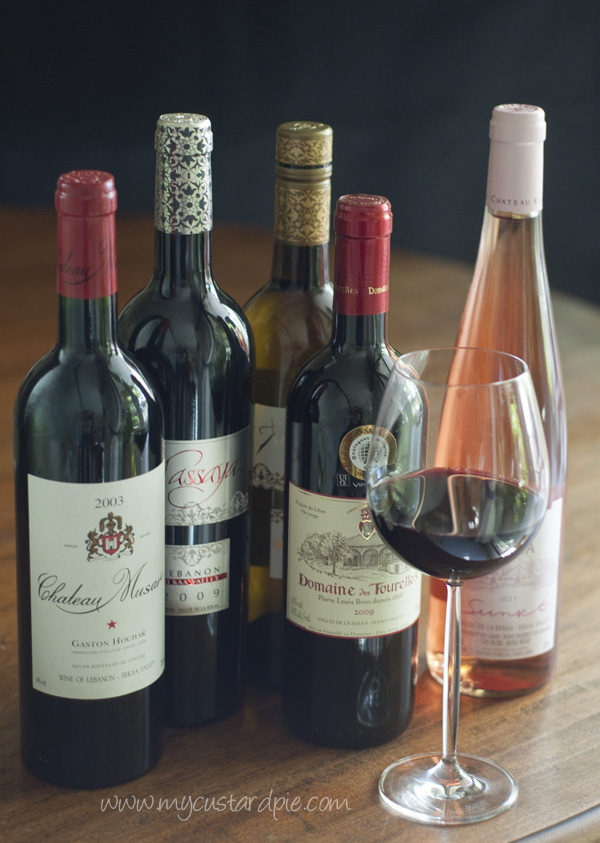 Fiona Beckett is a woman after my own heart – she is very interested in wine and passionate about cheese. A renowned journalist with a column in The Guardian, author of 23 books and co-founder of ‘Cheese School‘, Fiona also has a brilliant website dedicated to matching food and wine www.matchingfoodandwine.com When she suggested I might like to write a guest post I did a cartwheel (sadly only in my imagination) and considered the topic; it seemed natural, having been an expat in the Gulf for almost 18 years (five of them in a dry country), to look at some dishes from a typical Middle Eastern meal:
Can you remember a time when hummus didn’t fill the end of every supermarket aisle and come in ten different flavours? Now Middle Eastern influences in food are ubiquitous and restaurants abound, but what should you drink with a Middle Eastern meal?
Typically you’ll be served a wide range of mezze to start, from creamy, smoky baba ganoush, lemon-sharp tabouleh with fresh herbs, a fattoush or bread salad dusted with tangy sumac, vine leaves stuffed with rice and herbs, earthy hummus, delicate pastries stuffed with cheese, spinach or meat, spicy chicken livers and fried kibbeh coated in crunchy, cracked wheat with a lamb and pine nut filling. Some restaurants may even serve raw mezze such as finely minced spiced raw lamb kibbeh or cubes of uncooked liver eaten with garlic sauce and mint leaves.
The mezze course is usually followed by grilled meats, cooked over charcoal, which means an array of lamb chops, kebabs both with cubed meats and spicy, minced kofta, chicken and beef. So given this vast array of flavours, what would be a good choice of wine?
To read the full story and explore the most extensive resource online about what to drink with different foods, please visit Fiona Beckett – Food and Wine Matching
Which wine or drink would you choose?
You might also like
- Blind tasting and the Dubai Wine Club – mycustardpie.com
- Women and wine (part one) – what to drink in 2013 – mycustardpie.com
- Women and wine (part two) – mycustardpie.com
Where to take visitors to eat in Dubai – on a budget
 Dubai means five-star (and seven star) hotels, lavish limos, outrageous gold cocktails and luxury dining doesn’t it? Yes…and no. This city is home to all nationalities and budgets with a wealth of eateries to match. Since we arrived in Dubai in 2000 we’ve had a steady stream of visitors, many returning again and again. Their favourite places to go are not the sparkly, glitzy ones (although they like those too) but the street cafés, holes in the walls and other unique eating haunts. So when you’ve maxed out your credit card at the Skyview bar, in Dubai Mall or at Dubai World Cup, here are the top three favourite budget places to eat as road-tested by my friends and family. Highly recommended whether you’re a tourist or resident – just don’t expect linen napkins. And I better mention that they are all un-licensed (i.e. no alcohol) – and all the pics were taken on various nights out (and cameras, iphones etc).
Ravi restaurant (Ravi’s)


Sit on plastic chairs by the side of one of the busiest streets in Dubai, with the sound of honking horns as a background, eat Pakistani curries in front of the neon sign which is emblazoned Ravi Restaurant in brightest green. It’s a legend in Dubai and I have it on good authority that it hasn’t changed in twenty years (apart from tin plates being replaced by plastic). While still frequented by taxi drivers (you’ll see them dining inside), get there early to find your table on the pavement.
What to order: The menu is extensive (brain curry anyone?) and confusing for the uninitiated but don’t expect any help from the staff. I recommend chicken tikka (on the bone and fresh from the grill), aloo paratha (bread stuffed with potato and chilli and fried in ghee), dhal, any vegetable dish, chicken ginger and chicken achari. Meat tends to be on the bone so ask for it without if that’s what you want (although less tasty). We’ve never tried anything from the Chinese menu (and why would you?). Freshly baked flat bread (go to the alley at the side of the restaurant to see it being made), salad and water are brought automatically.
What to do: Go and visit the kitchens (see below). Spoof for who pays the bill.
Where to find it: Satwa Dubai. Follow the main road through Satwa heading in the Al Diyafa (2nd of December street) direction. Ravi’s is the last restaurant on the right hand side before the road curves round to the left. If you go straight on, there is a small car park to the left. Ignore the earlier Ravi restaurant on the left hand side. Tel: 04 331 5353
Bu Qtair


Note: Bu Qtair has moved – the pictures are of the old location.
Once a little known portacabin serving tea and meals to surrounding labourers this has morphed into one of the most popular places to grab an earthy eating experience. Set in a building inside a car park in the Fishermen’s Accommodation area between two dhow (traditional wooden sailing boat) building yards and behind a small port, on a patch of sand, the fish is caught locally and delivered fresh every morning.
How to order: Go into the hut restaurant as soon as you arrive and wait to be served at the hatch. Choose from the fish and prawns behind the counter – they’ll show you what they have piled up in containers. Ask what they have on offer and tell them how many people will be eating. There is a rumour that there are two prices and it goes up if you look affluent so question it if it sounds too much (maximum 120 AED for three people). Don’t pay now, leave your name and go outside and sit on the small stools at the side. Don’t worry, they’ll find you a table before your food arrives however haphazard the system looks.
What to order: Hammour is very over-fished so avoid if you have a conscience; Perch and Sheri are good, as are the prawns. All fish is coated in a spicy paste and shallow fried. At the table ask for roti (bread), rice, and curry sauce. A small salad of onion and cabbage is served. Water and soda drinks are available.
What to do: Take a metal knife with you to cut the fish, otherwise just tear off pieces with your fingers (there is a small sink inside the portacabin or take wet wipes). Go early in the evening to avoid the queues (or wrap up warm on a rare chilly night).
Where to find it: Heading out of Dubai on Jumeirah Beach Road, take a right hand turn immediately after The Chalet ( before Al Thanya street junction and Umm Suqeim Park). Turn right at the end of the road so you are driving parallel to the sea. It’s set back after the first dhow building yard inside the Fishermen’s Accommodation car park next to the fishing harbour. Also read a review from Pear Tree Diaries.


Breakfast at the Sheikh Mohammed Centre for Cultural Understanding
This is about the whole experience rather than the food alone – although it’s a jolly good breakfast. The strapline for the Centre is ‘open hearts, open minds’ and it’s an experience that every visitor I have been with has talked about for ages after. They also do walking tours, lunches and brunches. In the heart of Bastakia, you can wander round the art galleries or down along the creek afterwards.
 What to do: Go with an open mind, some questions about Emirati and Arab culture (you can ask anything you wish) and expect to be there for a couple of hours. Wear comfortable clothes, you’ll be sitting on the floor cushions. Make sure you book ahead.
What to eat: You’ll help yourself from a spread of chickpeas, balaleet (a slightly sweet dish of egg and pasta), spiced bread, lgeimat (Arabic doughnuts), cream cheese made from camel milk and date syrup. Tea, Arabic coffee and water is served. However this isn’t just about the eating – you’ll gain an understanding of a very different side of Dubai, Emirati life and Arab culture.
Where to find it: The SMCCU is in House 26 on Al Musallah Road in Bastakiya, Bur Dubai, between the Al Fahidi round-about and Dubai creek (further directions here). Parking is very limited so take a taxi; or take the metro to Al Fahidi station and walk towards the creek (Al Musallah Road has plenty of interesting shops along the way). For booking and more information about the breakfast, lunches and tours visit the website. A cost of 60 AED per person at time of writing.


P.S. Another ‘not to miss experience’ is a Frying Pan Food Tour. Spend 3 to 4 hours exploring little known, cheap eateries and learning about different cultures through food led by ‘Queen of the Street-eats’ Arva Ahmed. Tourists will never find these places unaided and I guarantee even long-term residents will not dream of the culinary treasures that exist down dark alleyways. Book your food tour here.


Other good things to do with visitors in Dubai
- Full Moon Desert Drumming (gingerandscotch.com)
- Dubai in 48 hours (thehedonista.com)
Have you visited to Dubai (or do you live here)? Where is your favourite budget eatery? Where do you take visitors in your home town?
March in a photo a day – from street level
I like the discipline of a photo a day challenge (this one is set by Fat Mum Slim). The limitations of sticking to an abstract theme make you look closer at your every day life. Plus I add in an extra requirement – where possible I try to take the picture on my morning dog walk. It means you really keep your eyes wide open.
March was busy, it was the end of my sister’s visit, the Emirates Festival for Literature was on one weekend, Taste of Dubai on another. The weather has been beautiful – the summer sizzle is just around the corner…but not quite yet. We’ve been sitting in the garden for supper every night and there’s still a freshness in the air.
Click on an image to view larger.



-

- Fellow foodies enjoying pizza in the Naked Pizza office
-
- I want… a slice of this soda bread.
-

- I love the illustration on the cover of one of my childhood favourite reads (and equally dislike the updated cover)
-
- Explore. Taste of Dubai – finding pink garlic.
-

- Green.
-

- Japanese section in my supermarket and curry blocks
-

- Clean. Blue sky, early morning after rain. I took 2 for this theme & this was the most liked on Instagram (the other one is below)
-

- About you. I painted this self-portrait about 18 years ago
-

- A couple of hot chillies
-
- Veg knife was a Christmas present from hub
-
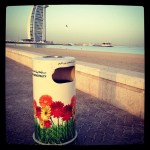
- Clean. An alternative. The bins by the beach have new flowery covers.
All pictures are taken with an iphone4 and most use Instagram filters.
Blind tasting and the Dubai Wine Club
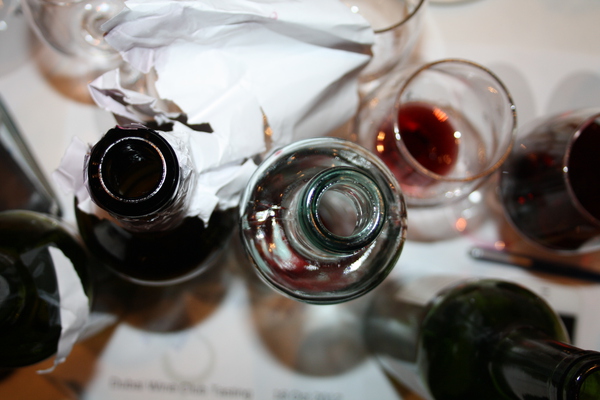
Image courtesy of Servicexcellence – Sofie Pickhard
Blind tasting and identifying wine can seem like a magician’s trick. Its mystique keeps people intrigued and enthralled. Some people have exceptional taste memories – a photographic memory of the palate – Oz Clark is someone who has a recollection of every bottle of wine he’s every tasted. I would think this is huge over claim had I not spent some time in his company and seen him apply the same facility of recall with people’s names coupled with an encyclopaedic general knowledge. I’ve never seen him blind taste a wine but I should think he would be pretty impressive.
Then there are the super-tasters; 35% of women and 15% of men have a heightened sense of taste and experience flavours with greater intensity than normal and being able to accurately discern minute variations would also be a distinct advantage.
Wine Kat, a wine profession with a blog that I follow, documented her Master of Wine mock exam tasting the other day. She was incredibly self-critical but it was with jaw-dropping awe I read about the nuances that MW students are expected to detect combined with a vast knowledge in order to pass this eminent qualification.
As for the rest of us mere mortals, what role does blind tasting play in wine appreciation? In our highly competitive world market, the branding and marketing is at least as important and the making of a wine. Most of us stick within a narrow range of what we are familiar with. Wine is still perceived as a complex topic and who can wonder with the many layered appellations in Europe, especially France and Italy and the complexity of German labelling for instance. And history, tradition, fashion, snobbery and those clever wine labels have a powerful effect over our perceptions.
There have been several blind tastings which have gone down in history as blowing apart received wisdom, pitching ‘old world’ wine making against new. The first is known as the ‘Judgement of Paris’; organised by British wine merchant Stephen Spurrier in 1976, it pitched some of the best vintages of the finest wines in France (then considered the best producers of wine in the world) against wines from the (then completely obscure) Napa Valley in California. The all-French panel of nine judges ranked two Californian wines as top. It was a pivotal moment in the world order of wine.

Berlin Tasting at the Armani Hotel Dubai
Here in Dubai, last weekend, there was a re-run of something now known as ‘the Berlin’ tasting. The first was in 2004, when 36 of Europe’s most highly regarded wine experts met in Berlin to blind taste 16 top wines from Chilean, France and Italy. Two Chilean wines came top above classics like Château Lafite, Château Margaux and Château Latour. In Dubai, 40 wine lovers and experts did the tasting (alas I wasn’t one of them) and Chilean wines took the top three places (Seña 2010, Don Maximiano Founder’s Reserve 2009, Seña 2009) above iconic wines of Bordeaux (including Château Margaux 2004 and Château Mouton Rothschild 2001) and legendary Californian Opus One (2003).
To cap it all, a recent article in Life Hacker cites experiments which show how easily experts are swayed by labels. The contents of cheap and expensive wine bottles were swapped but the tasting notes reflected what people thought they were tasting. When a white wine was coloured red, the experts imagined they were detecting berry fruit flavours in contrast to the unadulterated white.

Image courtesy of Servicexcellence – Sofie Pickhard
At the Dubai Wine Club we taste blind but no guesswork is required. The only decision we have to make is which wine we like best and which wine we like second-best. That’s it.
To keep up my wine knowledge from my Wines and Spirit Education Trust courses, I try to guess what they are but usually fall a bit wide of the mark. I love how people enjoy wines at these session they normally wouldn’t touch with a barge-pole e.g. a Spanish Chardonnay.
This month we were at the newly opened JW Marriot Marquis, now the tallest hotel in Dubai. It’s very sleek and the enormous room we were in had reflective panels so I kept thinking there were other rooms of wine tasters adjacent to us. For various reasons there was enough wine for 100 of us but there were 110 people so Kevin and Catherine cleverly got an extra table together for us using wine from the hotel menu. The ten people on our table ranged from an eminent health care professional visiting Dubai (who knew quite a bit about wine I suspect), to someone from the construction industry contemplating a move to Saudi, to a qualified hairdresser and included at least 5 nationalities. One gentleman saw me sniffing, swirling and making notes and said “you look like you know a lot about wine”. “I’m just a wine nerd” I replied. With my abysmal performance in trying to identify them, I need more practise!:


The whites
Wine A was extremely pale in colour, light, fruity and refreshing with tropical aromas and a dominant flavour of apple (think Pink Lady rather than Granny Smith). I thought it was most likely to be a Gewürztraminer but wasn’t sure. I certainly didn’t guess Pinot Grigio which I profess to dislike (there’s those preconceptions again). It wasn’t a very complex wine but would be great with Asian food. This Italia 2012 Pinot Grigio from the Veneto region of Italy was the second most favourite wine of our table. The freshness of the fruit is due to the youth of the wine. If you get a bottle of this, don’t leave it in the cupboard i.e. drink now.
Wine B – I guessed a new world Sauvignon Blanc and it was just that. Mont Gras Sauvignon Blanc from Chile. I didn’t see a vintage when the cover of the bottle was whipped off (and it’s not on my photograph) but suspect this wine was probably past its best. A blowsy tropical nose and rather flabby on the palate, lacking in freshness and a bit syrupy.
Wine C – my neighbour suggested an unoaked Chardonnay, but there was something on the nose that was a bit petroly which confused me and I couldn’t decide on anything. I think it was either a fault with this bottle or an excess of sulphur now I know what it was. Jinda-lee 2012 Chardonnay from Australia.


The reds
Wine D – Oh dear – nought out of ten for me guessing a Merlot when it was Rioja. The lighting in the room was all over the place but I thought it was ruby in colour which should have given me a clue and I wrote ‘tobacco’ in my tasting notes too. Back to school for me – and I’d now like to taste this again – 2009 Viña Collada Rioja by Marqués de Riscal (the oldest Rioja house producing wines since 1858).
Wine E – I thought this was a Cabernet Sauvignon blend and I was correct but any black pepper or spice notes that might lead me to a Shiraz rather than a Merlot passed me by. It was rounded and full with deep black fruit, soft tannins and perfectly balanced. Argentina is one of the most dynamic wine producers in the world, and the wines are often very good value; this was voted favourite on our table including me. This 2011 Fuzion Shiraz Cabernet comes from the Zuccardi family wine making company – owners of one of Mendoza’s biggest wineries and a mass producer of fine wines for export.
Wine F – I guessed cool climate Cabernet Sauvignon due to some very forward tannins and green notes on the palate. It was actually from Bordeaux – so blended with Merlot. This was my second favourite but it needed food to soften the slightly forward tannins. La Grande Chapelle 2011 from Antoine Moueix – Appellation Bordeaux Controlée


The reds were far better than the whites and as our canapés were excellent but rather delicate we were all quite jolly by the end of the evening (as six bottles of wine consumed between ten of us).
This monthly event is informal, friendly and relaxed as no-one is under any pressure. I do think that sometimes your attitude to wine depends on how you are feeling on the day too. To quote the organiser of the Paris judgement Steven Spurrier, “The results of a blind tasting cannot be predicted and will not even be reproduced the next day by the same panel tasting the same wines.”
Anyone can come to The Dubai Wine Club which meets on the third Thursday of each month – more details here. They are setting up something similar in Abu Dhabi soon – keep an eye on my Facebook page for more information.
Have you tasted blind? Or are you part of a tasting group? How do you choose the wines you drink?
P.S. I used my iphone 4 for all these images. The lights in the room changed from subtle pink to subtle blue. This is nice for ambiance but not great for wine tasting when you want to see the colour – or for photography. I’ve tried to correct some of the images but they remain lurid!


Related articles
- Blind tasting… (thunevin.blogspot.com)
- American wine maker whose chardonnay defeated France dies at 86 (rawstory.com)








 My Custard Pie