Courgette, pistachio and yoghurt loaf with a lemon honey glaze
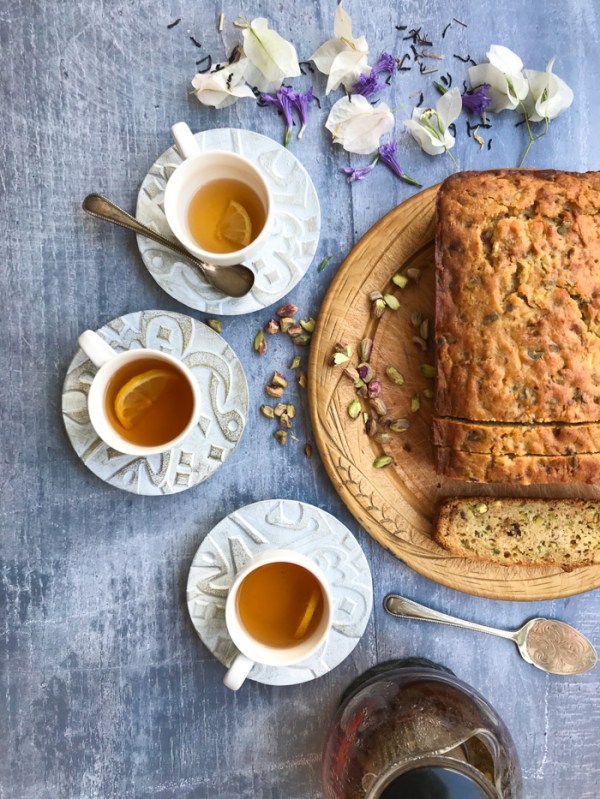 Ladles of goodness, with a nod to a lemon drizzle, this green pistachio-flecked, spelt and yoghurt loaf is light, moist, moreish and perfect with a cup of tea. And it’s another idea for using courgettes (enough said). I’m as susceptible as the next woman for something that’s called bread and stuffed full of vegetables, so you could legitimately eat it for breakfast even though it tastes rather like cake.
Leafing through recipes (aka Googling on my phone) reveals that there are a mind-boggling amount of ‘healthy’ courgette bread ideas out there, from plain spiced to those darkly moist with cocoa and chocolate chips. My beef is the sugar content in a lot of these which seems at odds with the low-fat or dairy-free milk, raw nuts and wholewheat or gluten-free flour that is specified (I also have a beef with ‘free-from’ ingredients being automatically labelled ‘healthy’, but that’s another conversation!).
Reducing your free sugar intake
Make no mistake, it doesn’t matter whether the sweetener is white caster, agave syrup, maple syrup, dark brown unrefined, jaggery, date molasses or coconut blossom lovingly hand-extracted by men in loin cloths from the palm bud stem in remote tropical groves, it’s all added or free sugar (rather than naturally occurring). This is where most of us should cut down – whether combined with hidden veg or not.
I’ve used raw honey in this recipe as it gives a gentle warmth rather than a sugary hit. We’ve all got used to sweeter tastes as sugar is added to savoury foods, and even fruit varieties e.g. Pink Lady apples are bred to appeal to our demand from our sweet-tooths. Dialing it down gradually retrains our palettes – I’m going to try reducing it even further next time I make this recipe or even substituting some of the honey with ripe banana.


How to bake with raw honey
Raw honey is the stuff that is taken straight from the hive – and if you thought all honey was like this you are in for a shock. Most commercial honey is heat-treated, flash-pasteurized and micro-filtered which removes the pollen. This is nothing to do with safety or taste but about appearance and shelf-life. These processes transform it from a substance which is packed with over 200 enzymes and nutrients which are beneficial to our health to little more than a honey-flavoured syrup. Most or all of the goodness is destroyed. Some even have sugar syrups added to bulk them out. I was aghast when I first heard this a couple of years ago as, like most people, I though that all honey was ‘natural’.
The process of cooking applies heat so will also reduce the amount of healthy goodness in your raw honey, generally removing about two-thirds of the antioxidants for instance. General advice when baking with honey is:
- Use at least half the amount of honey to replace sugar in your recipe.
- Reduce the liquid in a recipe, this can be a bit of trial and error so perhaps start with recipes that use an alternative liquid sweetener (e.g. sub honey for maple syrup).
- Reduce cooking temp by 10-20 C as honey will make your baked goods brown more easily.
- Add a little extra baking powder (about 1/4 of a teaspoon).
So why have I used raw honey in this recipe? As raw honey is naturally a bit sweeter than sugar it cuts the amount of sugar in half. Also to get some health benefits (rather than none at all) from my sweetener and for the more complex, nuanced, delicious taste. The glaze at the end adds a little more oomph and real raw honey goodness too.
What to do with all those courgettes?
With the start of Farmers’ Market , courgettes are going to be a constant in my kitchen throughout the season – if you want a bit more inspiration right now, find all my courgette recipes here. I have many more to share over the coming months.
The delicious raw honey I use is available from Balqees at the market, some of the farmers also sell local (quite strong-tasting) raw Sidr honey too.
This recipe looks long but it couldn’t be simpler.


Courgette, pistachio and yoghurt spelt loaf with a lemon, raw honey glaze
A healthy loaf that's moist from the hidden courgettes with a tang from the lemon and yoghurt. Great for breakfast or a snack at any time with a cup of tea
Ingredients
- 1 large free range egg
- 80ml coconut oil*
- 1 teaspoon real vanilla extract
- 120ml full-fat Greek-style yoghurt
- 100ml raw honey*
- 100g plain flour
- 100g spelt flour*
- 1/2 teaspoon baking powder
- 3/4 teaspoon bicarbonate of soda
- a pinch of salt
- 3 small courgettes, washed and grated coarsely (about 160g)
- zest of 1 lemon, grated finely
- 100g pistachios, chopped coarsely
For the glaze
- juice of 1 lemon
- 2 tablespoons raw honey
Directions
- Bring all the ingredients to room temperature. Slightly warm the coconut oil if it is not already liquid. Lightly grease a 23 x 13 cm loaf tin (9 x 5 inches) and line with baking parchment.
- In a large measuring jug (or similar) beat the egg lightly and add the coconut oil, vanilla extract, yoghurt and honey, stirring to combine.
- Put the remaining dry ingredients (flours, baking powders, salt, grated courgette, lemon zest and nuts) into a mixing bowl. Pour in the liquid ingredients and fold in with a spatula until just combined; do not overmix.
- Scoop the mixture into the loaf tin and put in the centre of an oven preheated to 170C. Check if it’s cooked after 40 minutes by inserting a skewer into the centre, the loaf is done if it comes out clean or with a crumb clinging to the surface. If it needs further baking, return to the oven for up to 10 minutes more, covering the top with baking paper or tin foil if the top is starting to get too dark.
- When done, remove from the oven. While still warm prepare and apply the glaze (as below).
- For the glaze: stir the lemon juice and raw honey together in a small bowl to make a runny glaze. If your honey is very thick you can put the bowl in the microwave or over a pan of hot water for a few seconds to change the consistency but do not warm it (to preserve the goodness of the raw honey). Make a few holes in the top of the loaf with a fine skewer or toothpick and use a pastry brush to apply the glaze evenly over the entire upper surface.
- Turn the loaf out onto a wire rack and leave to cool completely before slicing. Store in an air-tight tin.
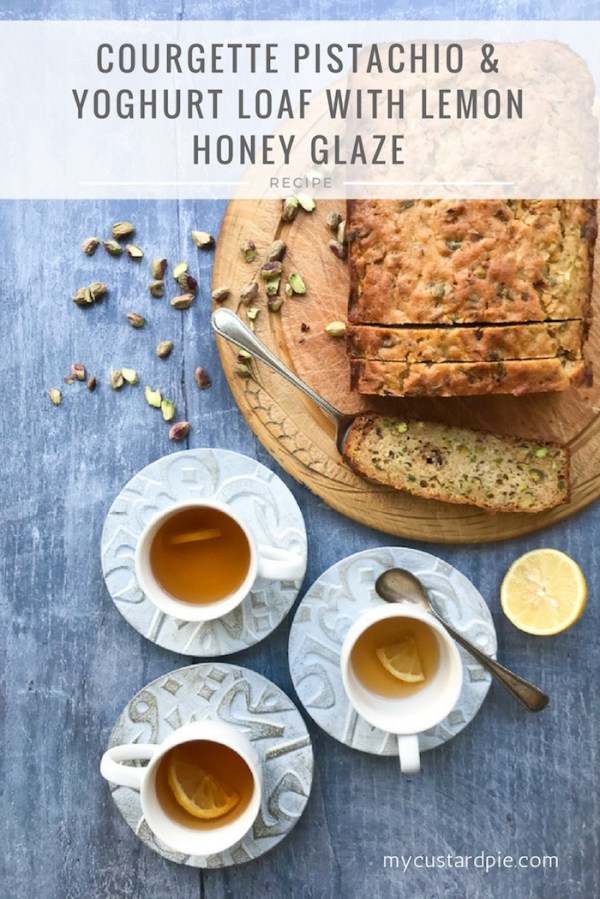
Pin this for later
If you heard Dubai Eye you’ll know this is great slathered with goats cheese and topped with a bit more raw honey. Trust me. Listen to that Dubai Today episode here.
If you’re interested healthy cakes and desserts which contain veg you might like a new cookbook by UK blogger Katherine Hackworthy of Veggie Desserts. I haven’t got my hands on a copy just yet but it sounds very appealing.
Veg in cakes – all wrong or your favourite thing? And honey – did you know that it’s the fourth most adulterated foodstuff in the world? Shocking eh? Let me know what you think.
How to find the best Instagram course for you

“Which social platform do you turn to first in the morning?”. I was asked this question on an interview for a podcast recently.
I didn’t pause for thought. “Instagram!”
It’s often the very first thing I do as I open my eyes after punching the alarm button off. Do you relate to this?
This little app has gone from a cosy community for sharing images to a platform that has changed lives and shaped businesses such is its power. As the stakes have grown, so has advice proliferated, a lot of it confusing, contradictory or downright shady (to use my daughters’ vocabulary). Add to this the constantly changing nature of Instagram, from the algorithm (boo!) to direct messages, stories, filters, live, location-based tags and much more. Where do you turn for guidance?
My day job is content creation and social media strategy for a handful of fabulous (food-centric) clients so I need to ensure my advice is razor-sharp and accurate, plus I want to do the best for mycustardpie. I also want to remain inspired by the platform, despite some of its challenging aspects with all these changes. As well as joining Facebook private groups, reading everything current from industry leaders, listening to a range of podcasts and testing my own assumptions and deductions, I’ve signed up for a few Instagram courses along the way. Many people said they’d like to know more about the ones I’ve taken, hence this post.
Here’s my honest opinion of three – with a caveat. When I mentioned I was writing about this among a group of Instagrammers I’m connected with, it sparked a debate. Some people who had done one or more of the same courses had different views of the strengths and weaknesses of each one. So I must stress that this is a very personal view based on my experience, starting points and ultimate goals. However, I have tried to put into context why each course struck a chord (or not) with me so you can make your own decisions whether it’s right for you:
Note: I wrote this post in 2017 and, as with all social media, things change constantly. I have updated sections of it.
Instaretreat
Sara Tasker has an unusual combination of skills. She is creative but also analytical – she describes her approach as “‘annoyingly tenacious’ and ponders the reasons behind things until she has worked them out logically. She has a very definite aesthetic and grew her Instagram account @me_and_orla to over 168k following with a dedicated ‘tribe’ of loyal and engaged followers. Her blog of the same name offers Instagram advice among other topics, and her recent podcast series, Hashtag Authentic is already attracting acclaim and a loyal following.
Course style: The Instaretreat is as though someone jumped inside my head and confirmed everything I know or thought about Instagram but put it down in a structured and rational way combined with a huge wealth of practical advice. It’s in written form in chapters with lots of visual examples plus there’s an audio download of most sections plus worksheets and is constantly updated.
Course content: This is the course that I’d recommend above all others and it often sells out in hours once released. It leans towards makers, creatives and slow-living but Sara also uses examples of others who are making a success of Instagram with a completely different aesthetic and ethos. The community of Sara’s followers is really nurturing and genuinely pushing the boat of creativity. I’m part of a comment pod through the group and while all the accounts are very different it’s a treat to see what everyone publishes and people are genuinely supportive.
I’ve been stretched creatively and signed up for Sara’s supplementary course Bloom and Grow which has an emphasis on using flowers (even though this is not something I usually focus on). The community spirit and creative inspiration after two weeks had my brain leaping into new territory. I’m stretched to look at things in a new light both in creative terms and with a clear, informed rationale.
Again with Sara you can get a taster of her advice through a free seven-day Instagram course when you sign up to her email list plus there’s a wealth of information on her blog. The Instaretreat is not cheap but great value for all it contains and there are details of everything that is covered in the course on her website so you can see exactly what you are signing up for. Update. A massive bonus is that you have access to this course for life – and every time it’s relaunched there are more and more resources available including podcasts, videos and a downloadable workbook.
My results: Some of my most popular Instagram posts have been created since taking this course and for a time I was seeing excellent growth and engagement. The Instagram algorithm changes have posed real challenges but Sarah’s advice and the close community around her help to stave off panic or succumbing to short-term measures. It’s incredibly nurturing and looks at things as a creative whole not just through the narrow lens of Instagram. Update: I’ve connected with and remained in touch with some lovely people since I did this course in 2017 – even meeting someone in Australia.
Best for: Bloggers, makers and small businesses with a creative and open-minded attitude ‘who like to know why things work, and not just how’ (to quote Sara).
Alex Tooby
Alex Tooby has a systematic and analytical brain and was determined to crack Instagram. She studied, and trialed and then came up with a winning concept @menandcoffee , combining two things that are guaranteed to attract an obsessional interest.
The idea was so magnetic, combined with sound implementation strategies, that it took off quickly and was picked up by a major newspaper in the UK which helped to rocket the follower numbers. She set up ‘Insta with Alex’ to share the knowledge and learning with others so they could replicate her success.
After the free introduction I subscribed to the Infamous to Influential and the Hashtag to Hero courses (then available as a bundle). Update: Her latest course is Instagram Ivy League.
Course style: Alex presents the courses as a series of videos. She is a clear communicator and drills down into a lot of detail with on-screen examples if she’s telling you how to do something online. The action points are in a downloadable pdf plus the course as an mp3 audio. Personally I really like having a range of options. The ‘cheat sheets’ and work sheets guide you through the course and act as an easy to refer to checklist. It is prescriptive in style i.e. do these things exactly to achieve this. There are two Facebook groups you can join for support from other course members and Alex herself.
Course content: The course is very focussed on finding and connecting with your ideal audience to sell your product or service. It does give information about how to get your Instagram account looking right, and being visually strong and consistent, but I would say the main strength is finding and building your audience. The end goal is not in doubt – it’s to make money and Alex has sections on monetising your account and influencer marketing from the perspective of both influencers and businesses.
She is candid as to how she runs her own businesses and her ongoing learning from this. When her own menandcoffee account was hacked and held to ransom, she shared the whole experience from her first horror at what had happened to the processes to get it back. She gained support from the community and we learned valuable lessons along with her. When Instagram changes have an impact on the course content she updates it with a new strategy or alternative.
My results: As this was the first course I took the results were the most dramatic and I saw a very steady follower growth after implementing some of Alex’s advice. It really made me think about hashtags in detail and helped me to work out who I was trying to connect with and why.
Best for: Businesses and business owners who want to use Instagram for profit and (online) sales.

Makelight Beautify your Instagram
Makelight has closed down since I published this post in 2017.
My first introduction to Emily Quinton was via a friend who recommended an excellent post called One hundred floral images which is about creating 100 images using just one bunch of flowers. Emily and her husband Stef are the team behind the blog and since I first read that post they’ve changed the portal dramatically and launched many different courses and content through their membership site Makelight.
The community around Makelight is very loyal and engaged and they have a lot of fans all around the world. Their subscription site is described as “The positive learning community for makers and entrepreneurs”.
I joined their online food photography course in the past (drop me a line if you want my review of this) and more recently Beautify your Instagram – sold as “Improve your visual storytelling and learn to use Instagram as a way to build an audience around what you do”.
Course style: Most of the lessons are taught via video, mainly with Emily talking to direct to camera, which isn’t my preferred learning style and I wish there was a transcript. It takes people by the hand and very slowly guides them through the basics of Instagram and Emily’s way of doing things. There is a closed Facebook group to share questions, progress and learning plus regular live question and answer sessions with Emily. I would recommend this course for absolute beginners to photography and Instagram, particularly people with accounts dedicated to floral arrangements, wedding photography craft and slow living.
Course Content: This was probably much too basic for me but I always keep and open mind and feel even a different point of view can be helpful. The course covers creativity, making your feed look consistent, using your smartphone to take photographs, explaining how to edit on your phone using PicTapGo, photographing in natural light, very basic composition, hashtags, and how to plan your story telling (using Instagram, Instagram stories, different apps and also touching very briefly on other platforms). When you sign up with Makelight you have access to a monthly report which analyses the colours, hashtags and subjects that you use in your feed. You can sign into the site with Instagram and receive a similar report about the themes and colours that are most popular with your followers.
You can access Makelight as a free trial member if you sign in with Facebook or Instagram but I’m not sure what you are offered once there as most of the courses are paid for. There’s a free five-day Instagram taster course and a hashtag library.
My results: I’ve had some insights from the colour tool which is quite useful and have tested hashtags highlighted in the new tool with inconclusive results.
Best for: Beginners on Instagram with basic photography skills who want a friend to slowly guide them through prescribed steps. Makers and very small business owners who want to connect with other like-minded creatives and crafters. People who wanted to replicate a very specific aesthetic. The drawback with this course is that you cannot refer back to it if you’ve ceased your Makelight membership (unlike the other two).

Which was the best course for me?
With Alex, because it was the first course I took, I had lots of ‘aha’ moments – and I would recommend it for clear, concise and data driven information. However it’s Sara’s content I refer to most often for inspiration and a level-headed, reasoned view on Instagram changes and challenges. The people I’ve met within her Instaretreat Facebook group, and more recently through Bloom and Grow, are united by creativity but not pigeon-holed. They feel like my tribe. I might have fallen completely out of love with the platform without the artistic exchange. The sound, practical, updated information contributes to the advice I give my clients too.
I’m too impatient for Makelight and feel like a bit of an outsider in their groups, I’ve taken a few ideas away but the Instagram course has been the least useful for me personally (signing up gave me access to six month’s of Makelight membership so I’ve done some of their other courses too). Their approach clearly resonates with many but didn’t with me.
The combination of the Instaretreat and Bloom and Grow has helped me fight back against the drop in engagement and visibility caused by the algorithm by really drilling down into what my audience relates to and why, what works best and raising the bar on my content. It’s also helps me to focus on the enjoyment of creating and connecting with like-minded people rather than getting too caught up in the numbers.
Finding the right course for you
My recommendation is to have a clear idea of what you ideally want to improve by taking a course, your objectives with Instagram and how much time, energy and funds you are willing to dedicate to achieve them. Write down where you are now and where you’d like to be. Look carefully at the course outlines and see if the things that are important to you are covered. Sign up for several of the free taster courses to see if you like the style and approach. Do not get caught up in pure numbers, especially for the courses that claim to grow your following overnight.
Courses I’ve avoided
There are other approaches to gaining a following but they usually involve cheap gimmicks and schemes which aim to ‘trick’ Instagram. While courses that sell these methods sound seductive they are not good for genuine engagement and sustainable results. Accounts that use them can be vulnerable too.
Links to the courses:
Alex Tooby: Instagram Ivy League
Sara Tasker on Me and Orla: Instaretreat
Makelight: Honey (current Instagram course offered in Makelight)
Affiliate disclosure: If you sign up to Sara and Alex’s courses through the links above I will earn a small fee at no expense to you.

Additional resources
I would classify the three courses I’ve taken as business-led (Alex), business with creative (Sara) and creative-led (Makelight). Of course, Instagram doesn’t exist in isolation and is part of a whole mix in the online world. Here are just three additional sources of information you might find useful.
- The Buffer blog (from the content scheduler Buffer app)
- The Later blog (content scheduler Later – which I use)
- Janet Murray gives advice on generating content (I use her annual content calender to get organised).
What next?
This is off topic of my usual food and travel posts – I decided to publish my experiences as many people asked me. Let me know if you found this useful and whether you’d be interested in other views or round ups about online topics. If you enjoyed this post please share it (helpful buttons below). Where have you found the best instruction or inspiration?
National Trust and modern art: Andrew Logan at Buckland Abbey
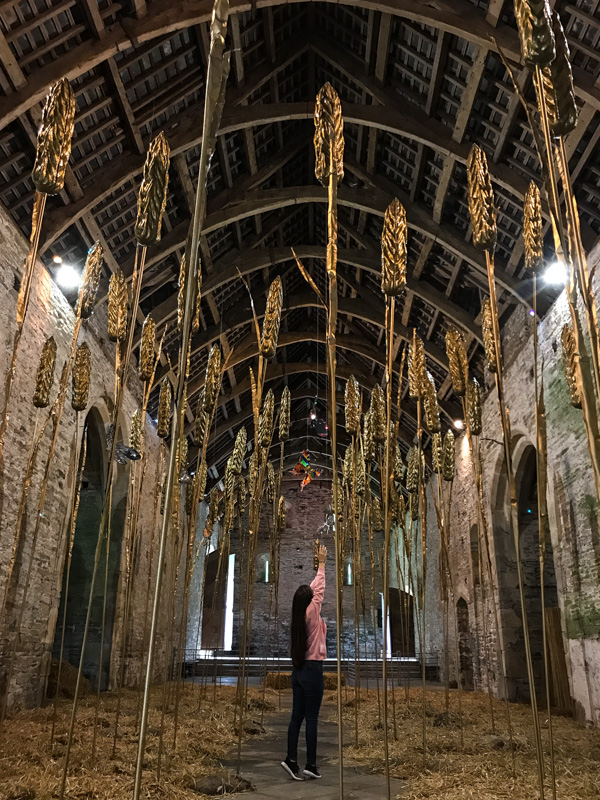
Vegan teen stretches towards a butterfly – Goldfield by Andrew Logan in the Great Barn, Buckland Abbey
We scuttled out of the Dartmoor rain into the barn, leaving the dark skies for a brilliant scene inside. This simple, solid farm building has remained unchanged since it was constructed in around 1278 and has the grace of a cathedral. A field of golden, quivering, shimmering blades of wheat reached up to the raised-cruck timber roof. Little mice, covered in mosaics of silver mirror, clutched the waving slender stems, a jewelled butterfly hung by a thread from the ceiling, twisting, turning, and catching weak rays from the skylights.
It’s hard to define Andrew Logan‘s work but it often draws on fantasy and the allegorical. He uses many fragments of glass, mirror, shiny surfaces, bright colours and jewels in his creations. When I saw a picture of this exhibition, I knew that I absolutely had to go and visit. How would these works fit within traditional, old buildings? The juxtaposition of ancient and outré was so intriguing.
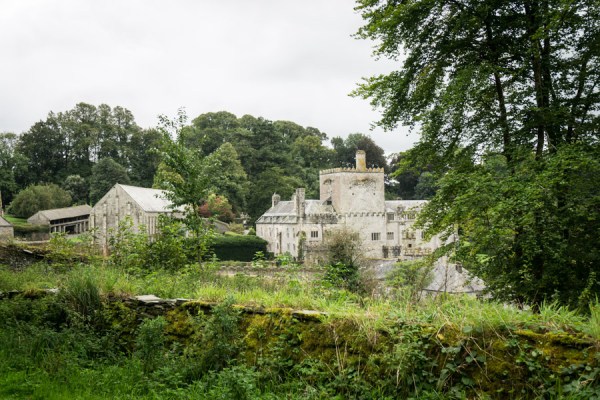
Buckland Abbey
There is an image of the typical National Trust visitor as rather elderly and conservative, and I’ll admit that when strolling round Buckland Abbey on a weekday I was the youngest visitor by far, apart from my teenage daughter. This part Tudor property set in rolling countryside with views to the River Tamar and gorgeous wooded walks is a gem, but we weren’t here for the legacy of the Cistercian monks from the 1200s, the Elizabethan wood carvings, or the tales of its most famous owner, Sir Francis Drake. Our motivation this time was to see a unique retrospective of a major living artist – a sculptor, jewellery maker and performance artist – with collected works from four decades and new creations.
Leaving the Great Barn, past a man bent double over the herb garden, we ventured off to explore the outdoor installations. Petals of smiling daisies – The Four Flowers of the Apocalypse – reflected the scudding, grey clouds from the inside of a greenhouse, but more dramatic was a fist clutching a sword, thrusting up from the cart pond. It was gothic and a bit menacing in such a bucolic scene until a little robin flew onto the sharp tip of Excalibur.


Almost as captivating as the range and variety of the works was the way they were arranged throughout the house. A lavish fountain pen inside a cabinet with a hand-lettered manuscript, a jewelled cross on the altar of a small chapel, a tiny sculpture hidden inside the bread oven in the Tudor kitchen. Each room was staffed by a volunteer who would usually explain more about the old treasures there, but had been briefed on Andrew Logan’s works too. Most were really enthusiastic but one lady, when quizzed, admitted she wasn’t altogether enamoured but that they were interesting. This definitely reflected the divided views of other visitors – one couple walked into the barn and after a “What’s that doing there?”, left in disgust. Seeking out the 18 major works added a completely different perspective to our afternoon and drew attention to the regular exhibits in a new way. The latest piece, commissioned for the exhibition – a glass portrait of Francis Drake – was one of our favourites.


Organised under the Trust New Art contemporary art programme, ‘The Art of Reflection‘ explored themes ranging from discovery and tranquility to nature and the universe. I’m in favour of this kind of collaboration for many reasons. It adds a new audience and relevance to these beautifully preserved properties, it provokes thought and discussion, and brings major works of modern art to areas of the country where they are usually pretty inaccessible. I’d visited Croome near Pershore previously for the ‘Vanity of Small Differences‘ – a series of six striking tapestries by the artist Grayson Perry inspired by William Hogarth’s 18th century paintings ‘A Rake’s Progress’ and as meaningful about the modern age as historic tapestries are about earlier times.


I adore the National Trust. At a time when the UK government are deregulating planning laws in favour of big developers giving them carte blanche to sully vast swathes of our green and pleasant land, I am even more grateful that they keep so much of it protected. It’s not just about old buildings, it is a huge force in looking after the environment for future generations at all levels, from local food initiatives to lobbying MPs about the implications of Brexit on the food, farming and the English countryside. The National Trust is a charity founded in 1895 by three people who saw the importance of our nation’s heritage and open spaces and wanted to preserve them for everyone to enjoy. I always renew my annual membership even though I’m only in the UK for a few weeks every year and love exploring new places or returning to old favourites.


This collaboration with the beacons of contemporary modern art may attract nay sayers but not me – I’m excited to see what the dear old National Trust comes up with next. And everyone else can go and clear the air on a long walk in glorious surroundings (perfectly way-marked of course!). To quote Andrew Logan “My work is about joy and celebration.” I’m all for that.


Click on any picture in the gallery to see the whole image.


Home-grown and locally-sourced produce plus regional dishes are championed by the National Trust. We bought apples from the orchard when we were walking round the extensive kitchen garden.
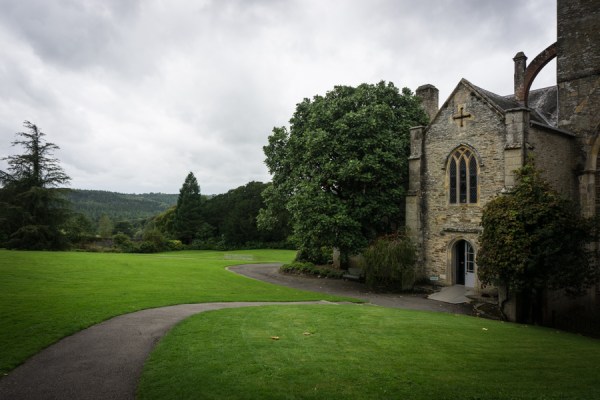
The Art of Reflection is at Buckland Abbey until mid February 2018 except Goldfield which is installed until mid October 2017. More details about some of the works here and Andrew Logan here.
Belle Epoque jaunts: old-fashioned boating on Lac Leman

I’ll admit my spirits sank just a little when a boat ride on Lac Léman was suggested. Travel on moving water has always been a bit of a (stomach-churning) challenge. Just ask my family – a certain mackerel fishing voyage has entered the annals of holiday history, to great merriment (from them). I joined the queue with my sister-in-law on a little white, wooden jetty jutting out into the lake in Montreux with fingers firmly crossed behind my back.
Wherever you are the Vaud region of Switzerland, Lac Léman (aka Lake Geneva) is omnipresent; a glittering, heaving, rippling companion if you are on its shore, to a misty, shimmering, expanse in shades of blue, green or grey (depending on the weather) as you ascend into the mountains.
It follows, right by your side, on the train journey from Vevey to Montreux and beyond; great hordes of swans bob and stretch on it between inestimable rows of moored boats in Lausanne; lean, leathery, swimming-capped, pensioners move their creaking limbs to glide under its surface on a daily basis, come rain or shine.


So here we were, on a shimmeringly hot day, barely a breeze wafting over its aqua ripples, about to launch ourselves out on its surface. An elegant paddle steamer glided into view, red and white Swiss flag fluttering from its stern. My enthusiasm for the cruise increased dramatically, memories of mal de mer dismissed, especially as our tickets were First Class.
Even though our feet flew up the brass-edged wooden stairs to the top-level to secure a spot outside, keener people than us were already lounging in old-fashioned, navy blue deck-chairs at the prow. We were more than content to settle on white-painted slatted benches, especially once in possession of a carafe of chilled local rosé from the bar.


Relaxation was de rigueur and the only movement, apart from stretching out an arm to take another sip from a glass, was the occasional shuffle of reclining bodies at each smooth and fleeting dock to shore. As a lady flexed her bare feet and polished toe nails in contentment, I couldn’t help think of the reaction this would have elicited from passengers of an earlier age. Lacy parasols would have shaded the pale complexions of ladies and frilled hems kept ankles well secluded on the fleet from the Belle Époque era – now immaculately restored to its former glory. We were being ferried by the SS Vevey, one of the eight paddle steamers that now dart across the lake, built in 1907 by Sulzer Brothers of Winterthur.


In good weather, this deck is perfect for unparalleled views of the pretty towns that hug the coastline, combined with old-fashioned courtesy of the bar staff. There is hardly a word uttered as we surrender to the lull of the engines and splendour of the scenery. Chateau Chillon, a formidable, honey coloured castle, is seen at its best from the water, Montreux rises steeply upwards behind leafy green, even the carved merry-go-round at Vevey looks more romantic from our bird’s eye view.


On a more inclement day or if you’ve succumbed to the exhaustion which comes from an overload of beauty (perfectly possible in Vaud), then a lunch cruise is an alternative way to travel. A few days later I snagged a window seat on La Suisse and spread my napkin on lap in anticipation of the ‘Formule Belle Époque’ – a starter, main, dessert plus some appetisers chosen from a limited menu.
A lady with her young grandson sat at the adjacent table adding the entertainment of watching two very different generations gain such pleasure from each other’s company. She doted in a quiet way while he demonstrated how to play a range of games and activities with her. She ate with relish – an obvious treat – while he struggled with more than a few mouthfuls of anything, cutlery large and unwieldly in his small hands, apart from his dessert. You can hear a little of his reedy voice on the video below!


The food leans to the traditional, with a focus on local provenance and seasonal ingredients: a savoury panna cotta made with Tomme cheese and some good olives went exceptionally well with a glass of local Chasselas as an appetiser; a hunk of Pinot Noir infused Vaudois sausage (an IGP local delicacy) in a casing of pastry and leek gravy was a robust precursor to my fish main course. This local char, one of the species fished from the lake we were traversing, was served as a poached fillet with caraway, grapes and delicate seasonal vegetables as a very pretty plate. I shunned dessert (although my neighbour’s raspberry macaron looked tempting) for a glass of elegant, local Pinot Noir. Service was brisk but attentive and polite; the whole experience relaxing and rather civilised making me loathe to disembark.
Fortunately there is one last sojourn with a steamer. The Vevey once more… to Vevey. I settle down on the rear lower deck and gaze as we slide past the turn of the century buildings in Montreux, curlicues of plaster bathed in golden late afternoon light. The horn blows throatily as we come into port; I’m a cruising convert.


More about Lac Léman: The lake plays a starring role in so much of Vaud’s calendar and eco-system. It forms the most beautiful backdrop to just about everything for visitors and residents alike; it reflects the sunlight so the vines that shelter in meticulous rows on its slopes produce luscious fruit in UNESCO World Heritage vineyards; for leisure there is swimming from small beaches and protected pools, sailing, wind surfing, water skiing, rowing and scuba diving; and provides a means for people to travel quickly to and from various ports along this expanse of water. It’s the largest alpine lake in Europe, straddling both Switzerland and France, with a surface area of 580 km², 73km along its length, and a car journey of around 3 hours to drive around its perimeter. You can hop on and off the ferry boat as part of a day trip as mentioned in this post by Taste of Savoie
Booking a cruise: I took the Riviera Cruise which visits Vevey Marche, Montreux, Villeneuve, Le Bouveret, St Gingolf and a few other little stops such as Chateau Chillon. Browse a variety of different experiences on the CGN website – it takes a bit of patient navigating – and the schedules change according to season. If you are there in Winter there’s a Fondue Cruise on a Friday night (I fancy that!) and even Oktoberfest.
Thank you to Vaud Tourism for two of my three lovely trips on Lac Leman. Click on an image to see the gallery.


Do you embrace boat travel or are you a bit of a land lubber like me? And are you rather allergic to the word ‘cruise’ or does it excite you?
Spicy sweet potato, tomato and turmeric soup {+ some photo tips}
There’s a dash through the gate into the porch through torrential rain by the person from Riverford at 7am. The empty carton is replaced with a new one abundant with brown paper parcels and intriguing sprigs of green. A neighbour drops in a little later with a clutch of freshly laid eggs. The benefits of a few weeks in Devon at my Mother in law’s house is the chance to order local, organic produce from a company who were one of the first pioneers, and they are based in the county.
In line with what’s in season, each week there are intriguing new things to browse on the website. If I lived here I’d order a weekly veg box but as there can only be one person in charge of shopping around here (and it’s not me!) I restrain myself to a few enticing items.
This week’s delivery contained a splendid, crisp Savoy cabbage, some sweetcorn enrobed in their husks, fresh edamame beans still clinging to their stems, purple sweet potatoes, a bag of Padron peppers, a small bunch of sorrel and some knobbly tubers of fresh turmeric. It feels like Christmas.
It’s the first time I’ve cooked with fresh turmeric and it made me wonder why I haven’t bought it in Dubai – it must be available somewhere. However, like ginger, I presume it’s hard to buy organic which puts me off. Then I looked up how to grow it and discovered that it’s a tropical tuber so I presume something that could be cultivated by the local, organic farmers. Something to mention when the new season starts in November (or maybe have a go myself).


How to prepare fresh turmeric
As a perennial herb related to ginger, it’s simple to treat it in the same way – with one word of caution. The juice from this root stains everything it touches; your fingers, the chopping board, the knife, any light plastic, your clothes.
You can peel the root with a knife, or the back of a spoon but this is not essential – just wash it before use to remove any dirt. Use a fine grater or micro plane, a robust garlic crusher or a pestle and mortar to prepare it. For the recipe below, I knew I was blending the soup after cooking so just chopped it finely as I would garlic.
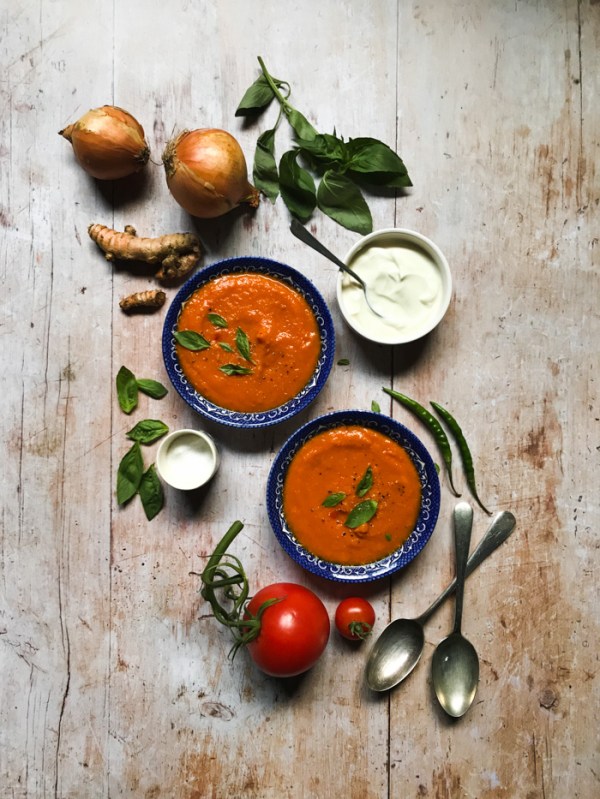
This soup was the result of the Riverford ingredients and needing to use up a few things in the fridge including some sweet potato. The turmeric added a subtle richness and warmth, much less earthy than the dried variety. It made an excellent lunch with some bread to mop it up with. Vegan teen reheated some to thicken it slightly and used it over pasta for supper. You can garnish with a swirl of yoghurt and some fresh herbs if you have them to hand.

Spicy sweet potato, tomato and turmeric soup
A comforting soup with the warmth of fresh turmeric.
Ingredients
- 2 tablespoons olive oil
- 1 large onion, diced
- 2 celery stalks, sliced
- 1/2 green birds eye chilli, chopped
- 5cm long piece of fresh turmeric, peeled and chopped
- 1 tin chopped tomatoes
- 500g sweet potatoes, peeled and cut into chunks
- 400ml vegetable stock
- sea salt and black pepper
Method
- Heat the olive oil, in a large saucepan, over a medium heat. Add the onions and cook, stirring occasionally, until they are soft and translucent (about 5 minutes). Add the celery, stir and cook for a further 3-4 minutes until slightly softened.
- Add the chilli and turmeric and give a quick stir.
- Pour in the tinned tomatoes, then add the sweet potatoes.
- Add the vegetable stock and bring to a simmer.
- Cook, partially covered, until the sweet potatoes are soft when pierced with a knife; this takes about 30 minutes.
- Remove the soup from the heat and use a stick blender to whizz to a smooth consistency (or use a power blender and then return to the pan to reheat).
- Taste and season with salt and pepper to taste.


What happened to the rest of the Riverford produce? We boiled the corn briefly and gnawed straight from the cob, butter melting over the kernels. The Padron peppers were blistered in a hot pan and devoured with salt as an aperitif. I found out that their Russian roulette reputation is not a myth as one set my mouth on fire; thankfully the rest were their usual mild, moreish sweetness. I hadn’t tasted fresh edamame before and boiled the pods whole in salted water, refreshed them in cold and podded the lot for picking at as snacks. The purple sweet potatoes were slightly more earthy and less overtly sweet in taste; delicious roasted as olive oil slicked, paprika dusted wedges. Vegan teen informed me that sorrel is poisonous eaten in large quantities, so I’m glad we just had a small bunch to wilt and eat like spinach, tasty though it was!
Putting a call out on Instagram, I had lots of suggestions for uses of fresh turmeric, the top one being in golden milk – my favourite recipe is by Kellie of Food to Glow.

Photography challenges, light, backgrounds and Lightroom presets
My unplanned, longer stay in the UK means I’m camping out at my Mother-in-law’s house. I’ve been watching the light at different times of the day to find the best spot for photography. My challenge is that in some places there is too much light (big windows) and some places not enough (parts of the building are a very old cottage). The garage has a frosted window high up and is where I shot these pics, but I don’t think the temperature of the light is quite right and it’s still too strong (hard shadows).
The backgrounds were ordered from Capture by Lucy (I seem to be building up a collection). These are printed vinyl that just roll up for storage (or bringing back in my suitcase). Don’t assume they are restricted to flat lay use only, I found some great ideas from Emma Davies Photography here. I liked the pictures on my iPhone 7 more than the ones on my Sony A6000; the 16-50 kit lens I have with me isn’t ideal for this kind of food shot (in fact looking to replace it as soon as I’m back in Dubai as the camera is excellent).
Looking at ways to streamline my editing and save time as I spend hours fiddling around on Lightroom so thought I’d give A Color Story presets a go. I use the app on my iPhone to give my Instagram pics a degree of consistency. The effects are less gloomy and muted than VSCO and while I love that moody, filmic look, I think ACS is more suited to the light, bright place I live in most of the year.
I’d love to know what you think of the edits – I used variations of the Everyday preset from the Essentials range for most. It certainly halved my editing time.


Autumn is awesome
Cosy-ing down for Autumn here so will be making this soup again – please let me know if you try it. I’ve been taken off guard by how much I’m loving this season despite a week of brief sunshine and very heavy showers. It must be a couple of decades since I watched the leaves start to turn golden, the light change and the nights draw in; the morning mists, billowing clouds and wisps of salmon pink in the sunsets have me transfixed. I’m trying to resist the urge to buy warm jumpers and fur-lined boots, although succumbed to a rather gorgeous blanket from the National Trust. What do you love (or miss) about Autumn?
Wild honey and rye: traditional Polish food for modern cooks


The doorbell rang and I dashed to meet the delivery man. He had a parcel containing a book I had been eager to see from the moment I heard of its first draft. Clutching the padded envelope, I took it to a quiet part of the house where the light flooded in through the window, so I could savour in solitude my first glimpse of Wild Honey and Rye.
Full disclosure as I’ve known Ren Behan, the author of it, since my early days of blogging. We met at one of the early Food Blogger Connects and she was one of the first people I spoke to when I nervously entered a room of food blogging strangers. Since then we’ve met up in some exciting places (at Diana Henry’s home for tea, upstairs in the private kitchen at Jamie’s Fifteen) and some less so (a snatched coffee in Hertfordshire with fidgety toddlers and sulky teens springs to mind) but despite living on different continents we’ve built and sustained a friendship based around our shared passion for writing about food and food issues. I’ve always admired Ren’s focus, clarity of thinking and determination too.
The other common ground was our heritage. Ren’s parents were part of the huge community of Poles who were forced to migrate during the Second World War. As Ren writes in her introduction, Polonia means Poland in Latin, but is also a term given to people of Polish origin who have left their homes and live elsewhere. This diaspora is one of the largest in the world. There are many tales to be told about the reasons for this mass emigration, but the war and subsequent power struggles wreaked much hardship, danger and tragedy. My own Father’s family were part of this exodus too.


The Polish community in Britain
The Poles were crucial contributors to the success of the Allied war effort, from being the largest group of non-British personnel in the RAF during the Battle of Britain to vital cryptography skills deciphering the early version of the Enigma machine. At the end of the war when Poland came under a communist government and the Kresy region that had been invaded by Russia remained under Stalin, many Poles made permanent new homes, which included over 160,000 who settled in the UK.
In her book, Ren tells of her upbringing, surrounded by a Polish community who were proud of their heritage and as eager to preserve traditions as they were to make a new life for themselves and their families, and of course food was at the heart of this. My own experience was a bit different, due to my Mum being English we didn’t learn Polish or go to Polish Saturday school, but we were still part of gatherings such as the blessing of the eggs at Easter, had traditional Polish costumes made by my Aunt and ate Polish food at the houses of relatives.


Remembering through recipes
Leafing through the book brought back so many memories from the recipes contained within its pages. Here are a few:
- My Mum did all the cooking in our house but about once a year (if that!) my Dad would take over the kitchen and slowly prepare placki – Polish potato pancakes. Of course we made a huge fuss of him and ate every one up as though it was our last dish on the planet, fresh from the pan. My poor Mum, the ingratitude!
- In fact my Mum did learn to make one Polish dish, stuffed cabbage parcels (golabki), filled with minced meat and rice with a tomato sauce, which were utterly delicious.
- My Uncle Janek would shout at us the minute we walked through the door of his house. “Sit down, drink something, have something to eat. Enjoy yourself.” It wasn’t a request, it was an order. At their round dining table we ate Easter (or Russian) salad, my Auntie Eva’s apple cake, tucked into boards of Polish charcuterie with spicy kabanos (common now but only available at a certain shop back then) and drank milky tea. During Autumn they would drive to the Forest of Dean and fill baskets with a variety of funghi, spreading their foraged finds on a small table for us to inspect before frying them in a little butter. I have no clue what we tasted, many were quite strong in flavour with unusual textures, but they must have had some idea about the varieties as I’m still here to tell the tale.


- I hinted at hardships earlier, and when my Father’s family was torn apart suddenly, his eldest sister was left behind and eventually lived almost the whole of her life under communism (and considerable deprivation) in Poland. We met a few times when she was allowed to travel to the UK and later, as the old order changed and travel became easier, I visited her twice. On my last trip with my daughters and my sister, we walked with Ciocia Zyta into her town and bought some wild blueberries that had been freshly picked from the forest. Back in her tiny kitchen she made dough and we fashioned them into pierogi, uniting us where there was the lack of a common language (only my sister speaks Polish). She joked that she could tell our characters by the way we made them, and that I was a perfectionist (guilty as charged).
- After visiting my Aunt we told a white lie and went to stay in an ‘agro-tourism’ place in another part of Poland. We had to fib as she would never have understood why we would pay to stay with strangers rather than with relatives, such is Polish hospitality. Our hostess was a Mrs Bigos (Mrs Stew!) and as there were not many places to eat out in the area we arranged for a sort of high tea every day. Hard boiled eggs from her hens, charcuterie, cheese, fresh lettuce, cucumber, tomatoes and radishes from the garden and good bread with unsalted butter sated our appetites whipped up by lots of walking in the fresh air (including the chapels of Kalwaria Zebrzydowska).
- People of more than 200 different nationalities make Dubai their home and my children’s junior school decided to hold its first International Day celebration. As you can imagine, competition was fierce to make each stall the absolute best and everyone was eager to share a bit of what makes their particular nation special. I teamed up with another Mum to organise the Polish stall and we had great fun doing it. Maria’s barszcz (beetroot soup) went down a storm even in 28 C temperatures!
 Cucumber salad
 Millet porridge with almond milk and blackberry compote
 pierogi
 pierogi in the pan
Modern Polish food
All the food from these memories is in the book, illustrated and explained in an informal but thorough way that encourages you to try them for yourself. The images are lovely – simple but very inviting – the travel ones taken by Ren herself when visiting Poland. What really tips the balance for me is that they all have a place within a normal family menu without compromising the original recipe. Most remain true to very traditional ways of preparation and simple ingredients. There is an occasional nod to ways Polish cuisine has changed to incorporate new things, such as avocado, but it sits well and feels relevant and not gimmicky (like too many cook books).


Cooking through the book
A neighbour gave us some knobbly cucumbers from his greenhouse. I’ve been dressing them sparingly (and dairy free for vegan teen) with dill, vinegar, a little sweetener (raw honey) and oil – which is the lighter variation given for mizeria or cucumber, soured cream and dill salad.
Also dairy free and utterly delicious is millet porridge with almond milk (or jaglanka z mlekiem migdałowym). This doesn’t sound too appealing does it, but trust me when I say it tastes lighter than oat porridge which makes it perfect for a warming summer breakfast (or all year round in Dubai). My only tweak of the recipe was to stir raw honey in after cooking it to preserve the precious healthy enzymes. I served it with a fruity topping made in the same way as Ren’s quick blueberry compote (kompot z jagód) but with foraged blackberry and apple, again with the raw honey stirred in afterwards.


I’m making the most of my time with vegan teen before she starts her next term of university and some pierogi-making was perfect Mother/daughter bonding time. I taught her how to knead dough properly and we set up a little pierogi-production line; it was great fun. Instead of an egg, we used aquafaba (reduced chickpea water) and a little oil in the dough, and she came up with a vegan filling of potato, caramelised onions and peas. I used Ren’s mushrooms and cream filling for the rest (pierogi z grzybami i śmietaną). Anything stuffed is a bit time-consuming but, again, the simplicity meant it wasn’t too arduous and we were really happy with the light, moreish dumplings.
Bookmarked for when I’m feeding a crowd, is Ren’s Hunter’s stew recipe (bigos mamy). Part of the crowd of 150 food bloggers she fed one summer, I still remember how good it tasted. While this is one of the heartier dishes, most recipes dispel any notion that Polish food is stodgy, heavy, unhealthy or not suitable for today’s modern lifestyle or dietary requirements. Wild Honey and Rye will have a permanent place on my kitchen counter and not just because my dear friend is the author (although this adds an extra warmth of feeling when I read it).
Thanks to Pavilion Books for sending me a review copy.


Wild Honey and Rye is published by Pavilion Books (a great source for beautiful cookbooks)
Peace at the end of the line. A trip to Rochers de Naye

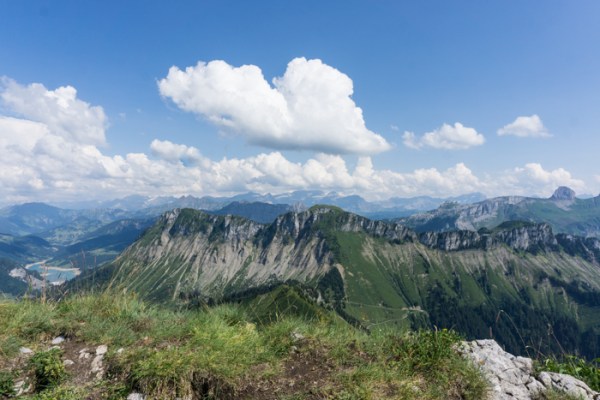
I turned left out of the little station at the end of the line at Rochers de Naye. Totally alone with the breeze, the view, the sound of buzzing insects and the clanging of cow bells from the valley below. It turns out everyone else turned right leaving me alone, at peace with my thoughts, stillness, and heart full of the utter, overwhelming beauty of it all. Where did you last feel like this?
There are many different trains in Switzerland: some luxurious and state of the art, some pretty standard and some which feel old and comfortable like Grandma’s rocking chair. All are clean and punctual. This train fell firmly into the latter, well-worn, charming category and, as a cog train with special teeth on the track to assist with the steep gradients ahead, had a rhythmic chugging to the steady motion. The friendly conductor ran onto the platform in Montreux to validate my ticket for me in the special machine (I’d forgotten) and then we were off, clattering gently along the edge of Lac Leman, then climbing upwards through verdant pasture, dark tunnels, passing wooden chalets with carved edges to their sloping eaves and neat window boxes of bright geraniums. The journey through the alpine countryside for about an hour was supremely relaxing, it would be worth buying a ticket for this alone.


Upwards and upwards we climbed. I felt I was willing ‘the little train that could’ not to give up as it hauled us to vertiginous heights. Finally we rounded a bend to the small platform at the end of the line and passengers swarmed to the front to disembark, and as mentioned, did a disappearing act.
I’d been looking for the spot I’d seen on Instagram and scaled a quite precarious mound, glad that no one was there to witness my scrambling. The only downside was not having a friendly passer-by to ask to take a pic so I abandoned all thoughts of this and threw myself into enjoying the moment.
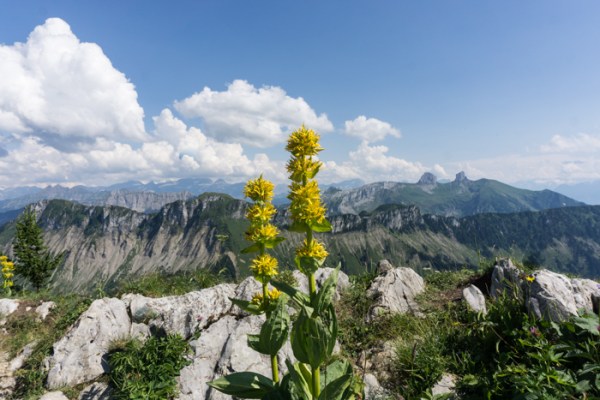
There were some rather randomly placed yurts nearby – apparently you can stay in them. I traced the narrow path signposted to the alpine garden, reached the wooden gate and picked my way through this little rockery paradise in the shadow of the mountains. Planted in 1896 with alpine flowers, including the Swiss emblem Eidelweiss, the garden is named after the poet Eugène Rambert who was an avid nature lover. I could see the cows below on their immaculate pasture, the bells competing with the hum of bees and the tiniest breath of wind under the beating sun. This little piece of heaven was mine alone.


I picked up pace on the way back and marched through the station, past netted enclosures housing marmots (all hiding from the sun) to reach an alternative view-point at 2,042m over Lake Leman and the Vaud region, again totally alone with my thoughts and the extraordinary scene. There is a restaurant that can be reached through a long tunnel at the end of the platform where you can enjoy these views with refreshments – I guess that’s where everyone else went.

In Winter this is a place for skiers and has a hut to visit Father Christmas, but I was more than content to explore this tranquil setting under the summer sun. Even thinking about it now makes my shoulders sink, my mind a little calmer. The train journey back down the mountain along wooded and grassy swathes and the shimmering blue water, followed by the paddle steamer over the lake from Montreux to Vevey, was the perfect ending.
Here’s a little video of the journey up and down and what was at the top… Would love to know what you think.
Thank you to Vaud Tourism for helping me discover this lovely place.
More information about Rochers de Naye here.
Where do you go to clear your head and lift your spirits?
Food waste and Instagram pics. Can it ever be justified?
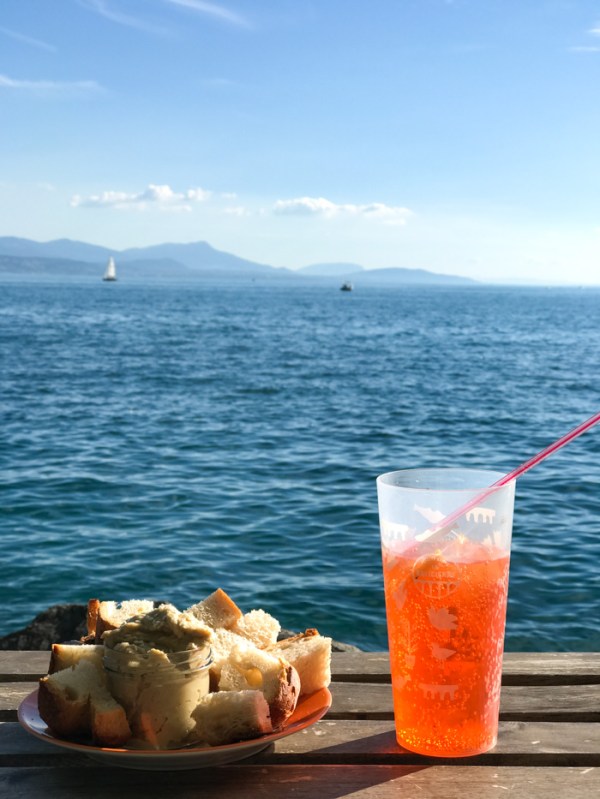
My restrained small bowl of hummus and an Aperol spritz on the edge of Lac Leman
That bountiful food flatlay we see on Instagram, scores of plates of all shapes and sizes cheek by jowl, crammed onto the table haphazardly, or lined up in symmetrical form, enticing our eyes, beautifully photographed overhead with hands reaching in to take, dip, or spoon from the abundant, eye popping, mouth watering feast. It’s a magnet for the double click.
Or the freak shake filled to its foamy brim, stripy straw standing tall, stacked with two or three sprinkle coated doughnuts. Another Instagram craze that our feeds are awash with, that attract adoring comments. “Yum”. “Delish”. “Want”.
But talking of feeds, who eats this food? I do wonder and in fact I have seen people at events pose with a photogenic milkshake or overflowing and alluring plate and then leave it after one spoonful.
I was thinking of this while dining alone by the edge of Lake Geneva. It was a hot day, I’d had a reasonable lunch mid-day, so I wasn’t that hungry. Therefore I ordered hummus and a drink. A voucher I’d been given for my meal (as I was invited as media) meant I could have ordered a whole lot more for the camera, but didn’t.
Is this wrong? We know and accept that food photography for advertisements is rarely eaten. It can’t be. The food has been tweaked, handled, poked, prodded and even sprayed with things that are inedible. Food photography can be as valid an art form as any other… and there lies the rub.
Isn’t this the same with Instagram feeds? I presume the lake side cafe in Lausanne would prefer me to take a shot that goes viral or at least garners maximum likes. They get publicity, I eat free and up my Instagram engagement. We all win – except for the left overs.
But something within me just can’t. I’m the one who takes home anything edible, half empty jars, ends of loaves etc, from photo shoots so it’s not wasted. If I prepare food at home for a shoot, I eat it – all of it.
There’s enough food on our planet to feed everyone easily and yet people go hungry. The rich adding food to landfill in unprecedented quantities is wrong. Food producers have tended the land, or raised and slaughtered animals for our sustenance, I can’t morally order or cook food to throw it away. A recent study concluded that Instagram could be fuelling a food waste mountain in the UK (although we mustn’t forget the influencers who give ideas about using left overs and frugal food).
And then there’s the lie peddled alongside the giant pretzel, the stacked burger with strings of melted cheese, the huge box of multi-coloured doughnuts, the ice cream cone piled high with tottering scoops. It’s always a pencil thin wrist holding it, a svelte bikini-clad form tucking into the impossibly huge chocolate chip cookie, slender ankles and tiny feet poking out from under the Nutella laden waffle stack. A recent article I read hypothesises that this promotes an idea if you get your aesthetic just right, if you’re cool enough, if you’re worthy enough, none of that science stuff about food and physiology will apply. I have two daughters. I have witnessed the impact of this continual pressure to conform to a impossible ideal throughout their growing up. There is no way I could add to it (this is also hypothetical given my age and uncoolness!).
So, whether you are behind the camera or in front of it, am I alone in wrestling with this dilemma?
I’d really like to hear your views and opinions on this tricky topic.
*Please note: I am not pointing a finger to individual accounts with the Instagram images shown here – I do not know what happened to the food in each picture after it was taken. They are examples of a particular kind of shot.
Trying to beat Imposter syndrome
 The foremost advice given about writing a blog is to post consistently.
Well, you might have noticed, I’ve been pretty consistent recently in not posting. I feel I owe it to you, as many have joined me on this blogging journey of seven plus years, to explain why. It’s taken me a while to figure it out too.
I’ve made excuses about being busy – and it’s true that working in digital communications that the demand for more and better quality content just keeps getting greater – but that’s not the whole picture.
On Instagram yesterday, I finally admitted to a large dose of Imposter syndrome (psychologists call it neurotic imposture) and a sort of crazy perfectionism which has left me staring at the draft posts section of my blog like a rabbit caught in the headlights, unable to press publish. Many said they had not heard of the term ‘Imposter syndrome’ and it sounds pretty pathetic when you put it into writing, but I’ll try to explain…
When people compliment your work or say how talented you are at something you should feel good, right? In fact the feeling that comes over you is the exact opposite. You believe they have the wool pulled over their eyes and you are not deserving of their praise. It’s the continual feeling of not being as good as a) everyone thinks you are and b) most other people in your field. This sounds like false humility and that’s why it’s really difficult to admit to, and super hard to rationalise and escape from.
This paragraph from a report in the Harvard Business Review – The Dangers of Feeling a Failure enlightens further (throughout the article there are many things about my background and expectations that I identify with):
“…neurotic impostors feel more fraudulent and alone than other people do. Because they view themselves as charlatans, their success is worse than meaningless: It is a burden. In their heart of hearts, these self-doubters believe that others are much smarter and more capable than they are, so any praise impostors earn makes no sense to them. “Bluffing” their way through life (as they see it), they are haunted by the constant fear of exposure. With every success, they think, “I was lucky this time, fooling everyone, but will my luck hold? When will people discover that I’m not up to the job?”
When my blog was in its infancy I was happy to do the best I could and just publish for the pleasure of sharing a variety of topics. Now there are so many blogs of incredibly high standards to compare my output with, paired with recognition as an ‘influencer’; it’s gradually caused my self-confidence about blogging to plummet and to doubt everything I set out to do.
Women are particularly prone to feeling like a fraud and apparently most people suffer from this at one time or another. I must admit to having it bad right now though and again, I’m trying to work out why this might be so I can combat it.
Much has been made of a version of the lives we portray online, the artificial perfect worlds, especially on Instagram. It seeps into our consciousness and even if our heads know that no one can really live like that and that nobody is perfect, envy, comparison and those feelings of inadequacy steal into our hearts. The wealth of advice out there is a double-edged sword too. I read a lot and listen to masses of podcasts. It’s easy to fall prey to certain aspects of received wisdom about things you should be doing and are not. The list is too long, too overwhelming; achieving it feels utterly impossible, and those that do it all seem blessed with the abilities of super humans. Related to this is my resistance to chunks of the advice, for instance the current wisdom that the only way your blog will be successful is by finding as small a niche as possible. This is good advice but not for me – you and I would all be bored very quickly if this was my approach. There are too many things of interest out there in the world to dig into, probe, examine.
Confessing to feeling a fraud
So why am I sharing all this in my most personal post ever (and completely outside the usual topics of my blog)?
- It’s a way to try to get over it. By sharing all I have nowhere to hide so have to get on with publishing posts more often – as I’m now accountable to you my readers in a different, more honest, and little bit scary way.
- The time taken to write and publish my blog posts has got longer and longer over the years and more daunting as the standards I’ve aimed for are higher (often feeling unattainable hence the delay in going live). These words were written quite hastily in a bid to prove to myself that the world will not implode if they appear online in fact…
- …this might help someone by showing they are not alone. I know I’ve found solace by realising I’m not alone. Does this strike a chord with you?
- I value everyone who has taken the time to connect with me here or on other channels and I felt an explanation was needed for my blogging drought.
- This actually took time away from publishing a post I’m afraid to finish – procrastinating once more about making it live. Classic imposter syndrome but at least I’m admitting it!
How I’m trying to beat imposter syndrome
This is what I’m turning to, and having it in a list form will help to remind and encourage me. As I’m no expert in this field, I’ve resisted writing the ‘top ten tips to help YOU etc.’ Sharing my approach and progress is the best I can do. I hope it helps others and I would love to have your thoughts about other things I might try.
- Form a blogging habit again. I’ve actually got a regular Instagram routine which I stick to that works well. It could be that this takes away from my time to blog so I’m going to put a strict time limit on it. In an interview for Janet Murray’s Soulful PR podcast, Jeff Goins talks about dedicating an hour a day to writing when he was starting out. This makes sense to get back into the practise of regular writing for my blog again. It also taps into the ‘do it until you believe it’ advice.
- Try to overcome perfectionism. This post is the first step. I’m going to diarise time once a week for batch editing my images which I never feel are good enough making this is a hugely time-consuming job. If I’m not making headway with this, I might even outsource some editing accepting that no one can be good at everything.
- Just doing the best I can. “Humility is not thinking less of yourself, it’s thinking of yourself less”. C.S. Lewis. Getting stuff done and out there must be my priority (rather than 250 unpublished half-finished draft posts – no joke). From now on I’ll aim for ‘good enough’.
- Only seeking out things that inspire, buoy me up and give me strength. Keeping away from content that makes me feel inferior or evokes envious or uncomfortable feelings for a while. Focusing on doing my own personal best.
- Identifying bad habits and working hard to break them. Who else here identifies with everything on this list of the five diets All women should be on by Sas Petherick?
- Being alert to the critical voice – and answering it. Acknowledging that my thought patterns are holding me back and setting a strategy to overcome it, however impossible this might seem.
- Valuing genuine, positive and kind people around me and trusting what they say. In response to my little reveal on Instagram I received some very touching messages of support for which I am truly grateful. Pooh-poohing their sentiments is tantamount to calling them disingenuous.
- Taking more risks, putting myself out there, doing the things that I’m afraid of. To quote Margie Warrell on Working Mother : Letting fears sit at the helm in life is a surefire recipe for lackluster mediocrity—or as Thoreau put it, “a life of quiet desperation.” I WILL refuse to let my inner gremlin dictate my choices.

My approach to blogging
I’ve also decided not to beat myself up about not having a narrow niche. The example of the lovely Sarah Von Bargen on the Yes and Yes blog really inspires me. She says:
When people ask me about my blog I tell them “It’s a lifestyle blog for smart, funny people.” And then I might point at them and wink and say “So you’re allowed to read it.”
My unique perspective on food, drink and travel will continue to be my blog niche which I hope will appeal to you if you like to dig a little deeper and ask the odd awkward question about things.
I’m designing a quick survey to help broaden my topics rather than “niche-ing down”. Send me an email if you’d like to receive it, or just tell me what you’d like to read more of (Instagram and blogging tips for instance).
Thanks for reading this far and for lending me your ears. Be prepared for a deluge of posts to follow – this will mean I’ve succeeded in conquering some demons. This thing goes so deep that I’m actually feeling like being a fraud at confessing to a syndrome! Feeling scared, vulnerable, and still daunted now I’ve written this – but also on the cusp of a new chapter.
Your thoughts, via comments, Twitter, Instagram, Facebook or email would be highly appreciated. Are there any resources that have helped? If this resonates with you too, would you like to join me on the journey? Could we keep each other accountable and provide support for blogging, social, small business, life….? Let me know 🙂
Dubai – how to experience an alternative Iftar
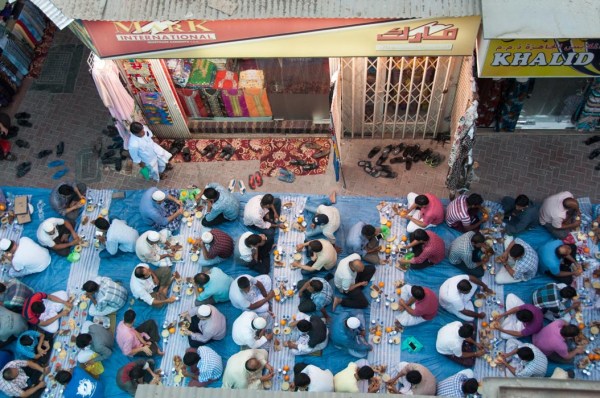
As a non-Muslim, it can be difficult to understand the true significance of Ramadan and what it really means to those observing a day-time fast for 30 days. Sure, it’s easy to see that the city of Dubai steps down a notch from its usual frenetic pace. White tents start to go up next to mosques to host communal Iftar for those who are less well off. There’s a mad dash on the roads just before sunset then all is quiet, the stillness punctuated only by the call from hundreds of minarets.
It’s a joyful time and one where families get together, sometimes at one of the many lavish Iftar buffets held across Dubai in 5-star hotels. These offer an extensive array of traditional dishes, a chance to try celebratory foods such as slow cooked whole lamb or ouzi, an endless variety of mezze and salad, plus – of course – a dizzying display of desserts. I have visited several and enjoyed my evenings, leaving satiated with food but without any real insight into this month that’s so special for local and expat Muslims. The amount of food waste from all these buffets is also a concern.
Iftar with Frying Pan Food Adventures and Gulf Photo Plus


It took a very different experience in old Dubai to change that. Sitting on the pavement with an orange and some water before me, the urge to peel the fruit was strong and I hadn’t been fasting. In parallel rows on either side of my strip of carpet were hundreds of labourers, sitting cross-legged, shoulder to shoulder in perfect peace. There was no chatter or commotion, just patient contemplation of the imminent breaking of the fast. The air shimmered in the heat of dusk, the warmth of the sun-baked concrete slabs seeped through the thin covering; even among friends this closeness seemed intimate and extremely humbling. As the sun started to dip and the prayer rang out we all gratefully tucked into our little pile of food including water – this is the first sip of drink these men will have had since about 4 in the morning – laban (a kind of drinking yoghurt), milk, some dhal, samosas and the orange.
After the men had finished eating, they helped to clear the leftover packaging and then left to go to pray and to start an evening’s work.
This tour is not just dedicated to experiencing Iftar, it’s an in-depth guide to this bit of Deira through food with the highly knowledgeable guides of Frying Pan Food Tours plus experts from Gulf Photo Plus on hand to give tips about taking good street photos. The photography tuition is excellent but having a ‘proper camera’ not necessary at all. A few people on the tour just used their phone camera and one no camera at all, just drinking in the atmosphere and experience without having to record it. After Iftar the area went back to its usual bustling self, we sampled karak chai, freshly baked bread, other street snacks and ended with a shared meal once again on the floor but this time in comfort (and with air conditioning).
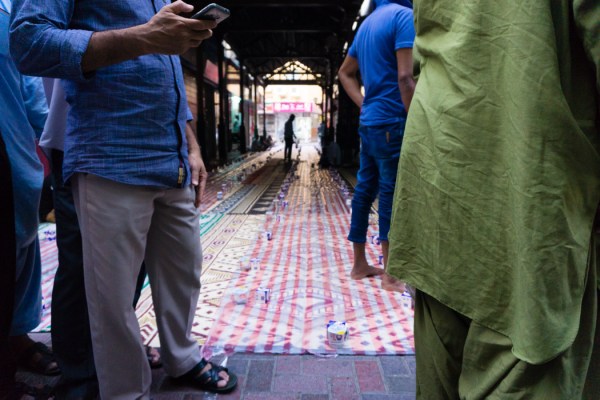


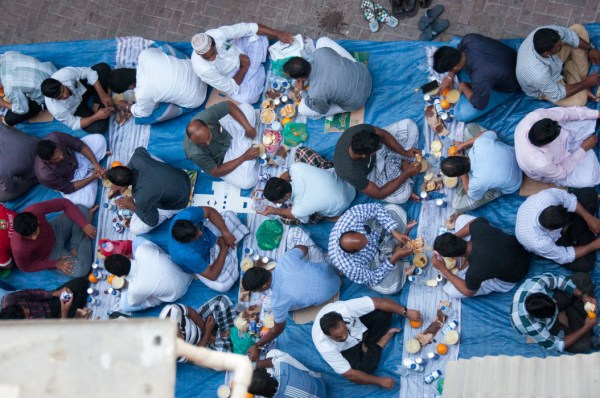


On our first part of the evening strolling around before dusk, we were guided observers in an alien environment; once down on the pavement we became part of the place.
For more information and to book visit Frying Pan Adventures or the Unseen Trails microsite.
Browse the gallery by clicking on an image and using the arrows left and right:


Here are some other ways to experience an alternative Ramadan within the community:
Filling the Blues
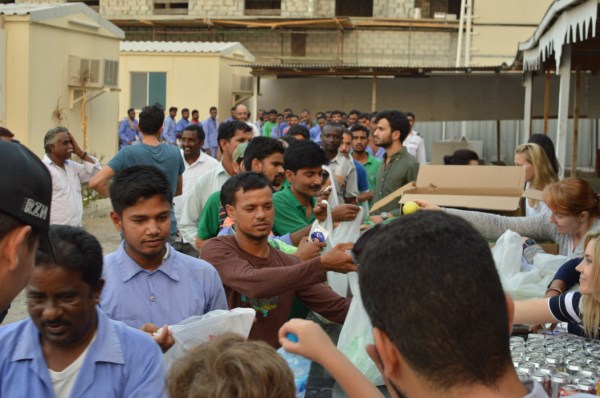 This is a Ramadan charity initiative started 10 years ago by Dubai-based restaurateur Tahir Shah the founder and owner of Moti Roti. What started as a small way to give back personally, gathered momentum and now sees restaurants from around Dubai involved and giving back. Every evening during Ramadan, a different restaurant prepares food which volunteers distribute to construction workers who are working the evening shift during Ramadan.
“We have a chance to give back to the workers who have built our restaurants, offices, apartments etc. – there is no illusion that we can fix everything for these guys, but all we can show is a gesture saying: Hey, we know you’re there and we appreciate it!” says Tahir. On a recent podcast interview he also mentioned that it’s not just the food that the workers appreciate. They value the variety of human contact as though they are welcoming new visitors every night; it makes them feel part of the community.
This year in line with Moti Roti opening its first restaurant in JLT, FillingTheBlues will be serving Iftar for workers on a site in cluster L Al Barsha each night of Ramadan.
To take part (organise queues, set up tables, hand out food etc) visit the Moti Roti website or email fillingtheblues@motiroti.me Update 2019: Since Moti Roti closed I cannot find any info about Filling the Blues.
Ramadan Sharing Fridges


The Ramadan Sharing Fridge began as an initiative to help less fortunate community workers and labourers to have access to free food and drink during the month of Ramadan.
Under the umbrella of the Red Crescent and in association with Open Arms UAE, that brings together different members of the Dubai community to share a moment together, and to show appreciation and respect for each other. It’s about demonstrating that a small act of kindness can have a positive effect on other people’s’ lives both during and beyond the holy month of Ramadan.
To participate, join the Facebook group here. There’s a map to find your local fridge and advice on how and what to donate to the fridge. Each fridge is emptied and filled up to 20 times a day and are open 24/7 so you can donate anytime. Community workers are around between 8am until 6pm which is when the need is greatest.
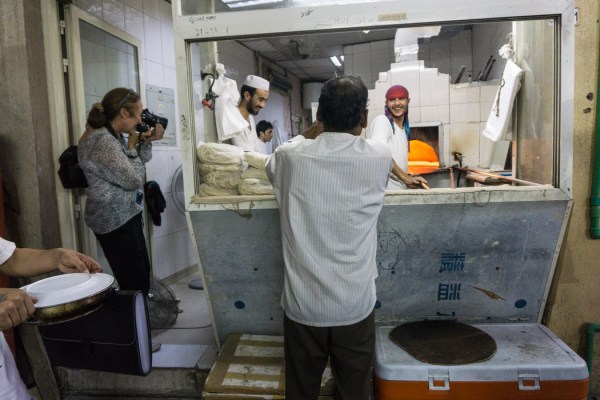
My daughter caught me in action on the Iftar tour
World Food Programme for Yemen
Just over the border in neighbouring Yemen, the continued conflict is having a devastating impact on much of the population with children bearing the brunt through lack of food.
As the Holy Month of Ramadan is a time for giving, the World Food Programme invite you to feed a child in Yemen who needs urgent food assistance. The ShareTheMeal app from the WFP lets you share a meal with just a tap on your smart phone. Download and share here
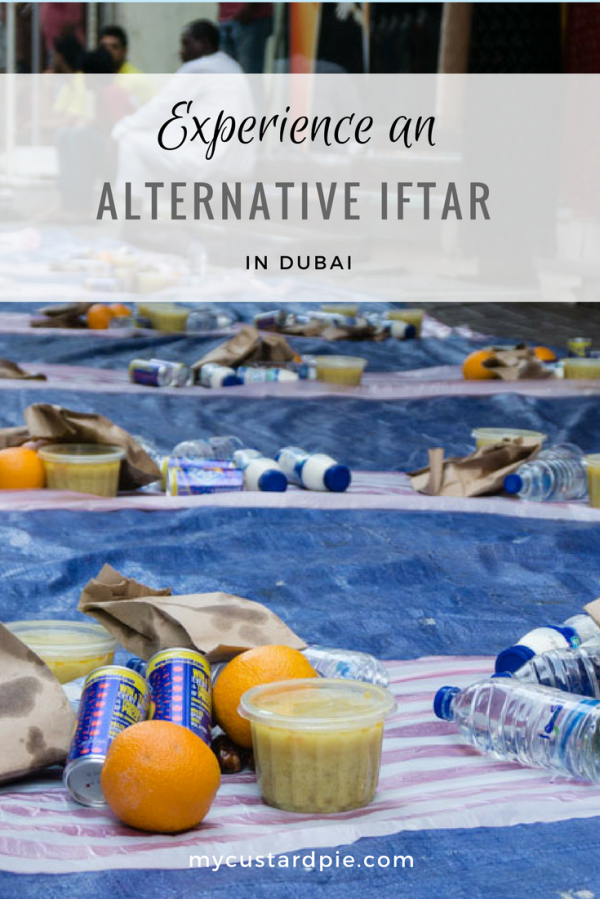
Ramadan Mubarak to all who are observing this Holy Month. If you have any special family traditions or foods you like to share I’d love to hear from you in the comments. Have you ever had a memorable Ramadan experience (whether you participate or not)? And please do let me know if there are any other ways to connect with the community for Iftar during Ramadan here in the UAE (or elsewhere).
P.S. Photo credit shared with my daughter – it was such a joy to do this tour with her and to see her interpretation through the lens in some of these pics.






 My Custard Pie