Taste of Dubai 2013
 As Gary Rhodes, Gizzi Erskine and Vineet Bhatia announced the opening of this year’s Taste of Dubai there was a real feeling of excitement. There was also a sense that it was going to get a lot hotter and a lot busier. In its sixth year, Taste of Dubai has come of age, with more restaurants than ever, celebrity chefs, demonstrations, a lot more live music, more pre-publicity – it’s a ‘must attend’ date in Dubai’s calendar. Indeed Gizzi Erskine, face of Taste of London, intimated that Dubai might do it a bit better…however, with guaranteed sunshine and a great setting in Media City, this city has several advantages.
This was my third year of attending and there were some highs as well as lows. So here’s an entirely personal account of my likes and dislikes in 2013 – and lots of pics.


Thumbs up
- It’s a great chance to sample the fare of expensive restaurants, especially some of their signature dishes, at reasonable rates (some more reasonable than others).
- Great idea from Atlantis to do an all-in price of five dishes from their range of restaurants (125 AED)
- Loved the sparkly trees and separate dining terrace for the JW Marriot Marquis which was an excellent showcase for this new hotel and a less frenetic experience than the main drag.
- You could sit in the chefs’ theatre and watch a series of excellent demos all day long and get very close to some top chefs (see Ishita Unblogged’s review below).
- Seeing chefs in their element. I bumped into Paul Kennedy from the Mango Tree, Paul De Visser from Ruth’s Chris Steak House and Alessandro Zulian from Carluccio’s, among others, all patently loving the interaction with the crowds.


- The Cookery school is a superb hands on experience where you can actually cook with some brilliant chefs. I didn’t manage a session this year, but loved every second of making risotto with Giorgio Locatelli last year (when Miele sponsored it)
- There were a few interesting competitions linked to social media run by individual restaurants. You could win a dinner for ten cooked in your own home by Paul Kennedy of the Mango Tree and Carluccio’s gave away 150 ‘dinners for two’ .


- Fresh produce. Lafayette Gourmet led the way with being able to taste really excellent ingredients. I met a charming man who runs Al Fumo, an artisanal smokehouse in Dubai, and tasted excellent maple-cured smoked salmon. Balqees were showing off their sublime raw honey produced by bees that feed on nectar from the Sidr tree and harvested using ancient traditional methods by semi-nomadic beekeepers in remote areas of Yemen; one taste is enough to know why it is the most expensive honey in the world. And I bought some very, fresh rhubarb and fabulous pink garlic flown in that morning from the Rungis market in Paris.
- More fresh produce. Knock me down with a feather. There was lots of local produce on display by Local Harvest which represents local farms in Abu Dhabi. It was so refreshing to see vegetables from the UAE (although being given a tasteless tomato in some cardboard packaging was not really in keeping with the environmental and flavour messages).


- I didn’t manage to experience Andy Campbell‘s Dining in the Dark concept but heard really good things about it. Ten out of ten for innovation.
- The MMI beverage theatre was in a much better layout and location. You still had to book early as sessions sold out immediately, but there was lots of room inside and it wasn’t just a magnet for people after free booze. You could learn about wines, whisky or cocktails in a fun environment plus there was….
- …the photo booth, also set up by MMI. I have to declare that KP helped create some of the graphics, but the way people have used the props in the pics on Facebook is so entertaining. Did I have a go…..?


Thumbs down
- Cramming every possible space with stands – many not food-related. A dentist…investment advice…a clothes stall… no, no, no…
- …and because of this there was hardly a blade of grass to sit on, let alone a chair. Has Taste of Dubai outgrown this venue?
- The restaurants that roll out the same menu year in year out. Yes you Gary Rhodes! White tomato soup has had its day, as has butter chicken from Vineet. The Grosvenor House Hotel restaurants were particularly guilty of this. There was no buzz at all around Toro Toro for instance, the slow service and repetitive menu did not do this stunning restaurant justice. A bit of innovation would show off these excellent restaurants better.


- More about the ingredients please. What are yukka fries? What are all those interesting-looking Asian bottles? What is black cod? More engagement while we wait for our food please.
- No real innovation. How about a downloadable map – a Taste of Dubai app…?
- …and much better social media interaction. It’s all about giving as well as taking you know! A display wall of tweets is a given. Why not do some location-based tracking of restaurants, vote for your favourites? My consultancy rates are very reasonable!!
- And wouldn’t it be nice to see some different chefs – not just celebrities – demonstrating how to make some of the dishes of the region.
- Oh…and the waste. I shudder to think how many plastic trays, forks and knives are thrown into landfill because of the festival. Couldn’t the organisers bulk-buy stylish biodegradable items for all restaurants to use?


Here are a few facts supplied by Taste of Dubai about the festival: More than 150 dishes from 30 restaurants, 10 International celebrity chefs; 6,790 potatoes used to produce the famous Rivington Grill chips; 33 Philips Chefs’ Theatre Displays; 70 kilograms of black cod ordered for the famous Nobu dish: 70 (Note: I do hope it’s not endangered); 26 Kenwood Cookery School interactive sessions and over 2,700 pieces of handmade Ravioli for Ronda Locatelli.
Are you a fan of this kind of festival? Do you have a ‘Taste of…’ in your city? How does it compare? Do you think celebrity status for chefs has gone too far or is it all just good entertainment? In fact has cooking become entertainment and at what price? Did you go to Taste of Dubai this year – what was your take on it? All comments welcome….


Related articles
- 2013 Taste of Dubai Festival (debbiemovestodubai.com)
- Taste Of Dubai Menu Tasting At Asado | Part 2 Of My Gluttonous Double Munching! (ishitaunblogged.com)
- Gizzi Erskine’s Crispy tuna rice hacked (thenakedplate.com)
- I saw them cook and I ate what they cooked. Taste of Dubai 2013 (ishitaunblogged.com)
- Simple Italian food – with clever wine matching (mycustardpie.com)
Also read about Taste of Dubai in 2012 on My Custard Pie.


Irish food – from farm to fine dining
“Irish fine dining. How many ways can you serve potatoes?”
This was KP’s reaction and just about everyone else to whom I mentioned ‘Irish’ and ‘fine dining’ in the same sentence. It seems that Irish food may have an image problem, which is strange given the export of ‘the Irish pub’ to every corner of the globe. Doesn’t a place where you go to have a great ‘craic’ need good food as well as drink? After the death of the Celtic Tiger (as Ireland’s economic boom between 1995 – 2008 was called), small artisan food producers have been an important part of the recovery, but, given my very unscientific straw poll of people’s reactions, there’s still a long way to go with positive PR for Irish food. However, I was lucky enough to meet two people recently, both doing a sterling job of flying the Irish culinary flag in very different ways.
Irish dining with finesse – The D Bar and Grill
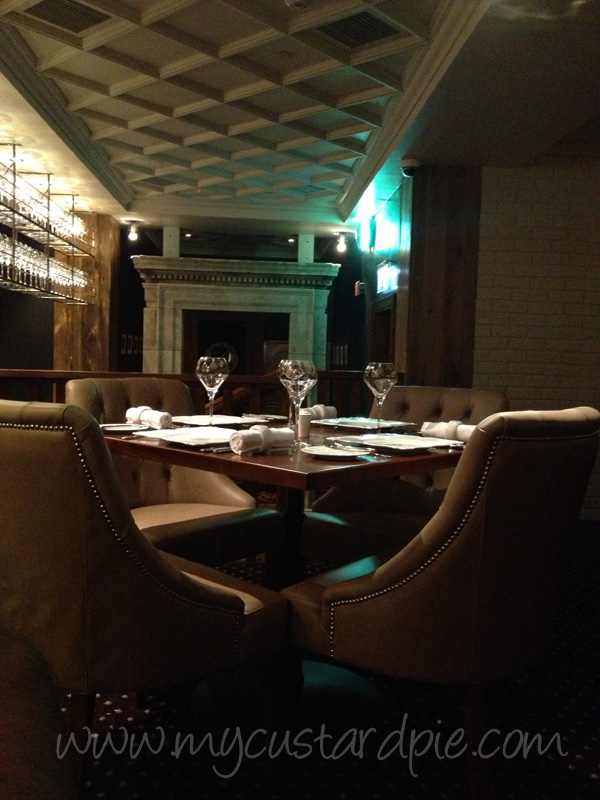
Somehow missing the main entrance, we ended up weaving our way through the dimly-lit, cavernous McGettingan’s Irish Pub on the Sheik Zayed Road, before finding the stairs leading upwards to The D Bar and Grill (named for Dublin and Dubai). It was a brighter, calmer atmosphere with caramel-coloured leather studded chairs, polished wood and plush carpet; like entering an exclusive gentleman’s club albeit one where striking chandelier drip from the ceiling, stone pediments form a background to hundreds of gleaming wine glasses and an ornate harp stands in pride of place. Opulence meets armchairs.
This is Chef Richard Stratton’s newest venture. He made his name at the Mount Juliet Country Estate, in County Kilkenny, over a decade ago, creating international dishes with local produce including seasonal vegetables from the Estate gardens. However, he is no country bumpkin and I suspect the only wellies to have graced Richard’s feet are Hunter by Jimmy Choo. With a penchant for fashion as well as food, there’s not a glimpse of chef’s whites on his personal website, only discreet tattoos. He’s come full circle via haute-cuisine of the Capital Club and The Fairmont, full-on bling meets Italian at the Cavalli Club, (all in Dubai) to a celebration of Irish ingredients at The D.
The menu is simple in tone, leek, potato and thyme soup, onion tart tatin with spiced apple, Ballycotton hake with melted leeks and brown shrimp butter, Barnsley lamb and devilled kidneys (with a smattering of luxury – Tsarskaya oysters, foie gras with sweetbreads). Presentation is immaculate. A perfectly-formed miniature amuse bouche of seafood arrived, before our starters of beetroot vodka gravlax and Ballydehob crab scotch eggs with avocado and aioli. The soft citrus notes of a Chablis were a good match. We both chose ‘signatures’ from the menu.


There is something so seductive about an individual pie and my steak and kidney pudding with a suet crust came in a gleaming copper saucepan, along with parsnip chips and Savoy cabbage. Extra melting soft kidney lay beneath the cabbage, all in all a voluptuous, comforting plateful. Real soda bread (if it’s permissible to mop up the gravy when fine dining) would have suited me more than the elegant wafer perched on the dish and KP’s shoulder of lamb tortellini, Irish stew style – two open shells of pasta filled with a rich stew in a pool of broth – cried out for dunking. The sauces of both were savoury and rich enough not to be overpowered by the Australian Shiraz we drank with them. Delicate presentation didn’t mean delicate portions and a refreshing sloe gin and tonic sorbet paved the way for pudding. Chocolate fondant was perfect in taste and hot, molten-centred texture, with slightly bitter Guinness ice cream; KP’s blackberry and apple Eton mess an extravagance of meringue, cream and fruit. We decline Irish coffees (it’s a school night) and are introduced to Richard for a tour of the restaurant.
Richard scoured reclamation yards and the Irish cheese selection (including the divine Cashel Blue) is housed in a small room fronted by stone-work rescued from Dublin university announcing ‘Laboratory’. Sourcing most of his ingredients from Ireland (oysters, lobster, crab and beef flown in every four days), Richard prepares them with innovation and finesse for fine dining while retaining the authentic flavours of the classic dishes. If this is the face of modern Irish cooking I want to eat more of it.


Fine Irish produce with a smile
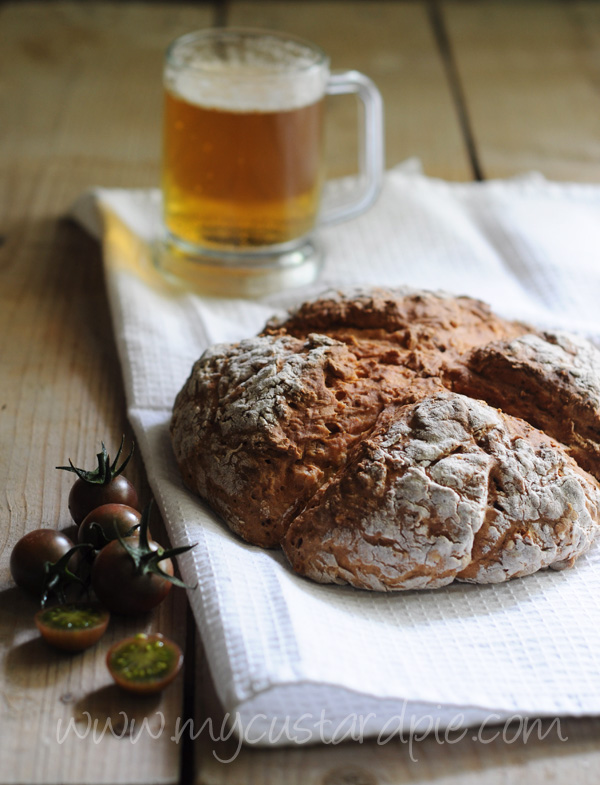
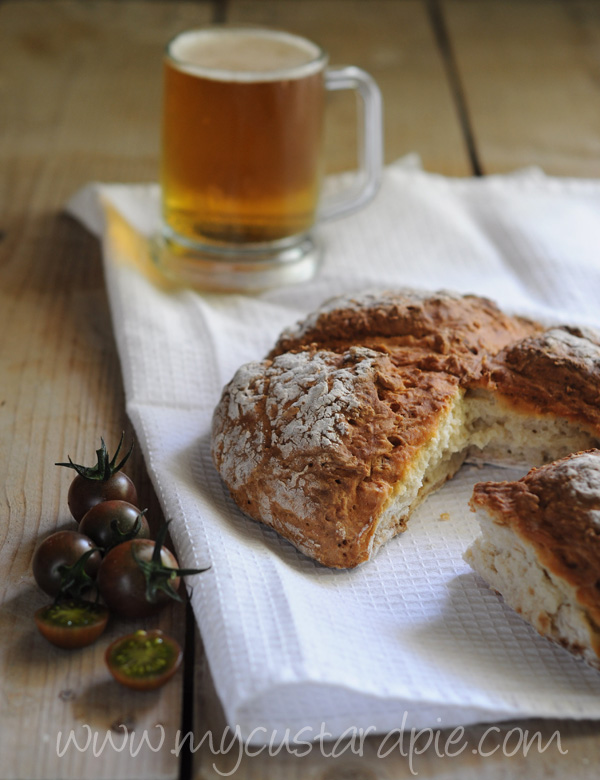
Rachel Allen rarely stops smiling. She looks as though she is having the best time in the world as she chops, folds and stirs, as relaxed as though she’s in her own kitchen at home. And home is near the Ballymaloe cookery school where Rachel arrived to learn cookery from the legendary Darina Allen, ended up staying to teach with her and eventually married her son Isaac. I met Rachel first at Abu Dhabi Gourmet and then at the Emirates Festival of Literature. Both times she made a version of Irish soda bread, both times it looked so easy – about five minutes to make and an hour to bake – and tasted delicious.


I asked Rachel what defines Irish cuisine. She said that Ireland hasn’t got a huge canon of dishes unlike more ancient cuisines such as France, in fact there are only about forty traditional recipes in all. However, the produce from this green and fertile land (she often mentions how much it rains) is of the best quality. In fact the philosophy of the cookery school is simple and reflects this:
We believe that the finest food comes from the finest ingredients. We teach using the best we can grow, rear or obtain locally. Our farm is organic and we use endeavour to use as much organic produce as we can in the school.
I wanted to share Rachel’s view of Irish food with you and took a video; sadly it came out with very low sound but I’m sharing it with you anyway so you can get an idea of how warm and friendly she is. I waited for her to finish answering questions from another couple first, but she asked all the questions putting them at their ease and teasing out details of their lives. By the end of her presentation we all wanted to go to Ballymaloe to collect eggs from the hens, make cheese and bake soda bread.
I’ve used Rachel’s basic white soda bread recipe a few times already – it’s fantastic for feeding hungry teens at short notice. She used laban instead of buttermilk when she was in the U.A.E. and it works well. To mix the flour and the wet ingredients together she recommends putting your hand in a claw shape and stirring round and round in one direction until it comes together and a dough forms. You do not want to knead the dough to work the gluten (as there is no yeast). A wet dough gives superior results (a lighter-textured loaf) but I hate the stickiness on my hands so used my dough scraper to fold it all together on the work surface. This worked well for me but use whichever method appeals. I also make some little ‘scones’ studded with chocolate chips and a little orange juice and zest.


So what are these 40 traditional Irish recipes? Here are some highlights:
- Barmbrack – a fruited tea loaf
- Boxty – grated raw potatoes cooked as a pancake on the griddle
- Champ – mashed potatoes combined with butter, milk and spring onions (scallions)
- Coddle – a braised dish of sausages, bacon (rashers), potato and onions
- Colcannon – mashed potatoes combined with butter, milk and kale or cabbage
- Farls – potatoes cakes made with mash cooked on a griddle
- Irish stew – a slow cooked stew with lamb (or mutton), onions and potatoes. Some versions include carrots, pearl barley and parsley.
- Soda bread – made without yeast (with fruit it’s called Spotted Dog)
I’m sure I’ve missed out some classics here. Please let me know what I’ve left out. What do you think of Irish cooking (and the concept of Irish fine dining)?
P.S. Just to show how nice Rachel Allen really is:
Related articles and links
- The D Bar and Grill
- Rachel Allen’s soda bread recipe
- Wheaten soda bread with stout, oats and molasses for St Patrick’s day (missfoodwise.com)
- Rachel’s Irish Family Food by Rachel Allen – New Cookbook (thekitchn.com)
- The Tradition of Irish Soda Bread (whenlifegivesyouchocolate.com)
Disclosure: We were guests of The D Bar and Grill; my opinions are my own.
Simple Italian food – with clever wine matching
 My pulse was getting quicker by the minute as I paced up and down in Gatwick airport; the check-in desk was about to close and my friend hadn’t arrived. Should I board the plane alone? Passport in hand, I was doing just that when she strolled up leisurely, her relaxed face turning to horror when she realised she’d misread the time on the ticket. We got the last two seats on the plane, upgraded to first (i.e. two seats at the front of the plane behind a curtain) and we were off to Italy. If alcohol was available I’m sure I downed it in one. The first time you travel without small children is a liberating experience; mine were one and three years old and I’d been stuck on a compound in Saudi Arabia for the first years of their lives. Freedom and Florence; what an intoxicating mix.
Art, artefacts and food probably sums up the trip. We ate simple meals at student hangouts and pavement restaurants off the beaten track. The highlight was Sunday lunch in the early Spring sunshine with a huge platter of mixed seafood, sparklingly fresh, salty and sweet with a bottle of wine.

Italian food seems to have captivated the world more than any other cuisine. But not content with the intense, simple flavours and fresh produce it’s based on, people have had the urge to modify, tinker and complicate. Take chicken tikka pizza for instance (just wrong on so many levels), stuffed cheese crusts; I heard Italian tapas advertised the other day. Chain restaurants and processed food manufacturers are the main culprits for these aberrations (although ‘Britalian’ food abounds to0). Is it possible to find well-cooked Italian food on the High Street or in a shopping mall?
At the end of our Italian weekend back in 2000, Jane went back to Surbiton and I moved to Dubai; we next met up a couple of years later in Kingston-upon-Thames at Carluccio’s. It was one of the first branches to open outside London and I remember a beautifully prepared risotto and a good bottle of red wine. I loved the combination of a casual but stylish setting, shelves of Italian ingredients, and a simple menu prepared well.

The chain expanded over the years and Antonio Carluccio left the company; at one time he railed publicly against the restaurants doubting whether the quality could be maintained at such scale. In 2010, Landmark – a Dubai-based company – acquired Carluccio’s and now retains its founder as a consultant. By all accounts he is committed to ensuring that the restaurants that bear his name live up to his ‘mof mof’ philosophy i.e. minimum of fuss, maximum of flavour.
I’ve visited Carluccio’s in Dubai Mall many times since it opened, particularly when we have visitors, as it offers a mid-priced casual meal with a great view of the Dubai fountains from the terrace. The menu is simple but well executed, the interior light, airy and stylish.
As the restaurant is in the Dubai Mall (rather than the other side of the fountains in the licensed Souk al Bahar) you can’t order a glass of wine to sip with your meal at Carluccio’s. However this is possible at the annual Taste of Dubai Festival, happening this year between 14th – 16th March 2013 and I was invited to lunch to taste the menu they’ll be serving this year. We were given the actual portion sizes, which were generous, and met Alessandro Zulian the head chef (all Carluccio restaurants head chefs are Italian) who answered our questions.
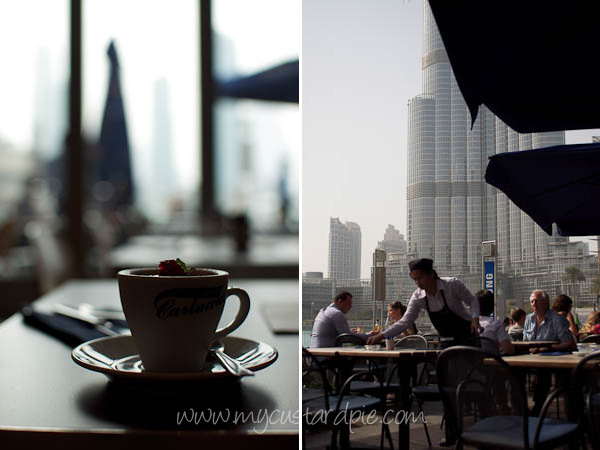
The stock for the risotto is home made and Alessandro roasts the chicken bones and onions in the oven to intensify the flavour and uses carnaroli rice (from the Maremma area near his home). All the filled pasta for the restaurant is freshly made by hand with flour from the South of Italy, and the dried pasta is also sent from Puglia. The risotto is made from scratch both in the restaurant and at Taste of Dubai (in many kitchens it is par-cooked and finished off); with the latter they make a large pot but will discard any remaining after an hour and make a new batch. Leaf gelatine is used for the panna cotta giving a lovely soft, silky texture (which is impossible with the powdered stuff). The gelato is made by a small Italian supplier in Dubai where it is made from local milk in a traditional way.
Of all the items on the menu, the risotto was my favourite – and for me the test of a good restaurant. The texture was creamy with depth of flavour and a tiny drizzle of olive oil flecked with rosemary which lifted it to ‘plate-scraping’ (and forgetting to take a photo) standards. The penne was created by Antonio Carluccio at the launch of the Ealing restaurant when they ran out of risotto. Using available ingredients he came up with the dish which is now the most popular on their menu in the UK.
The wines to be served at Taste of Dubai haven’t been announced yet so I thought it would be fun to give some wine matching ideas for this menu. Jameson Fink, expert wine writer, blogger and broadcaster (excellent podcasts called Wine without Worry) was kind enough to oblige. The prices are for the dishes at Taste of Dubai and in United Arab Emirate Dirhams.

Carluccio’s menu for Taste of Dubai 2013 with wine matching recommendations from Jameson Fink
Antipasti
Arancini Di Riso Sicilani – Crispy saffron risotto balls filled with melting mozzarella (AED 15)
Start out with some bubbles: a refreshing glass of Prosecco will be a nice contrast to the crispy fried exterior of the arancini and the salty cheese inside. I like the Adami Garbèl.
Secondi
Risotto al Limone con Pollo – Lemon chicken risotto (AED 20)
This dish seems tailor-made for an adventure in Italian white wine. Try Scarpetta’s Pinot Grigio from the Veneto. I am also a huge fan of Greco di Tufo or Fiano di Avellino from Mastroberardino in Campania. That should help you cover some ground in Italy. Actually, get all three.
Penne Giardiniera – Penne with courgette, chilli and deep fried spinach balls with Parmesan and garlic (AED 20)
You know I had to look up “courgette”? Now I feel like an idiot. But, on the plus side, I am now free to write “colour” and “flavour.” Which I love. Speaking of love, you know I can’t talk about wine without mentioning rosé. A well-chilled bottle would be the perfect partner for a dish full of strong-flavored chili and garlic. And rosé is a vegetable-loving wine. I’ve always liked the Maculan Costadolio. It’s not often you see a rosé made from 100% Merlot. Beautiful colour and flavour. (See what I did there?)
Dolci
Panna Vanilla – A delicious lemon and vanilla flavoured set cream with a raspberry coulis and fresh raspberries (AED 15)
I’m kind of torn between a Moscato d’Asti and a Brachetto d’Acqui. Both are fizzy, sweet, and low in alcohol. The former is like drinking a bowlful of peaches and pears. The latter, like drinking a bowlful of red berries. Get a bottle of each. I’m a fan of the Vietti Moscato and the Marenco Brachetto.
If none of these specific wines are available in your area, ask your friendly wine merchant to recommend a bottling of the same wine (Prosecco, Greco di Tufo, etc) from another producer. Cheers!
Gelati – Strawberry, chocolate and vanilla ice cream and lemon sorbet (2 x scoops AED 20)
More about Jameson:

Jameson Fink enjoying crisps (ok then potato chips) and white Burgundy
Eight years ago I moved from Chicago to Seattle to pursue all things wine in a full-time manner. I daydream about Champagne and popcorn together forever, and also enjoy watching Pawn Stars while drinking rosé.
Read Jameson’ s blog or download Wine Without Worry podcasts
In its sixth year, Taste of Dubai is one of the highlights of the foodie calendar in Dubai; there are more restaurants than ever this year and the usual smattering of celebrity chefs. I’m particularly interested in the Dine in the Dark concept by chef Andy Campbell which is a new innovation. It’ll be interesting to see how many restaurants bring something new and how many churn out the same menu (no more white tomato soup please Mr Rhodes). Bands are being flown in from the UK including The Noisettes. Local bands are there too – but not truly local food; organisers please take note.
See you by the risotto with a glass of wine….

Related articles
- Does Matching Food and Wine Really Matter? (heinkoegelenberg.typepad.com)
- A Recipe for Life? – Antonio Carluccio (mycustardpie.com)
- Taste of Dubai and gingerbread cake (mycustardpie.com)
- All in good taste? (mycustardpie.com)
Meat choices

Rare breed cattle in the Cotswolds, UK
Suddenly we’re all shocked that value burgers, lasagne and other processed food products in the UK have something other than beef in them. It’s 23 years since the BSE (bovine spongiform encephalopathy) scandal, when it suddenly came to our collective conciousness that perhaps cows didn’t live long and happy lives out in fields and eat grass. As a nation (and lets not pretend this wasn’t happening in other part of Europe but Brits are sticklers for upholding the law) we had become so disassociated from the way animals for food were reared that a whole industry, with its focus on delivering cheap meat to consumers and maximum profits to shareholders, that it was an enormous shock to most people that vegetarian cattle were being fed other species ground up in meal, to enable them to put on the pounds of lean protein we demanded. The age of innocence was over it seemed.
So, over two decades on, how has it now come to pass that our food chain is more obfuscated and opaque than ever and on the faces of all politicians and industry representatives there is the look of mock surprise? Genuine surprise, or a feeling of being completely let down is the response of many consumers, finger waving and moralising from others (often those with bigger budgets). As food writer Trish Deseine says:
For me, the collective, vicious circle of obsession, illusion and denial is well and truly exposed and exploded and there’s no going back. Read more here.
In these straightened times, when there is food in seeming abundance (so much so that millions of tons of it ends up in landfill), ordinary families are often faced with difficult choices.
Jules from Butcher, Baker blog sums it up:
Imagine this: you have a family to support, you work every hour under the sun to put food on the table. You can’t shop at the butchers as they are only open when you are at work (my local butcher only opens 10-3 Monday – Friday). You don’t own a car due to rising petrol prices so the supermarket a short walk away is only option. With the cost of domestic fuel rising dinner needs to be quick to cook, you can’t afford to have the oven on for an hour or two cooking a delicious home-cooked meal from a frugal yet tough piece of meat. At the supermarket you have a choice: 4 x £1 value lasagne that cooks quickly in the microwave or £6 worth of ingredients that means you are 90min away from a meal. You know you are compromising on taste and quality but remember food is now fuel.
Don’t believe the Daily Fail hype that people living like this don’t exist. They do. I work with children and families who are just like this. They are not scroungers or people wasting money on frivolous things like Sky and XBox, they are struggling to make ends meet let alone eat. Read more here.
Joanna Blythman makes this point:
The very essence of food processing is taking apart natural foods and reinventing them in a value-added form that is more lucrative for their makers. The horsemeat fiasco has merely provided us with a snapshot of just how under-policed, and liable to fraud and adulteration, manufactured ready meals and processed meat products really are. Read more here.
I don’t believe that providing people with safe, nourishing food should be left solely to the vagaries of market forces (voluntary pledges and commodity trading). The industrialisation of farming in agriculture and animals (including the failed promises and potential catastrophe of GM crops) and the pervasive spread of increasingly processed foods in the hands of fewer and more powerful corporations and retailers is one of the most sinister threats of our age. So what can we do?
Sarah Emily Duff, author of Tangerine and Cinnamon explains:
Over the past century, and particularly since the 1950s, the eating of animal protein has been democratised. Whereas before the 1900, more or less, only the middle and upper classes could afford to eat meat on any regular basis, from around the end of the Second World War, it has become increasingly the norm for all people to be able to buy cheap protein.
But the technologies – the hormone supplements, factory farming, selective breeding, the Green Revolution – which have allowed us all to eat more meat, have also proven to be unsustainable, and particularly in ecological terms. As a recent report published by the World Wildlife Foundation, Prime Cuts: Valuing the Meat we Eat, argues, it’s not simply the case that everyone – all over the world – should eat less meat for the sake of the environment, human health, animal welfare, biodiversity and other reasons, but that we should eat better meat: meat from animals reared sustainably. Read more here.
Like most consumers, I make difficult choices every day when shopping for food, with the added complication that I live in a country where most of it has to be imported. We eat meat once or twice a week, in small quantities and I do my best to ensure it comes from the best source possible (and budget permitting). Spinneys now label some of their beef as grass-fed, Prime Gourmet also sell grass-fed beef, plus they stock OBE organic beef (as does Carrefour). The OBE group unites family farms in the Channel Country of Australia, these cattle have been free-range for generations and they are left to graze on a range of 250 types of grasses, herbs and plants that grow naturally. I met with some of the people who run OBE a year ago and a planned short chat turned into over an hour where we talked about everything from the cows seeking out medicinal herbs when they were sick to the way they form family groups.
Some time ago I was given some of the meat to try. It comes in a range of cuts and is mid-price range (for Dubai). I cooked several meals and the meat tasted very good. I was going to give you a range of recipes and some nice pictures of the finished dishes (and will do in the future). But in the context of the last two weeks, I feel there are more important points to make. I don’t pretend that the whole answer is to just change our shopping habits, but it’s the only area where most of us have any impact.
Whenever we have the rare opportunity to talk direct to the producers of our meat direct let’s seize it. If we’d done more of this before, it might have helped shape a better future where we could rely on food to be safe and nutritious and not at the expense of animal welfare or our environment.
Wherever you live, what choices do you face and decision do you make about food provenance, meat in particular?
Postscript: Three new articles appeared just as I posted this. Very well worth a read:
Horse meat – The hardest thing to digest is that it’s your fault (The Making Progress Blues)
Meat-free every day (The English Can Cook aka Ms Marmite Lover)
‘everymeat’ bolognese (The Riverford blog)
How to eat by Nigella Lawson: review
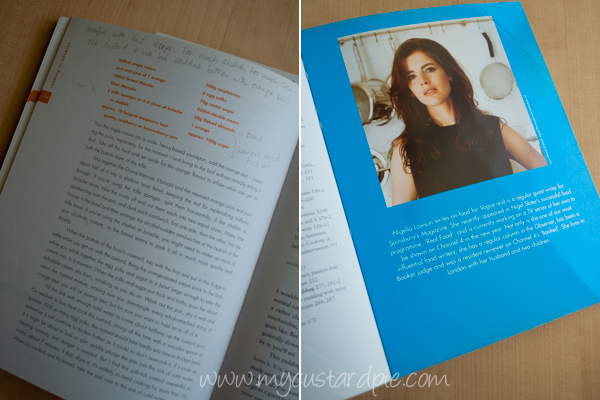
 How to eat. ‘With a knife and fork’ is my facetious reply to the title of this cook book by Nigella Lawson. The subtitle redeems it – The pleasures and principles of good food . This was the first book I owned by La Lawson and its pages are looking fairly battered now – always the sign of a well-used cookery book.
It is the epitome of the type of cook book you can read in bed as well as use in the kitchen. Never one to use one word when a rambling three sentences could be substituted, this is part instruction, part diary to all intents and purposes. I’d been warned off ‘Domestic Goddess‘ by friends and Amazon reviews – “the recipes don’t work” – but from day one How to eat struck a chord, probably because it reflected a similar time in my life as her own. Firmly ensconced on the toddler birthday party circuit, I understood how she could dedicate a page and a half to Marmite sandwiches. I had my own embryonic cookie cutter selection and a tradition of making gingerbread for every special occasion (where Nigella tended towards a lighter biscuit daubed with icing). Stuck on a compound in Saudi Arabia, dinner parties were a regular event and her menus provided inspiration, even if some were just pipe dreams (pork, alcohol and game in rather short supply). In tone, it managed to balance the feeling of great sophistication with being utterly down-to-earth (in retrospect neither are true).

Moving to Dubai in 2000, gave me the freedom to shop and cook more adventurously. I could jump in the car and drive to a choice of supermarkets rather than wait for KP to drive me to the closest, aiming to get there with enough time to shop between prayers. There was not much that couldn’t be found in Dubai; pork and alcohol all year round, with game available over Christmas. Cooking Nigella’s excellent pheasant casserole became an annual ritual.
Sometimes you need an aide memoire, rather than recipes and this book provided it for me. A good basic carbonara recipe for instance (no cream or parsley thank you), a really good beef stew (beef stew with anchovies and thyme), minestrone. The Irish Club’s Irish Stew is equally good for a mid-week supper or to serve for friends at dinner, with luscious, rich gravy and intense herbs (leaving out the pearl barley for KP). I’ve even made a vegetarian version with halloumi which my daughter adores.
Nigella captures moments that we can all relate to. ‘Before you’ve even taken your coat off, put the chocolate and butter in a bowl and suspend over a pan of simmering water’ she begins in her instructions for making gooey chocolate puddings for a mid-week, after work supper. Her analogies can be vivid; of Turkish Delight figs ‘the purple-blue fruits are cut to reveal the gaping red within, so that they sit in their bowl like plump little open-mouthed birds’. There are no pictures of the finished dishes in this book but with descriptions like that who needs them. The figs, slicked with a rosewater and orange blossom water scented syrup are good as a pud but also as breakfast with Greek yoghurt.
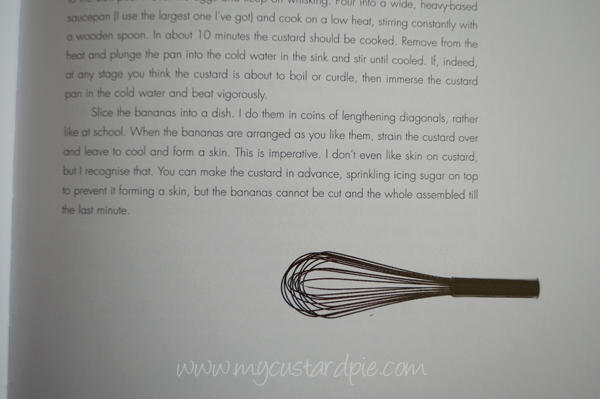
Other favourite recipes from How to eat are butterflied leg of lamb, stem ginger gingerbread and pheasant with gin and it. The section on pastry-making was really useful in a hot climate and the chapter on feeding babies and small children worth all Annabel Karmel‘s books put together. Less successful are Anna’s chickpea and pasta soup (bland and quite revolting) and trifle. KP has banned me from making any trifle recipe by Nigella due to the excessive amount of alcohol she recommends. Her famous ham in Coca-Cola first makes an appearance here, although I’ve never been tempted to try it.
While the book is a good reference to many basic recipes (sauces such as Béarnaise, making stock, a range of cakes) and tips for organising your larder and freezer, Nigella has never, in any of her books, even given lip service to considerations about budget. She cheerfully adds a whole bottle of Sauternes to a pudding for instance (Sauternes and lemon balm jelly), roast chicken is on the menu for a mid-week meal, grouse and pheasant part of the repertoire. She is meticulous in her directions in this book, explaining in great detail how the recipe fits into her life and alternative ways of making or serving. There is half a page on making breadcrumbs and includes information about the weight of one slice of bread or the equivalent in tablespoons. This is what makes the book so readable for me but the paragraphs of preamble prior to each recipe means it’s not the quickest book to navigate in a hurry. Nigella’s unbridled enthusiasm for food and cooking at the heart of family life jumps out of the starting blocks here which is why it made such an impact. I think it was her grown-up cookery tome before she indulged in a more frivolous future.
How to eat rarely leaves the shelf now except to refer to the favourite recipes above. However it’s the perfect reminder of a certain time in the life of our family and will never be donated to ‘K9 Friends‘ for that reason.

The Domestic Goddess (Photo credit: Smaku)
With more than one hundred cook books , I thought a series of quick reviews might be useful to see why they’ve earned their place on my shelves, in my kitchen and sometimes in my heart. This is the first – let me know what you think.
Related articles
- Forever Nigella #23 – Nostalgia (thebotanicalbaker.wordpress.com)
- Cook Book Challenge 3: Nigella Express (thehungrysparrow.wordpress.com)
Women and wine – part two
 ‘Women and wine‘ said the headline of the email. KP perked up. “It’s a wine event for women,” I explained and he looked a little crestfallen. Men have usually been at the helm when I’ve ventured out for a wine tasting but this looks like it could be changing if the last few events I attended are anything to go by. From visiting wine makers to wine professionals (top restaurants Table 9 and La Petite Maison both have female sommeliers) to a ‘Champagne socialist’ (more of that later), women are making their mark and grasping the bottle, in all parts of the world including Dubai.
Women and wine lunch – Mango Tree Dubai
There was a thrill of excitement and a lot of nattering as about twenty ladies filed into the private dining room of the Mango Tree. Isabelle Beau de Lomenie introduced herself. “I fell into a vat of Sauternes when I was a child and nearly drowned.” she explained in a thick French accent “I haven’t been able to stop drinking good wine since.” A new face on the wine scene in Dubai, she has experience of sharing her knowledge of wine, and flair for entertaining in some unlikely corners of the world including organising the first black tie event on the Great Wall of China. Isabelle who grew up in Bordeaux, manages her family owned vineyards in Graves and Sauternes from afar (her grapes contribute to the renowned Doisy Daene and Chateau Liot) while adapting to various international postings. Her experience in wine led to her involvement in the launch of Grace Vineyard in Shanghai province. She is also an expert in Thai cuisine after living in Thailand for many years.
The wines to match the modern Thai food menu had been sponsored and chosen by MMI who organised the event, so Isabelle shared her opinions of them as she tasted them with the food. She declared that the wines were extremely well-chosen to go with the spicy Thai food.


Riesling from two different parts of the world were first up together with a platter of mixed appetisers. We tasted a Tesch Unplugged Riesling from vineyards in Nahe, Germany which were transformed into “the Punk Rock winery” to quote Martin Tesch, owner and winemaker. This is a bone dry wine with concentrated green apple peel and lime on the nose, a hint of peach flavour mingled with citrus with refreshing acidity and good length. The intense minerals on the palate (they are still finding fossilised sharks’ teeth in the vineyard) meant this wine was particularly good with the seafood and the citrus complemented the Thai flavours well. Minerals dominated the second wine too, an Eden Valley Riesling by Peter Lehmann from Australia with crisp notes of citrus, lime peel and petrol on the nose. This was not quite as good with the food but perfect as an aperitif (or by the pool as Isabelle suggested), or to help with late night blog writing. Ahem.
Strong flavours were offered up in the main courses, chicken fillet with red curry sauce (Gaeng Ped Gai) steamed sea bass with garlic, fresh chilli and lime (Pia Kra Pong Nung), stir-fried mixed vegetables and two types of rice. We tested the mettle of three different wines to see how well they matched these spice-laden dishes.
I’ve met Louis Boutinet of Waterkloof a couple of times and there’s a romantic story behind setting up the vineyard along with a lot of passion in the winemaking particularly their dedication to bio dynamic agriculture. False Bay is their affordable range made by the same winemaking team supplied with fruit from neighbouring vineyards in the Cape, South Africa. Isabelle informed us that rosé has the ability to go with all sorts of foods especially spicy ones. There was the tiniest hint of spice, due to the Rhone grape varieties used, along with summer berry fruits in the False Bay Rosé.


I would never normally order red wine with Thai food so this was a good opportunity to sample two very different styles of Pinot Noir and I was already a fan of both the wines served.
Laforêt from Joseph Drouhin, is a well made and affordable way to sample the pleasures of Burgundy at an entry-level. Summer berry fruits as you would expect, raspberry, red currant and strawberry aromas with lots of fruit on the palate.
I spent a very pleasant evening with Ben Glover, the head winemaker of Wither Hills for fifteen years, who has helped to shape the style of the vineyard (he’s recently joined the Mud House wine group). Ben is down to earth, in the both metaphorical and literal sense; by this I mean he seems intensely in touch with the vineyard, its seasons and cycles. He also took time to talk to every single person in the room that night, crouching down by the side of their tables to speak to them directly. Anyway the end result of all that care and attention is a Pinot Noir that’s bright with cherries and bramble fruits, layered with some very subtle spice and vanilla notes.
Both wines worked well with the Thai flavours because of the fullness of the fruit without being heavy – so not to overwhelm the food – good balance and acidity. Choosing a favourite to drink with the Thai food was difficult but on balance the Wither Hills worked for me. I can’t find it in my notes but I’m pretty sure Isabelle preferred the French wine (in fact would stake money on it).
Things were getting lively and it was only early afternoon. I hate to compound stereotypes about female tastes in wine but there was an absolutely rapturous approval of the Stella Bella Pink Muscat which came with the fresh fruit dessert. I detected notes of Turkish Delight, Isabelle compared it to Kir Royale (to which there was a very loud ‘ooh la la’ from the other end of the table) and she explained that the low levels of 8.5% alcohol meant that you could drink more of it. Many took her at her word and there was soon a round of applause, quite rightly as she had done a fantastic job of guiding the tasting, and a suggestion that there should be a regular ladies wine tasting lunch i.e. weekly! Great Thai food and well matched wines – I could be persuaded.
Details of the Mango Tree Dubai here. To be informed of future events, subscribe to the MMI Grapevine mailing list here.


Boschendal
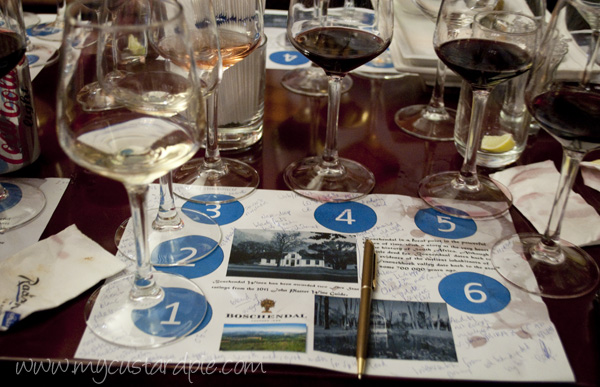
After living in Saudi Arabia for a couple of years, one of the highlights of a holiday in South Africa in 1997 was sitting in the beautiful grounds of the Boschendal Estate gazing at the surrounding mountain range and stunning scenery. I wasn’t drinking then (a newish baby in tow) so was glad to be able to taste some of the Boschendal wines at the Radisson Blu with wine maker Lizelle Gerber. Lizelle started with a bit about her background and sounded quite quiet and polite but she warmed up when she got to the wine where her wide knowledge was impressive and attention to detail with wine making evident. We sat at long tables, Dubai dwellers and some visitors interspersed which meant that the atmosphere was buzzing pretty quickly.
Wines from South Africa can vary enormously and I’ve learned to steer well clear of the lower priced, mass-produced Chenin Blancs, South Africa’s favourite white grape variety and Pinotages (a cross between Pinot Noir and Cinsault) its signature red. Exciting, well-made wines are coming out of South Africa however and I was interested to see where Boschendal fitted in. Lizelle guided us through six wines (retail price per bottle from MMI before tax indicated):


- Boschendal Classics Chenin Blanc (AED 41) A well-balanced, nuanced Chenin with slight floral and sweet melon on the nose, and tropical fruits tempered with nutty oatmeal on the palate. This would be a great match for Asian food and proved to me that all bottles of budget Chenin Blanc from South Africa are not created equal.
- Boschendal 1685 Sauvignon Blanc (AED 59) – This will keep SB fans happy; a spritz of lime and minerals with a whiff of the tropics.
- Boschendal Blanc De Noirs Rosé (AED 41) A refreshing acidity balances juicy berry fruits on the nose and palate. I tasted this again recently at a dinner the other night where it was paired brilliantly with a wagyu beef and black truffle tartare. A really versatile wine which I’m going to stock up on – perfect for Dubai drinking.
- Boschendal Lanoy Cabernet-Merlot (AED 41) Well structured and plummy this would be great mid-week with a beef casserole.
- Boschendal 1685 Shiraz-Cabernet (AED 74) The most complex of all the wines which might actually benefit from decanting to reveal all its fruit.
- Boschendal 1685 Shiraz (AED 74) A basket of black fruits with some tobacco and spice. Maybe a little too jammy. I’d like to taste this again.
During questions someone asked, “What should wine taste like?”. You can listen to Lizelle’s reply here:
The lighting was very poor which is what gives these pictures their liveliness – that’s all I’m saying! More about Boschendal wines here.


Champagne Jayne
I haven’t met a single woman (who drinks alcohol) who doesn’t like Champagne, but I’ve never met a single woman who likes Champagne as much as Champagne Jayne. I first met Jayne Powell when she kick-started Food Blogger Connect 2012 with a toast and a guided tasting of Moët Brut Imperial, Lanson Gold 2002 and Tarlant Rosé Brut Zero. She stopped in Dubai for a whirlwind visit including an opening toast for the Time Out Young Chef of the Year Awards with Piper Heidsieck. Jayne has been awarded the honour of “Dame Chevalier de L’Ordre des Coteaux”, named Champagne Educator of the Year 2012 by Harpers magazine and Winner of the Gourmand 2011 Best French Wine Book (Australia) Award for her book “Champagnes – Behind The Bubbles”; she spends her time between London and Sydney spreading her own brand of Champagne edutainment. Also an authority on James Bond, she is a self-styled Champagne socialist (a nickname given by the Financial Times) and believes that everyone should drink it. Hear hear. More about Champagne Jayne here.
On the topic of premium French sparkling, the Champagne house Duval-Leroy is female-owned and boasts a 42% female staff. According to Frances Bentley (a former employee) there is a deliberate policy to employ women in key positions such as chief finance officer, head winemaker and head of quality control. Carol Duval-Leroy believes that not only do women have the necessary experience and competencies, but that it makes for a very productive working environment where there is impeccable attention to detail.
Understanding wine can seem difficult and many people still feel daunted or apologetic when choosing, tasting or giving their opinion on wine. I certainly think there has been a gentler, more relaxed and intuitive feel to the tasting sessions I attended led by women. What do you think?
Related articles
- Women and wine (part one) – what to drink in 2013 (mycustardpie.com)
- Britain loves…. Mango Tree visit and Coronation chicken recipe (mycustardpie.com)
- Pinot-ish ramblings from the wrong side of the world (winekat.com)
Disclosure: I booked for women and wine but was then invited as a guest. I was a guest of Radisson Blu to the Boschendal event. All opinions are my own and I was under no obligation to either host.
Mysterious mornings
 Everything has taken on a new look during these misty mornings. Even in the early hours, the intense rays of the sun beat down on everything, little is hidden. The fog veils everything but makes colours glow. This broken dhow is a like beached whale stranded on the shore.
Women and wine (part one) – what to drink in 2013
 If your perception of a typical wine professional is a red-nosed, toffee-nosed, corduroy-jacketed man, think again. The wine industry, once almost exclusively a male preserve, has in the last couple of decades woken up to the fact that women are major buyers of wine, may be better at tasting than men (women have more tastebuds, a keen sense of smell and a higher proportion of supertasters) and like to drink the stuff too (and that’s not just maiden aunts quaffing sweet sherry).
The United Arab Emirates is often a bit behind the times, but it catches up with gusto. I’ve been meeting more and more women in working in the wine industry and hosting wine events here recently (more of this in part two) – and took my next tiny step in the world of wine myself with my WSET exams in 2012.
For a small place in the middle of the Persian Gulf, we have quite a good choice of wine available here in Dubai in the scheme of things – although tax and import duty has an effect on the prices. I’ll be very glad to see the back of the local obsession with Sauvignon Blanc and Pinot Grigio and just hope this happens in 2013. I’m looking for some more interesting wine producers, wine styles and grape varieties this year and asked four of my favourite female wine writers and experts (two based here in Dubai) what they are going to be drinking in 2013. They’ve come up with some informed, vibrant and eclectic recommendations that I’ve squirrelled away in my iphone for referral already.
What we’ll be drinking in 2013
 Kat Wiggins – Marketing Manager at Lay & Wheeler, Master of Wine student, twitter addict and blogger at The Wine Kat (where she writes about wine and shoes)
I think in 2013, I will be continuing my love affair with new world Chardonnay. At the fine wine end of the spectrum, there is extraordinary quality to be found in USA, Australia, NZ and South Africa. Current examples I have tucked away include Neudorf, Kumeu River, Ten Minutes by Tractor, Au Bon Climat and Chamonix. I am sure I will add to them – although I won’t be able to resist them for long either!
 Julia Harding – is a Master of Wine, award-winning wine writer, lecturer and wine mentor. She has been a wine buyer for the highly respected Waitrose wine-buying department, before becoming Jancis Robinson’s full-time researcher, co-ordinator and associate palate in 2005. She has contributed to the most recent editions of The Oxford Companion to Wine and The World Atlas of Wine, and has just finished researching and writing, with Jancis and with Dr José Vouillamoz, Wine Grapes: a complete guide to 1,380 varieties including their origins and flavours (Allen Lane/Ecco, Oct 2012) as well as playing a major role in maintaining the award-winning www.JancisRobinson.com.
What will I be drinking in 2013? Working on our recently published Wine Grapes (see www.winegrapes.org) over the last four years has constantly stimulated my thirst for wines from rare grape varieties, so I will continue to keep my eyes and ears open for those.
This week, for example, in preparation for a VinCE masterclass in Budapest in March, I retasted a varietal Shavkapito produced by Pheasant’s Tears in Georgia (probably about 10 ha in existence) and Walter Massa’s Timorasso (c 20 ha) from Tortona in north-west Italy. But that doesen’t mean that I will be giving up on fine German Riesling, most often off-dry and dry. There are many producers I admire but two of my favourites (if you judge by what is my mini cellar, ex coal hole under the stairs) are Klaus Peter Keller from Rheinhessen and Dönnhof from the Nahe (I could name others but they spring to mind first). Over the last couple of years I have also bought a small amount of St-Aubin from Pierre-Yves Colin-Morey – wonderfully precise wines.
Not that I only ever drink white wine, though on balance I probably drink more white than red. I hope I get a chance to drink some older red Burgundy and Bordeaux this year but also a peppering of Cabernet Franc, one of my favourite red varieties. On the whole, I like reds that are fresh and have a bit of a bite to them, like Frappato from Sicily or Vinhão from Vinho Verde country in northern Portugal or high-quality Valpolicella from the Veneto. I almost forgot to mention the northern Rhône, and Nebbiolo from Piemonte – it is just impossible to narrow it down!
My recent foray into Portugal for my top 50 has also inspired me about wines, especially white, from that country.I cannot leave out sherry and madeira, both of which I relish on the right occasion. I buy as much sherry from the Equipo Navazos as I can afford and reasonably drink and Barbeito is probably one of my favourite madeira producers right now. Port is less common for me but I hope I get a chance to drink more of Dirk Niepoort‘s fabulous colheitas and tawnies.To be completely honest though, most of what I will be drinking in 2013 is currently unknown to me, and I am very happy about that. I love trying wines I have never come across before – new producers, new regions, new grape varieties – for me that is part of the endless fascination and pleasure of wine.
 Sarah Walton – food, wine and travel blogger at The Hedonsita who, in her wine-related past, has studied wine in Australia, been a sommelier, written a wine magazine, been a wine sales rep and had a wine website with cellar management and online sales. Her frank and open approach to wine banishes mystery and wine snobbery.
First, I’m going to drink a selection of 2010 white burgundies and Chablis. I’m going to stick to Rullys in the main, because I can afford them better than the Meursaults. I’ll have the odd stab at some 2010 Chablis, but these will probably be better in the long term rather than the short, and there’s no point in keeping anything for more than a few months in this climate unless you’ve got a serious wine storage facility. I’ve already had some pearlers from the Mâconnais, despite reports that they are variable because of some summer hail. Red Burgundies are also going to be great from 2010, better probably than the white, but like the Chablis, they are probably going to be better in a couple of years.
Next, I am going to attack a whole stack of 2010 Mornington Peninsular Chardonnays (Australia) with gusto. Pretty good year despite a bit of humidity, and drinking beautifully right now. Of course, practically nothing from the region is available in Dubai, so I’m going to have to bring some treasures back from Australia each time I visit.
Next, I’m going to throw myself towards Spain. Not for any particular vintage (although 2010 seems to be a good one to stick with again), but for the region, because I’m going to be in Cataluña later this year, and I want to be informed when I jump in the car to cellar door hopping. I’m going to veer towards Priorat reds (2009 or 2005 they say) and Rias Baixas for the whites because I adore Albariño, and maybe some Godello from Valdeorras because I hear it’s very nice. Have no idea if I can find it locally though. And then, of course, Cava. Bubbles always require further examination.
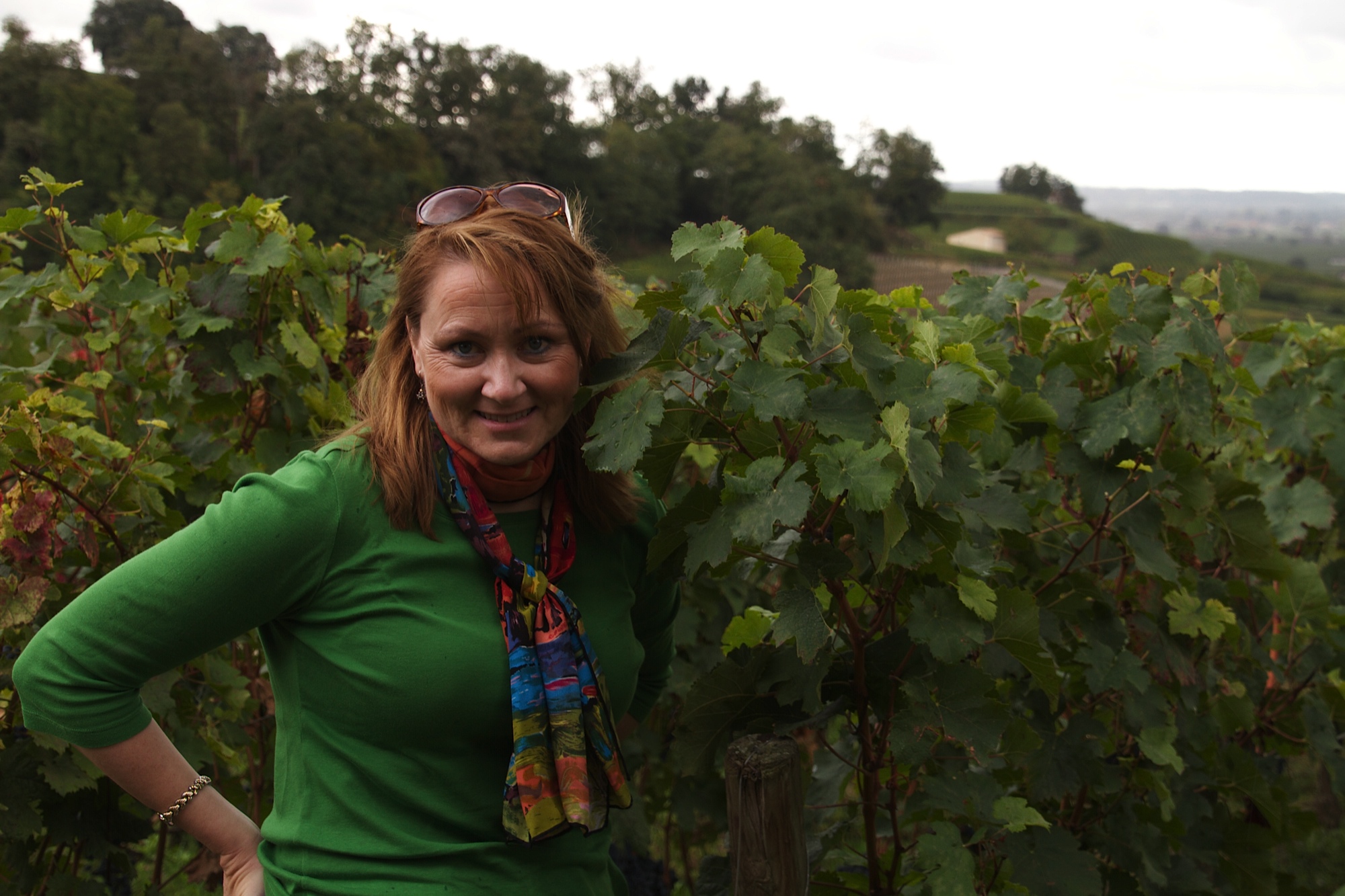
St. Emilion, France Chateau La Clotte the day before 2012 fall harvest
Catherine Watkins – is a Certified Sommelier with The Court of Master Sommeliers in London, a member of the Guild of Sommeliers in Napa, California and gained her WSET Advanced Award (with distinction) to name a few. She co-hosts both the Dubai and Abu Dhabi Wine Club monthly wine tastings in addition to serving as the Sommelier to the International Wine & Food Society of Dubai. Sommelier services available upon request.
Here’s what I’m drinking now and looking forward to enjoying in the months to come:
Budget-savvy white wine for now is Gazela 2011 Vinho Verde from Portugal. Delicious, crisp and slightly petulant in the glass. Good with light salads or seafood.
Budget Go-To red currently is from Catena in Argentina. With Nicolas Catena recently awarded wine maker of the year in 2012 by Wine Spectator his brand is getting it’s “due” and for good reason. The 2010 Alamos Cabernet Sauvignon is rich, fruit laden and perfect on a cool winter evening with red meats. At under 40AED ( from A+E) a bottle it’s a steal.
A mid-priced red I’m still loving, that has recently gotten high praise in the wine press, is the Clos de L’Oratoire des Papes Chateauneuf-du-Pape 2010 (from MMI). A good match with lamb or charcuterie or hard salty cheeses.Looking forward to seeing the 2013 southern hemisphere harvest results and what delicious wines they produce from the non-aged category of Sauvignon Blanc and other light whites.
I recommend anyone holding and aging their ’05, ’09 & ’10 Bordeaux to be patient and let them develop-10 years time is the best to begin the drinking window. By all means enjoy your ’00’s now and into the future. Many will drink well 30+ years on.
The cocktail scene is lightening up as well with bartenders beginning to branch out from their recent crush on “Brown” spirits (Rye, and blended whisky) in cocktails. Look for creativity with eau de vie, liqueurs and unusual blends with fruit juices and aromatic spices. Not sure we’ll be ordering these anywhere except the top bars with the best mixologists in town but keep your eyes and taste buds open for something fresh in the spring as this trend makes it’s way around the globe.
Massive thanks to my generous contributors. I’ve discovered some wonderful wines in the company of Sarah and Catherine here in Dubai and have a few bottles of some rather nice wine tucked away in the UK due to the help of Kat and the team from Lay & Wheeler. Thanks to Julia for taking time away from Jancis Robinson’s purple pages which I subscribe to and provides some of the most intelligent wine writing available. Wine Grapes should be on the wish list of anyone who wants to know about wine (it’s on mine).
In 2013 I’ll be trying to stem the tide of astringent Sauvignon Blanc by serving Riesling, Grüner Veltliner (particularly Charming) and Torrentes at home. There are some particularly nice examples of the latter around, many produced sustainably or even organically. I’m also planning to take in some wine on my travels – with Georgia and Portugal both on my radar. Hoping that 2013 will be a better year for English winemakers too. Sharpham deserves another visit and I plan to sample Camel Valley wines in situ, with a short detour to some West Country cider makers.

A few tasting highlights from 2012
Wine blogs I like, written by women (in no particular order):
The Wine Detective – Sarah Ahmed; independent, award-winning wine writer and communicator
The Wine Kat – Musings on fine wine, fine food and, occasionally, fine shoes
The Wine Sleuth – A Californian in London; wine, food and travel
Wine and the City – The Drinks Business Magazine journalist with a passion for wine, food and travel
Wine blog – juicy tales by Joan Diaz
Sip Swoosh Spit – a passion for wine from how it’s made to how it tastes
Miss Bouquet – nose good wine
Wine Passionista – your enthusiastic guide to helping you choose, discover and enjoy every glass
Matching food and wine – Fiona Beckett: food and wine pairing made easy
What are you planning to drink in 2013? Please share your recommendations in the comments.
Rosemary and date syrup bread – a clean slate
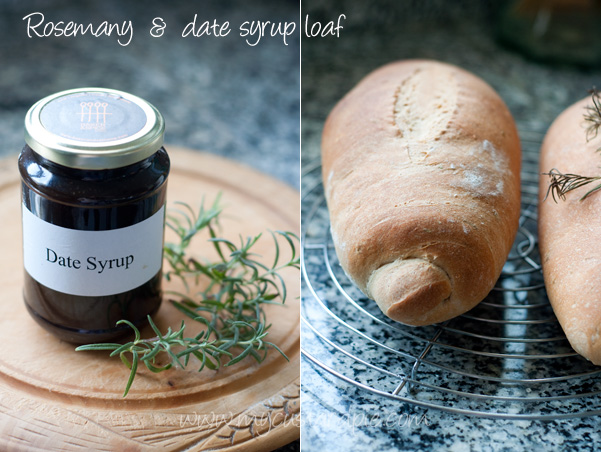 “There’s absolutely no food in this house.” This statement, usually delivered with a dramatic sweep of the arm and a pointed stare at me, is uttered now and again by my teens. This is despite rather strong evidence to the contrary (full cupboards, a packed fridge). What they mean is that there is no food in the house that they’d like to eat right at this particular moment. After weeks with the house full of visitors, we are out of routine so when this was last uttered I directed them to a notepad and pen so they could add their essential staples to the shopping list. But bread was one item that I refused to buy. New year, clean slate time – it’s back to home-made.
The silence of the kitchen when everyone is out at school and work; the joy of working from home so I can pop down from my office after each stage of proving; the pleasure of welcoming the teens home after a hard day with a loaf still warm from the oven. Oh bread-making how I’ve missed you.
Whole wheat would wait for another day, but the astringency of rosemary is completely in tune with a simpler diet after the excess of the last few weeks.


I piled flour and salt on the counter, mixed yeast and date syrup into water barely warm from the kettle and poured it into the mound to make a mini-lake. Drawing the flour from the edges little by little with a fork to form a thick swamp, I then swapped to my dough scraper to fold in the edges to make a shaggy pile. Plastic scrapers are all the rage but I love the smooth, wooden handle of mine. Finely chopped rosemary was added as I stretched and folded with rhythmic kneading, the silky dough becoming speckled and smooth. After proving, shaping and rising again, I slashed the top, lay a branch of rosemary on one loaf and slid them into the oven. Several squirts from my water spray into the heat pierced the calm with intense hissing.
The teens ate slices spread with butter. Inspired by the Grana Padano pairing with honey at Cucina Caldesi I added a slice of Parmesan and more date syrup (a good quality one from Baker and Spice). Anything makes a great sandwich with this bread but you could use Brie and grapes, cold lamb and redcurrant jelly, chicken with salad in a lemon oil dressing or thinly sliced smoked pork with slices of apple.
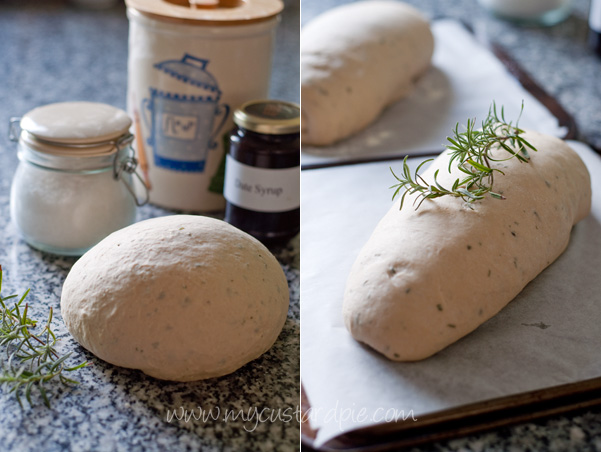
I’m joining in with the Twelve Loaves theme of a clean slate this month. Cake Duchess has the details and lots of other bread baking inspiration. Go on, join us – make a loaf today.
Rosemary and date syrup bread
Ingredients (I doubled this and made two loaves)
- 10g active dried yeast
- 15g date (or maple) syrup
- just over 300ml water, heated until tepid or blood temperature
- 500 g strong white bread flour
- 12g sea salt (or to taste)
- 1 tablespoon (or more to taste) finely chopped fresh rosemary
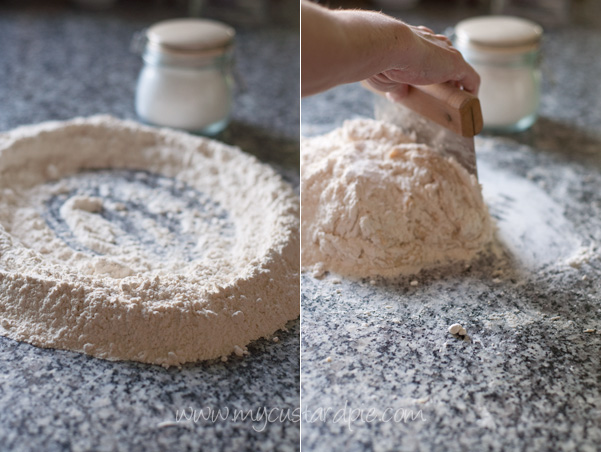
- Put the flour and salt in a pile on the work surface (clean with enough room to move) and make a very large flat well in the centre, keeping a wall of flour round the edge.
- Dissolve the yeast with the date syrup in the tepid water, mix with a fork and pour the liquid into the well.
- Use the fork to incorporate some flour from the edges of the well, a little at a time.
- When the consistency of the liquid centre is quite thick (i.e. won’t run all over the surface) switch to a dough scraper and fold the outside edges into the middle. Keep doing this until you have a shaggy pile of mixture in the middle. If the dough is too dry add a little more water. Do not use more flour though – it shouldn’t stick and you can scrape everything up with the dough scraper.
- Make a dip in the top of the dough and add the chopped rosemary. Fold the dough over it and start to knead gently; continue for about 10 minutes until a smooth, elastic ball of dough is formed.
- Put the dough in a large bowl covered with cling film or a cloth and leave to double in size (about an hour).
- If you have made double the amount this is the time to cut the dough in half. Shape your loaf by flattening it gently into a round (like a thick pizza) then rolling it up. Place it on an upside down baking tray lined with baking paper, seam side down. Leave to rise again so it doubles in size (45 minutes to 1 hour). Meanwhile heat the oven to 200 C with a baking tray or baking stone inside.
- Slide the loaf gently onto the heated baking tray or stone – I keep it on the baking paper and find this helps. Give several vigorous squirts from a water bottle into the oven and shut the door. Turn the heat down to 180 C. Repeat the squirting after 15 minutes.
- Remove from the oven after about 25 minutes, when golden with a crisp crust. Cool on a rack.
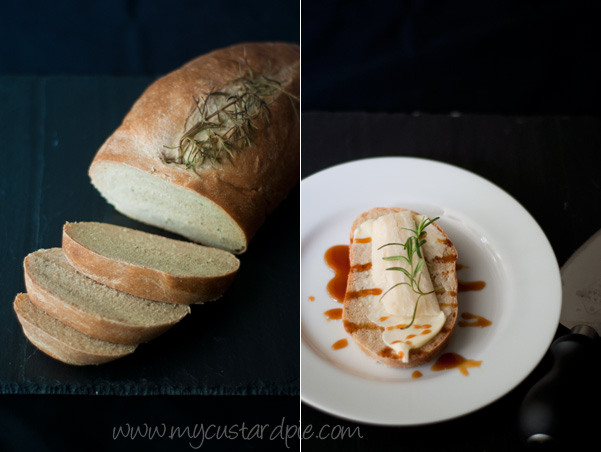
What are you are going to make (or eat) as part of a clean slate at the start of the year?
Taste the difference: black and white truffles
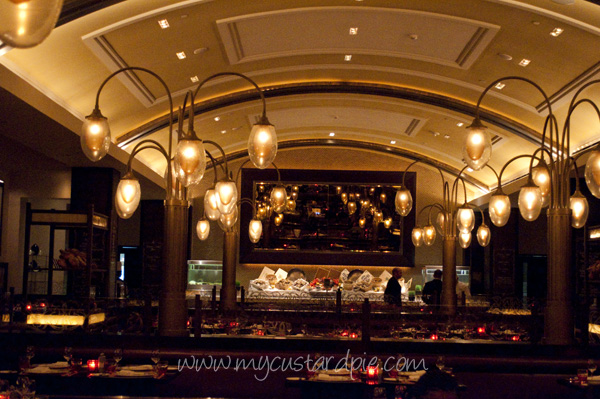 There’s no love lost between the English and the French…but this rivalry doesn’t seem to extend to food. Perhaps English food is beneath the gaze of the Gallic nation; and the British attitude to food tends to be as an adjunct to our lives rather than an all-encompassing central focus.
However antipathy between the French and the Italians comes to head when food is on the agenda. Ask a countryman of either nation about a shared ingredient or classic dish of the other and the reaction will usually be something along the line of ‘what do they know’ accompanied by the throwing up of hands or the shrugging of shoulders. With many prized ingredients and dishes in common (e.g. minestrone topped with pesto, soup a la pistou) and a passion for tradition and authenticity perhaps the similarities are just too close for comfort.
Truffles are a prime example. The Italians head out into the forests during October and November with dogs to seek out the white truffle (Tuber magnatum) and truffle fairs are held where prices for this knobbly fungi are legendary. The French use pigs to root up black truffles (Tuber melanosporum) the best specimens are reputedly from the Perigord (not to be confused with the summer or burgundy truffle – Tuber aestivum/uncinatum). Do the English have truffles? Yes, they grow on our Isles but only the most dedicated forager ever samples their delights.
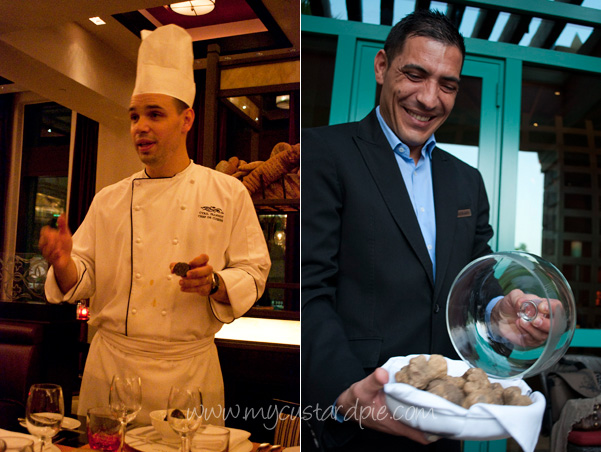
Chef Cyril talks about black truffles from the Perigord at Rostang; white truffles at Ronda Locatelli
I’ll admit to a strong bias, having sampled the new season truffle menu many times at Ronda Locatelli at Atlantis, I had been totally seduced by the simple dishes (from risotto to pasta) which showcase the musky attractions of the white truffle. I was interested to step across the corridor into Rostang for a chance to try new season French black truffles flown in from the Perigord.
Michel Rostang gained fame and his first Michelin partly due to his creation of the black truffle sandwich. This was the first thing we tried at a dinner held to showcase a special new season truffle menu. Chef Cyril Jeannot brought round the sandwich wrapped in cling film in its raw state. For the flavour of the filling to permeate the butter and bread, it is kept in the fridge for three days. It amused me to see us all sniffing a sandwich, like a bizarre dining ritual.
A black truffle was also passed around. At first I was surprised at how weak the scent was compared to fresh white truffles. But after holding for a few moments I suddenly smelled a strong but elusive porcine aroma giving way to a much more complex layer of scents. It was like the forest floor with hints of green herbs, moss and earth.
Simple carbohydrates and fats are the perfect foil for truffle flavours; would anything on this menu live up to Giorgio Locatelli’s truffle risotto or raviolo uovo with a shaving of truffle? The butter from the sandwich had melted into the toasted bread, it was like elements of a luxurious fried breakfast. I tried to be restrained but finished the lot.

Sandwich a la truffe fraiche par Michel Rostang and a foie gras and leek terrine with truffle
Next was la terrine de foie gras, poireaux truffes; You’d expect the foie gras to be the star wouldn’t you, but it was the soft, buttery leeks that won the day. A puree of artichoke was lovely although it revealed why French cuisine is often not vegetarian-friendly – there was foie gras in the purée! They were lovely flavours but quite rich and salty after the other things we’d tasted. Finally we had a choice of chicken roasted with black truffles under the skin or sea bass. Although the chicken choosers raved about the sauce (which was really good) I was delighted with my fish dish as it was the closest to that ambrosial carbo-truffle combination that takes you away from the table and off into heavenly clouds of sensory enjoyment. The beautifully cooked sea bass fillet was accompanied by a little mound of creamy, buttery mashed potato flecked with black truffle.
Dessert and truffles are a bit contrived to me, I’d rather have a savoury dish however glorious Locatelli’s truffle zabaglioni is. A simple baked apple with almonds and black truffle was an unexpected treat. The apple, an old, traditional, French variety called Reinette Clochard (I refuse to use the word heirloom here), quite similar to a Russet in taste and texture, a drop of creme fraiche or cream would have been my only addition.
So I’ll get off the fence now. In the black versus white truffle head to head which was my favourite? Whether it’s the Italian seduction technique or the indefinable muskiness of the taste and scent of the white truffle, the tartufo bianco remains in pole position for me.
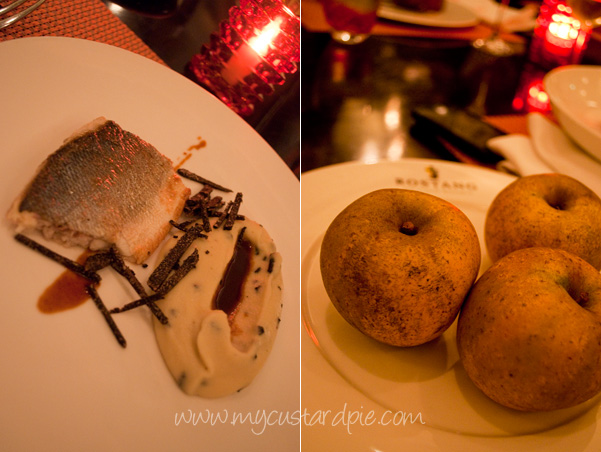
Sea bass and gorgeous mashed potatoes with truffle. The apples before they were baked.
A fresh, white truffle has a compelling aroma that makes you want to inhale deeply, somewhere between a chamois leather and the rind of a ripe brie but with the delicacy of a spring flower. The flavours give a nod to the mushroom but in umami-ness, earthy and nuttiness. The appeal is so irresistible that a friend of mine was compelled to eat dirt when in Piedmont (completely understandable). However the black truffle had different qualities which make it a very special gastronomic experience. With the Italian season over, I’m quite happy to move over the border.
You can taste this menu yourself as part of Truffes Janvier 2013 at Rostang from Thursday 17th – Sunday 20th January, 2013. On Friday 18th January, 2013 Celebrity chef Michel Rostang himself will host a special dinner where every dish features the tasty truffle. Diners will be offered a rare chance to mingle with the culinary star. More info here
So to borrow a line from Michael Jackson, ‘It don’t matter if you’re black or white”…unless you’re a truffle.
What’s your experience of truffles? Love them, hate them or think they are over-rated? Have you tried (or foraged for) an English truffle? Or in other parts of the world? Or never tried them (truffle oil which generally contains no truffle at all does not count!)?
Related articles
- French truffle thieves face military threat (guardian.co.uk)
- Precious White Truffles (edinburghfoody.com)
- IHT Rendezvous: The Trouble With Truffles (rendezvous.blogs.nytimes.com)
- English truffles; where to find them (guardian.co.uk)
- Eating white truffle with Giorgio Locatelli (mycustardpie.com)
- Truffle, risotto and the perfect pasta from Giorgio Locatelli (mycustardpie.com)
- On moderation and militants (mycustardpie.com)
- The truffle hunter and his dog (lifeinthefoodlane.com)








 My Custard Pie