Beetroot and walnut muffins
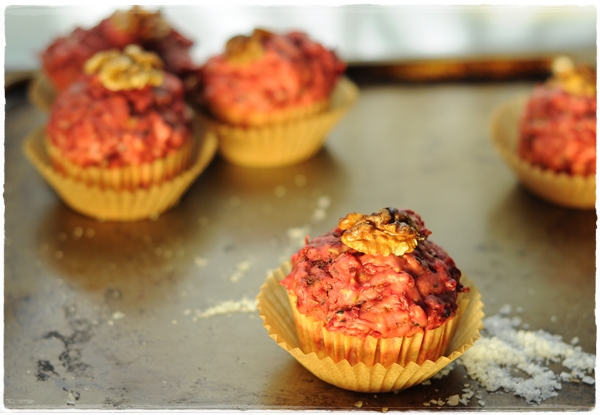 Which ingredients will you always find in your kitchen? Essentials for me include lemons, onion, garlic, black pepper, tinned tomatoes, parmesan and pasta. If these are in the larder, I’m happy and can rustle up a meal or three. Top of KP’s list would be pickled beetroot. We always have a jar in the fridge which he reaches for as soon as he gets in from work. It’s precisely that version of beetroot which has put many people off it forever and this beautiful sweet, earthy root has so many better uses than being dunked in vinegar. Just look at the fabulous variety of recipes from Scandinavia.
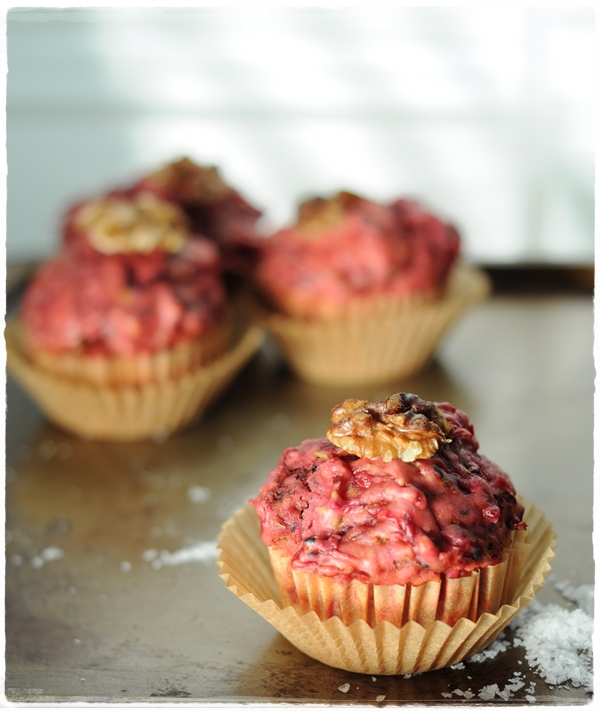
When a muffin recipe using courgette and sesame seeds landed in my in-box I remembered the unkept promise I’d made to myself when I baked courgette cluster bread, to make a beetroot version. The muffin recipe got the purple root treatment instead, with some walnuts to off-set the sweetness. The vibrant pink colour intensified by cooking was quite shocking but the taste was moreish. They became darker pink as they cooled and would make a good breakfast or mid-morning muffin. Like sour cream with barszcz, a creamy taste goes well so I might fold in some feta or soft goat’s cheese next time I make them.
Ten uses for beetroot:
- Juice it – put one small beetroot, two apples and a stick of celery through the juicer (always dilute beetroot juice with other vegetables due to its strength).
- Make salad of equal amounts of grated carrots, grated beetroot tossed with some chopped parsley in a mustard-based vinaigrette.
- Roast whole and unpeeled (200 C for about 45 mins) with a couple of sprigs of fresh thyme, olive oil and sea salt.
- A bright pink beetroot dip can be made by softening some chopped beetroot in butter then adding a splash of balsamic vinegar and water and steaming with the lid on for a further 10 minutes. Blitz with a pinch of brown sugar, seasoning and ground cumin then stir in some creme fraiche.
- As a side dish: toss some apple slices, sautéed in butter, with warm, cooked beetroot, add a dash of creamed horseradish and a squeeze of lemon to the pan juices, combine and garnish with chives.
- Beetroot soup (barszcz) is quick to make, warming, and beautiful to look at.
- Use the tender leaves from summer beetroot in salad.
- Beetroot bruschetta – diced cooked beetroot on slices of sour dough with melted Brie on top.
- As an ingredient in chocolate cake (just think how moist carrot cake is). Here’s a nice gluten-free recipe.
- Beetroot chutney. Simmer 750g diced raw beetroot, 2 small, chopped onions, 1 1/2 grated apple, zest and juice of a large orange, a tablespoon each of mustard and coriander seeds, with 400 ml white wine vinegar, 300 ml balsamic vinegar and 350 g light brown sugar for about an hour (until thickened). Pour into sterilised jars.
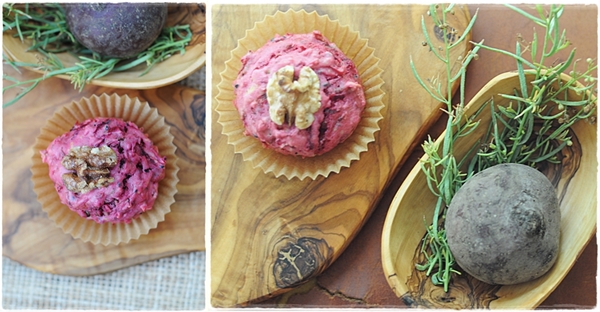
Beetroot and walnut muffins
Makes 12 muffins
Ingredients:
300g beetroot, finely grated (about 4-5 small beetroot)
320g plain flour (or 220g plain with 100g rye flour for a deeper flavour)
1 tablespoon baking powder
1/8 teaspoon salt
freshly ground black pepper
40 g chopped walnuts plus 12 whole ones
1/2 level teaspoon dried thyme or 1 teaspoon of chopped fresh thyme
2 large eggs
240 ml buttermilk*
90 ml sunflower oil or melted butter
*If you can’t get buttermilk where you live (e.g. Dubai) you can make a substitute. Here’s a good guide by Chef and Steward.
Alternatives: Replace about 50g of the beetroot with sultanas or grated dessert apple for a sweeter taste or crumbled feta for a creamy one.
Method:
Preheat the oven to 200C. Grease a 12 cup muffin pan or line it with paper liners.
Lightly beat the eggs together in a bowl, then beat in the buttermilk and oil. In a large bowl, sift together the flour, baking powder, salt and pepper. Stir in the grated beetroot, thyme and chopped walnuts.
Make a well in the centre of the mixture and add the liquid ingredients. Stir gently until just combined; don’t over-stir, a lumpy batter is best for muffins.
Spoon the batter into prepared muffin pan (I recommend an ice-cream scoop for this) and place a walnut on the top of each one. Bake in the centre of the oven for about 20 minutes. Cool in the pan before serving. Best eaten on the same day of baking (they freeze well though).
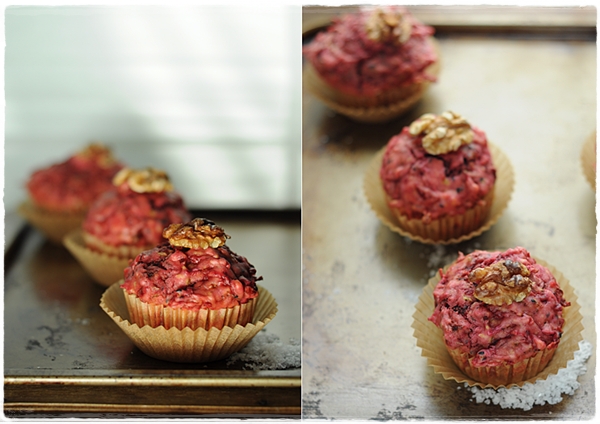
I’ve baked these for Muffin Monday, a great idea by Baker Street. She describes it as “a culinary journey of sharing a wickedly delicious muffin recipe every week” ; drop her a line if you’d like to join her. Beetroot is in season, so what are you waiting for? For further inspiration pop over to Simple and in Season over at Fabulicious food.
I’d love to know which ingredients you can’t live without. And are you a beetroot-a-phile or phobic?
Roquefort and pear fougasse
 The first time I ever left England’s shores was in my late teens and I went on my first proper holiday with friends to the island of Menorca. We stayed in the lovely holiday home of my friend’s Mum’s friend and spent the days lying on the wide sandy beach and the evenings eating the gorgeous food that was cooked for us. I thought I’d reached paradise as for me, a beach meant Weston-super-Mare. The local gin made to an old English recipe and the slightly mad fiestas helped too.
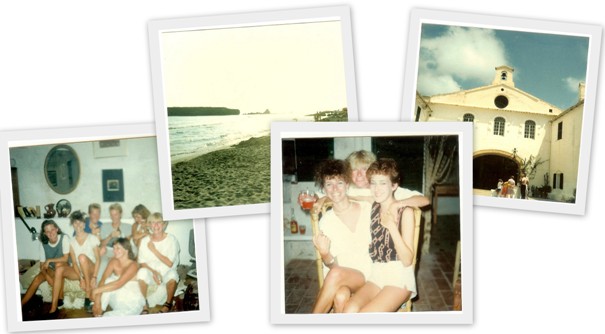
One evening we went out to a smart restaurant (very different to the tavernas in the village of Santo Thomas) run by an ex-monk; that’s all I can remember about it. Well not quite all, I remember the starter like it was yesterday (rather than decades ago) – a perfectly ripe pear in a Roquefort sauce. I’ve loved that flavour combination ever since.
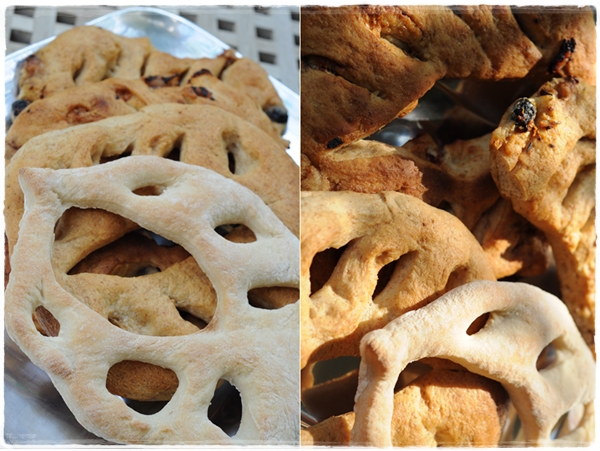
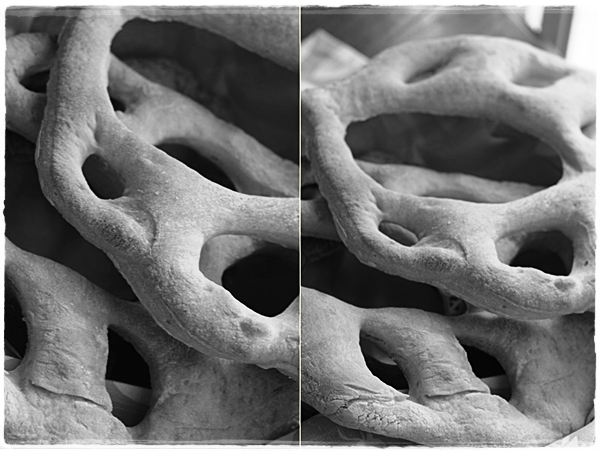
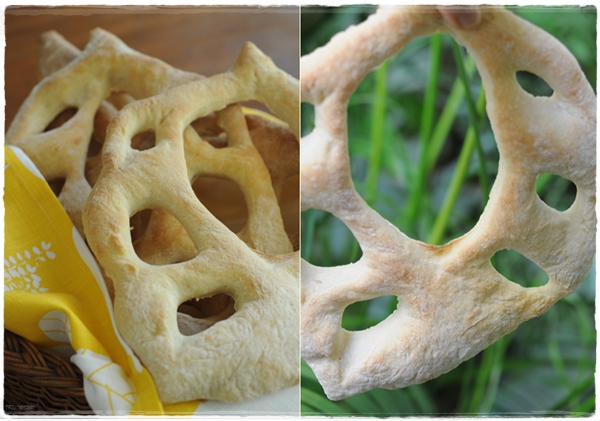
Fougasse is a French relation of focaccia, sometimes stuffed with cheese and olives, sometimes plain, usually slashed in places so it cooks quickly and this makes it look like a bit like a Celtic rune or a cheese plant leaf.
For this month’s Fresh From the Oven challenge, set by Claire from Purely Food, I decided to make a simple version and the most complex I could find. The simplest recipe (inspired by Richard Bertinet and Lorraine Pascale) used very wet dough with cuts in it. The more time-consuming was from Dan Lepard.
I adapted both recipes but as expected the first was simple and quick to make – more like French stick in a pretty shape and the second took the best part of the morning, on and off.
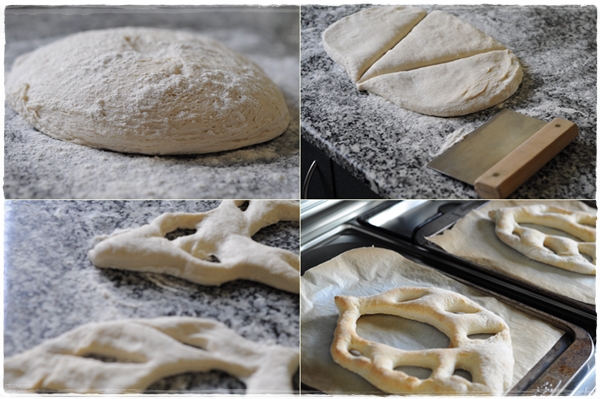
Making the simple recipe
The first version was made with strong plain flour, water, yeast and salt and the teens fell upon in when they came in from school. It was a show stopper. I divided the second dough into three and added sun-dried tomatoes, black olives and mozzarella to one and Roquefort and poached pear. The texture of these loaves was much more like focaccia and almost a meal in themselves. Fresh pear rather than poached would have probably worked better but the flavours were perfect. I would make it again as an alternative to focaccia.
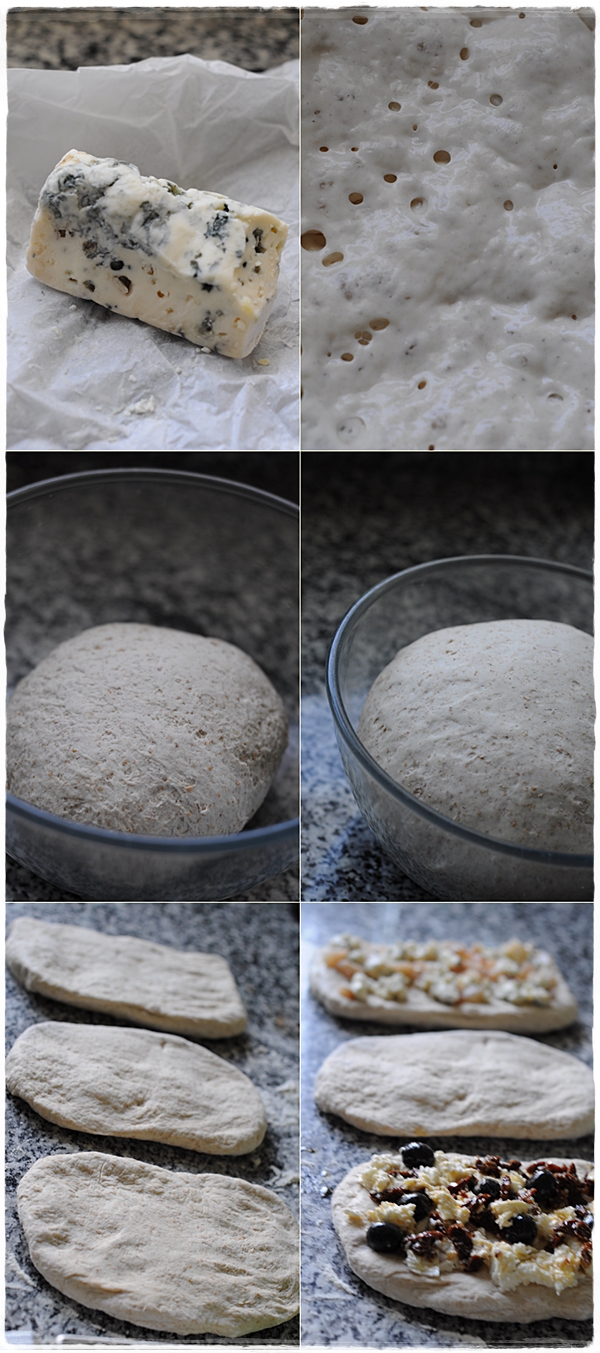
The sponge method - fougasse
Fougasse
Makes 3 Fougasse
Ingredients
500g strong bread flour
350ml tepid water
5g dried active yeast
10g sea salt
Olive oil (optional)
Method
- Preheat your oven to its highest setting (around 240 C).
- Put the flour and sea salt into the bowl of a mixer or food processor with a dough hook. Measure the tepid (lukewarm or blood temperature) water into a jug and add the yeast. Whisk with a fork until combined and foamy. Add the water mixture to the flour and knead slowly for 10 minutes (you can also do this by hand). The dough is ready when it is smooth and not sticky.
- Lightly flour the work surface, place the dough on the flour and form the dough into a ball. Put the dough into a clean large bowl and cover with a tea towel or cling film.
- Leave the dough to rise for at least one hour. Turn out gently onto a well-floured surface; let it spread across the work surface. Sprinkle some flour over the top of the dough and cover with a clean tea towel. Leave for about 5 minutes.
- Use a sharp knife or dough scraper to cut the rectangle of dough into three triangles (by cutting in a V-shape). With the point of the triangle at the top, make a slash down the middle. Make three smaller diagonal cuts on each side of the one in the centre. Gently ease open and enlarge the holes with your fingers. Drizzle a little olive oil over the surface of each loaf if you like.
- Gently lift onto a baking tray lined with baking parchment. Bake for 10 to 12 minutes until golden brown.
You can find the second fougasse recipe in Exceptional Breads by Dan Lepard and Richard Whittington (or online here). I used wholewheat flour instead of rye and cut the dough into three prior to adding the fillings. I put 70g Roquefort with 50g pear into one piece and 60g mozzarella, 40 g sun-dried tomatoes and a small handful of black olives. Be very gentle when you fold the dough to incorporate these ingredients.
Do pop over to the Fresh From the Oven site in a few days to see what everyone else came up with. The Well Seasoned Cook Black and White Wednesdays is a fabulous collection of monochrome food shots and well worth a visit.
Which flavours have your holidays inspired?
Cake seventh heaven
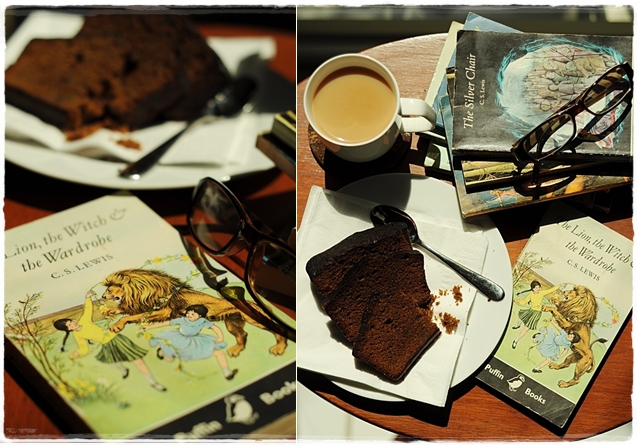
And then she saw that there was a light ahead of her; not a few inches away where the back of the wardrobe ought to have been, but a long way off. Something cold and soft was falling on her.
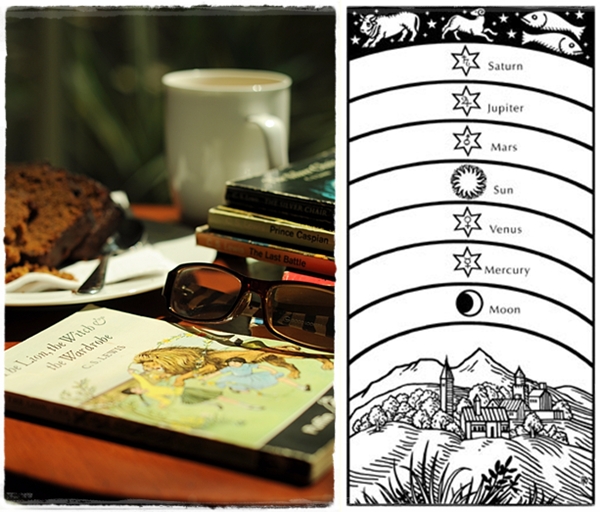
That sentence was the beginning of my journey into Narnia and, as a seven-year old, I was totally spellbound. I revisited many, many times over the years via the Chronicles of Narnia, seeing it through my own eyes then again with my children. Planet Narnia, a book and documentary linking the books to the imagery of the seven heavens gave me a different viewpoint with jovial Jupiter, its cheerful, festive, tranquil and magnanimous astrological attributes embodied by The Lion, The Witch and The Wardrobe (and giving context to the Jupiter movement from Gustav Holst’s The Planet Suite which I adore).
A new chapter
On July 26th 2010 someone visited My Custard Pie and left this comment:
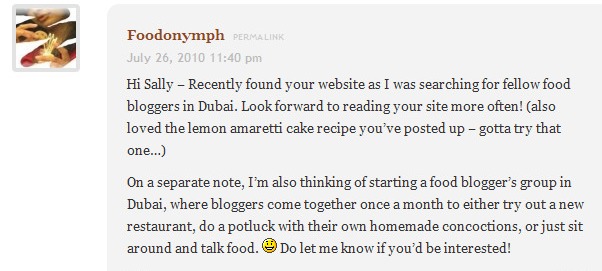
My fingers flew over the keyboard as I dashed off an enthusiastic reply. The same sort of thoughts had been going through my own mind for a while. I returned to Dubai and suggested we meet at BakefestDXB, a ‘tweet-up’ at Wild Peeta (a tweet-up is where people who have only previous communicated via Twitter meet up in reality). Nerves overtook me and I sat outside in the car for about 10 minutes before plucking up the courage before going in to face a room of complete strangers (psychopaths? weirdos? teenagers?!).
I opened the door and went inside. This was my Narnia moment, like entering the wardrobe and discovering another world. For fawns, dwarves, eagles, lions and a lot of snow substitute an eclectic group of generous people energised by Miss I Live in a Frying Pan (previously known as Foodonymph!) and lots of icing. I haven’t looked back since.
Celebration
To celebrate the anniversary of that fateful comment we plumped for a date after Ramadan and the summer hols to meet up at Tea Junction in Bur Dubai. In just over a year, two food bloggers (eating cake) has grown to a group of almost 70 food bloggers, all based in the United Arab Emirates.
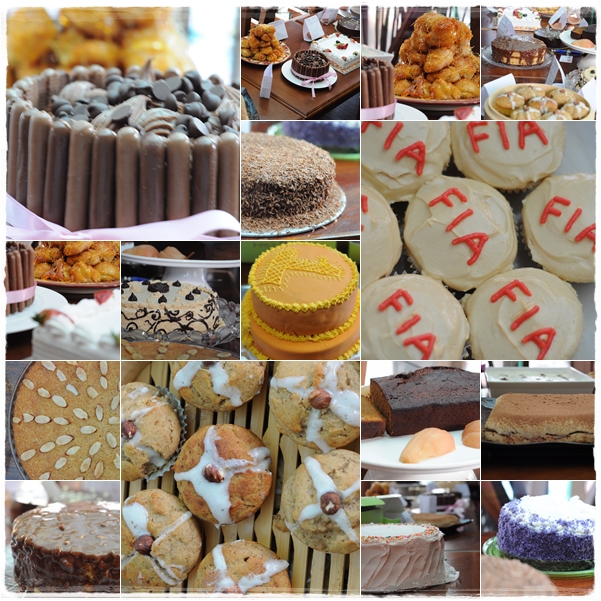 Over that time we’ve set up a private Facebook group called Famished in Arabia and used this to coordinate a series of events. These have ranged from dinner over cheap and not-so-cheap eats, cookery classes, gingerbread decorating, restaurant openings, a food blogger safari, informal photography workshop sessions, visits to the fish market, a baklava factory and a chocolatier, Bakefest DXB 2, cake decorating classes, a chocolate-fest, Come Dine With Me Dubai contests, recipe development competitions and a picnic to name a few.
Our blogs are as varied as the dishes at an international restaurant and we hail from all over the world with India, Sri Lanka, Germany, Australia, Cyprus, France, Germany, Spain, Philippines, Holland, Tanzania, Yemen, United Kingdom, South Africa, USA, Lebanon and the United Arab Emirates all represented (and more). Some of us contribute to a collaborative site called TableTalk and we’ve been featured in various publications including The National. And it’s not limited to food only, members have changed career, had babies, been on television, run marathons and have received the moral support of the group. (There’s a list of UAE food bloggers here).
And me? I now think nothing of going to a gathering of complete strangers as long as there is food in common. I wore a shield of confidence at Food Blogger Connect this summer which would rival Peter’s present from Father Christmas. I’ve been inspired, learned so much and been given generous support that I’m exceptionally grateful for. Could it be the magnanimous influence of Jupiter? There’s always cheerfulness and festivity when this group get together and everyone is welcome at our table as long as they blog about food and respect each member.
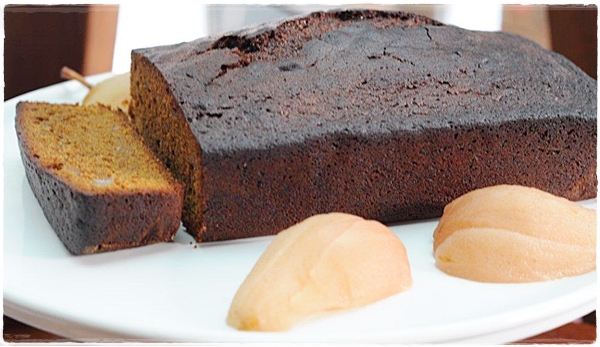
So for this momentous anniversary, there was only one way to celebrate. No, not with Turkish Delight…with cake of course. Lots of it. I made sticky gingerbread (recipe link on my last post where I ate it for breakfast). The others ranged from shop-bought beauties to gorgeous purple yam cake (and everything in between).
Who knows what we’ll be looking back on and who’ll be sitting round our table this time next year. One things for sure – it’ll be a lot of fun. Thank heaven.

I thought this was especially poignant - from Mind Map Inspiration
A cuckoo in the nest and cake for breakfast
Something new has arrived in our garden. It’s got lots of knobs, cast iron grills and is powered by gas. In a bout of anthropomorphism, I’m thinking that our old barbecue is looking a little green. With envy that is, rather than just paint. It suspects a cuckoo in the nest, pushing it out of the limelight as the beautiful weather approaches and our outdoor life begins in earnest.

For our dear old kettle and any barbecuing purist, let me assure you that we will carry on cooking on charcoal for the most part. KP has got the indirect heat method of grilling down to a fine art these days and nothing beats a tender, smokey piece of sirloin or a whole leg of lamb to carve and share with friends. I’m thinking of the new interloper as the means of having an extended cooking area that I can use spontaneously.
Instead of standing under the striplight of my (rented) kitchen, while my teens hold their breath at the smell of fish, I can be under the night sky with no complaints to disturb my reverie.
Barbecued breakfast is the meal I’m most looking forward to. Not just rashers and sausages (but again those aromas will be so much nicer in the garden than inside the house), but French toast, grilled peaches, fruit brochettes with yoghurt, even pancakes – not everything has to go straight on the grill.

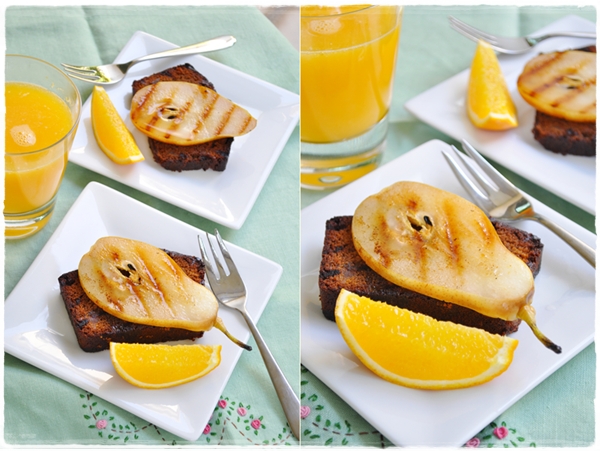
So combining an al fresco start to the day with my favourite way of using up dinner party leftovers has got to be a good thing. Cake for breakfast. Gingerbread was in abundance after preparing one slab for supper for twelve the night before and another for a huge tea party (more about this in a few days). Generous slices of the cake were grilled first, followed by fairly thick slices of fresh pear dipped in orange juice. I used a cast iron pan on the heat (you can also cook directly on the bars, just make sure all traces of meaty stuff is cleaned off first). Once grill lines were evident, the pears and gingerbread were drizzled with a bit of syrup from a jar of stem ginger (although maple syrup would be good too). Greek yoghurt and honey is another good addition.
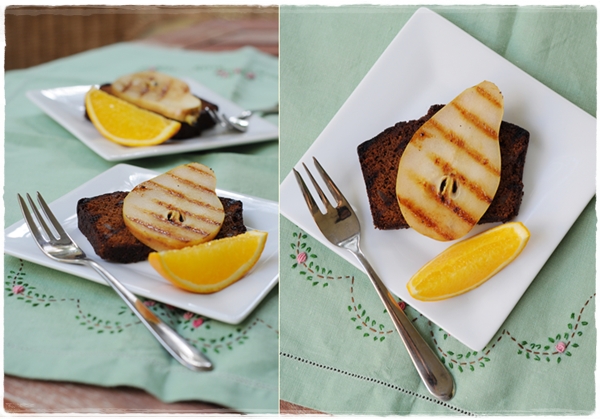
Here’s a link to the gingerbread recipe which I follow verbatim from Tamasin Day Lewis and it’s so good I don’t see how it could be improved upon (the raw cake mixture is quite irresistible too).
As someone from a barbecuing nation, I’m not sure if Jeanne of Cooksister ever starts her day with brekkie on the Braai, but I wanted to join her and other South Africans (including fellow Dubai-dweller My Mezzaluna) in marking National Braai Day. I cooked fresh fruit brochettes for her annual barbecue event Braai, the Beloved Country last year (here’s the round-up), so I’ve continued the fruity theme. Cheers Jeanne – Happy Braai-day.
For Dubai dwellers, you have two choices for gas for your barbecue. You can buy a cylinder from Ace Hardware and take it to one of the LPG suppliers for filling (Ace has a list) or use the butane that is supplied for indoor cooking from the home delivery suppliers. You will have to buy a regulator and bottle from them. For more info about Weber here’s the link for the UAE.
Expect many more barbecue-centred articles from me over the coming months (apologies to readers in parts of the world where you are just heading into Winter). What’s the strangest or most unconventional thing you cook on the barbecue?
Pomegranate season
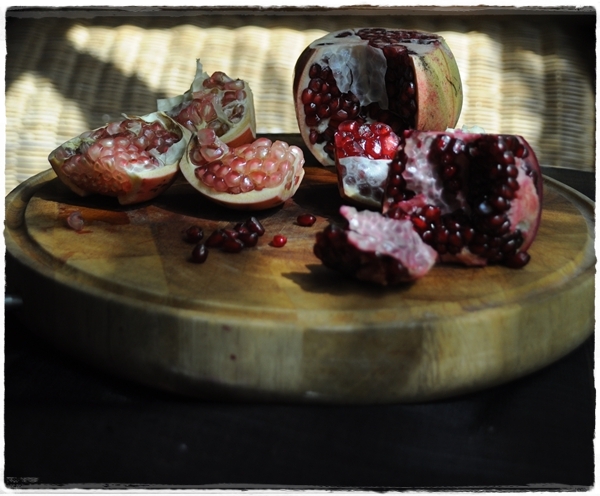 Autumn comes to Dubai and is not, as in England my country of birth, the season of mists and mellow fruitfulness, with blackberries and sloes weighing down the hedgerows, leaves turning golden and the scent of wood smoke in the air. Instead there is a slight lowering of the air conditioning, the realisation as you step outside that your sunglasses have not steamed up, deep red sunsets, a sense of promise for sitting outside long into the evening for many months to come and piles of pomegranates in the supermarkets.
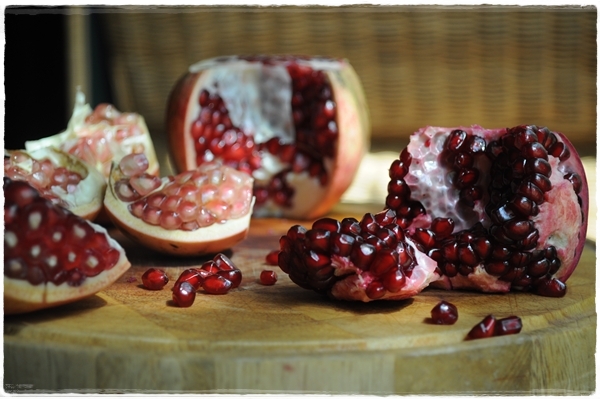
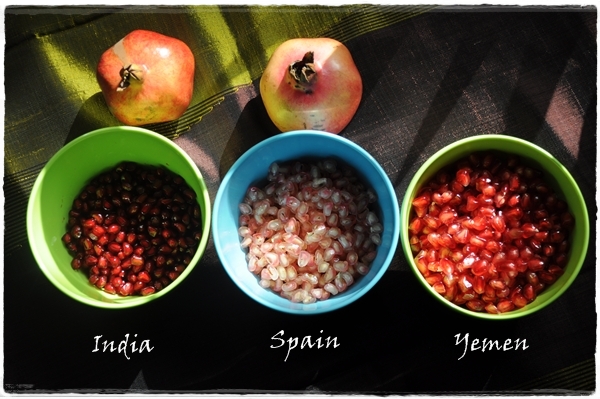
Today I had the choice of fruit from four countries and due to curiosity and indecision, while ably advised by the assistant, I bought three different kinds. The ones from India were small and deep red, the Spanish ones paler and oddly described as seedless, Yemen yielded huge yellow globes which I would have avoided but the man said these were the sweetest. He also said that the Egyptian pomegranates were sour, so they stayed on the shelf. These might have been the variety that is used to make pomegranate molasses, a sweet and sour condiment used across the Middle East in cooking.
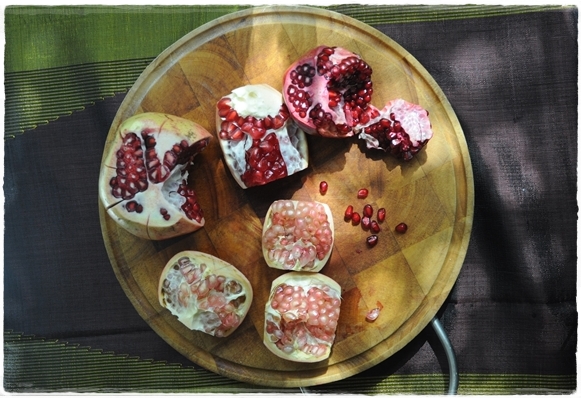
As a child, a pomegranate was the most unusual fruit I ever ate and seemed highly exotic. My mother bought them about once a year and, in retrospect, I have to wonder why. She wouldn’t have dreamed of buying a mango or a pineapple. They were cut in half and we were given a pin to eat them with – which seems both impractical and pretty dangerous with hindsight. However, no tongues were pierced but I think we got bored with eating them quite quickly using this laborious method.

Nigella Lawson advocates cutting a pomegranate in half and then whacking the shell with a wooden spoon so that the seeds rain down. While this does produce a few pretty promptly, it also sprays juice in all directions, damaging the juicy globules.
My preferred method is best done when you are not in a rush or have a few willing helpers. It doesn’t take that long but does require a gentle touch and a bit of patience. It’s quite therapeutic sitting in a quiet kitchen, Radio 4 in the background, easing the glittering bounty from its shell, pith and membrane.
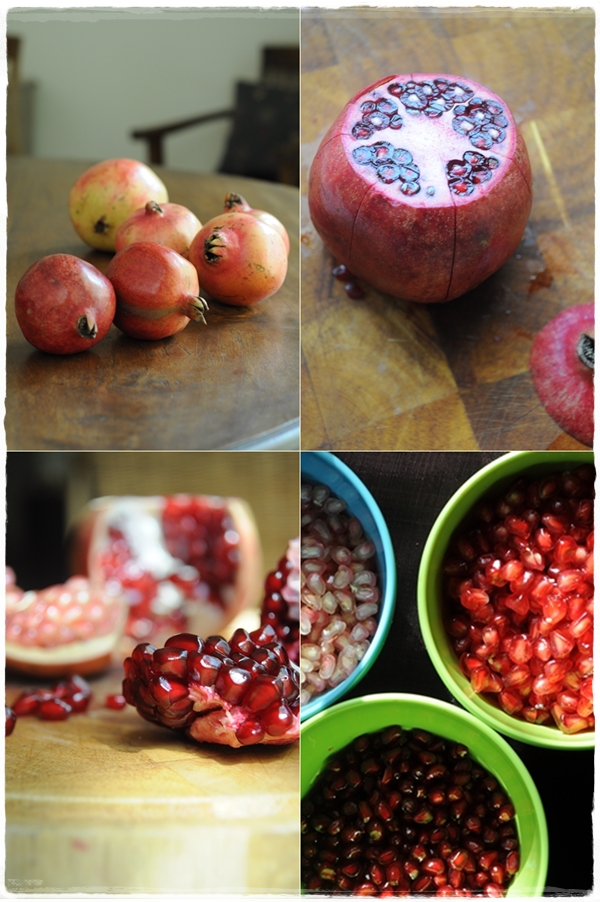
How to remove seeds from a pomegranate
- First, cut a thin layer from the top and the bottom of the pomegranate to expose the seeds underneath (try not to cut into them if possible).
- With a sharp knife make eight equal cuts down the sides through the skin, following the line of the pith if you can (you can see that I didn’t always!) You will feel a soft resistance to the knife when you have cut all the way through the leather-like skin.
- Grasp both sides of the pomegranate and break in half gently. Separate the other wedges equally gently. Do this over a bowl or tabletop as the seeds will start to fall out.
- Carefully remove the pith, membrane and skin from each section letting the seeds collect into the bowl, teasing any stubborn ones out by bending the skin.
- Using this method will result in a heap of jewel-like pomegranate seeds completely free of pith, juice intact. By the way, the man was right – the pomegranates from Yemen were the sweetest.
Ten things to do with pomegranate seeds
- Scatter them over salads. They are especially good with bitter leaves.
- Stir them into a raita with yoghurt, salt and spring onions.
- Use them as a garnish for fish in a tahini sauce (or over hummous).
- Mix into cooked couscous or pearl barley with a handful of chopped mint, the juice of an orange, a little olive oil and white wine vinegar
- Sprinkle over the top of a trifle – this is great around the festive season.
- Cut deseeded cucumbers into small dice and mix with the seeds, sea salt and a squirt of lime juice.
- Bake some quinces (if you are lucky enough to find some), spoon on some clotted cream and strew with pomegranate seeds.
- Combine with dried apricots (soaked overnight in orange juice and simmered until tender), dates, segments of fresh orange and a little bit of orange flower water for a winter fruit salad.
- Serve a small bowlful with a cheese board (instead of the usual grapes).
- Make a pomegranate sauce. Put the seeds from 4 pomegranates into a blender for a few seconds then strain the liquid (about 300 ml) into a pan. Add the juice of 2 lemons, a tablespoon of sugar, 150ml of water, salt and pepper. You could add some browned joints of duck, sauted onions and some walnuts and simmer gently for at least 1 hour until very tender.
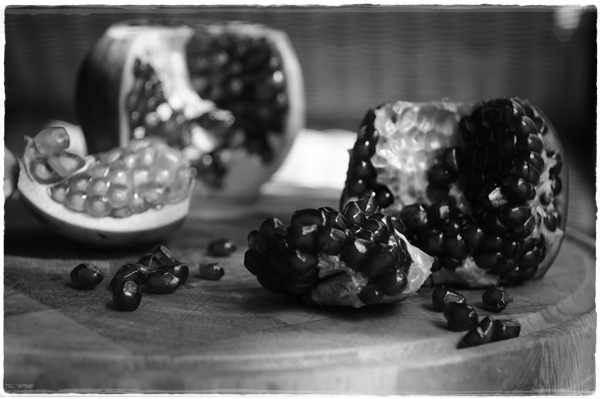
It was great fun taking these pictures of pomegranates and as the colours are so rich and sumptuous it might seem odd to take the black and white ones. However, the shapes are so sculptural though and in monochrome they are transformed into something other wordly – almost alien like!
I started with Keats so will end with Shakespeare:
It was the nightingale, and not the lark, that pierced the fearful hollow of thine ear. Nightly she sings on yon pomegranate tree. Juliet, Act 3, Scene 5, Romeo and Juliet.
 I’m sharing this for Black and White Wednesday run by super-talented photographer Susan over at The Well Seasoned Cook and with Ren for Simple and in Season at Fabulicious Food.
Fish for supper
 We were all hunter-gatherers until about 10,000 years ago (modern Homosapiens that is). Today I suspect that, for most of us, this is limited to hunting for a car parking space at the supermarket and gathering our shopping bags at the checkout.
Soap box alert: Our dissociation from the source of our food has led to many of our food production ills (salmonella in eggs, BSE etc) and that I am always dismayed to witness how squeamish many of my friends and family are at staring the origins of their food in the face.

The gathering side can be easy to get involved with; bushes were laden with blackberries and sloes as I left an England just going into Autumn (for the steamy shores of Dubai). Hunting is a different matter altogether. If I suggested that we all go out and shoot pheasants for the pot as a family day out I think I’d get short shrift. However, hands shot up eagerly when my husband suggested we all go mackerel fishing. Even the vegetarian was keen.
When booking, the very friendly lady assured me that she suffered from the same lack of sea legs as me and found that taking ginger tablets did the trick. Not wanting to drive after taking the stronger forms of sea-sickness remedy I located the nearest Boots the Chemist, popped a pill and ferried our merry band to the beach at Exmouth.

There was something about the red and blue boat that looked both jolly and vulnerable. Under grey skies, the trawler chugged out to the fishing grounds, the World Heritage Jurassic coastline receding rapidly. The engine ceased and the boat began to gently roll on the swell. The crew members handed out rods and gave brief instructions and soon about 30 lines and weights were dangling over the sides. It was a slow start until a large man proudly hauled in his first gleaming mackerel, gleaming silver, black and blue. My husband and teens followed suit although my vegetarian daughter put most of hers back into the green, grey choppy water.
 After nearly two hours, the cheerful crew gutted the catch and allocated fish according to how many each person had landed. A tightly tied plastic bag with five mackerel was our booty. I could hear the buzz and chatter, the delight at catching two fish on one line, the filleting skills and the fact that five men succumbed to the nausea-making lurch of craft. My head was over the side, eyes tightly shut for most of the journey – drat those ginger pills.
While freshness in fish is always desirable, in mackerel it is essential as it deteriorates rapidly. It is an oily fish which benefits from simple cooking. Put some herbs into the cavity and bake them. I used rosemary and roasted some rhubarb alongside. The oily flesh stays moist and succulent and ours were ready in about 20 minutes in a hot oven. Catching our dinner (or in my case hearing it being caught) was exhilarating and there are no lingering shots of the cooked version as we ate it straight away.

Mackerel are pelagic fish, swimming near the surface in shoals. The size of these shoals are now diminished and so subject to stringent controls, however mackerel are fast-swimming, breed early and are not as popular in Europe as fish like cod and haddock so haven’t been as affected here by overfishing.
Species of mackerel caught locally in the UAE include the Indian Mackerel (Garfa) and the King Mackerel (also known as Kingfish or Kanaad), both have a stronger fishy flavour, firm flesh and are high in Omega 3. Excellent grilled, I’d recommend an outside barbecue as the smell can be quite strong in the house.
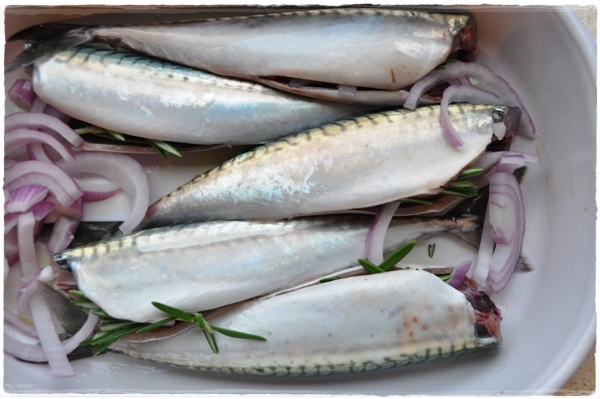
Baked mackerel with red onion and rosemary
Serves 2-3
5 mackerel, gutted, cleaned heads removed
1 red onion
sea salt and freshly ground black pepper
several sprigs of rosemary
- Cut the red onion in half and then into thin slices
- Wash and dry the mackerel
- Season the inside of the fish with salt and pepper and put a few pieces of onion and a sprig of rosemary inside each one
- Drizzle a tiny amount of olive oil in a baking dish, scatter the remaining onion over the base and lay the fish on top in one layer
- Bake in a preheated oven of 200 C until the fish is cooked (about 20-25 minutes)
Serve with baked rhubarb (200g rhubarb, cut into short lengths put in a roasting tin 2 tablespoons of caster sugar and baked until just soft enough to take the point of a knife – about 20 minutes.)

We used Tiger Charters for our fishing trip in Exmouth.
Have you had any hunter or gatherer moments lately?
Perfect day – Sharpham Vineyard English wine and cheese
 There was a bit of a tussle among English wine producers recently when some of them came up with an official name for English sparkling wine. ‘Britagne’ was suggested to describe methode Champenoise, quality English fizz but it fell a bit flat with some vineyards. You may be quite surprised to hear the words ‘quality’ ‘wine’ and ‘English’ used in the same sentence, but there are around 400 vineyards in England and Wales all keen to show off their viticulture prowess. Grape growing for wine has been around since before the Norman conquest and is recorded in the Domesday Book; Samuel Pepys wrote that he drank some wine from a vineyard in Walthamstow! As the effects of climate change have an increasing impact on traditional vine growing areas like Spain, big producers might start to eye up British ‘terroir’ in the future.

One location I wanted to eye up myself was the Sharpham Estate. Located on a bend of the River Dart in Devon, as we turned off the road from Totnes, meandered through the pretty village of Ashprington and neared the end of the narrow lanes, an absolutely stunning view greeted us.
After being led to a table in the tarpaulin-covered bit of the outside restaurant we browsed the menu, which was short – my favourite kind – with the kitchen using mainly local, organic produce with vegetables from the Sharpham Estate walled garden. KP ordered green pea, mint and Sharpham rustic cheese fritters with herb salad leaves and a tomato, chilli and basil salsa while I chose the homemade pork, pistachio and prune terrine. These were listed as starters but we gambled that they’d make a good light lunch and when they arrived we knew we were right. We tucked in just as the heavens opened, quite dry under our little tent but the lovely view of the river (albeit on the other side of the car park) was a blur. This was a bit disconcerting since I’d signed up for Trek and Taste involving a self-guided tour around the vineyard followed by wine and cheese tasting (there are several tours to choose from).

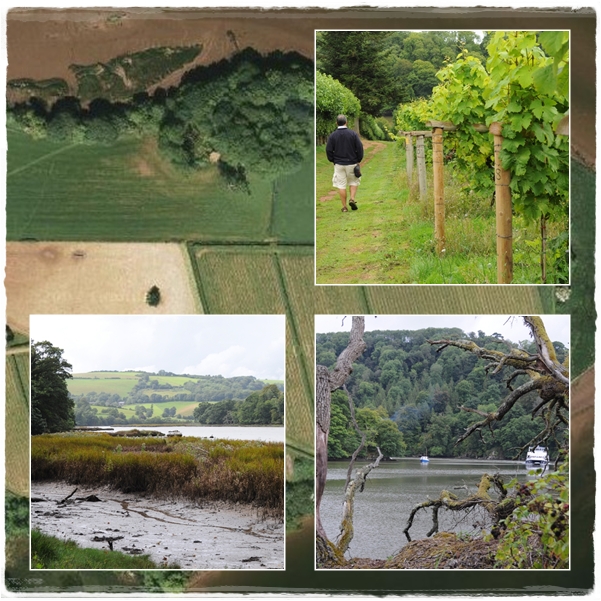
But this was an English summer and the second the rain stopped I ran to the car, got my wellies and we started out up the lane, clutching the map following the red route (there were also shorter alternatives) . Lines of vines ran down to the river’s edge, providing a warm, sheltered micro-climate perfect for grape-growing. Sharpham House, a neo-Palladian mansion built in the late 1700’s, watches over the 550 acre estate. It was acquired by Maurice and Ruth Ash in 1961 (Ruth, the daughter of Dartington Hall founders) and by the end of the 1970’s they began to plan a future for the estate based on sustainable farming practices and quality food production which included developing the cheese making business and planting vines in 1981.
Cheese is made from Jersey cows on the farm and the wine is made on the estate. From the start they placed the emphasis on producing food that people would like to eat (rather than a focus on what they could grow) which was the reason behind the choice of primarily French grape varieties unlike many other British vineyards which grow German. All was peaceful as we wandered through lines of trees and vines stopping to chat to a lone viticulturalist.
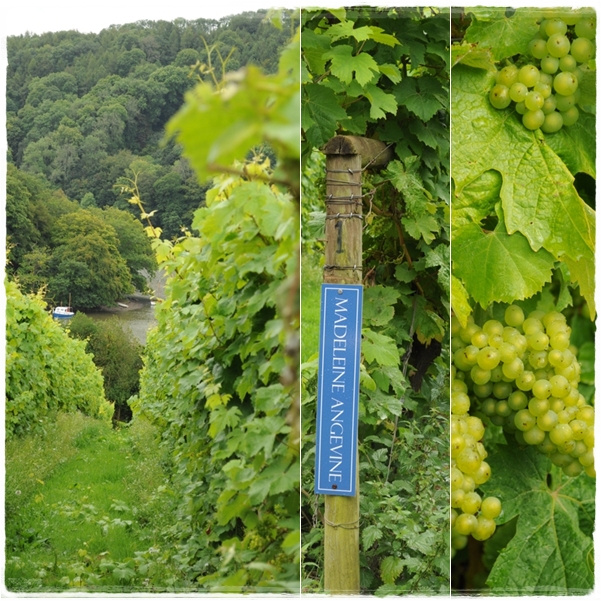 Passing signs with rather poetic names like Madeleine Angevine, we followed the path, over an electric fence (which we later found was there to keep badgers away from the roots of the vines) and along the River Dart an extremely tranquil spot when the commentary from the boat tours have faded into the distance. The beautiful walk took us barely 20 minutes and we were soon forging back across a field in glorious sunshine.
While we waited I peered in the windows of the dairy as you cannot enter for hygiene reasons but there are information signs about each stage in the cheesemaking process. We went to the tasting area and met Steve, an Australian winemaker with a sense of humour who was an enthusiastic guide. He asked our group who was on the gold package (six wines and three cheeses) and who on the Silver (four wines and two cheeses). After my walk I regretted my decision to opt for Silver and asked if I could upgrade which then led to a general wave of all the other Silvers upgrading. So, ready to taste, we kicked off with Steve pouring us a glass of Sharpham Sparkling Pink, which is made by methode traditionnele (the same way Champagne is made) which had a lovely mousse and delicate, strawberry fruit.
 Sharpham Estate Selection was dry, crisp and really clean, made from those Madeleine Angevine grapes we’d walked past earlier. There seems to be a trend, certainly among my friends, to drink nothing but Sauvignon Blanc and I’m longing for a change. This would be an excellent replacement for refreshing summer drinking without the astringency (and touch of cat’s wee) you get with some SBs. Sharpham Barrel Fermented had subtle vanilla notes that come from being aged in French oak and was well received by everyone – Steve has his signts on a making a Chablis rival.
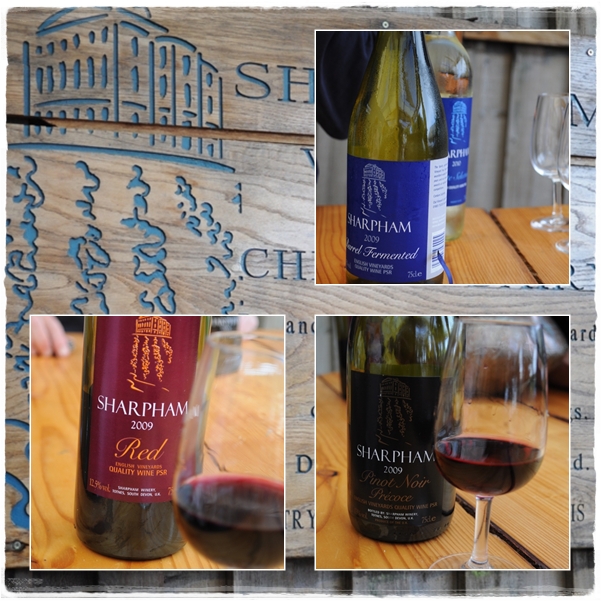 Sharpham Rosé had a slight coral tint and its rounded fruitiness made me think how well it would have gone with my terrine. We finished with Sharpham Red followed by Sharpham Pinot Noir, neither of which I expected to like, but I did. The Pinot was not hugely complex but a well-made, easy to drink cool-climate red with lovely cherry and plum flavours and great with the samples of handmade cheese. These were Sharpham Rustic with chives, fresh and crumbly, Sharpham Elmhirst, a firmer, creamier texture with really excellent taste and the original Sharpham, a fabulously creamy, unpasteurised Brie-style, mould-ripened square . I bought a slab of the last one from the shop to take as a gift for friends we were staying with that weekend. I must admit that I ate the better part of this ripe, oozing temptation myself while there.

This was exactly my kind of day out: A walk in beautiful surroundings. A simple lunch menu using fresh, seasonal, local ingredients but interesting enough to show off chef’/manager Rosie Weston’s considerable talents. Great cheese and wine produced by people who are absolutely dedicated to making the best they can. And it stopped raining.
If you want to know more visit:
Sharpham Wines and Cheeses – booking is only necessary for the Sharpham Wine Experience Tour
The Vineyard Cafe – open end April – September, booking recommended (and dependent on weather)
English Wine – the history, background and a listing of all the vineyards
Getting English people to drink English wine in England is a struggle so you may not be surprised that it is not available (to my knowledge) in Dubai. Have you ever tasted wine from the UK and, if so, what did you think of it? Is there any wine from a less traditional part of the world that you’d recommend?
A little piece of cheese heaven – Tavistock Real Cheese Fair
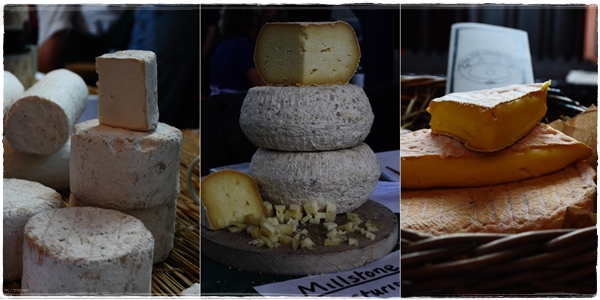 Plunging into the throng, armed with a toothpick, the soft sounds of a jazz trio in the background adding another layer to the gentle murmurs of enjoyment, I was ready to attack. My challenge, shared with everyone else among the thronging crowd, was to sample as many of the artisan cheeses in the room as possible. No mean feat as there were at least fifty of them made by producers from Somerset, Devon and Cornwall and a few farther afield.
Food festivals abound in the UK and they range from the Ludlow Food Festival which takes over the whole town (and involves a sausage trail, a festival loaf trail and a real ale trail) to several chilli events the most famous being the West Dean Chilli Fiesta, to The Isle of Wight Garlic Festival but this has to be just about the most ideal in my book. Eat cheese, drink cider, talk to cheesemakers, listen to jazz, then go outside into the Devon sunshine in the stannery town of Tavistock – it doesn’t get any better than this.
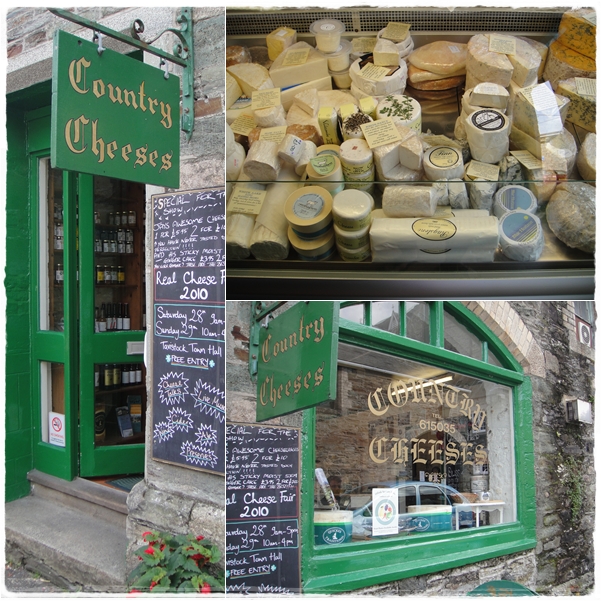
The Tavistock Real Cheese Fair is held annually on the Saturday and Sunday of August Bank holiday weekend and organised by Country Cheeses as a showcase for their suppliers. Country Cheeses is a down to earth little shop – the cheeses they stock are second to none and very local in origin. They even have some exclusives that they commission, often with their staff getting involved in tandem with the cheese-maker in production, such as ‘Bliss’ made with Philip Rainbow in Somerset. They are not as well-known as somewhere like The Fine Cheese Co in Bath (another of my favourite cheese haunts) and, in my opinion, could learn a bit from them in terms of promotion and presentation although this could be changing – I hear they are on TV this Autumn with the River Cottage team.
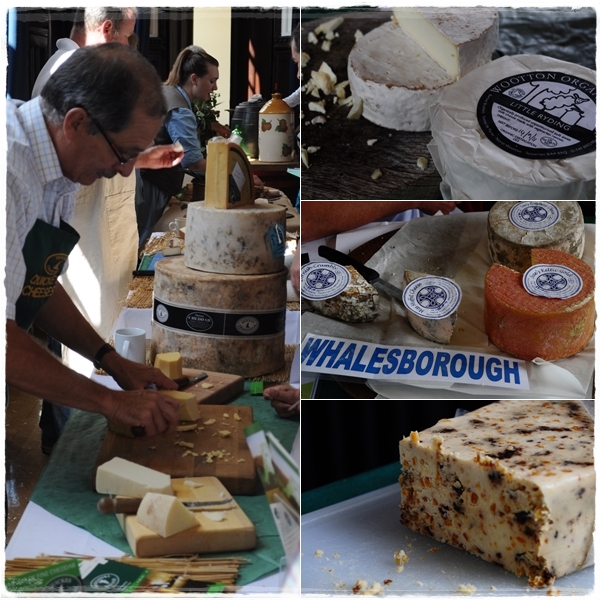
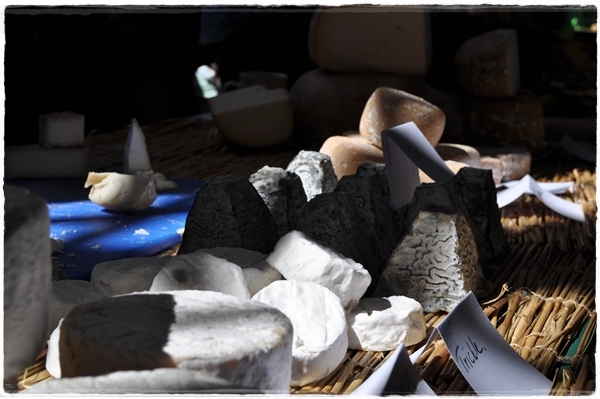
But back to the tasting. You start by climbing the stairs in the Tavistock Town Hall and being welcomed into its dark-panelled and heraldic depths with a booklet to make notes in and a cocktail stick. Sunlight streams in through tall, mullion windows onto the trestle tables which line the room, covered in cheese. From mountains of huge cheeses like the Keens, Montgomery and Westcombe unpasteurised Cheddar in greyish stacks which resemble the granite tors that surround the town, to little hills of carefully cut tasting chunks, exquisite morsels on china plates. Every cheese has a different character and all are made with passion demonstrated by the eagerness of the artisans who man the stalls to explain exactly why their cheese is different and why you should taste it. Believe me – it’s cheese heaven.

Britain nearly lost its cheese heritage as mass-production of cheap food after WW2 started to erode traditional cheese-making techniques. A further blow came when cheese made of unpasteurised milk was almost outlawed in the 1980s. There was a listeria outbreak in Europe involving Vacherin cheeses, which killed 30 people and was blamed on unpasteurised milk, but this was ultimately proved to have been caused by cheese made from pasteurised milk. Major Patrick Rance (cheese expert and campaigner) produced evidence which stopped a bill to ban raw milk for cheese as he recognised the importance of using unpasteurised milk for individuality and taste. (There’s an excellent profile of him on podcast on the BBC Food Programme).
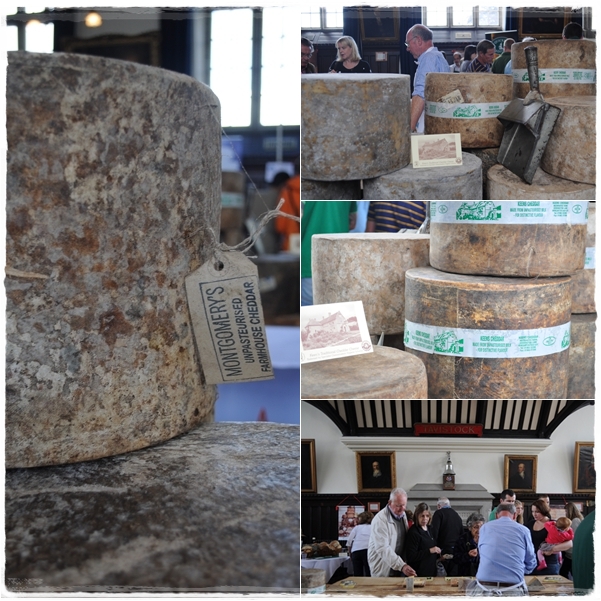 Nowhere is this individuality more evident than on the stall which displays Montgomery, Keens and Westcombe – the only three cheeses entitled to the Slow Food designation ‘Artisan Somerset Cheddar’. To qualify for this accolade, the cheese must be made in Somerset – where the damp climate is recognised as the best for growing lush pastures – from the milk of the farm’s own cows, allowing control of quality from start to finish. The cheese must be made using raw milk and traditional starter cultures. By using raw milk, all the natural flavours come through in the final product, giving the Cheddar its full fragrant and earthy character.
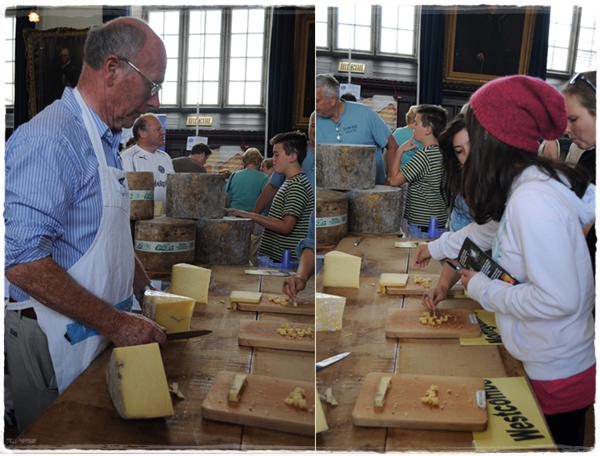
My teens trying to decide which Cheddar is best
The amazing thing about these three cheeses is that they are made from milk from the same breed of cattle, in the same way, within about a 20 mile radius. They all taste very different and I mentioned this to the man on the stand. Our favourite changes every year but he said that in fact they change from week to week each batch being completely different. One in the eye for standardisation and the reason you should buy your cheese from someone who lets you taste before you buy. It also shows the effect of cheese-making ‘terroir’, the skill and mood of the maker on this handmade and unique product. A big block of Keens accompanied me back to Dubai this year (more of this later). We also tasted their latest experiment to make cheese in the style of artisan Swiss cheese – a completely counter-intuitive process if you are used to making Cheddar apparently. It knocked the socks off any Emmental cheeses I had tasted before.
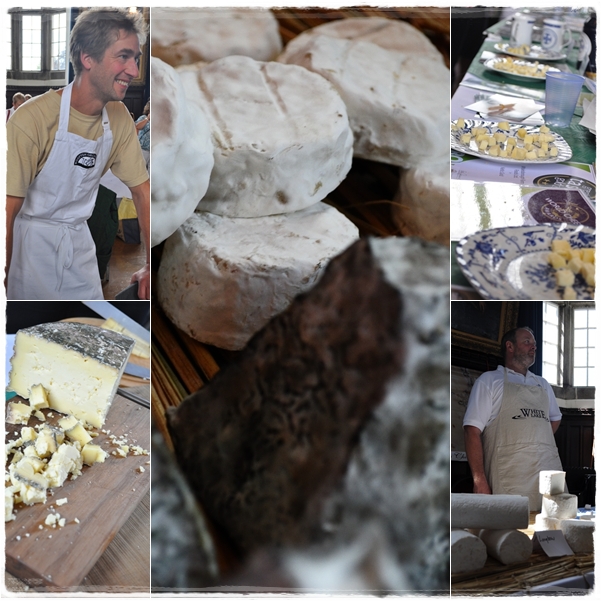 The family Prosser mingled, tasted and sipped, meeting up from time to time to share finds. We all seemed to agree on Miss Muffet made by Whalesborough in Cornwall, a creamy but addictive curd cheese with a slightly nutty flavour. My youngest daughter sighed over wild garlic Yarg from Lynher Dairies (also in Cornwall) which was pungent in the extreme and wrapped in wild garlic leaves. The older one liked Devon Sage a fragrant, herby cheese made solely for Country Cheeses by Curworthy on Stockbeare Farm close to nearby Okehampton. They both adore smoked cheese which has never really appealed to me but I also bought a slab of Devon Smoake nonetheless. Cropwell Bishop has the most addictive Stilton which was drawing a crowd and then they whipped out a cheese that had the room abuzz – a white Stilton packed with dates and orange, like Christmas pudding with a side serving of cheese.
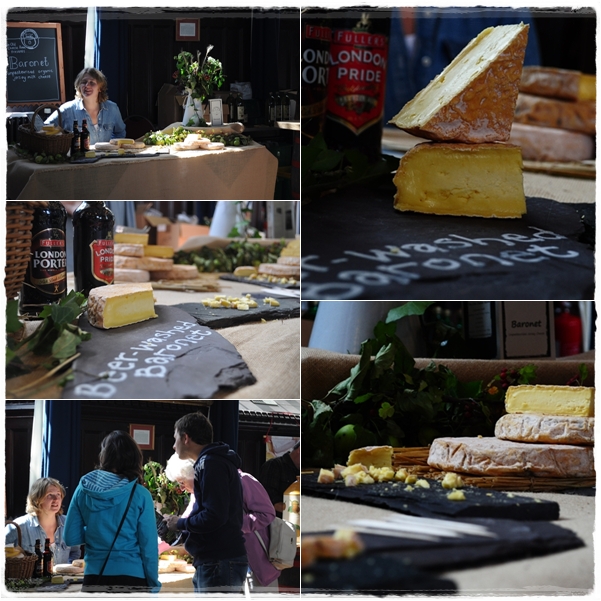
KP alerted me to some Fuller’s beer-washed Baronet on a very attractive stall and I met the producer Julianna Sedli, a Hungarian living in Wiltshire attempting to make French Reblochon-style cheese with a more distinctive taste by using organic unpasteurised milk from Jersey cows on the Neston Farm Estate. I loved her cheeses especially the golden, ripe Baronet and hung around for a long time chatting and tasting. Her details are in the list of exhibitors below and The Old Cheese Room is a name to watch.
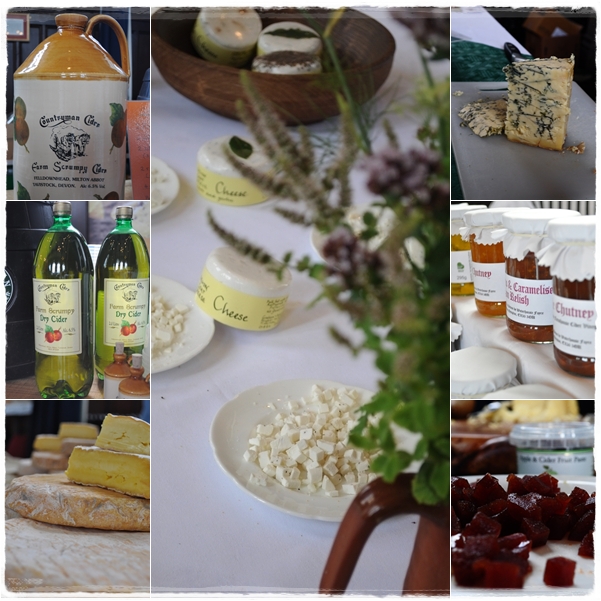
Sharpham Wines and Cheese had an impressive array and I had to ‘remind’ myself of how good the Coulommiers-style Sharpham cheese had tasted on our visit a few days earlier (more to follow in another post). Countryman‘s selection of local cider was a great accompaniment to all our munching, KP bought quite a few jars of Waterhouse Fayre chutney to test his luggage allowance and we dipped into Jay’s Fruit pastes which are absolutely smashing with cheese (and I regretfully forgot to add to my shopping basket this year). Devon Blue (cow’s milk) seduced me this year and I packed a wedge instead of my usual excellent Harbourne Blue (sheep’s milk), both made by Ticklemore near Totnes in Devon.
 Replete, we wandered out into Bedford Square – no lunch was necessary! Entry to the Cheese Fair is free and you are not obliged to buy (only the wine and cider is on sale) – if you want to purchase cheese you visit the Country Cheeses shop at the back of the Pannier Market. This lack of commerce removes any pressure from the tasting experience and is part of what makes the event so special. I returned to the shop a few days later and bought several kilos of our favourites to take back to the UAE. I find that if kept in the cold hold in my suitcase they travel perfectly well. No sniffer dog has accosted me to date!

You can see a list of the producers at the fair here, there’s also quite a lot of info on the Country Cheeses website. I met food writer and journalist Fiona Beckett during the summer and she mentioned her excellent cheese blog, The Cheeselover covering some other cheese events. If you don’t have a good local cheese shop you can order online from quite a few sources including The Fine Cheese Co (if in the UK).
If you are in the UAE and looking for good cheese my favourite hunting grounds are:
- Carrefour – mainly for Vacherin Mont D’or, which is only available at certain times of the year (from late October).
- Lafayette Gourmet – in Dubai Mall in Galleries Lafayette there is a cheese room stocking mainly French and Italian cheeses.
- Aswaaq – they stock Yeo Valley Organic cheddar
- Oeno at The Westin has a cheese room to choose from when you dine there
- The Sofitel at The Walk, JBR does an excellent wine and French cheese night
- I have yet to try the newly opened Jones the Grocer…
Would I like to make my own cheese? You bet…and coincidently just found a bottle of vegetarian rennet in Choitrams so watch this space…
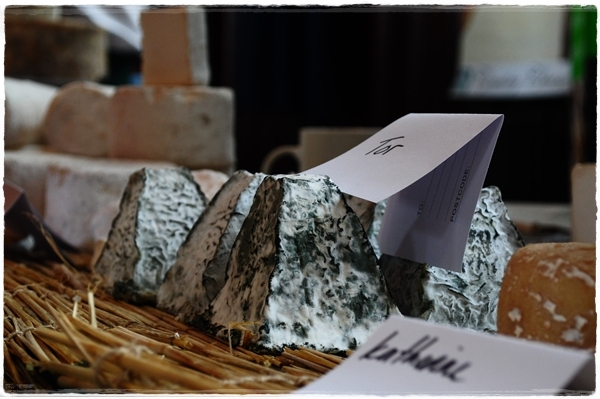
Have you got an artisanal cheesey favourite, a cheesemonger you adore or a festival of food you’d like to share? Leave a comment and make my day.
Solving summer surfeits – Courgette cluster bread
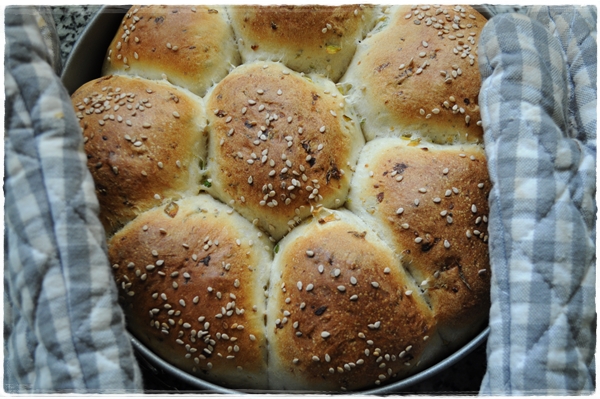 For all the advantages of growing your own fruit and vegetables, the downside is that everything comes at once. You long for the first season’s strawberries and then you are overwhelmed, having to pick them daily before the birds get them. Summer pudding was designed especially to use up a soft fruit glut. Courgettes (or zucchini if you like) are the same and if you grow your own, there comes a time where you have to scale a small courgette mountain. I know this from childhood memories rather than having my own garden (as I’ve lived for over 16 years in a desert land) but local courgettes are available cheaply and plentiful all year round here. I can’t imagine anyone picking this slightly bland and watery vegetable as their ‘top of the crops’ but I’m always on the look out for recipes that might use them in a different way (instead of stuffed, fried or in ratatouille or caponata).
It was up to me to choose a bread recipe for all the Fresh From the Oven food bloggers to cook this month and I thought this would be just right for the UK where I am right now or back in Dubai.
I’ve been cooking a new bread recipe every month as part of this group for a year and a half and it has made a me a more adventurous and confident baker. I’ve got to ‘meet’ some lovely people along the way too. There are so many food blogs and not enough time to read so I tend to gravitate to a handful of favourites; people I feel a connection with. It’s really odd how strongly this is conveyed online (even in the 140 characters of Twitter).
All the Fresh From the Oven group seem to be a lovely lot – maybe there is something about making your own bread that brings out the best in people. Breaking bread together is such an honest and unpretentious way of eating with friends.
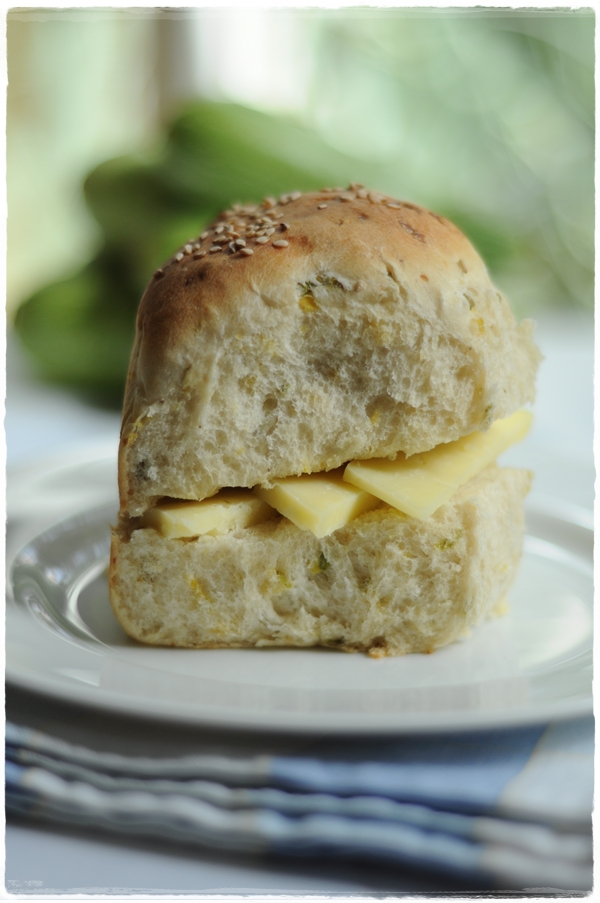
These cluster rolls are light, fluffy but substantial and best friends with cheese and tomatoes. The courgette keeps it fresh for a few days – and it got me wondering about other vegetable combinations in bread. You have carrot cake, so why not wholemeal carrot bread and how about beetroot and rye? Would it work? Take a look at what all the other FFTO bakers came up with here.
By the way, I bake a fair amount of bread and KP said that this was the best I had ever made! Praise indeed.
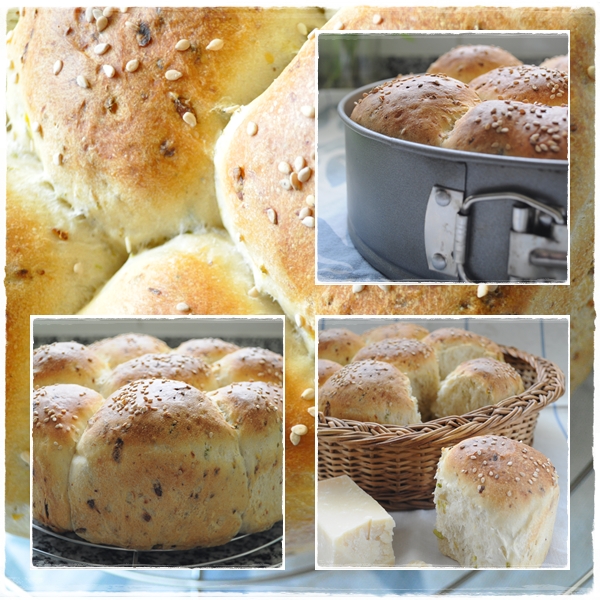
Courgette Cluster Bread – adapted from a recipe in House and Garden magazine by Roz Denny
Makes 8 rolls or clusters
Ingredients
450g courgettes, grated coarsely
Salt (for degorging and for the dough)
675g strong white bread flour
2 sachets of easy-blend/fast-action yeast or 14g instant dried yeast
3 tablespoons parmesan, grated
Freshly ground black pepper
2 tablespoons olive oil
Tepid water – about 200ml
Milk, to glaze
Sesame seeds, to sprinkle
Method
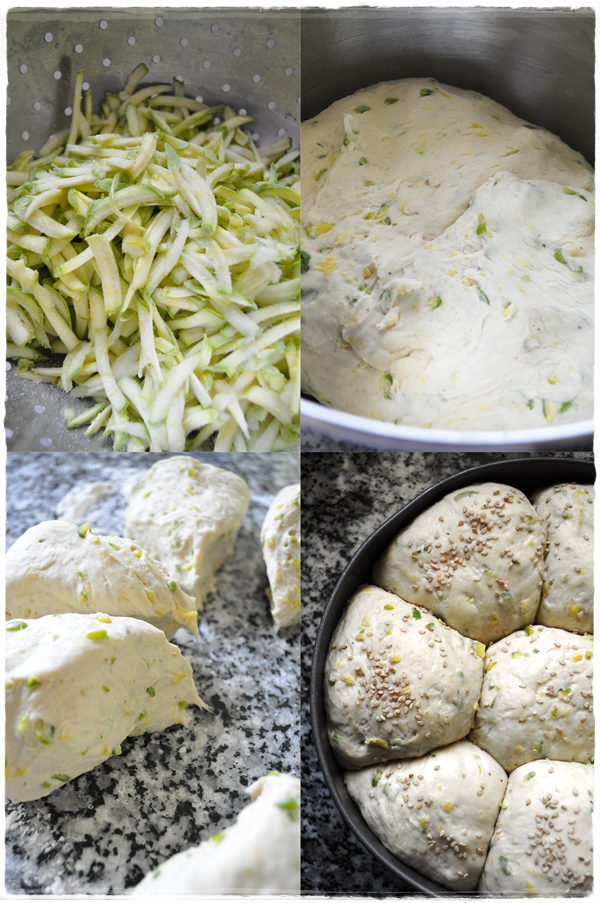
Place the courgettes in a colander, sprinkle lightly with salt. Allow the juices to drain for about half-an-hour, then rinse well in cold water and pat dry.
If using instant yeast whisk it into 90 ml of the water until frothy and dissolved. Mix the flour, yeast, parmesan, 1/2 teaspoon of salt and some black pepper together in a bowl, then stir in the olive oil and courgettes. Add some more water until the mixture comes together as a firm, soft dough. I did this and the kneading in my KitchenAid with the dough hook.
If kneading by hand, turn the dough onto a lightly floured board or work surface and knead until smooth and elastic. Lightly oil a bowl and put the dough into rise, covered with cling film or a cloth, for about one hour or until doubled in size.
Knock back the dough in the bowl (punch the air out of it) and then turn out onto a lightly floured work surface. Knead again briefly until smooth.
Divide the dough into eight equal pieces and roll to shape into even balls. Lightly grease and line the base of a 23 cm cake tin with baking parchment. Place one ball of dough in the middle and all the others around it.
Brush the tops of rolls with milk and sprinkle over some sesame seeds. Cover again with oiled cling film or a cloth and leave to prove until doubled in size and the balls touch each other – about 30 minutes.
Put into a preheated oven at 200 C for about 25 minutes until golden brown and cooked. Cool on a wire rack. Tear each roll off to eat as a bun.

Sorry about my daughter's choice of nail polish
Good times and setting a bad example
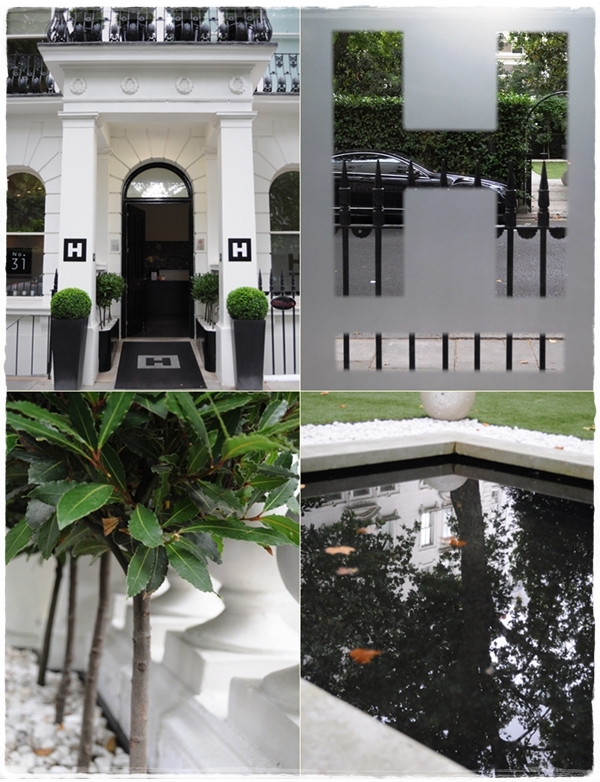 My teens think I’ve set them a very bad example and are dining out on the story. Firstly I’m on Twitter “It’s for stalkers Mum”; I blog – “Mum’s got a food blog (rolling eyes)” and finally, last weekend, I committed the ultimate crime and went to stay with someone in London who I’d met on the internet “You warn US about stranger danger”. In fact I’d been given the incredibly generous offer of a place to stay by Helen of Fuss Free Flavours as I was going to my first ever food blogger conference Food Blogger Connect. I think she was the brave one by inviting some blogger who lives half way round the world to her home.
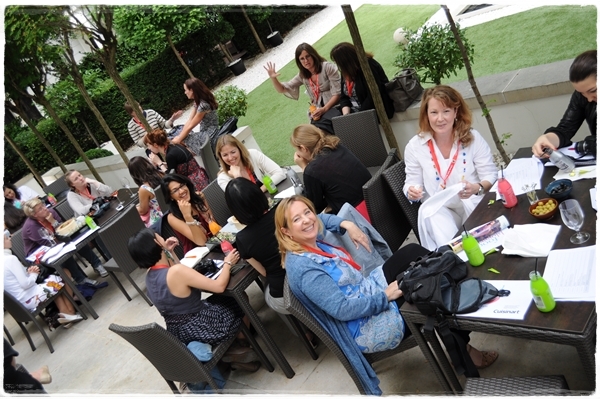
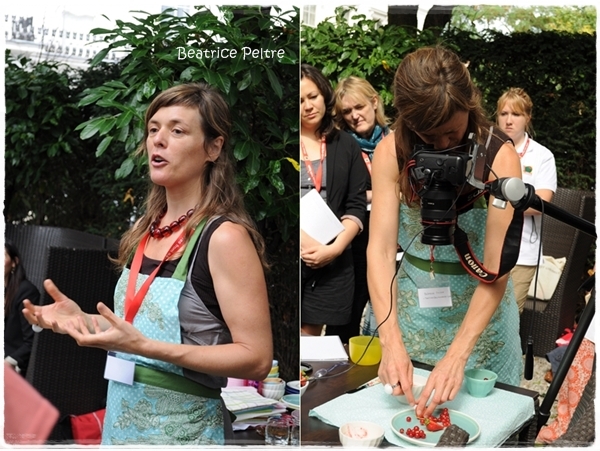
So why were a group of foodies drawn from different countries (and continents) to spend a weekend at The Hempel in West London? Dreams, ambitions and the opportunity to meet some like-minded fanatical food lovers; some came because they were thinking about putting a toe in the food blogging water and wanted some expert advice, some to emulate the awe-inspiring photography and styling of a master (or should I say mistress), others had their sights set on a book deal, recipe development, video demos and some dreamed of food blogger super-stardom, financial success (and working for 3 days a week). There were speakers and sessions for all this and more.
Equally valuable and enjoyable was the chance to meet fellow foodies from all over the world including Hungary, Bulgaria, Holland, Italy, France, Germany, Russia, Kazakhstan, the U.S. and, of course, the U.K. Food bloggers tend to be a generous bunch – I think it’s got something to do with the sharing of food around a table and basics of breaking bread with friends. I also realised with a jolt just how fortunate I am to interact and meet up with my wonderful group (now over 50 in number) of food bloggers in the UAE – I think this hardly happens in London, let alone in other countries (the Dutch bloggers were in heaven). I was delighted to meet up with the authors of some of my favourite blogs including Poires au Chocolat, Extra Relish, Eggs on the Roof, Juls Kitchen, Zizi’s adventures, Maison Cupcake and Fabulicious Food.
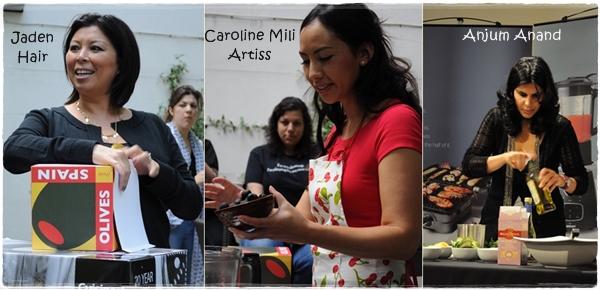
Just a few of the presenters:
- Jaden Hair of Steamy Kitchen, an incredibly warm, generous and multi-talented cook, TV presenter and author who started with a food blog and an audience of two – her husband and her Mum.
- Fiona Beckett who is an award-winning food and drink writer, compulsive blogger (food, wine and cheese blogs!) and author of 22 books. She blogged about her presentation here and received an entertaining rejoiner from Wine, Women & Song here.
- Tim Hayward – food writer, broadcaster and photographer and editor of Fire & Knives, a quarterly magazine of new food writing.
- Chef, food writer and TV presenter Anjum Anand, one of the first writers to create and write Indian recipes catering for the health-conscious cook.
- Caroline Mili Artiss who specialises in Malaysian food and is one of the first TV chef’s to be discovered on Youtube in the UK.
- Vanessa Kimbellwho gave up a well-paid job in IT and set herself the goal of writing a cookbook and getting it published within a year.
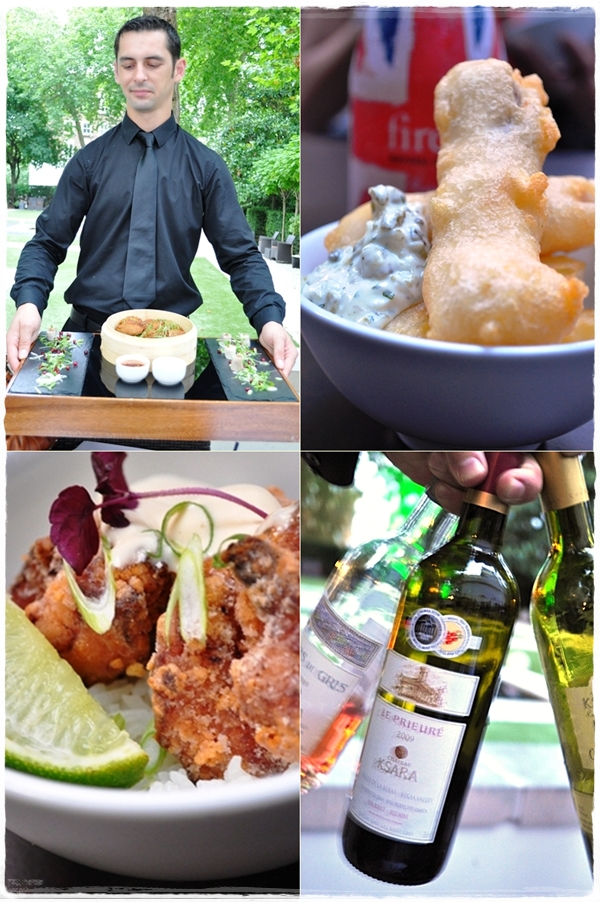
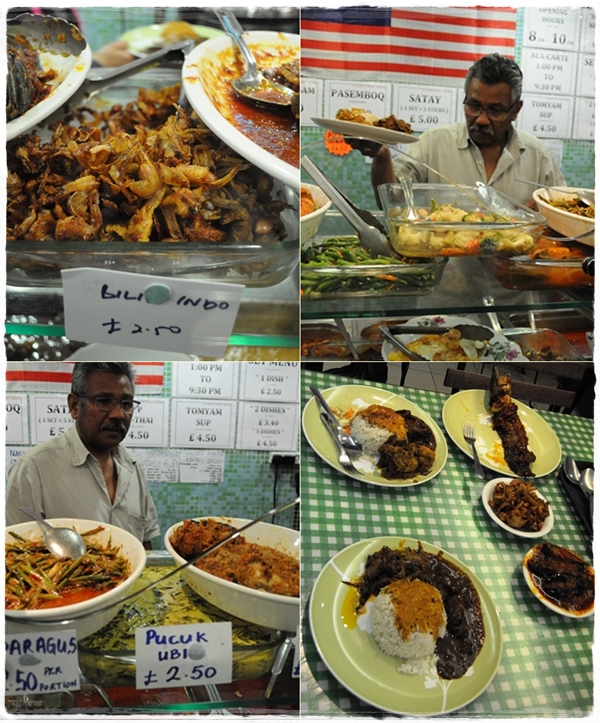
OK, I know it’s taken me a long time to get to this….what about the food? A variety of tempting delights kept emerging from The Hempel kitchens from delicate canapes to dainty tasting portions at the first reception to a sumptuous brunch including a fabulous eggs Benedict with smoked fish at the last brunch. Olives and French goats cheese were present throughout, and Leila added another centimetre to my waistline as I was unable to resist her handmade chocolates. But the main highlight for me was being introduced to Malaysian cuisine by May (of Malaysian by May) who took us to the Malaysian Student Canteen a few streets away. The food and conversation were varied and spicy.
I didn’t want to leave at the end of the weekend but tore myself away from drinking Pimms in the sunny garden with such a gregarious and talented group of friendly food bloggers, said goodbye to Bethany and massive thanks to Helen, and wandered to the tube station bowed under the weight of an enormous goodie bag, inspired, energised and ready for more cooking, eating and blogging.
PS There are masses of photos on Flickr if you’d like to see more.










 My Custard Pie