Diary of a Christmas cake and a pudding too
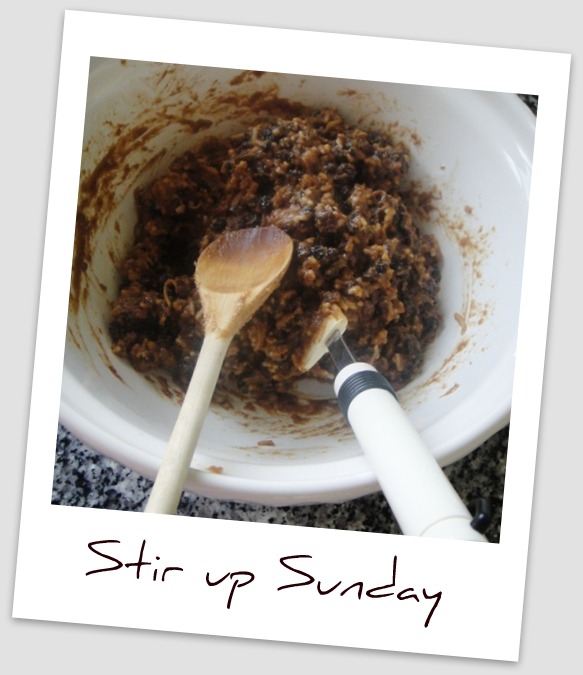 Today is ‘Stir-up Sunday‘, the last Sunday before Advent in the Anglican Christian calendar and the day that Christmas puddings are traditionally made. After a rewarding but totally manic month I made the most of another religious holiday, Eid al Adha, to do some soothing baking earlier this week. Shutting myself away in the kitchen with no distractions, playing the music of my choice (after competing with two teens and a indie-loving husband) is really calming and knowing that a few more essential items are being ticked off the Christmas list removes some of the frantic voices from my head. OK, I’ll confess what was on my playlist if you’ll keep it a secret – The Very Best of Chic and Sister Sledge. Teens soon scarper in horror when they get a peek of a highly embarrassing, disco-dancing, apron-wearing Mum.
Christmas pudding
Part of the pleasure, for me, is mulling over every recipe I have before making the final choice. Good Housekeeping is a stalwart but this year I turned to Nigella for my pudding recipe, swayed by her generous use of alcohol. In her other recipes, this is often not a good thing and husband begs for mercy after eating her trifles. However, the point of the Christmas pudding is for it to be laden with tastes that don’t get an outing for the rest of the year. I couldn’t get hold of the exact typr of sherry la Lawson advocates, so used a combination of medium sherry and Glenfiddich whisky (don’t use a supermarket brand here).
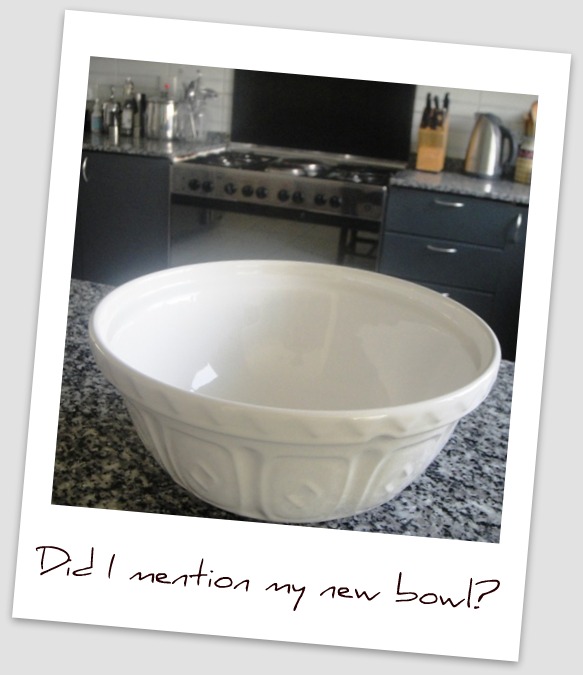 Stirring up a pudding is no trouble at all and my last visit to Lakeland produced some plastic pudding pots I’d had my eye on for ages. I gladly sacrificed my ceramic pudding bowls with their layer of parchment pleated and tied with string for this less attractive version for the ease of snapping on the lid. I made up for this by investing in a rather beautiful Mason Cash mixing bowl so I could pretend I was Jill from the Archers when she was still grand dame at Brookfield. Full recipe and instructions for making your Christmas pudding at the bottom of the page. Now onto the cake…
Christmas Cake – part two
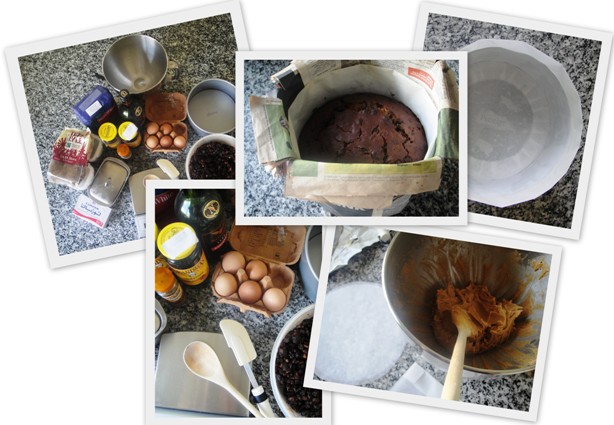
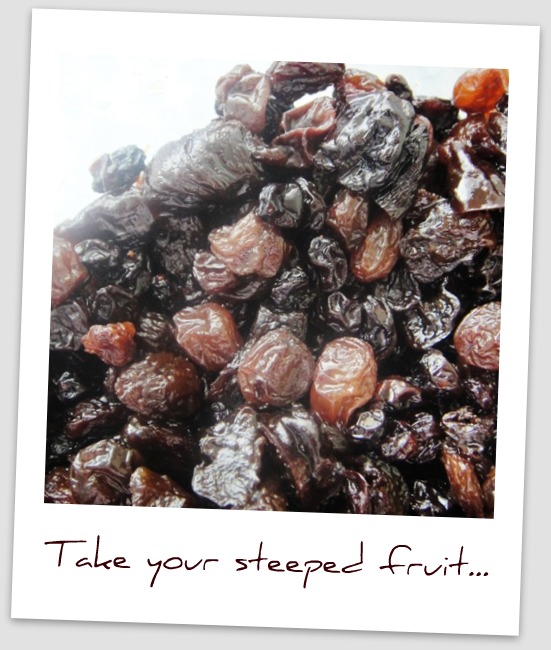
For the next stage of my Christmas cake, I popped over to The Pink Whisk for Ruth’s recipe. Having steeped my fruits in brandy for many weeks I was lured again by the promise of a dark, treacley mixture sprinkled with spice. Note to Dubai-dwellers, if you can’t find it on the supermarket shelves, you can make your own mixed spice.
Ruth’s step by step pictures and instructions for making the cake are superb, so I won’t reproduce them here. I will share what went wrong with my cake in case it happens to you. I used an oven thermometer and placed the tin on the middle shelf. However, even with these precautions, the heat underneath the tin (despite being placed on newspaper) must have been too intense and instead of a nice flat cake there was a bit of a cracked volcano look to the top. Once the cake had cooled I levelled it off with a bread knife as this will be easily hidden under its layer of marzipan and icing later. The cook’s treat was to eat the top and gave an early preview of how magnificent this will taste when completed. I’ll be icing it in December so please do revisit then – in the meantime I’m feeding my pet with brandy.
Make time for your Christmas baking this week if you haven’t already and if you can find time to write your Christmas cards now you won’t regret this, I promise. Is there anything you’ve baked or made for Christmas this week?
Christmas pudding (adapted from Nigella Christmas)
Makes 1 x 1.7 litre (3 pint) pudding which will serve 10-16 if part of the Christmas feast. I made two puds, 1 x 2 pint and 1 x 1 pint.
Ingredients
150g currants
150g sultanas
150g prunes, cut into pieces
75ml sherry
100ml whisky
100g plain flour
125g breadcrumbs
150g suet
150g dark brown sugar
1 teaspoon cinnamon
1/4 teaspoon ground cloves
1 teaspoon baking powder
grated zest 1 lemon
3 eggs (large)
1 medium cooking apple, peeled and grated
2 tablespoons honey
Brandy or vodka (about 125ml) to serve
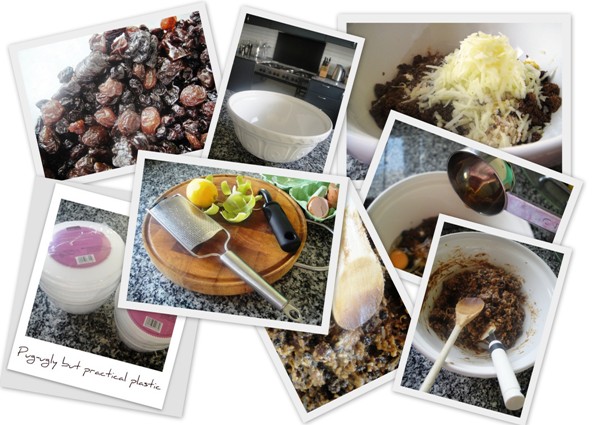
Directions
- Put the currants, sultanas and prunes into a bowl and pour over the sherry and whisky. Give it a stir, cover with clingfilm and leave to steep overnight (or for up to a week).
- Butter the inside of the pudding basin and lid.
- Put a large pan of water on to boil.
- Combine all the ingredients and stir together in a large bowl. Tip: to measure out the honey, pour boiling water over the tablespoon first and it will pour off the spoon easily and cleanly. There are various traditions about stirring a Christmas pudding (East to West because of the wise men and everyone in the family taking a turn) but I usually do it solo.
- If you want to use pudding charms add them now. I can NEVER find mine when I’m making the pud and anyway, in the interest of fairness surreptitiously drop one in the top of each serving on the day.
- Use a spatula to scrape the mixture into your basin or basins and level the top. Snap on the lid (or tie on your paper). I used Nigella’s belt-and-braces-method of wrapping a layer of foil round too.
- Place the basin in the saucepan of boiling water which should come halfway up the sides and put on the lid. Alternatively you could use a lidded steamer if you have one. Steam the pudding keeping the kettle boiled ready for topping up every now and again. A large pudding will need 5 hours, the smaller ones 3 hours.
- Keep in a cool place until Christmas. Mine are in the fridge at the moment but only due to the proliferation of ants in Dubai this year.
- On the day you are going to serve the pudding, replace the foil and steam as above for 3 hours.
- Remove the lid of the basin, place a plate on top and invert, gently squeezing or tapping to release the pudding.
- Warm the brandy or vodka in a small pan (do not boil). Take the pudding and pan to the table, dim the lights, pour the alcohol over the pudding and set light to it (using a long stemmed barbecue match or lighter for safety). I do not recommend walking with a lit pudding!
I like whisky cream and brandy butter with mine. Or even better, custard.
Fresh food home-delivered in Dubai and a Moroccan salad

When a good friend moved into an apartment recently, she bemoaned the difficulty of doing a supermarket shop for a family of five and getting it from her car, via the lift, into her home. As a shoulder to cry on I can listen quite well, but feel of much more use if I can offer some kind of tangible help. I bombarded the poor girl with a list of home delivery options but this was also a catalyst to order from one of them myself.
I’d met the people from Salata at the Souk al Bahar market and they were very enthusiastic about their fresh-looking products. The fruit and vegetables are not organic but they are locally grown or imported from some trusted partners. They use a hydroponics system, a soil-less growing method, which means they use a minimum of chemicals and farm in a very sustainable way. With the sad closure of the Nazwa organic farm shop in the summer I had been meaning to try them out as a way of getting fresher local fruit and veg.
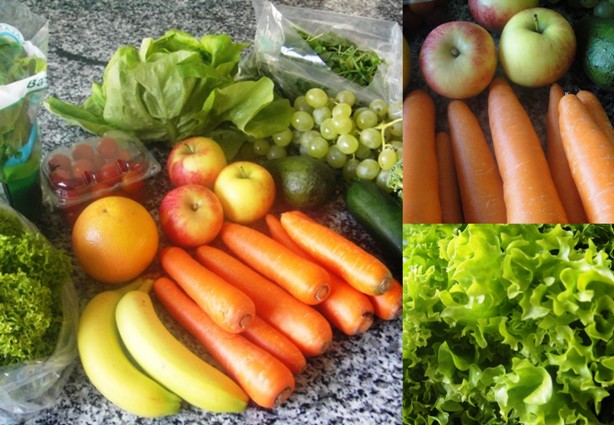
Some of the contents of my first lucky box from Salata
You place an order with Salata online by 10am on a Monday and it is delivered on Thursday. I browsed through the website but couldn’t make decisions about what I needed for the next week so plumped for a ‘lucky box’ for 100 AED (about 27 USD or 17 pounds sterling). I couldn’t believe the amount in the box when it arrived; it included potatoes and peppers, fresh salad and herbs, courgettes and cucumbers and more. As a keen cook all I could see were endless possibilities for the week.
I’ve had the boxes delivered for a few weeks now and like the surprise element. The salad in particular is very fresh. You also have the option to order exactly what you want from their online list (which I did this week as the last box I received had enough lettuce to feed us for a month!).
Having to cook from the box has had me searching out a variety of new recipes and when green peppers arrived I thought of this Moroccan salad. As a lemon-freak I love the astringency of the flavours; it makes me feel like I’m getting all my vitamins for the week in one dish. The recipe is below; let me know what you think.
For Dubai-dwellers, the other home-delivery options I thought of are here (I have only tried Salata and Bebida so would really appreciate comments if you’ve used the other services):

Salata – Locally grown fresh vegetables (and some imported fruit) ordered online and delivered on a Thursday.
Swiss Cottage – Freshly baked European-style breads delivered daily in time for breakfast.
Bebida – Home delivery of groceries (from cereal and juices to coffee and noodles).
Earlybird – Another home-delivery option for groceries.
Organic Foods and Cafe – Will home delivery free if you spend over 500 AED otherwise a 50 AED charge.
Barakat – You can order juice from their Jumeirah Beach Road shop and they’ll home deliver for a minimum order of 50 AED. The map and contact details are on Places.ae
Let me know if you hear of any more.
-
- Preserved lemons (home-made)
-

- Tomatoes, peppers and preserved lemons
-
- Flat leaf parsley
Moroccan green pepper and preserved lemon salad
Adapted from Sophie Grigson’s Sunshine Food
Serves 4
Ingredients
3 green peppers (capsicum)
3 ripe, well-flavoured tomatoes
1/2 a preserved lemon
3 tablespoons of chopped flat-leaved parsley
1 tablespoon lemon juice
1 1/2 tablespoons of extra virgin olive oil
salt and freshly ground black pepper
Grill the peppers on a gas flame or under a very hot grill until the skins blacken. As soon as they are cool enough to handle, remove the skins and seeds and cut into strips. Cut the tomatoes in half horizontally and squeeze them gently to remove the seeds, then finely dice. Discard the pulp from the preserved lemon and dice finely. Mix all the ingredients together, season to taste. Served lightly chilled or at room temperature (having drained off any excess dressing).
This goes really well with grilled fish especially oily ones like mackerel or sardines.
Butternut and feta tartlets – Autumn flavours in the desert
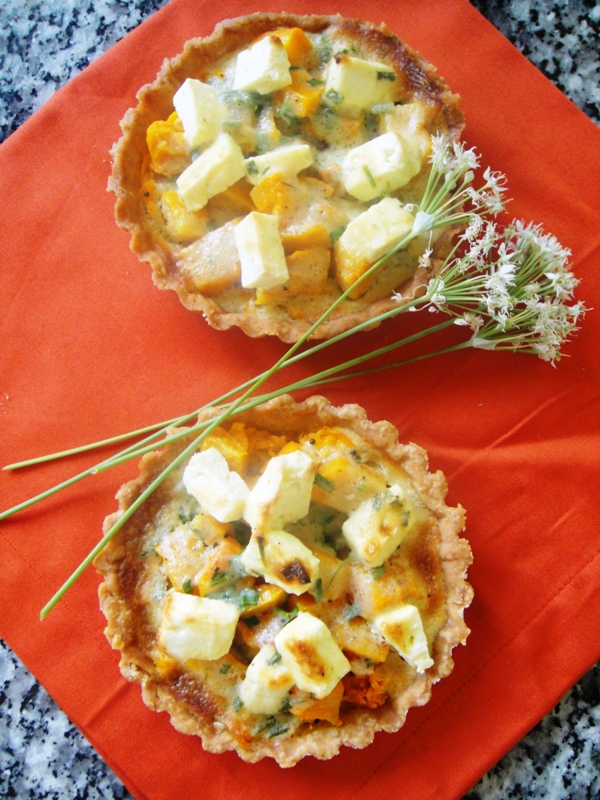
Butternut and feta tartlets with garlic chives
Other people have been helping me relive the transition from Summer to Autumn in the traditional English way. Claire from Things We Make and Gill from My Tiny Plot were harvesting the last things in their gardens, Aran from Canelle et Vanille was gathering hazelnuts (in Florida) and cooking with pears. I can smell the wood smoke, hear the crackling of bonfires and feel the nights drawing in. All have been preparing for the dying down and dormancy of nature. Here in Dubai, this time of year is the reverse for me. The days and nights of stifling humidity are finally giving way to freshness and blue skies. My herb pots that I left in July as I went to the UK for two months are parched and drooping. It’s time to clear them all out and plant new seeds. The woody herbs like oregano and thyme survive the searing temperatures here, after all it does get pretty hot in Provence, but the additional moisture in July, August and September finish them off. Surprisingly some garlic chives which I planted have revived with abundant grassy strands and delicate white flowers.

One book I brought back from England that I’ve been cooking my way through is Plenty by Yotam Ottolenghi, but I turned to his first book for inspiration for these little tarts. I replaced the recommended goat’s cheese with feta in an attempt to tempt my vegetarian daughter. I failed but her loss was my gain. Make these when you have plenty of time but you can break the recipe up in to stages (e.g. make the pastry cases and fillings one day and finish off the next). The garlic chives from the garden added a lovely savoury freshness to the autumnal flavours of the pumpkin and spiced carrot. By the way, if you are in Dubai, you can get the small tart tins (non-stick and loose-bottomed) from Lakeland in Mirdif City Centre.
Do the changing seasons affect the way you feel (and the flavours you use)?
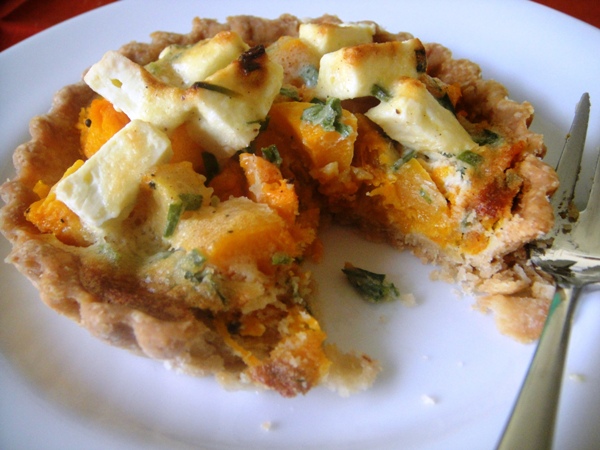
Butternut, carrot and feta tartlets
(adapted from Ottolenghi The Cook Book)
Makes 6
Ingredients
For the pastry
230g plain flour (I use Waitrose organic from Spinneys)
1/2 teaspoon salt
110g cold butter, cut into small pieces
60ml milk
For the filling
450g (net weight) peeled and seeded butternut squash, cut into 2cm dice
2 tablespoons olive oil
1 teaspoon mustard seeds
180g (net weight) peeled and coarsely grated carrots
35g caster sugar
30ml white wine vinegar
50ml orange juice
30g unsalted butter, melted
150g feta cheese
1 egg yolk (free-range if possible)
120ml whipping cream
20g chopped chives (garlic chives if available)
40g Parmesan cheese, freshly grated
salt and freshly ground black pepper
- Make the pastry first. Sift the flour into a large bowl and add the salt (you could also add 25g of poppy seeds at this point – I didn’t). Rub the butter into the flour until the mixture resembles fine breadcrumbs (I do this in a food processor or in my KitchenAid with a paddle attachment as Dubai is always too hot for great pastry making). Add the milk and stir until the mixture just starts to form a ball. Shape the dough into a fat disc, wrap in cling film and chill for a few hours.
- Preheat your oven to 170 C (Gas Mark 3, 338 F). Mix the diced squash with 1 tablespoon of the olive oil, some salt and pepper and bake in a roasting dish for 15 minutes or until semi-soft. Allow to cool
- While the squash is cooking, heat the remaining oil in a large saucepan and add the mustard seeds. Cook until they start to pop, then add the grated carrots and cook, stirring frequently, for 10 minutes. Stir in the sugar, white wine vinegar and orange juice, bring to the boil and then simmer on a low heat for 20-25 minutes until almost all the liquid has evaporated. Leave to cool.
- Brush the inside of 6 tarlet tins (10cm diameter, 2cm deep) with melted butter. On a lightly floured work surface, roll out the pastry to 3-4mm thick. Cut out circles and line the tins evenly, cutting off the excess pastry. Chill the cases for at least 30 minutes before baking blind at 170 C for 20 minutes. Remove the greaseproof paper and baking beans and return to the oven for 5-10 minutes until golden brown. Leave to cool.
- Raise the oven temperature to 180 C (Gas Mark 4, 356 F). Combine the egg yolk, cream, chives, parmesan, a pinch of salt and a generous grinding of black pepper in a large bowl (I used my KitchenAid). Whisk together until the cream forms soft peaks and then refrigerate for at least 10 minutes.
- Divide the carrot mixture equally between the pastry cases, spreading it over the bases. Top with butternut squash and crumble the feta over it. Place the tartlets on a baking tray and spoon over the cream mixture. Bake for 8-10 minutes until the filling is golden and set. Remove the tarlets from their tins as soon as they are cool enough to handle. Serve warm (although good cold too).
A rocket salad makes a great accompaniment. These would be ideal picnic food. If you make these, let me know if you enjoyed them as much as I did.
Truffle, risotto and perfect pasta from Georgio Locatelli
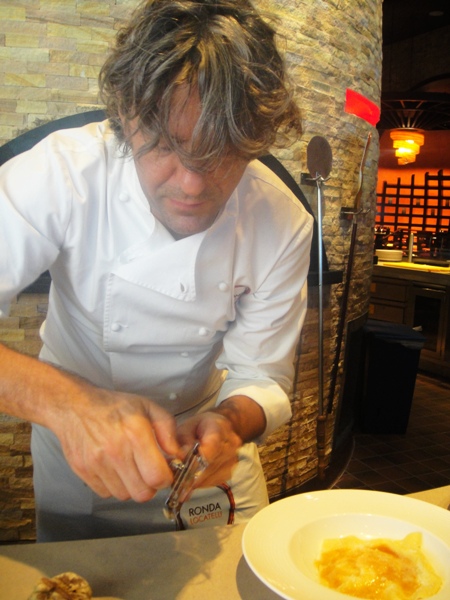
Giorgio Locatelli shaving truffles over pasta
“The problem with the French”, said Michelin-starred chef Giorgio Locatelli, “is they make really complicated recipes and then put a little bit of truffle on top. I want a simple dish with a lot of truffle on top that will really bring out the flavour of the truffle”.
I have eaten truffle before but it has always been in the former incarnation. And here I was, back at Atlantis, at Ronda Locatelli for a cooking class from the eponymous chef, and white truffle was the key ingredient.
I felt like an excited school girl about this, and not just for the cookery. Giorgio appeared, a little more grey than I anticipated but with floppy hair and that droopy-eyed Italian look and slightly craggy face that makes him look like he’s spent too much time in a rugby scrum. Swoon. As soon as he started talking about truffles I was under a very different spell. He’s charming and erudite, as you would expect from a highly successful chef on TV, but the knowledge and enthusiasm for his subject interspersed with little anecdotes from his childhood, had everyone in the room (mainly people from media and PR) rapt.
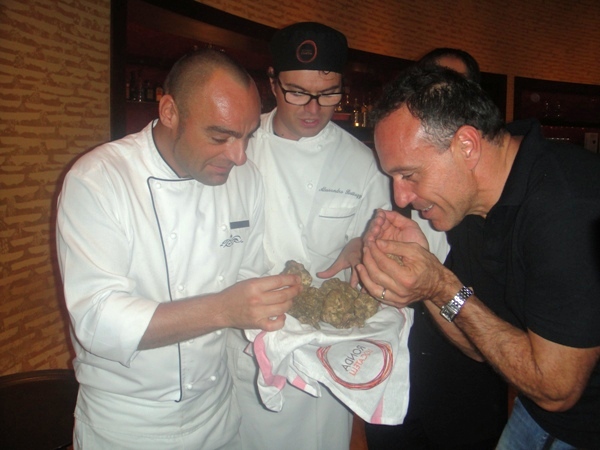
Truffle-hunter Carlo and the Ronda Locatelli chefs smell the truffles
A large bowl of knobbly truffles were passed round so we could inhale the scent. It was intense and the precious cargo were swiftly covered up and whipped back to the fridge to preserve their flavour.
I could write a whole essay on the truffle with information from Giorgio and his truffle hunter side-kick Carlo but I’ll restrain myself to a few snippets. Truffles became a present that kings gave to kings but they started as peasant food with the poor foraging for something to enliven the plain pasta and rice for a couple of months of the year. Only within the last twenty years has truffle mania seen the prices rise and truffle dealing take place as it has been traded like other commodities.
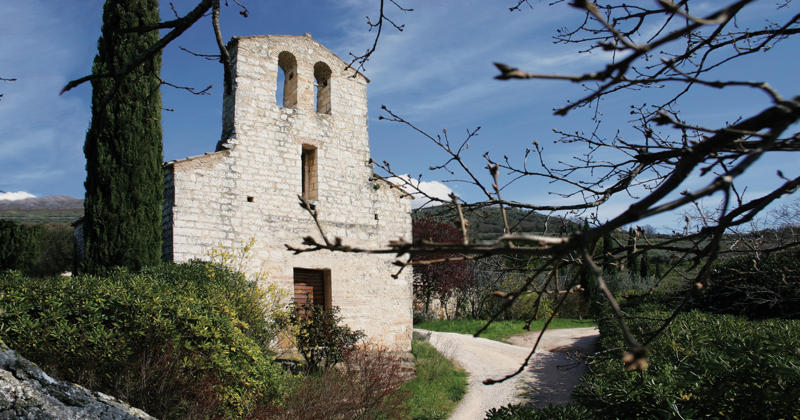
San Pietro a Pettine, the Umbrian estate where Carlo finds white truffles
The Italians use dogs rather than pigs to hunt truffles as they are more communicative with humans so the nuances of the ripeness of the truffle can be gauged. The treatment of these dogs prior to a truffle hunt may not bear close scrutiny (I’m betting the Italians don’t have an equivalent of the RSPCA) and the treatment of humans on a truffle hunt was a bit extreme too. G. and his mates were shut away in a hut in the woods and not allowed to wash or use toothpaste for 24 hours. Woken at the crack of dawn they were given a breakfast of ham and red wine (bread and truffle is reserved for the dog’s breakfast and when they emerge “go crazy mad”). Spores do not travel more than 35-40 metres so the general area is known where the dogs are left to roam. Here’s Giorgio’s quick guide to doggy truffle-hunting language:
Dog uses one paw to dig = truffle not ripe
Dog uses two paws to dig = truffle semi-ripe
Dog uses both paws and sticks his nose right in = perfect
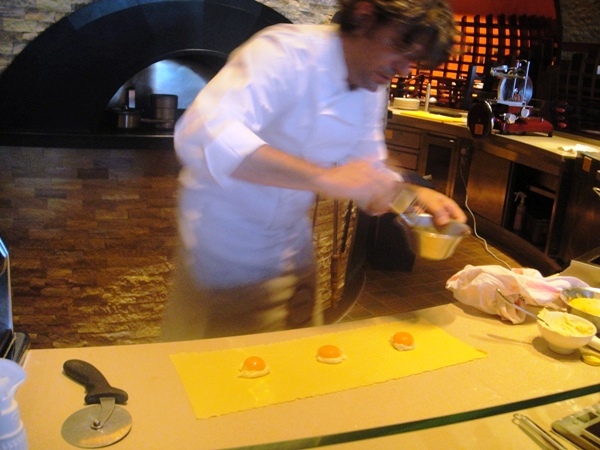
Giorgio Locatelli making the egg yolk pasta parcels
As soon as the truffle leaves the ground it stops ripening and is at it’s very best eaten there and then. We were given some truffle butter to taste but Giorgio was absolute disparaging about truffle oil. The formula for the truffle has been discovered (by the Austrians!) so the flavouring for most oils is a chemical compound. “You can tell by the burp” Giorgio expostulated, “real truffle doesn’t repeat”! Neither G or Carlo use oil or butter unless it’s homemade.
In Giorgio’s opinion the most delicious way to eat fresh truffle is on fried eggs. He then prepared some gourmet alternatives starting by making fresh pasta which he turned into ravioli filled with pomme puree (fine mashed potatoes with truffle butter) with an egg yolk on top. These were served with generous shaving of truffle and some parmesan. We all passed round a plateful to share – sublime doesn’t get near the taste and texture. And looking back, this was the dish that showed off the flavour of the truffle best.
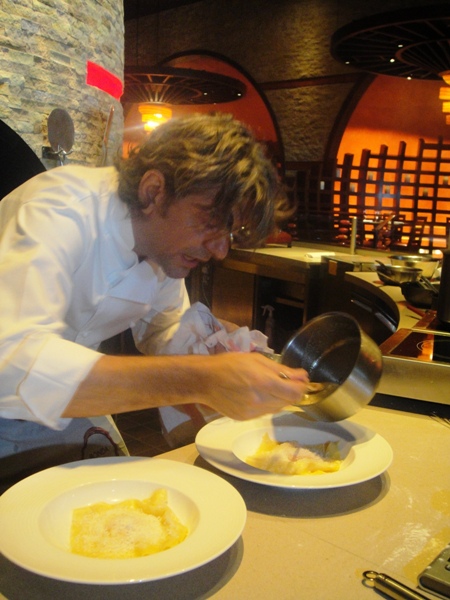
Giorgio pours the sauce onto the pasta
We then swooped on every plate that Giorgio produced; Tagliolini with beurre fondue (a luxurious sauce made of butter and cream), cups of pomme puree frothed up with air (sounds rather cheffy but it was divine) and a risotto – all bringing out the musky flavour of the truffle that it was topped with.
Again more historical information ( Mussolini was responsible for the spread of rice-growing from some regions to all across Italy) and little snippets of Giorgio’s boyhood where he stood on a beer crate in his parents’ restaurant and stirred risotto and bechamel. I have read masses of cook books, watched programmes about pasta and risotto making but I learned more about them in those couple of hours to bring a new understanding into my cooking. I’ve listed the top three most useful tips.
Top 3 tips to make perfect pasta from Giorgio Locatelli
- Make the pasta the day before and leave it to rest overnight in the fridge.
- Pay more attention to how you feed the dough through the machine than how you crank the handle .
- Don’t use too much flour when rolling it out. If the pasta dough sticks to the machine the dough is too wet. G used practically no flour for the ravioli and a little for the tagliolini just to separate the strands once they were cut.
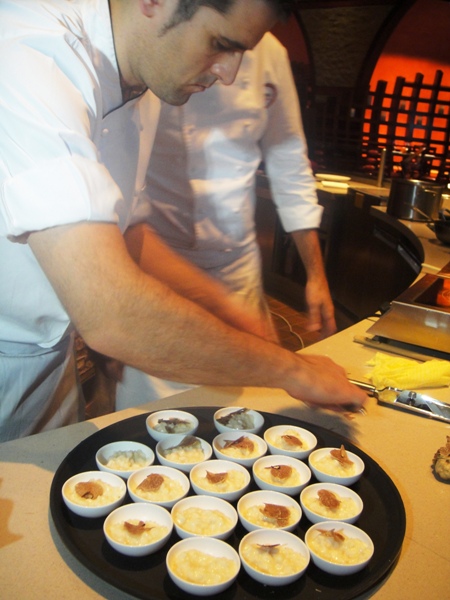
A sous chef from Ronda Locatelli shaves truffle onto risotto
The risotto was a revelation. Just a bit of chopped onion, superfino carnaroli rice (“the most elegant”) and chicken stock (no wine today because of where we were, but he would normally recommend it). He added cold butter and parmesan at the end off the heat (mantecatura).
This time there was no sharing, we all had a dainty little dish of the sublime risotto and white truffle to ourselves. I’m glad because I might have fought someone for this.
The session was over too soon and I thanked the man himself and told him my risotto didn’t taste like his. He said, in his languid accent, “you can do it. My wife’s a rubbish cook and she can make risotto” !
Top 3 tips to make perfect risotto from Giorgio Locatelli
- Do not use cream or mascarpone (like bad restaurants do).
- You can tell if risotto is cooked perfectly by the appearance of the grains – an aura of translucency and a pin of white.
- At the end of cooking you should let the risotto rest. You can tell if it is the right consistency by the sound it makes when vigorously stirred (like porridge). It should have enough liquid to have a slight ripple (like the water in Venice) which Giorgio called all’onda (waves). The exception is in the South of Italy where they make risotto firmer, more like a cake. Then you add the mantecatura.
Note: Never cook risotto while wearing shorts as the grains retain heat – about 160 C..ouch!
You can see Giorgio in action making pasta on TV. And here’s the recipe for just one of the things we tasted. If you do manage to get hold of a white truffle (which you can buy for 40 AED per gram at the restaurant or go and stay with Carlo and hunt your own) I strongly recommend it. Otherwise the special truffle menu is available from October 28th 2010 at Ronda Locatelli at Atlantis Palm Jumeirah. These particular gourmet white truffles (Tuber Magnatum Pico) are from the grounds of Carlo’s San Pietro a Pettine Estate and I’m already looking for an excuse to go back and taste them again paired with this traditional-style Italian cooking.

A delightful, little taste of risotto with truffle
Parmesan Risotto with White Truffle by Giorgio Locatelli
(Risotto al Tartufo Bianco)
Ingredients
2.5 litres good chicken stock
50g butter
1 onion, chopped very, very finely
400g superfino carnaroli rice
125ml dry white wine
Salt and freshly ground black pepper
For the mantecatura
75g cold butter, cut into small dices
100g finely grated Parmesan cheese
Method for the risotto
- You need to have a pan of hot stock ready on the hob, next to where you are going to make your risotto.
- You begin with the soffritto, which is the base of the risotto. Making this involves sautéing onions – and sometimes garlic – in butter.
- Next you have the tostatura, the ‘toasting’ of the rice in this mixture so that every grain is coated and warmed up and will cook uniformly. At this point, you usually stir in a glass of wine and let it evaporate before beginning to add hot stock.
- Now you start adding your stock slowly (a ladleful at a time) and when each addition is almost absorbed, you add the next one, stirring almost continuously so that the heat is distributed through the mixture and you achieve the rubbing away and dissolving of the starch around the outside of the rice, without breaking the grains.
- When the rice is ready, tender but still al dente, you need to rest the risotto (just for 30 seconds), turn off the heat, and without stirring, decrease the temperature.
- Finally add butter and cheese.
- This last step is the mantecatura, the beating in of butter and cheese which helps gives the modern risotto its unique consistency.
- Add 1 teaspoon of truffle butter along with the parmesan (and a little veal sauce).
- Shave the white truffle on top.
Then you are ready to serve – and the sooner it is eaten the better!
The egg yolk and potato parcel recipe is on chef Robert Conaway’s blog who is from West 14th restaurant (also on The Palm).
My pictures aren’t great as the lighting was so low but I hope they’ll give you an idea of the atmosphere (and I regret not plucking up the courage to ask for one of me and the man himself). I am now officially a Locatelli fan.
-

- Giorgio and Carlo introduce the session
-

- It’s not in the cranking action, it’s the other hand that counts!
-
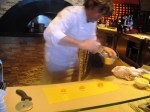
- Giorgio Locatelli making the egg yolk pasta parcels
-
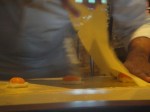
- Laying the pasta over the egg yolks
-

- Cutting the tagliolini by hand
-

- Giorgio Locatelli shaving truffles over pasta
-

- Shaving yet more delicious white truffle
-

- A sous chef from Ronda Locatelli shaves truffle onto risotto
-
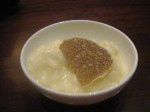
- A delightful, little taste of risotto with truffle
-

- Giorgio pours the sauce onto the pasta
-
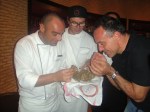
- Truffle-hunter Carlo and the Ronda Locatelli chefs smell the truffles
-

- San Pietro a Pettine, the Umbrian estate where Carlo finds white truffles
Halloween, gingerbread and two kinds of pumpkin
When I was eight years old I went into hospital for a small operation. All my classmates sent me “get well soon” cards that they made at school. Some of the girls drew princesses and fairies on the cards but my closest friends covered theirs with potions and witches. One card says “I hope you will die”. I loved it; we were obsessed with witches and spookiness. Halloween was a night that you felt extra safe indoors because heaven knows what was flying up in the sky on a broomstick. Trick or treating was a foreign thing. “Give us a treat or we’ll play a trick on you” sounds more like a scene from The Sopranos to me, but bringing up children overseas means that it has been part of our lives in a way that, regretfully, bonfire night hasn’t. Sharing the excitement of dressing up and going out in the dark with groups of children makes me remember how much I loved all things gruesome at that age.

First carve your pumpkin
So I’ll be putting a sign on my door and handing out spooky gingerbread that me and my teens have made, to those that ring the bell. We’ve got a ‘scary sounds’ cd to play and have even carved a pumpkin which was great fun. We made a skull. See How to carve a pumpkin and more great pumpkin pics for inspiration and directions.

My favourite gingerbread
The gingerbread recipe is one I have made countless times and I’ve never met anyone who didn’t find it irresistible. It’s been the basis for fairies, camels, Easter bunnies and of course Christmas decorations. It’s very forgiving so children can roll it out again and again. Download a copy of the gingerbread recipe here. Gingerbread (If you are in Dubai and want an icing class I can recommend Vinitha who runs Wilton classes at Tavola on the Beach Road).
Hay, hay it’s Donna day
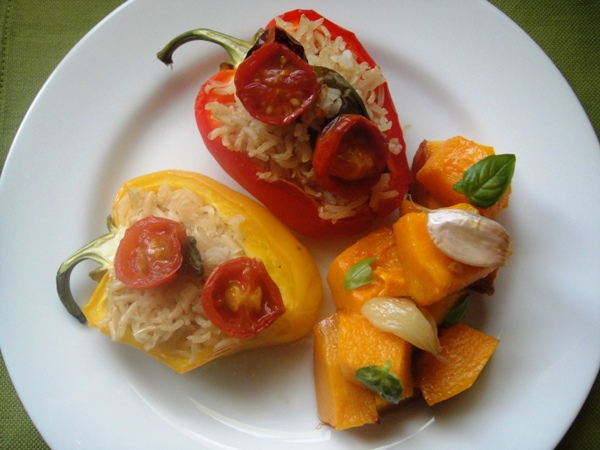
And what to do with the inside of the pumpkin? Donna Hay is a celebrated cookery writer from Australia who pares food down to modern, tasty and elegant recipes. This recipe is adapted from one chosen by Chez Us for Hay, hay it’s Donna day. I tinkered a bit to turn it into a vegetarian autumnal feast for my daughter – the colours are perfect – but just replace the peppers with some chicken breasts ( and serve the rice on the side) to transform back into a carnivorous feast. Simple and no magic spell required.
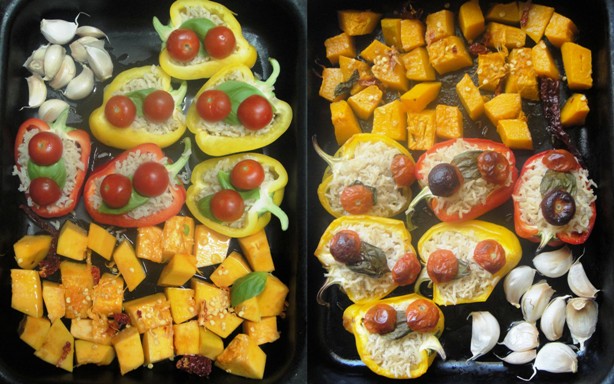
Spicy pumpkin with roasted garlic and stuffed peppers
- 350 g pumpkin, peeled and chopped
- 1 head garlic, cloves separated
- 2 tablespoons olive oil
- 1 teaspoon chilli flakes
- 2 cups cooked brown rice (I used 200ml volume brown basmati)
- 2 or 3 peppers (capsicum)
- cherry tomatoes
- 1 cup torn basil leaves
- ¼ cup (60 ml) white wine vinegar
- 2 tablespoons olive oil, extra
Preheat oven to 220ºC (425ºF). Place the pumpkin, garlic, olive oil and chilli on a baking tray and toss to combine. Cut the peppers in half, discard the seeds and membrane and stuff with the rice. Top with a couple of halved cherry tomatoes cut side down. Roast for 20 minutes or until golden and cooked through. Squeeze the garlic from the skins and place in a bowl with the pumpkin, basil, vinegar and extra olive oil. Mix well to combine. Serves 4.
Are there any traditions you’ve adopted especially edible ones?
Chelsea and cinnamon buns
 I do love a nice Chelsea bun. It brings back memories of going to the dentist. My Mother who was usually very health conscious would take us to the baker’s shop to buy a treat before taking us back to school – usually a Chelsea bun or a dripper. My sister and I would gingerly eat the doughy mouthfuls, our gums still frozen and tingling from the anesthetic. My children, however, do not relate to this at all. Brought up as ex-pats all their lives, the patchwork of their childhood food experiences is very multi-cultural but they were aghast that this ‘boring’ bun was my first choice when we visited a baker this Summer in the UK. They are drawn to sweet treats from brands that seem to be taking over the world and making every city into a carbon copy. I can’t help feeling rather sad about this as though a bit of their English heritage is being lost. In fact I can feel a ‘History of the Chelsea Bun’ session coming on (and there is a really good one on Baking for Britain).

This month’s Fresh From The Oven Challenge was set by Wendy from the Quirky Kitchen and while delighted to make Chelsea buns, as the only dried-fruit eater in our family I knew that it would be a slippery slope if I made nine of them. However my youngest daughter adores Cinnabon so inspired by a great ‘taste alike’ recipe from gorgeous Tartelette I split the filling half and half.
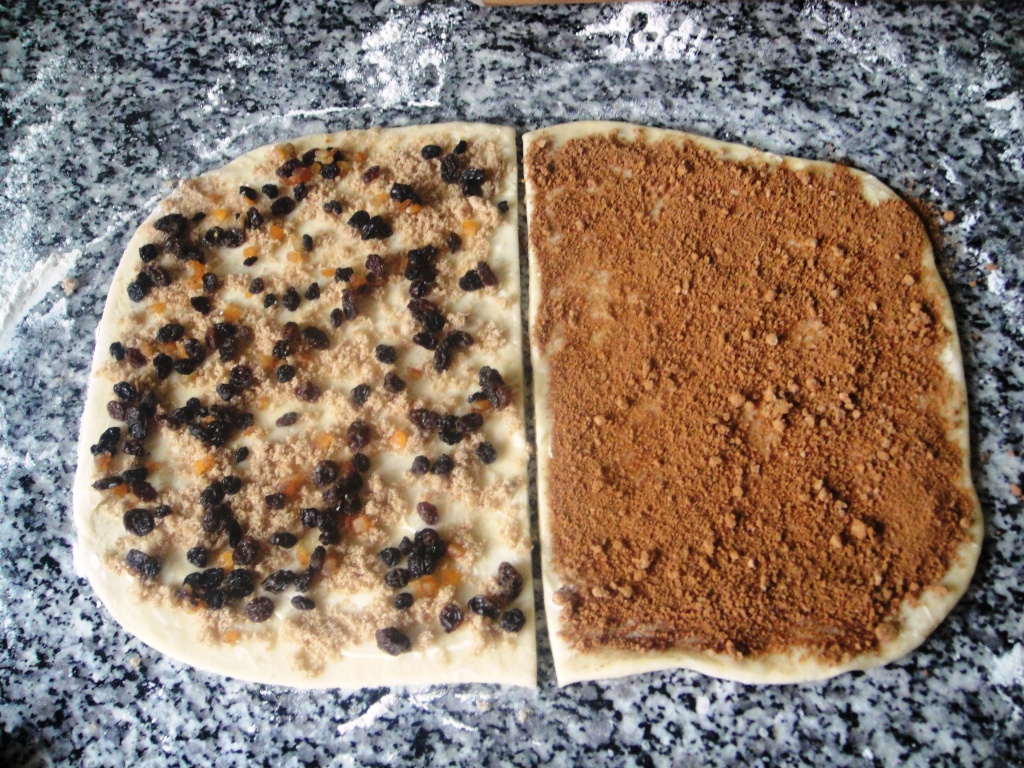
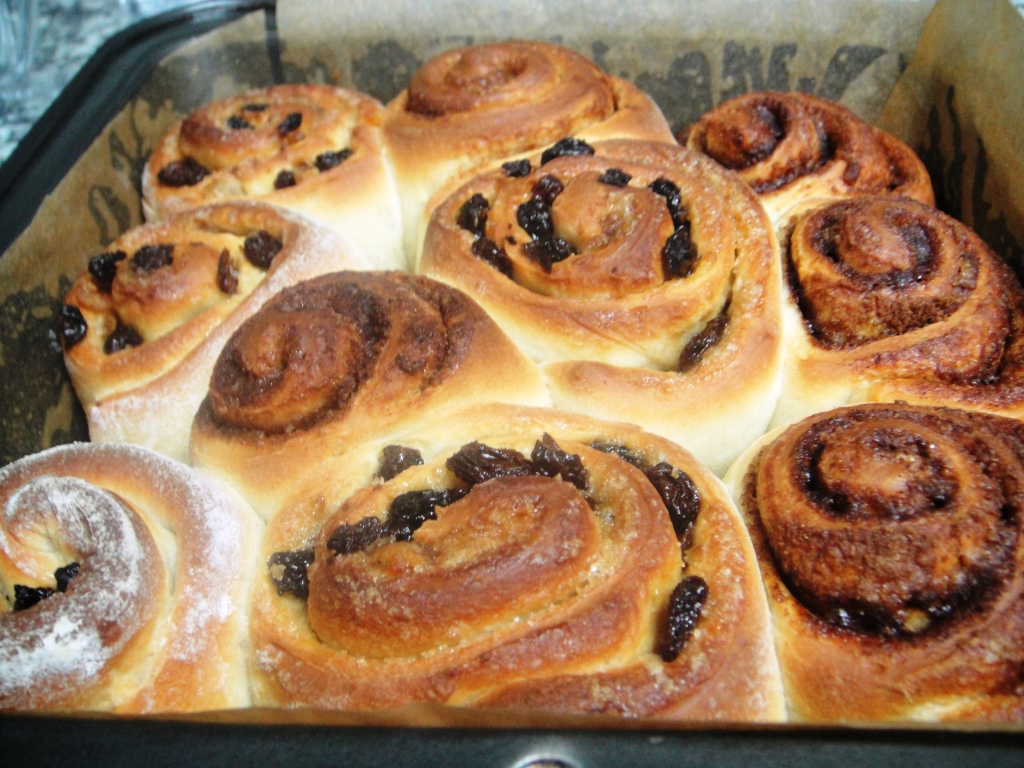
How easy these were to make (whichever version you choose). The icing on the cinnamon rolls is decadently addictive and my teens declared it better than Cinnabon ( and better than Betty Crocker – where did I go wrong?). I would rather our less-healthy treats are home-made from good ingredients even if the calories are rather empty than sell my soul to a multi-national any day! Go on – try them and see.
P.S. Don’t forget to check out the Fresh From the Oven site to see how everyone else got on with their Chelsea bun making.
90ml warm semi-skimmed milk
55g cream cheese at room temperature
190g icing sugar
1 tablespoon milk
1/4 teaspoon vanilla extract
- Combine the flour, sugar, salt and yeast (if using fast action yeast) into a mixing bowl. If you use active dried yeast (usually the only choice in Dubai) add it very slowly, grain by grain, to the warmed milk stirring all the time. Make a well in the centre and add the softened butter, egg and milk. Mix to make a soft dough. (I used my KitchenAid with the paddle and then changed to the dough hook). Knead until smooth.
- Cover and prove until doubled in size. This took about an hour and a half (although Wendy says her airing cupboard can do this in around half an hour).
- Generously butter and line a 18 cm (7 inches ) square tin. Make sure it’s not a loose bottomed one, or you’ll get problems later on and lose your filling.
- Flour your work surface, and roll out the dough, (no need to knock it back) to a rectangle measuring about 30 x 23 cm (12 x 9 inches). If you get the edges as square as you can it will help to make your buns look even, but I quite like the squiffy homemade look.
- Spread the softened butter as evenly as you can over the dough. Sprinkle the sugar and the dried fruit on top (or the cinnamon sugar) and gently press it into the butter.
- Now, roll up the dough along the long edge, as though you were making a Swiss Roll. Seal the edge. I find that smoothing it down with the flat side of a paring knife can help here.
- Turn the roll over so that the seal is underneath and cut the roll into 9 equal buns (I made 10 as I did half and half filling).
- Place the buns, cut side down, into the buttered and lined tin, and leave to prove until the dough has doubled in size, and they have all joined together into one big Chelsea bun muddle. I baked mine in a 180 degree oven, for 20 minutes but check after 15 minutes.
- Once cooked, cool on a wire rack. For the Chelsea buns drizzle honey on the top while still warm, for the cinnamon buns top with the icing after 10 minutes.
-
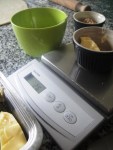
- Weighing the ingredients, my preferred method
-

- Dough with two fillings – traditional and cinnamon
-

- Ready for the oven
-

- Buns browned and ready for icing
-

- Stars and stripes!
-

- A British tradition – Chelsea buns
-

- Cinnamon buns coated thickly with icing
Thanks for joining me for this month’s baking challenge. Do you have a traditional favourite or fond memories of a sticky bun?
Foodie friends, Oktoberfest and home-made pretzels
 Pretzel mania
Where do you think I found this mountain of pretzels? I bet that Dubai wouldn’t be top of your list but as the Autumnal months creep in Dubai residents can choose from a range of places around the city to celebrate Oktoberfest. A group of us, all united by a love of food and writing about it online, thought that a trip to one of the most popular venues would be fun. So off we went to the Hofbrauhaus in the JW Marriot in deepest, darkest Deira.
We arrived early and it was pretty empty giving us lots of time to take in the spectacle of Asian staff in full lederhosen. The menu options are over-complicated and by the time the waiter worked out what we were all having I decided that I would abandon my car and dive into the German beers (the super deluxe package!). I was gasping for my stein of authentic Hofbrau.
Sausage and sauerkraut
Apart from the pretzels, the cold buffet looked a little sad although there was a good array of smoked fish and salads. I’d been dreaming of sauerkraut, mustard and really good sausage since I visited Munich last December and there was a fair choice at the hot buffet. Suckling pig is not something you see on a buffet in many Muslim countries. The presentation was a bit lacking and there were no labels so I had no way of distinguishing my bratwurst from my knackworst. I also played hunt the sauerkraut and then had to walk back out into the corridor to the salad buffet to get some mustard. (Continued after images)
-
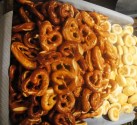
- Plenty of pretzels
-

- Praying pretzels
-

- Beer-making equipment?
-
- Personal steins
-

- A brewing vat?
-

- The friendly staff in lederhosen and dirndl
-

- Hofbrau from Munich on tap
-

- A diner tucks into the suckling pig
-

- Weissbier and friends
-

- Enthusiastic dancing
-

- Traditional entertainment?
-

- The sausage dominated hot buffet
Eccentric entertainment
The entertainment arrived and I will be tactful here as I don’t want to come across as completely cruel and heartless. Just think Una paloma blanca German style. The place was now full, of German families in the main, who were obviously really enjoying themselves. Children, dressed up in their best, the girls with neatly plaited hair, were dancing enthusiastically and parents and grandparents were swaying in time to the music. Lederhosen was sported (complete with knitted knee warmers), dirndl dresses were swirled, steins were raised and weissbier consumed. I had eaten so much meat that I was dreaming of lettuce for a week.
Overall we had a jolly time, mainly due to the great company and atmosphere. The staff were great, it was good value for money and it was a family friendly version of Oktoberfest rather than standing on tables surrounded by young people singing loudly. Let’s just say it was an experience.
Make your own pretzels
Making your own pretzels is fun, easy and a freshly baked one is a wonderful thing. Apparently their exact origin is not known but could be France or Italy. The folded dough is supposed to represent a child’s arms crossed in prayer and they were given as rewards for diligence. See below for recipe.

Soft pretzels
Ingredients:
For the dough:
350 ml warm water (about 45 C)
1 tablespoon sugar
2 teaspoon sea salt
2¼ teaspoons dried active yeast
620 g plain flour
60 g unsalted butter, melted
Vegetable oil
To finish:
Cooking spray
2.3 litres water
130 g bicarbonate of soda
1 egg yolk beaten with 1 tbsp. water
Pretzel or sea salt
Directions:
Combine the water, sugar, salt and yeast in the bowl and mix to dissolve the yeast (I used my Kitchenaid with a paddle attachment).
Add in the flour and melted butter and mix just until the dough comes together (I used the paddle again)
Knead for about 5 minutes until the dough is smooth and clears the sides of the bowl (I used the dough hook on low speed).
Transfer the dough to a bowl lightly greased with vegetable oil, turning once to coat. Cover with cling film and let rise in a warm place, about 50-55 minutes or until doubled in size.
Preheat the oven to 220 C. Line two baking sheets with baking or parchment paper and spray lightly with cooking spray. Bring the water and bicarbonate of soda to a boil in a large saucepan or stockpot.
Divide the dough into 8 equal pieces and roll each piece into a long rope, about 60 cm. Do not flour your work surface, the oil will stop them from sticking.
Make a U-shape with the rope and, holding the ends of the rope, cross them over each other and onto the bottom of the U-shape in order to form the shape of a pretzel.
Place onto the lined baking sheet.
Put the pretzels, one or two at a time, into the boiling water for 30 seconds. Remove from the water with a slotted spoon (I found it easy using 2 slotted spatulas) and return to the baking sheet. Once all the pretzels have been boiled, brush the tops with the egg wash and sprinkle lightly with salt. Bake in the preheated oven until dark golden brown, about 12-14 minutes. Transfer to a cooling rack for at least 5 minutes before serving.
Do try them. Ours were a bit irregular in shape as we made them in a hurry but my girls pronounced them better than the ones in Munich! Praise indeed. Have you had success with holiday food cooked at home? Which items are best left to the experts? Love to hear from you in the comments.
P.S. Visit I live in a frying pan for a different account of our evening.
Jack Daniels with everything – an evening at Seafire
 I have a gripe about restaurants in Dubai. Despite acres of choice it’s difficult to find somewhere nice for casual dining. A lot do ‘fancy’, but where do you go when you don’t have a yearning for a tian of vegetables, a venison jus or dessert with a tuile? Street food is fine but I’d like to enjoy a nice glass of wine (without renegotiating my overdraft)? The ‘all-in buffet-style’ dining places offer value for money but they’re better suited for a school class Mum’s gathering (no-one fights about the bill). Simple food, nice surroundings with a drinks menu at a ‘mid-week kind of price’ is what I’m searching for. I just wish Carluccio’s was licensed here.
Anyway, when I was invited (more about that later) to Seafire at Atlantis I was prepared for swanky. This turreted pink hotel, out on The Palm Jumeirah, is just the wrong side of gaudy for me, but there is no denying the lavishness and grandeur of it all. We were there to try the new Jack Daniel’s menu so got started with Lynchburg Lemonade and Amaretto Jack cocktails. This is special Seafire Single Barrel Jack Daniel’s – a blend specially created for the restaurant. You may remember that I’ve cooked with Jack Daniel’s and my husband makes a mean Lynchburg so I was intrigued. We met Grant Murray, the very welcoming executive chef, who apologised that his baker had not added any corn to the corn bread but he’d rustle up something lovely for us.
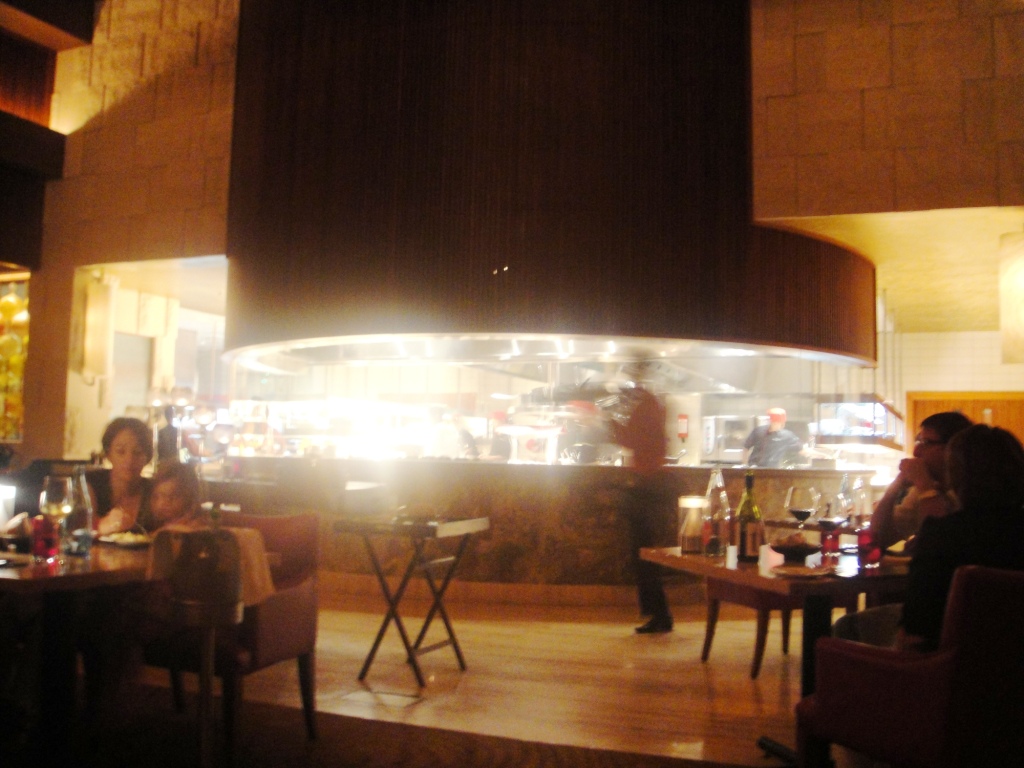 Seafire, like most of the spaces in Atlantis, is absolutely enormous; the warehouse-sized space is made less intimidating by wooden beams, gigantic suspended lighting, a circular open kitchen and a vast marble bar. Red leather chairs and ochre sofas provide comfort, the lighting is quite dim and the soundtrack a bit Buddah Bar-ish (if you know what I mean). It was full of families with white blonde, impeccably behaved children (most playing quietly with i-pads and the like) – Danish school holidays?
‘You know what a corn dog is don’t you?’ said our breezy waitress. Actually I didn’t. The menu was inspired by Southern American comfort food – sort of posh barbecue and drive-in-movie; a Brit from South-West England was all at sea. It was minced chicken and beef with cheese, deep fried in a crispy coating, on a stick. ‘Just throw it in your gob as usual’ said ‘Breezy’ (more friendly and polite than this sounds on the page). We did and it was a great initiation to corn-dogs.
 The slow-braised ribs (from specially bred, fed, reared and imported Atlantis Australian beef) marinated in Jack Daniel’s barbecue sauce were unctuous slabs of meat falling off the bone (and quite enormous – are you getting a theme here?). The coleslaw was packed with interesting crunchy bits and there was a sweet little corn on the cob on the side. Something plain, like bread, would have been a good foil for the richness but it never arrived. However, we never asked and the attentive staff including very charming and enthusiastic Jeet would have obliged if we had, I’m sure (and they offered us more of everything else).
If you like ice-cream (Jack D and hazelnut) with chunks of Hershey’s milk chocolate, fudgey bits and sauce then the dessert would have made your day. I like 90 percent bitter chocolate and, dare I say this, I’m not very keen on ice-cream so I think it was wasted on me. The single barrel Jack Daniels was another thing and rounded off a very lovely evening with smooth, warm, vanilla-ey, deliciousness. The enormous space meant my friend and I nattered all night without being overheard but still feeling part of the atmosphere.

Beautiful pic - NOT taken by me!
The menu is 195 AED per person (for three courses plus I think this includes a shot of the Seafire Jack with dessert) so it just fits into mid-range, unfancy (although you’d bump up the bill if you indulged in the JD Single Barrel cocktails). It was a perfect night out with a good friend, mid-week. Recommend to friends as good value and a bit of a treat? I have already.
Would I have thought the same if I hadn’t been a the guest of Atlantis and how did this come about? It’s quite common in Europe and the USA for established food bloggers to be invited to review all kinds of things (read here for an exhausting account of Mathilde’s Cuisine’s week in London). Tarik and Amanda from Atlantis marketing were absolutely charming with their invitation and our welcome was fit for VIPs. I thought why not try something different – but it does raise questions about whether it might have an impact on the integrity, content and style of what I’m writing. And do you, dear reader, really want to hear about me going out as a guest? Should I just enjoy it while it lasts?! What are your thoughts – do please let me know in the comments. I’d appreciate your feedback.
-
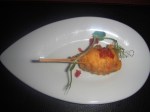
- This is a corn dog – a posh pooch
-
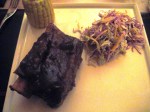
- Tasty in an unphotogenic way
-
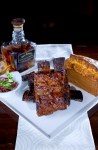
- Beautiful pic – NOT taken by me!
-

- The open kitchen
-

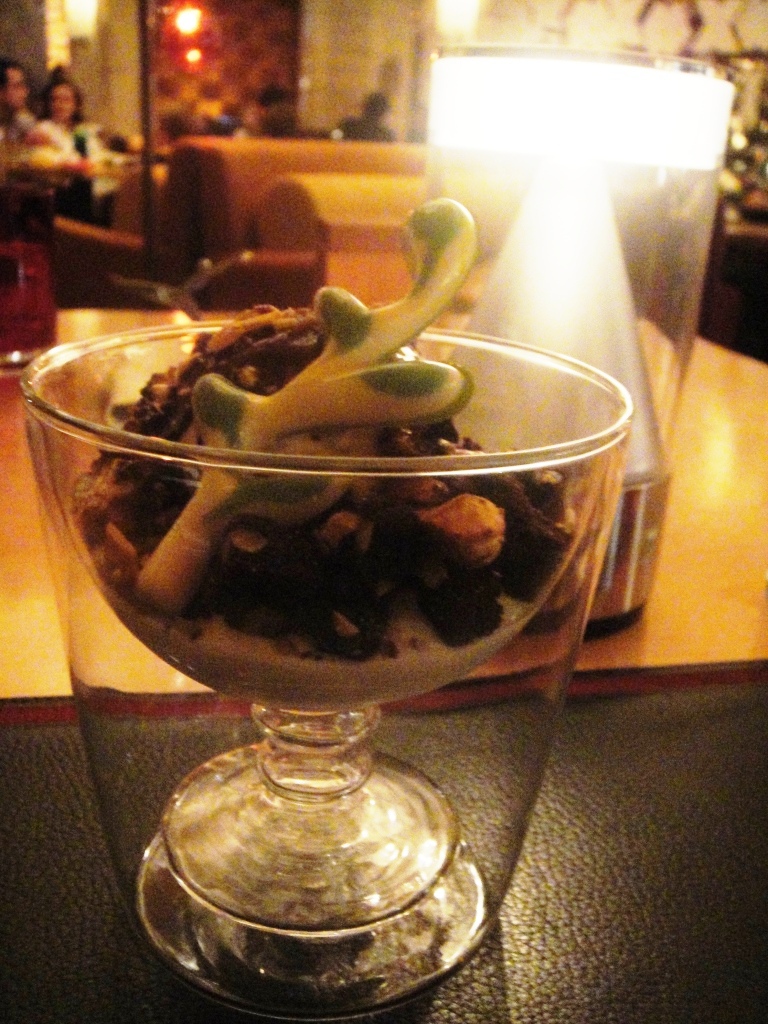
- Jack Daniel’s sundae
-

- This vast space was quite cosy
-

- A toothpick holder that delighted us
-

- View into Seafire from entrance
-

- Part of the bar
-

- Gigantic lanterns in the restaurant lobby
-

- Looking up at the light
-

- Huge suspended lights
-

- In the hotel
-

- Ceiling mural – my friend loved.
Counting the nights with preserved lemon chicken
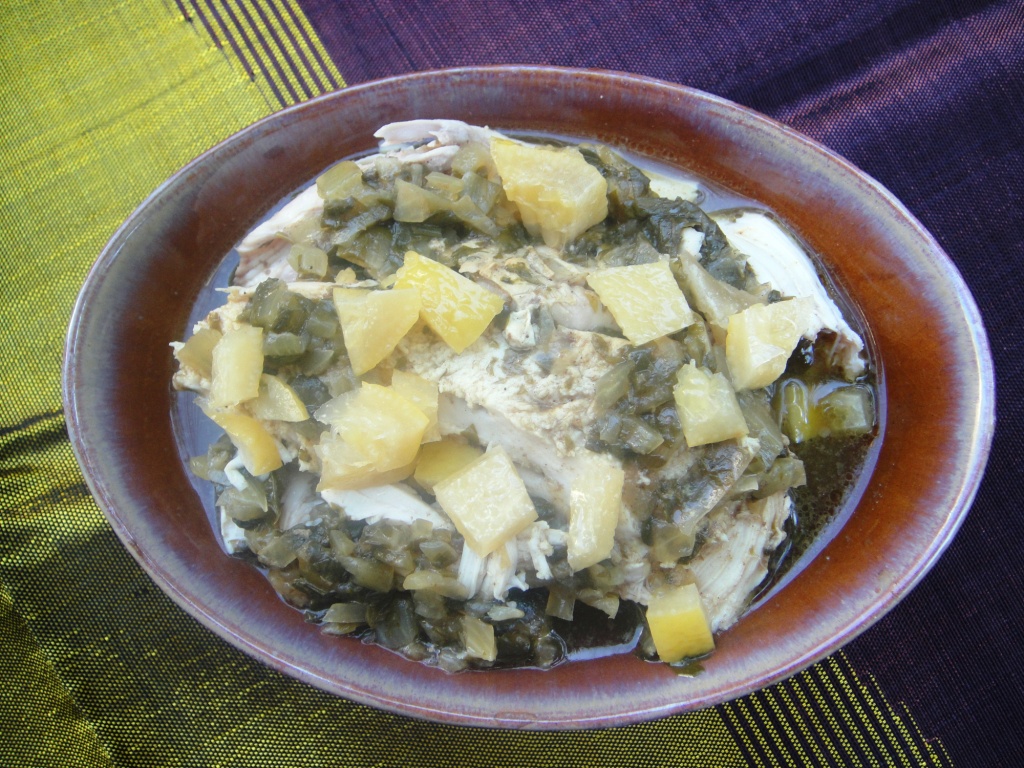
Chicken with preserved lemons
I simply love going to my monthly book club meetings. This is not an exaggeration and the rest of the group feel the same. We’re nine women of many different ages and nationalities united by a passion for reading and wanting to extend that experience by talking about it. I’ve been part of this club for over eight years and although the members have changed (in a transient, ex-pat community) the pleasure hasn’t. We take in turns to choose the discussion book and the chooser hosts the next meeting and provides the food and drink – if possible to linked to the book.
Food linked to reading
Some memorable meals have included African style with cassava chips (The Other Hand – Chris Cleave), filled pasta in a sarcophagus of pastry (The Leopard – Giuseppe Lampedusa), a Trinidadian feast (A House for Mr Biswas – V.S. Naipul) and a daube of beef cooked by Mary even though she is vegetarian (To the Lighthouse – Virginia Woolf). Our book choice this month was The Night Counter by Alia Yunis (who happens also to teach at Zayed University in Abu Dhabi). It’s the story of Fatima, a Lebanese octogenarian who lives in Los Angeles, who has been visited for the last 992 nights by Scheherazade of the Arabian Nights mythology. This time it’s Fatima who has to recount her life stories and she knows that after 1001 nights she will die. She wrestles with the problems of her extended family of four generations in an entertaining, interwoven and sometimes rather ludicrous way.
Our Lebanese feast
For our Lebanese feast, this time we bucked the usual trend and did a ‘pot-luck’ dinner. My appointed dish was chicken and I conjured up thoughts of preserved lemons (I happened to have made a jar) and saffron. I couldn’t wait to see what everyone else had brought especially as the author herself had published some Lebanese recipes online linked to the food in the book. You will not be surprised if you know anything about Lebanon or the Lebanese that food is central to the story.
This all coincided neatly with the Taste Lebanon theme chosen by Dirty Kitchen Secrets for the Monthly Mingle a sort of virtual dinner party organised by the lovely Meeta of What’s for lunch Honey. You can read all the Lebanese recipes here.
So our feast included hummous (of course), tabbouleh, mutabal, manoushe, fatoush, a lovely couscous dish, vine leaves, little balls of fried kofta, fluffy rice and my chicken with preserved lemons.
-

- Alia Yunis book that we read
-
- The ingredients
-
- Coriander and parsley
-
- Chop the herbs finely
-
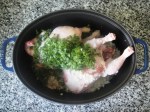
- Simmer all the ingredients except the lemon
-
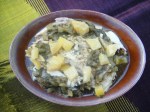
- Chcken with preserved lemons
-
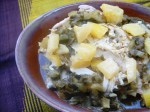
- Chicken with preserved lemon
-
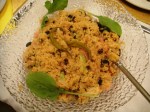
- Coucous stuffed with good things
-
- Part of the Lebanses feast
-
- Preserved lemon chicken with serving spoons from Lebanon
Monthly mingle
I have a bit of a confession about this recipe. It was handwritten on a scrap of paper in my recipe file and called Lebanese lemon chicken but when I looked in Claudia Roden (after I’d bought all the ingredients) I found a nearly identical recipe called Moroccan chicken. Monthly minglers and people from the Levant, let me know if I am committing a great travesty by submitting this as Lebanese. Whatever its cultural origins I urge you to make it ; it’s not beautiful to look at but sublime to taste – the poaching stock is deeply flavoured with the saffron, herbs and spices contrasted with the almost candied preserved lemon.
Chicken with preserved lemons
Serves 8-9 people
Ingredients:
2 x chickens (approx 1kg each)
2 tablespoons of olive oil
2 onions chopped finely
1 teaspoon of saffron strands
1 teaspoon of ground ginger
1 teaspoon ground cinnamon
Sea salt and black pepper (ground)
a large bunch of flat-leaf parsley, chopped finely
a large bunch of coriander, chopped finely
water
4 preserved lemons, chopped into small pieces
Method
Put all the ingredients except the preserved lemon into a large pot (a cast-iron one is ideal). Add water to come half-way up the chickens , bring to the boil then simmer gently, uncovered, for about 1 1/2 hours or until the chicken is cooked through and soft enough to part from the bones. Remove the flesh from the bones (or keep in pieces) and return to the sauce (which has now reduced) along with the lemon. Reheat, garnish with some coriander or parsley if required and serve with rice.
Let me know what you think. The book club girls loved it.
Diary of a Christmas cake
Lists are the framework of my life. Do you relate to this? Unless it’s on a list somewhere, it doesn’t get done. This is due to my head being in the clouds where I spend most of my days in a distant reverie where I randomly jumble ideas for work, writing things out in my head, daydreams, rehearsed imaginary conversations and eureka moments. Lists make sure that my feet sometimes hit the ground and a percentage of all this wool-gathering turns into reality.
So what’s on my October list? I know full well, as Autumn takes pace and runs away with the speed of an express train, if I don’t start putting some of my Christmas ‘cloud’ ideas in my head into action now, I’ll be leafing through Nigella’s Christmas in January saying ‘I meant to do that…and that.’
Part of the joy of Christmas cooking, for me, is the time (=love) invested in something to make it extra special and not every day. So when I found a recipe for a Christmas cake that advocated starting now, I was down to my local Choitram (supermarket) in the dried fruit aisle in a jiffy. The advantage of making your own cake, if you live in Dubai, is that you can have one that contains alcohol (essential in my book as it this transforms it from every day into luxury).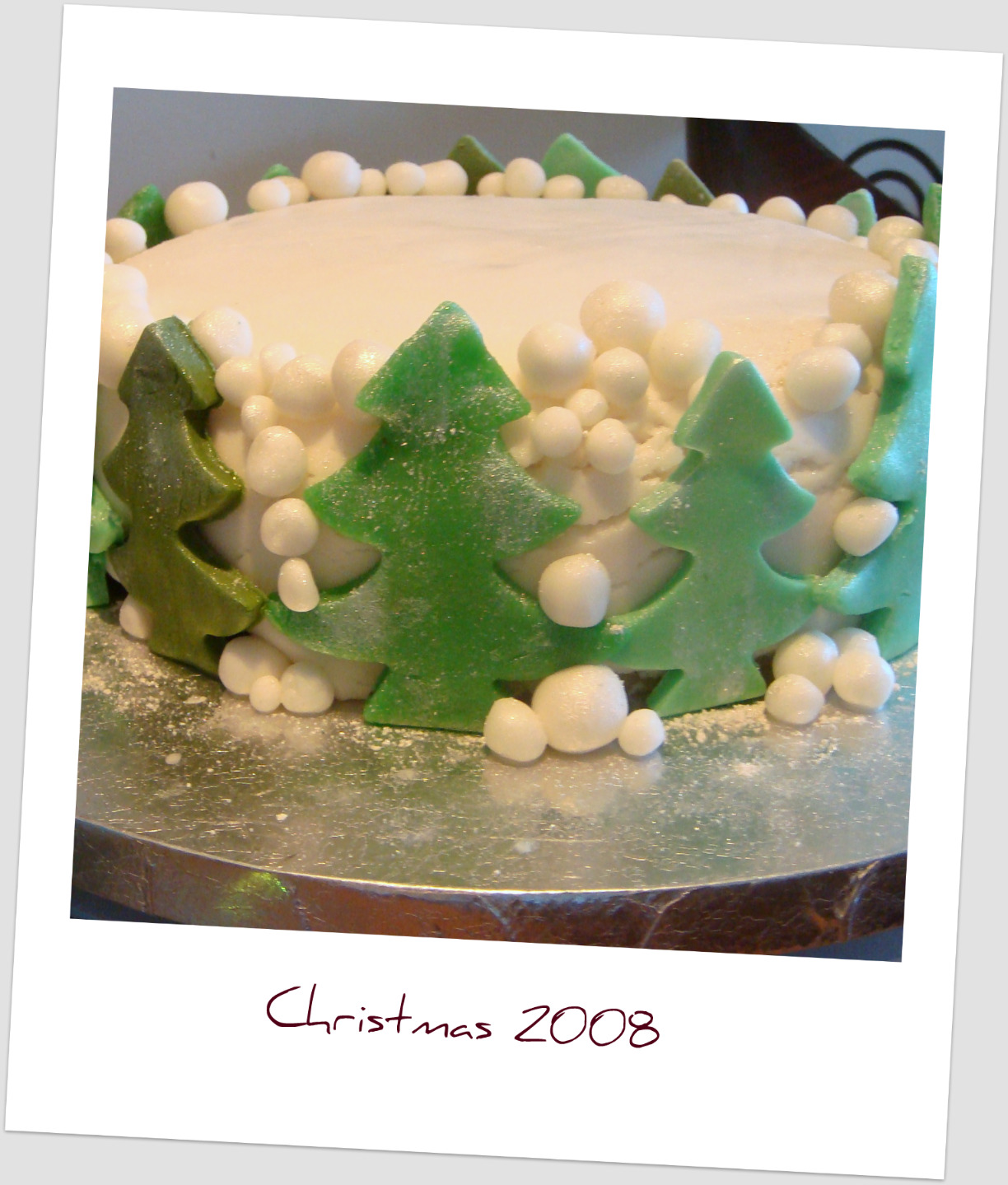
My entire family was glued to the Great British Bake Off last month – an excellent show on BBC TV. It’s a series about finding Britain’s best amateur baker judged by a Paul Hollywood, a stern sounding Northerner with twinkly eyes and the doyen of baking Mary Berry who is now in her mid 70’s (proving that a lifetime of cake is the secret of eternal youth). Mel Giedroyc and Sue Perkins, the very witty presenters, interspersed tracing the history of British baking by visiting local baking landmarks with eating some vitally important ingredients (very funny, if a bit nerve-wracking for the contestant). It was interesting, informative and showed off some of the best of Britain both visually and culinary. Ruth Clemens was just pipped at the winning post and although I was happy about Edd Kimber being victor I suspect that Ruth had a sizeable vote willing her on. She lives up to her description on her blog The Pink Whisk of baker extraordinaire (check out her scone recipe). This Christmas cake fruit-steeping recipe is taken from it.

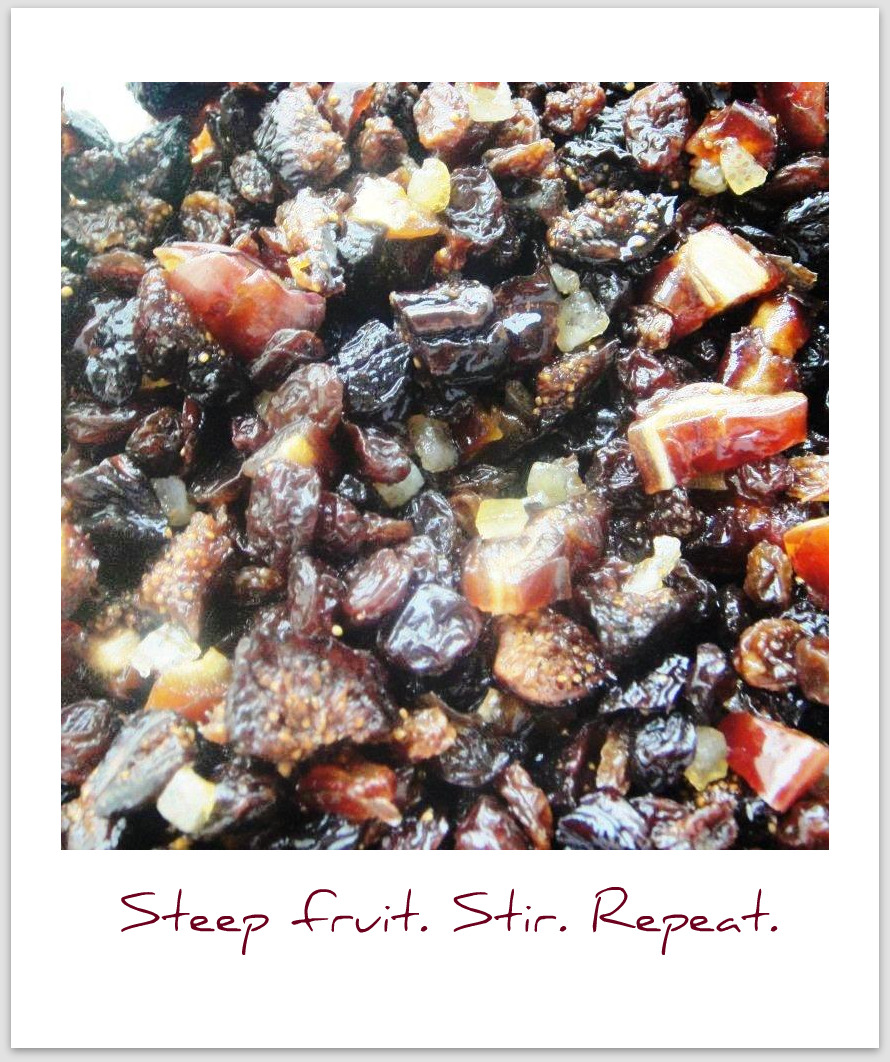
Shopping is the most arduous part of this recipe. You assemble a selection of dried fruit, steep in brandy-laced sugar syrup and give it a stir every day. Within one week the shrivelled pieces (including some cute little mission figs I found) have been transformed into plump, dark, shiny jewels. The pleasure in opening the lid of this concoction and disturbing its sticky depths with a spoon cannot be underestimated.*
Ruth’s recipe is below and I do urge a visit to The Pink Whisk. In the meantime, I though I’d share my Christmas list month by month and maybe you’d like to share anything on your list too (in the comments section). After Christmas I’ll make one big list (downloadable pdf) that you can file away for next year, or visit next Autumn and I’ll post a reminder, to ensure that your Christmas spirit in December will be as light as Ruth’s scones. Sound good? It’s a deal.
* If you live in Dubai and I still haven’t convinced you of the joys of making your own cake, you have the option of handing over some cash for some lovingly prepared traditional Christmas cake (with the essential added extra – nudge, nudge, wink, wink). Lilybakes is taking orders or contact @boozychef on Twitter for some homemade goodies.
Christmas list – October
- Steep fruit for Christmas cake (see below)
- Draft Christmas letter (if you write one) or a few lines to write in Christmas cards.
- Order photos for Christmas letter to be duplicated (e.g.nice pic of children, dog, hamster, golf clubs whatever).
- Buy Christmas cards, make a list and start writing them (a few at a time is better than a huge mountain)
- Make 2 x Christmas puddings (you’ll have one more item ticked off the list for next year). Stir up Sunday, the traditional time to make puddings is 21st November but I say get ahead. I’ll post my pudding recipe next week.
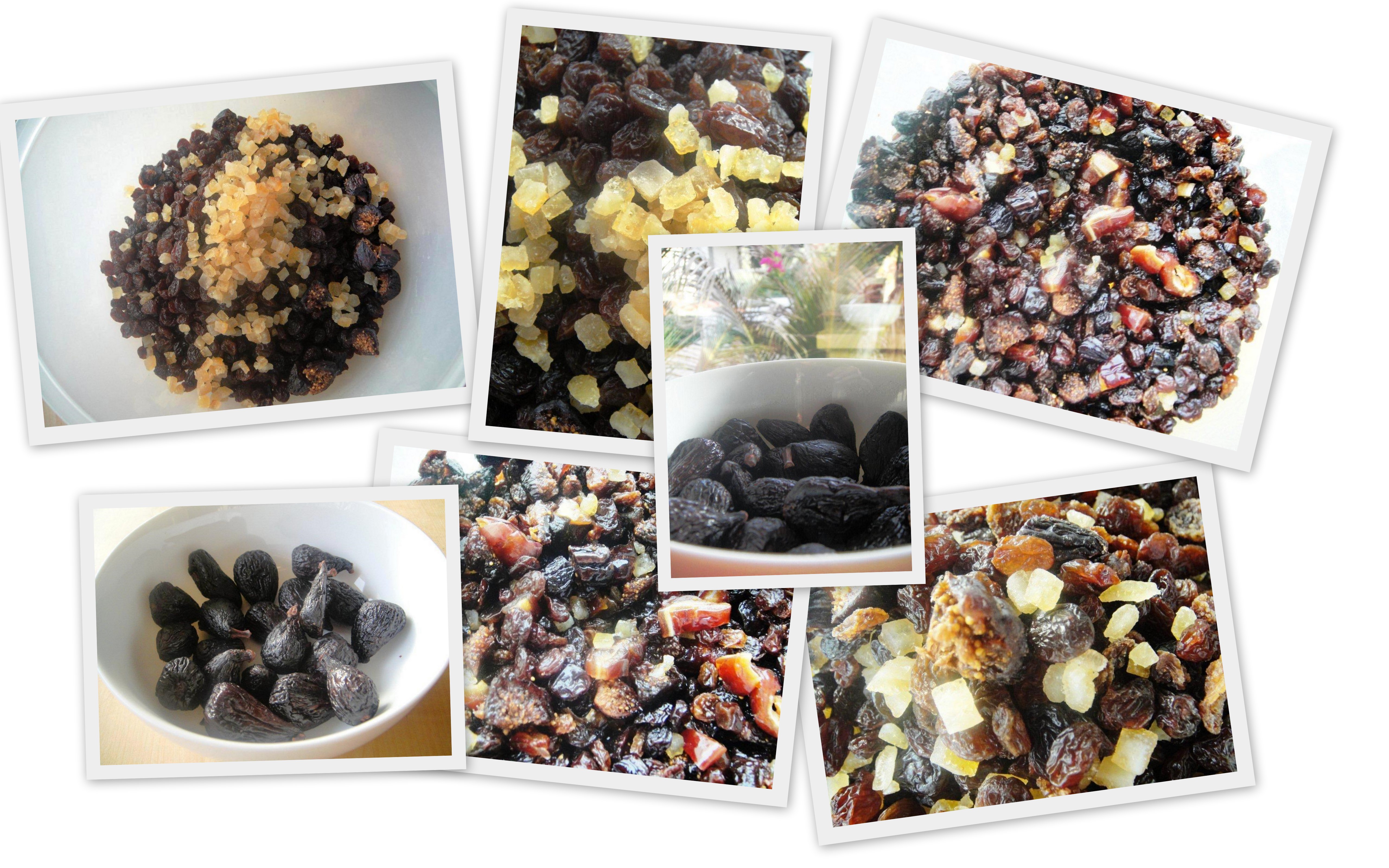
Boozy Christmas Fruit
This quantity will ultimately make an 8″ Christmas Cake.
Ingredients
55g caster sugar
55ml water
170ml brandy
175g dried figs
200g raisins
200g sultanas
100g dates
55g mixed peel
Start by chopping the dried figs and dates into chunks (I use scissors for this).
Place all the dried fruit in a large bowl and mix.
In a pan, heat the water and caster sugar stirring to dissolve the sugar to create a sugar syrup. Set to one side and allow to cool slightly. When cooled pour in the brandy.
Pour the liquid all over the dried fruit.
Place the whole lot in an airtight container.
Stir this daily for one week, after that you will only need to stir it once a week. At the end of six weeks it’ll be ready to use in a Christmas cake. Use your favourite recipe or check here in a few weeks for further instructions.










 My Custard Pie