Nazwa Organic Farm Shop closes down
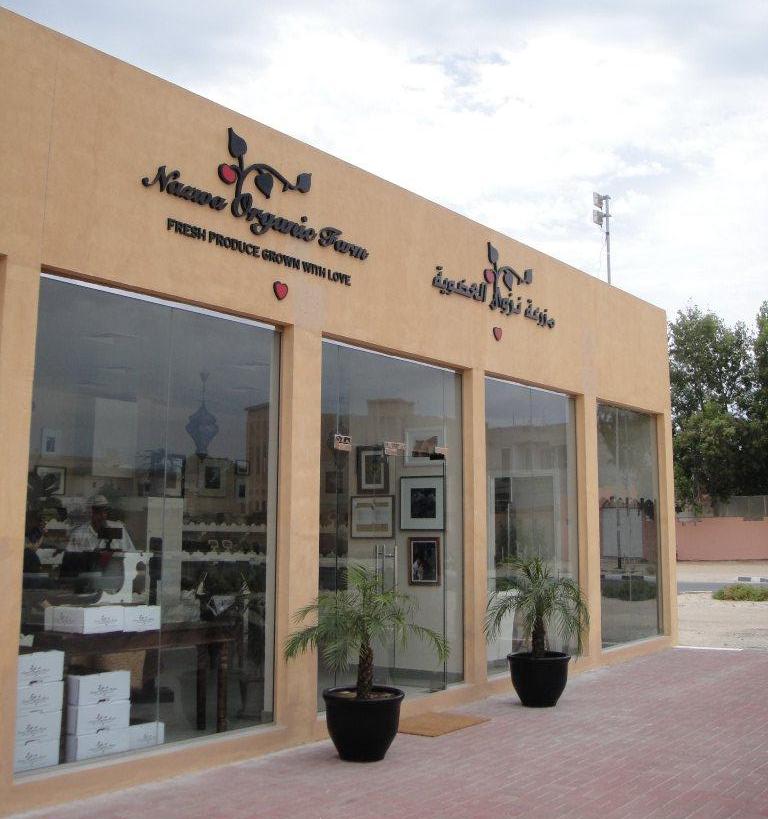
Nazwa Organic Farm Shop
I have championed the Nazwa Organic Farm shop and vegetable box scheme since I heard the first rumour about it and know from the speed that the shelves emptied that many, many people in Dubai welcomed this unique and valuable addition to our shopping choices. It was with great sadness I read this e-mail I received today and because I know that a lot of people reach this site looking for Nazwa information, reproduce it here in full:
Dear Customers,
It is with great sadness that I compose this message to you. Over the last few weeks I have fought to keep the deliveries and retail outlet alive. I am very sorry to inform you that the farm owner has decided to shut down operations at the farm and closed both the retail outlet and deliveries. The majority of staff have been let go without notice.
These steps were taken shortly after I left the country to go on leave. The reasons behind these decisions and the owners future intentions are best known only to him.
Considering the work that the team have put in over the last year, I find it hard to put into words how devastated we all are at this point.
I would like to ask anyone who knows of any potential vacancies for our wonderful shop staff to please contact me by e-mail at elenakinane at googlemail.com
I would also like to apologise to all of you who have been waiting for deliveries or have visited the shop over the last few days. Up until now I have been unable to get in touch with all of you.
Finally, I would like to share with you that it was my wish to be able to supply our community with affordable, fresh organic fruit and vegetables. We had great plans for the future but unfortunately it wasn’t meant to be this time around. Right now I can only hope to be able to achieve this by other means sometime in the future.
Thank you for all your encouragement and support.
Very best regards
Elena Kinane
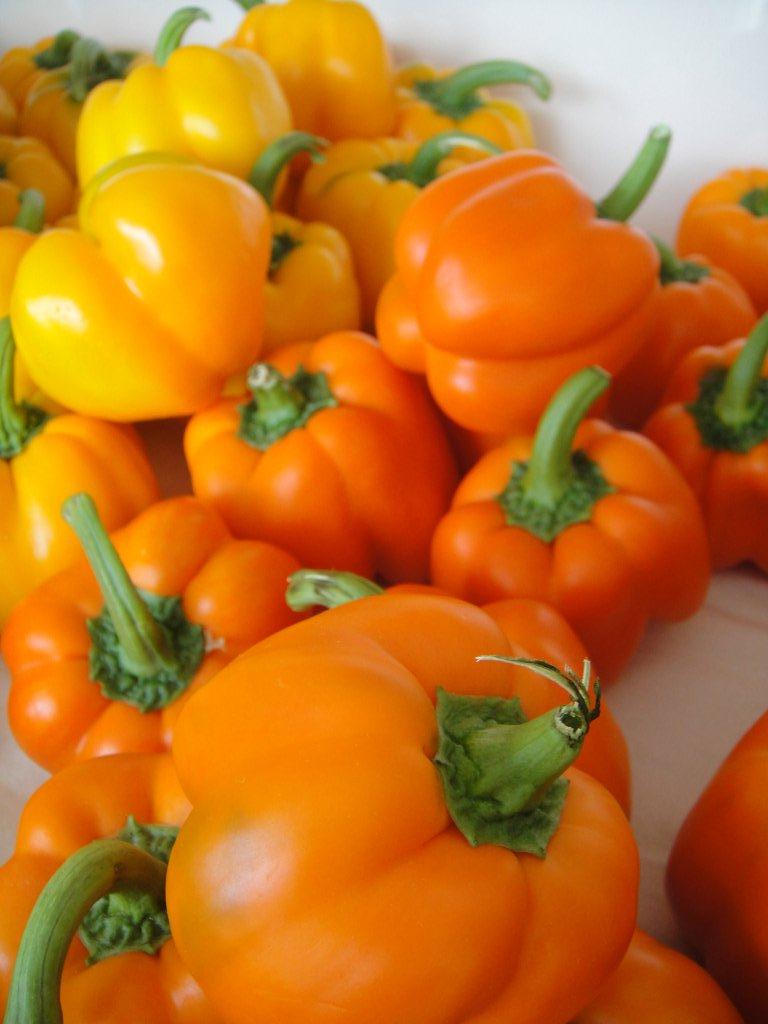
Organic peppers
This is a black day indeed. I felt that the success and vision of this farm was a really positive step in Dubai where not all the news is so enlightened or uplifting. Elena’s enthusiasm and eye for detail as well as 100% commitment to her principles shone through. Surely this is a business model that makes sense and a large consumer base ready and waiting. There is a big demand for the local free range organic eggs that were always sold out and if someone who has the means and commitment is reading this, please consider local, free-range organic poultry as your next venture. Replace one of the sinister looking sheds that boast a chicken logo with some happy hens and the will fly out to customers (sorry for the pun).
So it’s back to buying a patchy and often expensive array of imported organic fruit and veg. I’m sure I’m not the only one that refuses to buy apples from the US GM and intense farming monster at a ridiculous price and prohibitive food miles.
If anyone hears any more about the closure please share it in the comments section. I’m sure you’ll all join me in wishing Elena and her team well and saying farewell with utmost sadness. You were a bright spot in the lives of everyone in Dubai who wants to feed themselves and their families good, fresh affordable food with a sound provenance.
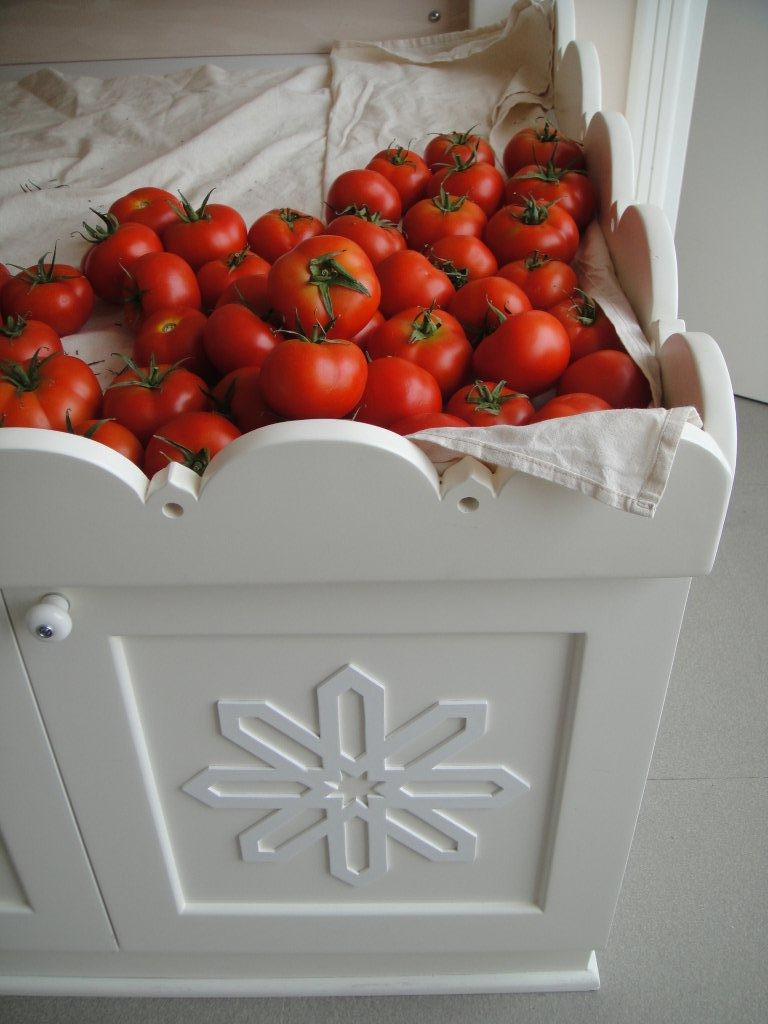
Beef tomatoes
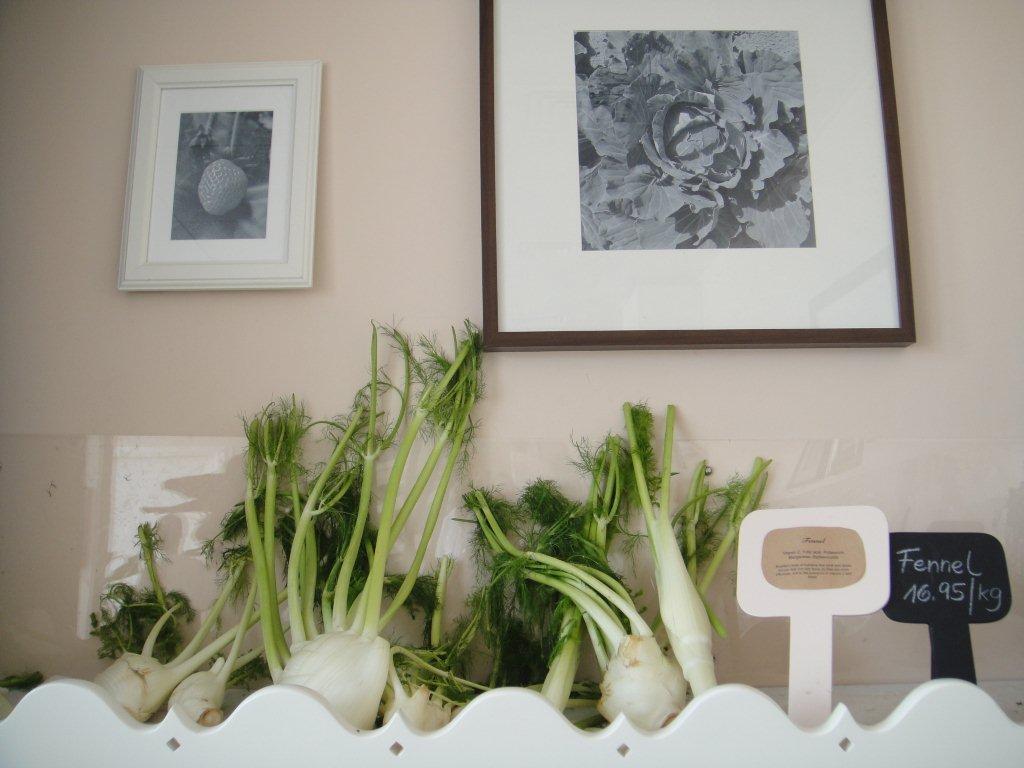
Frondy fennel in front of print lined walls
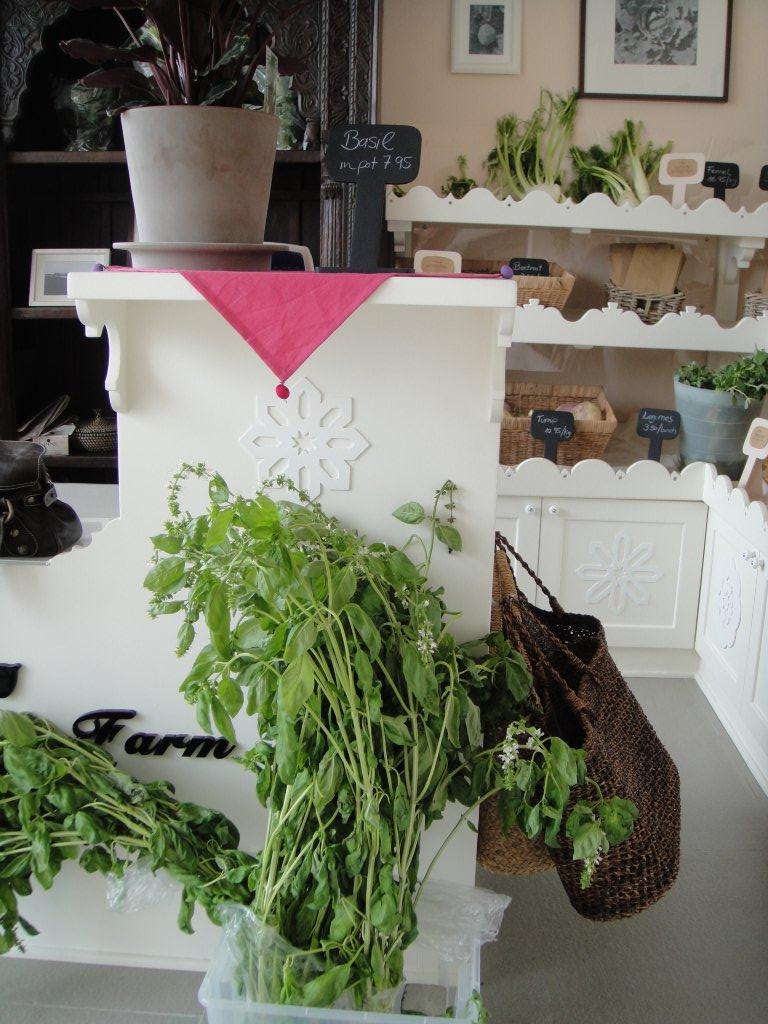
Herbs frame the counter
Postscript: There was a piece about the closure of Nazwa and organic farms in the UAE in The National on 7th August 2010 read here.
Tracy Emin and walnut bread
….what do they have in common? Bear with me.
Lynn Barber or ‘Demon Barber’ has made a name as a writer of excoriating profiles of the rich and famous she has interviewed. I listened avidly to her Desert Island Discs appearance on Radio 4 this week and she mentioned that among all her interviewees she had only become friends with a couple of them including Tracey Emin, the British modern artist. It struck me that what both women have in common is brutal honesty. Barber’s account to Kirsty Young on DID was incredibly revealing of her emotional and physical life in a way that I’m sure none of her interviewees had ever been.
 So to walnut bread, this month’s Fresh from the Oven challenge set by Sarah from Simply Cooked. How honest should you be in writing about your cooking experiences? Do readers want to be inspired by the perfection of cookery and photographic skills? Will they trust you to pass on recipes if you reveal what really went on in your kitchen?!
This month I’m in England and cooking in my Mum’s kitchen. I realised just how hard this is as I reached for familiar utensils and ingredients that you take for granted and negotiated with an unfamiliar oven.
I got up at 6 am to make the bread as we had a day out at the Cotswold Wildlife Park planned. I used all wholemeal flour as I didn’t want to buy too many ingredients (and I like a strong flavour). The dough was quite wet and it took me a while to knead (I would have reached for the dough hook at home!). Finally the loaves were proved and I put them on an enamel grill pan (no baking sheet) and put in the small fan oven at 180 C (I cook with gas). The loaves looked lovely and I could leave it there and show you the beautiful pictures of their emergence from the oven. Unfortunately they were stuck fast – Superglue would not have done a better job – and I was in a very bad mood as I tried to hack them off with spatula. But mistakes are there to be learned from right? I should have used the big oven so there was not so much direct heat under the loaves.
The good news is that the bread was delicious and although I sacrificed the underneath portion of one loaf to the birds there was enough to take to our picnic at the wildlife park. It’s great with blue cheese or a runny Brie de Meaux Recipe below….and I’d be interested to hear your view on honesty. Should I have shown you the blackened pan?
-

- The sponge
-
- Weighing the walnuts

-
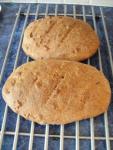
- Walnut bread
-

- Rhino – a few pics from our day out
-

- Giraffe
-

- Baby ostrich
-

- Camel
Whole Wheat Walnut Bread
adapted from The Neighborhood Bakeshop by Jill Van Cleave
makes 2 loaves
1 teaspoon active dry yeast, divided
500 ml lukewarm water (95 – 110F, 35 – 45C), divided
380 g plain bread flour, divided
1 tablespoon honey
1 tablespoon olive or walnut oil
180 g stone-ground whole wheat flour
40 g semolina flour, or more whole wheat flour
1 teaspoon sea salt
175 g coarsely chopped walnuts, toasted
First prepare the sponge starter. Dissolve 1/2 tsp yeast in 250 ml lukewarm water in a medium bowl. Let prove until bubbly, about 5 minutes.
Add 190 g bread flour and stir until a thick batter forms. Cover the bowl and leave at room temperature to rise and bubble for 6 to 8 hours. The starter is ready to use now or can be put in the fridge overnight. (Bring it back to room temperature before using.)
Dissolve the remaining 1/2 teaspoon yeast with the 250 ml lukewarm water in a large bowl. Let prove for about 5 minutes.
Add the sponge starter and mix well. Stir in the honey, oil, whole wheat flour, semolina flour (if using), and salt.
Add 160 g of the remaining bread flour gradually to form a stiff dough.
Add the walnuts.
Turn out onto a floured surface and knead for ten minutes, adding as much of the reserved flour as needed to keep it from being too sticky. Knead until the dough is smooth and elastic.
Grease the bowl and return the dough, turning it to coat it in oil. Cover the bowl and allow the dough to rise until it is doubled in size, about 2 hours.
Divide the dough into two pieces and form into loaves. Place on a baking pan and leave them to rise again, about 30 minutes.
Bake at 400 F/205 C for 30 to 40 minutes, until the loaves sound hollow when tapped on the bottom.
Cool on a wire rack
See Simply Cooked if you want the cup measurements. Thanks for a great recipe Sarah – can’t wait to make it in my own home.
Culinary voyeurism – Lemon amaretti cake
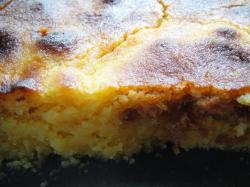
In the last few weeks during my stay in England, I haven’t done much cooking at all…but I’ve done a lot of eating. My Mother-in-law, as usual, has loved us with food, producing delicious hearty food from her kitchen in Devon. Proper puddings and home-made cake are an everyday feature which we polish off pretty quickly after our walks on Dartmoor. I’ll talk a lot more about Ma-in-law, or Nan-Nan as she’s known to my children, in a future post – there is a fascinating food history about my husband’s family. In the meantime I’ll share this recipe for a moist cake which would be as scrumptious with some cream for pudding (clotted of course – we are in Devon) as it is with a cup of tea. My involvement was mainly as a passive viewer – although I got to grate the zest and squeeze the juice from the lemons (a job I love).
Lemon Amaretti Cake
Makes 1 x 20cm cake
Serves 6-8
Ingredients
- 200g softened unsalted butter
- 200g golden caster sugar
- 3 medium eggs
- finely grated zest and juice of 2 lemons
- 200g ground almonds
- 2 tsp sifted baking powder
- About 9 amaretti biscuits
Method
- Butter a 20cm (about 5cm depth) loose-bottomed cake tin. Preheat oven to 190C/170C fan/gas 5.
- Whizz all the ingredients except the amaretti biscuits in a food processor until smooth and creamy.
- Spread 2-3 tbsp of the mixture evenly in the base of the cake tin. Arrange a circle of about 8 amaretti biscuits on top, touching each other and a few cm from the edge, and one in the middle. Spoon the remaining cake mixture in, smoothing the surface.
- Bake in the oven for 30-35 minutes (at least) until a skewer comes out clean. Run a knife round the edge, remove the collar of the tin and leave to cool.
- Serve dusted with icing sugar with creme fraiche or cream and extra biscuits to decorate if you like.
-
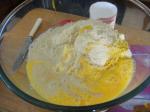
- Combine all the ingredients except the biscuits
-
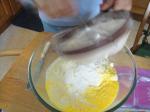
- Nan-Nan sifting in the baking powder
-
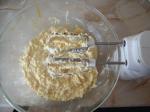
- Whizz or whisk until smooth(ish)
-
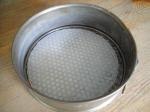
- She lined the tin
-

- Arrange the biscuits on the first layer of cake mixture
-

- The amaretti will puff up and go slighly chewy when cooked
-
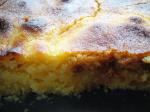
- Lemon amaretti cake
-
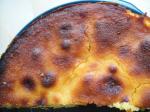
- The top gets quite brown but can be disguised with icing sugar
-
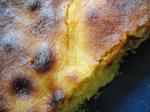
- It looks like it’s been blow-torched!
-
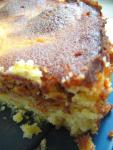
- Lovely moist texture
-
- The serving suggestion as shown in the recipe
Woods, canals, cottages and a kamikaze drop
When I returned to Dubai from Lebanon all I wanted to do was to carry on walking through countryside. A city in a desert at 40 C+ and high humidity was not the best place so I leapt off the plane in Birmingham (UK) 6 weeks later inhaling fresh air and itching to get my walking boots on. Britain is a crowded island but it’s quite easy to get out into a bit of green space, ducking down a path with a green waymark, without meeting a single person on your way. My home county is Gloucestershire and I took advantage of the fine weather this week to discover a variety of walks and hikes.
Guiting Woods
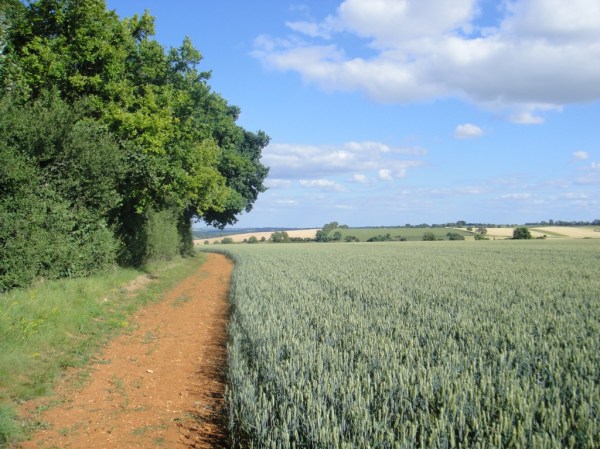
Open cornfields and billowing clouds
This is a fabulous walk which we discovered last year after visiting the Cotswold Farm Park near Guiting Power. There are many famous Cotswold villages like the Slaughters, Broadway and Bourton-on-the-Water but the honey coloured stone cottages and tranquil feel of Guiting Power make it one of the prettiest to me. My Uncle first saw my Aunt on stage in a pantomime in the village hall; they celebrate their ruby wedding this year. After a surfeit of baby animal stroking, we (me, my daughters and my sister) started by parking in Critchford Lane by the sheep pens and walking down a track to the right of the stunning Manor House. The view across to this very desirable residence with sheep grazing on the common land in front of it mustn’t have changed for hundreds of years.
The track takes you steeply upwards through a line of trees dotted with rabbit holes but you are soon deeply into Guiting Woods following the path of the Warden’s Way (a 14 mile trail). The dry weather meant that it was easy-going but it’s probably very muddy a lot of the time. At the far edge of the wood we left the Warden’s Way taking a left turn steeply back up through the trees (we had no map and my daughter cleverly remembered the way). A bit of a pant and a puff upwards and we were soon back on a broad path. At a stone post we left the dark woods for a red earth track by the edge of cornfields – the change is dramatic. The views across the fields are the epitome of the Cotswold countryside and we eventually joined the drive of the Manor House. Two riders saluted us on our way but apart from a couple of dog walkers at the start, we saw no one else. This route took us one and a half hours at a reasonably swift pace. We drove back through the village stopping at the pretty Hollow Bottom pub for a drink. We sat at tables outside in the early evening sunshine looking at the view of a glorious meadow.
Click on an image in any of the galleries to view them in a larger size.


Saul junction and Frampton on Severn
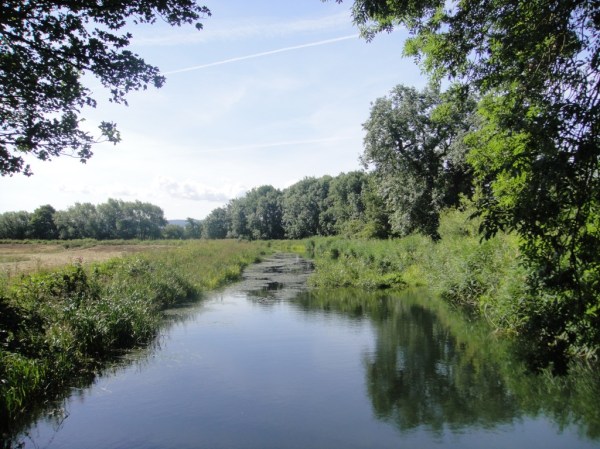
A tributary of the canal at Saul
We needed a walk for all the family; stretching enough for the keen hikers but not too demanding for older members of the party. A flat walk along a canal path with a great tea shop at the end near Frampton on Severn fitted the bill. We covered the five-mile circular trail in two hours. We started at Saul junction, followed a canal path, crossed a bridge and admired the neat gardens along the road to Frampton. There were duck eggs for sale with an honesty box. We crossed the beautiful village green, went through the lych gate and fields by the church, crossing back over the hand turned bridge onto the canal path with views across the broad flood plains to the Severn estuary. We ended the walk at the Stables cafe where we had bacon and egg rolls, homemade cake and cups of tea while watching the ducks and swans with their cygnets on the water. You could take this at an easier pace or add on other sections of the canal path for a longer walk (or cycle). Slimbridge Wetlands Centre is very near and worth a visit.


Cranham Woods

A beautiful tree in the wood
My sister admitted that she had often, as a child, gazed from the car window into the mysterious woods that border the road from Cheltenham to Painswick wishing she could explore. We bought The Cotswolds Walks book by Pathfinder Guides and followed the route 16 via Cooper’s Hill and Buckholt Wood. Leaving the small car park we entered straight into deeply loamed wooded paths striking up through leafy canopies on a well waymarked path dappled with sunlight. These would have been edged with bluebells in the Spring. My sister spotted a long-tailed tit on a beech tree and as we looked closer we spotted more and more, counting at least 12 of these tiny, busy little birds.
We skirted the woods with glimpses of open countryside and eventually entered the village of Cranham, admiring the cottages and vowing to return to visit the Black Horse Inn. At the edge of Cranham Common we re-entered the woods eventually reaching the hamlet of Cooper’s Hill and the site of the annual cheese-rolling competition. The sheer drop that people hurl themselves down is truly frightening when viewed from the base or the top – we did both (viewing not hurling). Personally I would rather dance round the maypole. We got very slightly lost right near the end and I realised my new perchant for extreme inclines when I suggested to my sister that we scale the side of a quarry. She declined. This lovely circular walk is perfect for a hot day due to the shady trees and took us just over two hours.


Brimpsfield and Syde
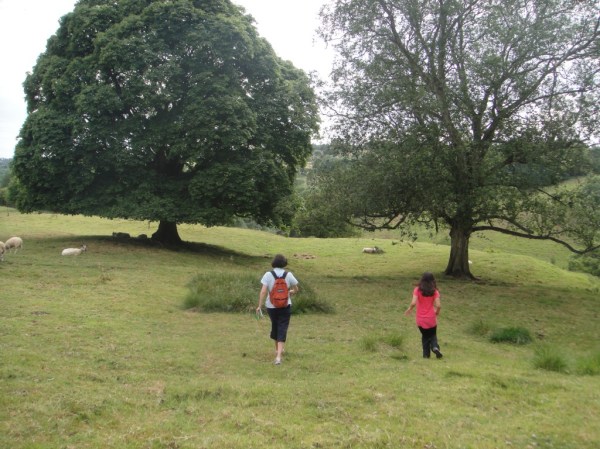
A Cotswold field near Syde
Testing another of the Pathfinder routes we left the A417 on our way back from Cirencester, parked in the village hall car park in Brimpsfield and walked through the village. It was a glorious summer’s evening. This was a gentler landscape of cottages, lakes, woods and fields covered with sheep – who were fairly unfazed by our company. We climbed up the only steep section to the village of Syde and then back again as we decided not to visit the church. As the evening was humid we took a path by Ettington woods when we got to Caudle Green, passing a stream, cows and horses before rejoining the lane in Brimpsfield with plans to return for the rest of the route another day. The villages were incredibly peaceful and very pretty. The Old Vicarage in Brimpsfield had me dreaming – but we realised they all lacked something…a pub. Ah well.



View from Pew Tor, Devon
I’m very excited. I leave for two months in the UK on Friday – yikes! that’s tomorrow. Dubai is a lovely place to live but our ‘green and pleasant land’ is bursting with exciting events, shops, countryside etc. that it just can’t rival. I got into the habit of deserting (the desert) from the start of my Middle East adventure as an expat. Nobody who had the option stayed for the summer months in the sunny kingdom of Saudi Arabia. It was 50 C with nothing to do (believe me). This lovely tranche of time, which goes so quickly, means that my children have the chance to get to know their relatives and feel closer to the country that is named on their passports. A few things on our ‘to do’ list this year are:
- Wearing out our National Trust cards especially in Devon and Cornwall. Cothele is a favourite.
- Doing even more things in Cornwall – including cycling the Camel Trail, visiting the workshop of Linda Styles, surfing in Polzeath, shopping at the Barefoot Kitchen, eating a crab sandwich in Cadgwith Cove made by Sarah Legge in the crab sheds and visiting my lovely Uncle and Aunt at Trevissome House.
- Going to Giffords Circus on the village green in Frampton-on-Severn. We’ve been every year since it started.
- Camping and doing a bit of grooving at Chagstock.
- Visiting the Cotswold Farm Park…again (my teens insist we go every year, as I did when small).
..and enjoying the light evenings, rain, open gardens, parks, deciduous trees, Cornish pasties, tea shops, museums, high streets (not malls), pebble beaches and all the other things I miss.
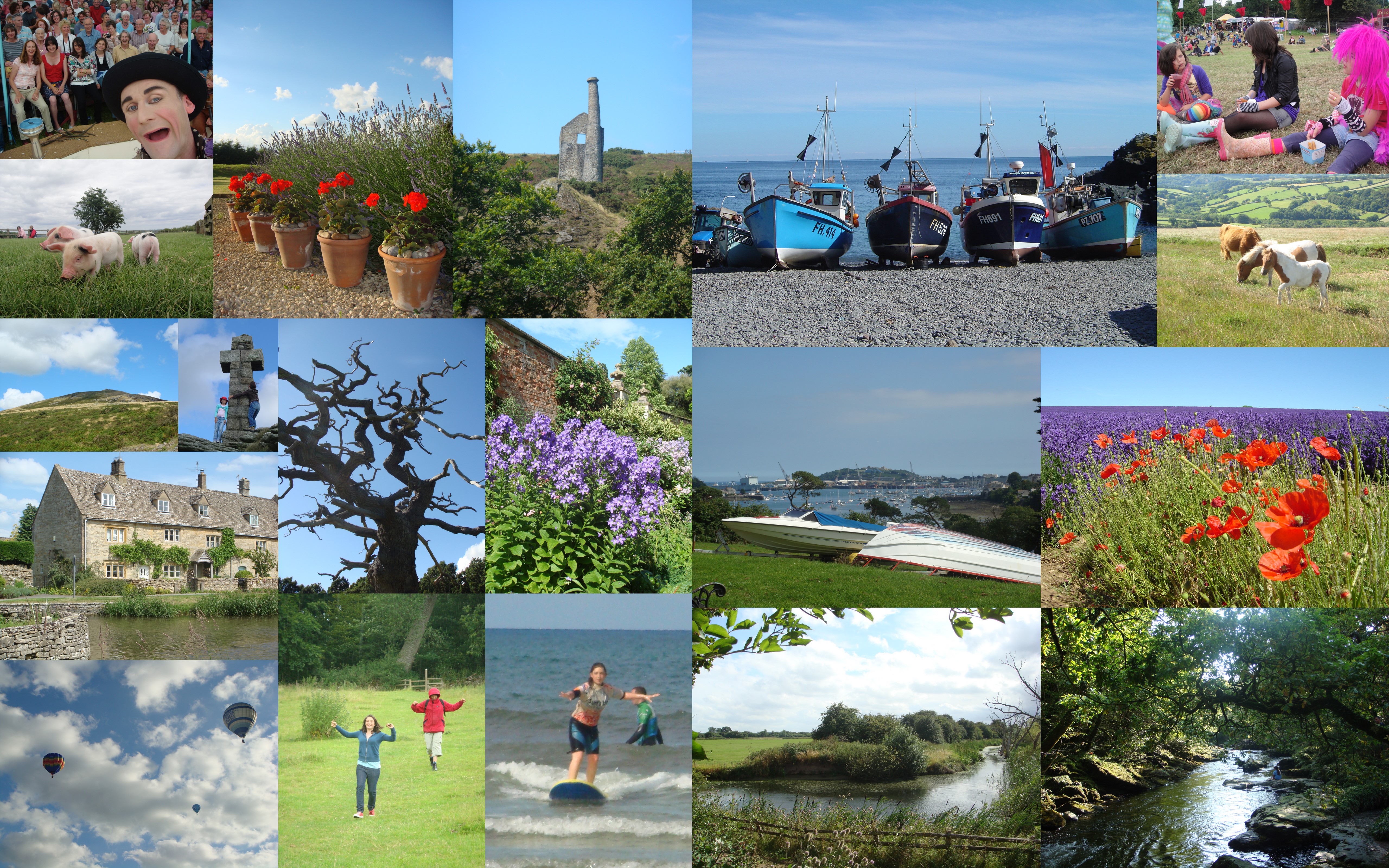
Past summers in the UK
As well as striding over the Cotswolds and Dartmoor (followed by some real ale in a pub) I love the abundance of great food shopping that is available from farmer’s markets to fabulous delis (The Fine Cheese Co in Bath for instance). My travelling souvenirs are most likely to be edible these days. Dubai is really well served with the variety of food on offer – although I miss having a range of really fresh, seasonal and organic produce – but there are a few ingredients I can’t obtain. This year I won’t have so many packages smuggled and snuggled in my suitcase as I’ve made these ingredients from scratch (inspired by some wonderful food bloggers).
-
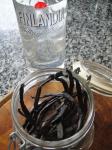
- The ingredients
-
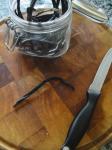
- Slice the pods
-
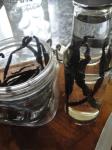
- Combine and leave. Simple.
Real vanilla essence. A huge bundle of divine vanilla pods can be bought really cheaply at the spice souk in Dubai but every year I bought back an expensive little brown bottle of liquid. Use Real Butter gave me that Eureka moment. The pictures are of my own bottle of pods which are quietly leaching their delicious caramel coloured flavour and scent into their alcoholic host as we speak.
Red wine vinegar. When a friend recently left Dubai, I inherited the food contents of her cupboards including a very impressive collection of wine vinegars – the result of some serious smuggling. This is one of those items that falls into the dodgy category in Dubai. It gets left off the shelves as you can only buy alcohol with a license in a special shop – which is full of spirits and wine rather than useful cooking ingredients. The genius Ms Marmite lover revealed that you can indeed turn those gone-off dregs of wine into a delicious ingredient for salad dressings, sauces etc. My unattractive jar is sitting in the shade on my patio completing it’s transformation so I suggest you look at MML’s lovely pics of her stone jar warming by the Aga instead. I may lug a small bottle of vinegar with ‘mother’ in it home – but it’s a small burden to yield such abundant treasure.
Vegetable bouillon. We have a vegetarian in our family and the only vegetable stock I really rate in Swiss Marigold but even when you can get it in Dubai it’s a shocking price so in the past it came with me on a little plane journey to the Middle East. Third culinary star step forward – Heidi from 101 Cookbooks shared a recipe inspired by River Cottage (are you keeping up?). Again, mine is sitting rather unattractively in the freezer so feast your eyes on her gorgeous images which are always inspiring. It’s so easy and adds such a depth of flavour.
I hope you like these ideas. They’ll certainly provide more space in my bag when I return to the heat in September. I have a feeling that it might be taken up with extra cheese from the Tavistock Cheese Festival. Which edible delights do you bring home when you travel abroad?


Dinner with Wasia and Turkish pide

Turkish pide
My lovely friend Wasia, who is an exceptional cook of delicious Pakistani-inspired curries, invited me for supper. I took along some pide which I’d made as this month’s Fresh From the Oven baking challenge. This is a soft, slightly sweet bread, that is traditionally eaten in Turkey during Ramadan, the month of fasting in the Muslim calendar. The challenge was set by Pei Lin aka Mrs Ergül who used a recipe from Iffet’s My Turkish Kitchen. Pide is often described as Turkish pizza but this recipe was more like Turkish focaccia – light, cakey and a little sweet – perfect for dipping into spicy sauces and scooping up dhal.
The FFTO challenge is always interesting because everyone interprets the recipe in a different way. I’m always astonished how much a recipe can alter from person to person. For this reason (and probably because I’m English!) I’m not that keen on cup measurements. I think there is a bigger margin for error. For instance, filling the cup with flour; doyou level it and pack it down a bit or just loosely scoop it up? I tried to find out what a stick of butter weighed but found a variety of answers so plumped in the middle for 100g. The excellent blog by Ms Marmite Lover explored the subject of measurement a few weeks ago. Anyway, I have converted the quantities I used into grams in case you are like me. I think the proportions are correct, although my dough was not extremely sticky and the sesame seeds (I could only get white ones) did not stick very well. I think I would glaze with milk to help them cling next time. The pide is easy to make but you need to eat it within hours of making as it goes stale very quickly. It was delicious with Wasia’s courgettes and tomatoes (I wonder if she’d share the recipe?).
-
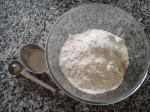
- Mix the dry ingredients in a bowl
-
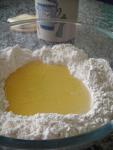
- Make a well for the water and melted butter
-

- Coax the dry ingredients from the sides with a fork
-

- The dough after kneading
-

- Cut into squares with a sharp knife
-
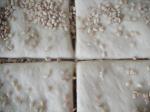
- Sprinkle with sesame seeds (I could only find white ones)
-

- Bake until light brown
-
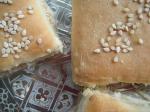
- Tear into squares and eat soon
-

- Finding props was easy – we live in the Middle East
Pide (inspired by Pei Lin aka Mrs Ergül who used a recipe from Iffet’s My Turkish Kitchen. Method was rewritten and metric measurements by me)
Ingredients
590g plain (4 cups) flour (all-purpose)
450ml (3/4 cup) warm water
50g (1/2 stick) melted butter
1/2 tablespoon instant dried yeast
1 tablespoon sugar
1/2 tablespoon salt
black and white sesame seeds
Mix the dry ingredients in a large bowl (or pile onto the counter and make a large well in the middle). Add the melted butter and warm water into the well and gradually incorporate the dry ingredients from the edges until a dough is formed. Knead the dough on a flat surface (the dough should be sticky) – I kneaded for about 5 minutes. Put the dough back into the bowl and cover with cling film (or a damp tea towel) and leave in a warm place to rise until it has doubled in size (at least an hour). Lightly knead again to remove any air. Line a 33cm x 27cm (13″ x 10.5″) baking tray with parchment paper (my tray was 30 x 30cm). Flatten the dough out on the tray with your fingers so it reaches right to the edges. Dampen your hands with water if the dough sticks to them. Use a knife to cut the dough almost right through into equal squares (I made 16). Sprinkle some sesame seeds on top (I think you could use nigella seeds instead of black sesame seeds). Preheat the oven to 180 C (350 F). Let the dough rise for half an hour. Bake for 30 minutes or until the pide turns light brown. Remove from the oven and leave to cool for 20 minutes. Cover the pide with a clean kitchen towel to keep it soft.
Fresh, local and best
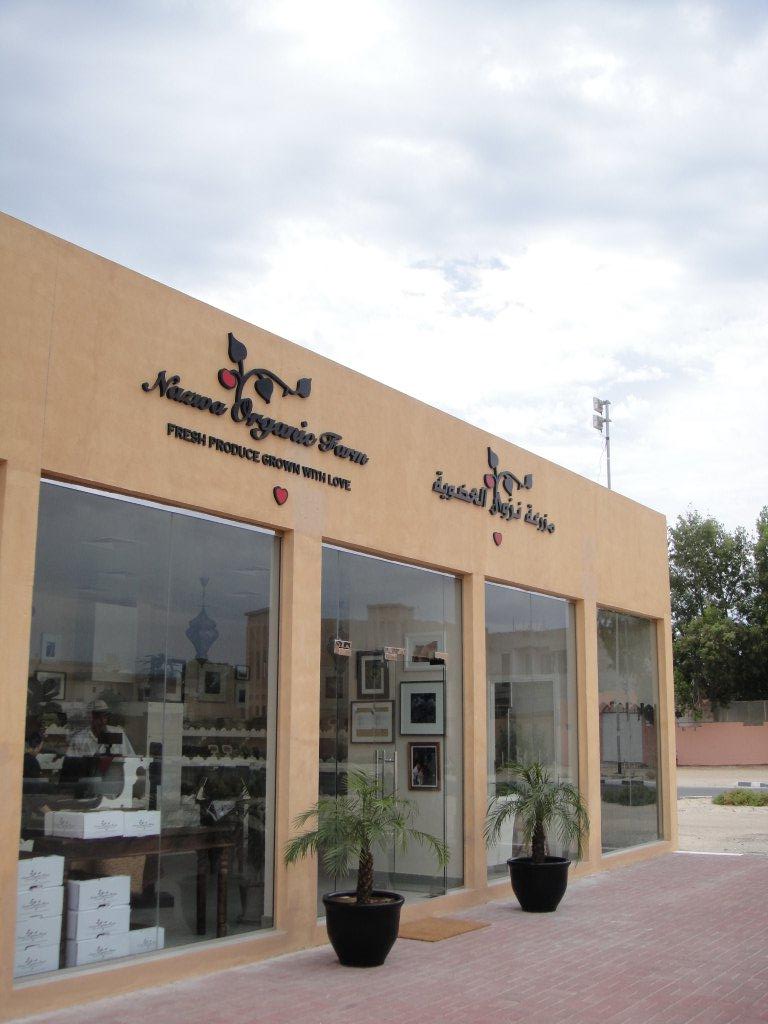
Nazwa Organic Farm Shop
Welcome if you’ve landed on this page looking for details of the Nazwa Organic Farm Shop. Since I wrote about their opening and (due to demand) added a location map, I’ve had many visitors who have found this useful. The good news is that they have just launched their own website and although it’s under construction in many areas, I’m sure it will match the quality of the rest of their fantastic enterprise soon.
Having a diet of mainly organically sourced foods is not easy if you live in Dubai and I found the following post on Fresh, Local and Best blogspot really helpful (wherever you live in the world) when prioritising your shopping. The Environmental Working Group with findings analysed by the Department of Agriculture in the U.S. identified 12 types of fruit and vegetables which are likely to be the most contaminated with pesticides and chemicals (and are therefore top of the list if you are trying to buy organic). Of the 12 most contaminated foods, aptly dubbed “The Dirty Dozen” seven are fruits: peaches, strawberries, apples, domestic blueberries, nectarines, cherries and imported grapes. Of the vegetables celery, peppers, spinach, kale, collard greens (a type of cabbage) and potatoes are most likely to retain pesticide contamination (read the article for full details). The list also contains information about the least contaminated items too (including onions).
Organic peppers
Although this is a report from the States, I can’t help feeling that these findings would apply equally to the imported (and probably the local) produce that makes up most of the fruit and vegetables on our supermarket shelves. The demand for organic, local produce in Dubai has been shown by the speed at which the goods in the Nazwa shop disappear. It would be great if someone acted on the business opportunity that I’m sure exists for local, free-range organic chicken. Back to recipes for the next post – but please let me know if you’ve found this little bit of information useful. Happy and healthy shopping and eating.
Postscript: Nazwa Organic shop has since been closed.
Compassionate muffins
My daughters couldn’t believe their eyes when they saw this in the cupboard.
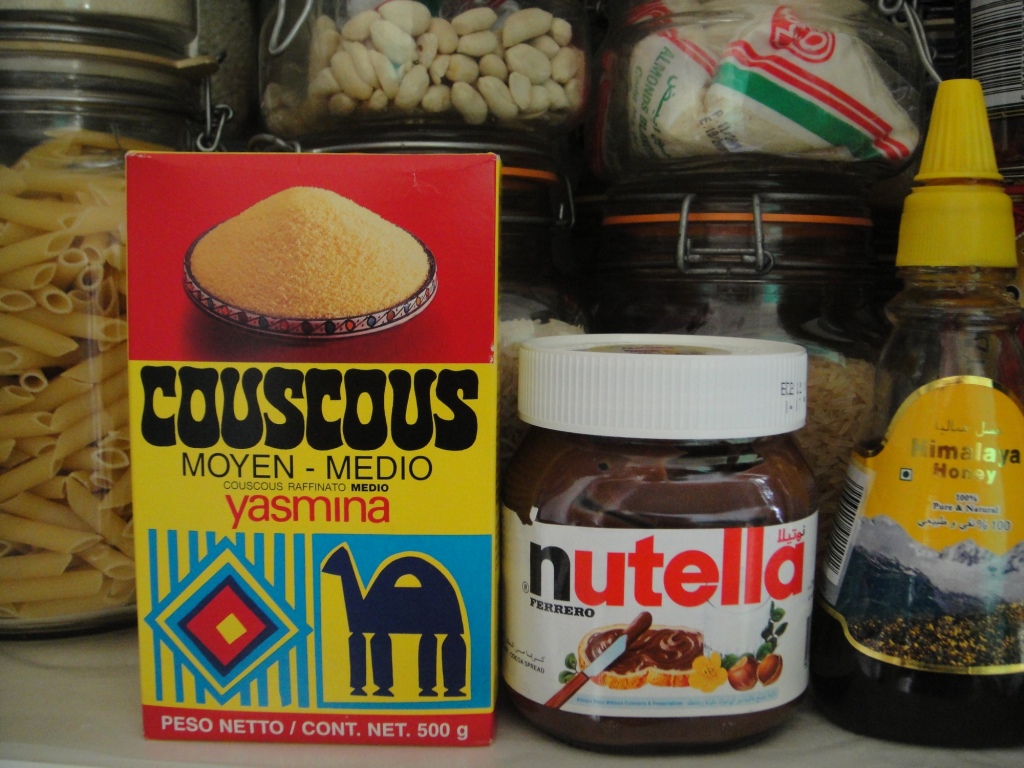
Not Nutella?!
It’s not that we never have treats in the house but I yell at the telly (it’s my age) every time some Mum whinges “I just can’t get him to stop eating chips” about their severely unhealthy child. “Well don’t buy them then!” I comfort myself that at least with home-made treats you know what goes into them (including the love).
It’s ‘Bake with Compassion‘ week; an event run by Compassion in World Farming to encourage us to eat eggs from free-range hens. Hugh Fearnley-Whittingstall was behind the Chicken Out campaign so I thought I’d make one of his recipes – chocolate marble muffins. You’ve already guessed what they’re marbled with. They’re really easy to make and freeze well too (you can do a lemon-curd version too). I don’t share my daughters’ enthusiasm for Nutella usually but here it seems to melt into the muffins infusing them with a deep, smooth texture and taste. Recipe below.
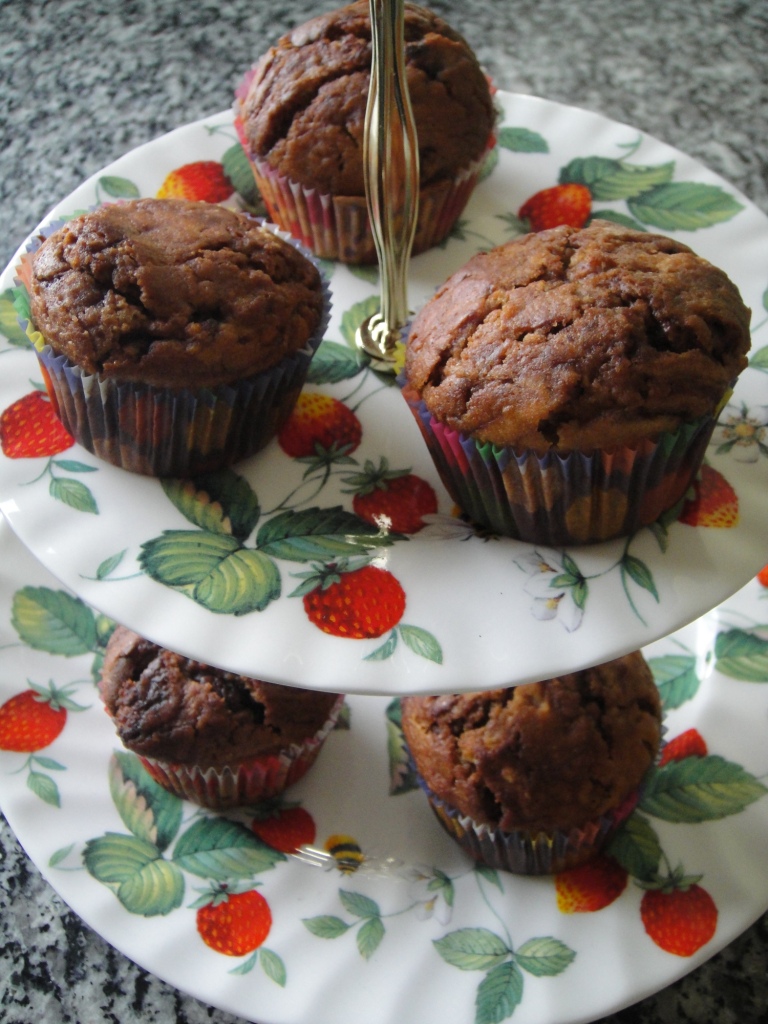
Chocolate marble muffins
Note to Dubai readers: My conscience leads me to buy free-range and organic eggs although they are often 3 – 4 times the price of local eggs (I knew someone who worked for a chicken farm here. Trust me.). I find the best value are ones from the UK in Choitram or from Germany at Organic Foods & Cafe. The French eggs from Spinneys and Carrefour, although seemingly less per box, contain minute little eggs so work out more in the long run. I’ve never got my hands on any local free-range organic ones from the Nazwa Farm Shop but they have plans to step up production in the future to cope with demand. Good news.
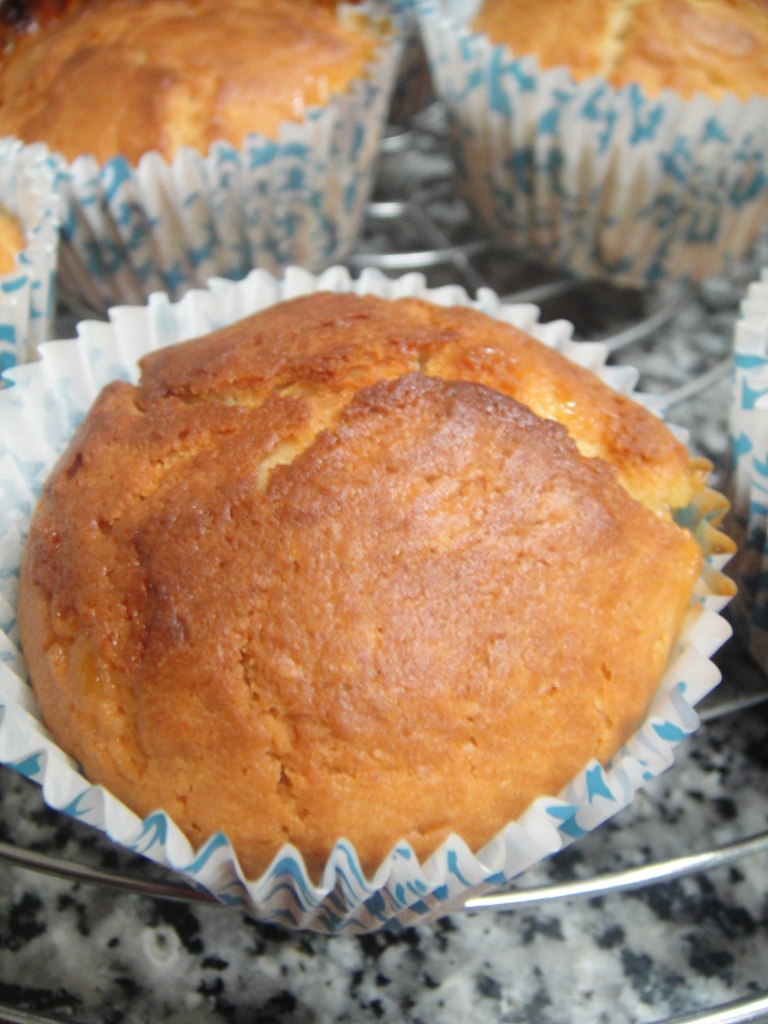
Lemon curd marble muffins
Chocolate Marble Muffins from River Cottage Every Day by Hugh Fearnley-Whittingstall
225g plain flour
2 teaspoons baking powder
A good pinch of sea salt
100g caster sugar
1 medium free range organic egg
125g plain yoghurt
125ml whole milk
75g unsalted butter, melted and slightly cooled
150g chocolate hazelnut spread (warmed slightly so it’s easier to marble) MCP note: Not necessary in Dubai.
or 150g lemon curd
Put 12 large paper cases into a muffin tray. Put the flour, baking powder, salt and caster sugar in a large bowl and whisk lightly to aerate and combine. Mix the egg, yoghurt, milk and melted butter together in a jug. Pour them into the dry ingredients and mix lightly, stopping as soon as everything is combined – it’s essential not to overmix or you’ll get dense, cakey muffins. Add the chocolate spread (or lemon curd) in 6 or 7 dollops and quickly ‘marble’ it lightly through the mixture (a couple of light stirs is really all that’s needed). If the lemon curd is stiff, just add it in little blobs. Spoon the mixture into paper cases (I use an ice-cream scoop for muffins), to three-quarters fill them. Bake in an oven preheated to 180C/ Gas mark 4 for about 30 minutes until golden brown. Transfer to a wire rack to cool. Eat on the day you bake them, ideally while still warm.
Hugh also gives instructions for jammy and fruity muffins in this book (every recipe I have tried is excellent).
Searching for cup cakes at the Majlis Market
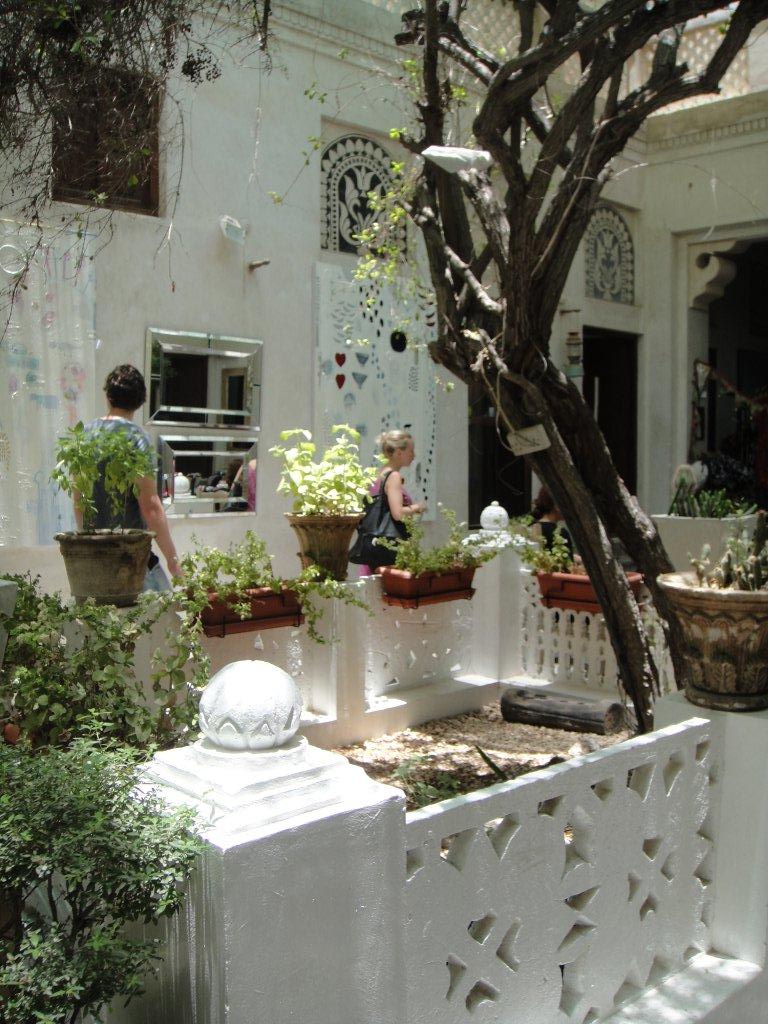
In the courtyard of majlis of the Majlis Gallery
When I feel very wound up, a visit to the Majlis Gallery soothes my soul. And the rapidly created city of Dubai, full of gleaming and awe-inspiring in places, can lack soul. The control of business by a limited number of locals means that restaurants, shops etc. can be very impersonal, I guess this is the same the world over as big corporates dominate more and more. Setting up a small business is expensive and difficult. In other countries you could start a little cottage industry from home and see if it worked out, paying tax when you started to make a profit. The permission-based system here means you have to get a trade license, a sponsor and premises from day one.
Despite this the artists and craft community seem to survive, if not thrive and I don’t know how I’d missed the market at The Majlis Gallery until now (the last one of the season, usually held on the first Saturday of the month). This traditional house with windtowers was Alison Collin’s family home which, turning her passion for art into a business, she converted into a gallery. Alison’s eye is superb. She receives hundreds of applications from artists every month and her choice of work is varied and original.
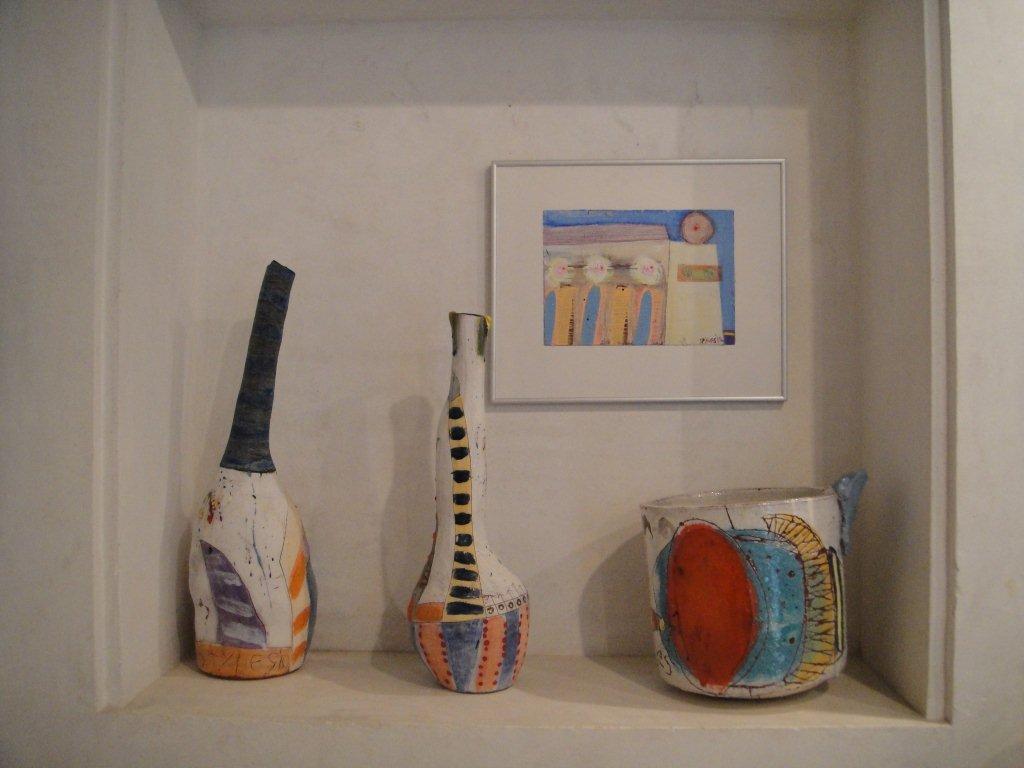
Linda Styles colourful work.
A friendly guard let us into the special free car park reserved for customers which meant we only had to walk a few paces. Thank goodness for that as the temperatures were soaring into the 40 Cs. Apparently it’s usually buzzing in the gallery on a market day, but the humidity and heat had kept the crowds away. We admired what was on the stalls which reflected the quality and eclectic nature of the gallery’s art; the artisans and vendors were really friendly too.
-
- Baskets from Tanzania
-

- Tanzanian lizards.
-

- Vibrant cloth bags
-

- Beaded key rings
-

- Blown glass and silver are used to reflect geology and nature.
-

- Artisan jewellery
-

- Jewellery made with tactile textiles.
-
- Funky ceramics
-
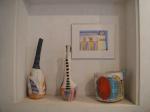
- Linda Styles colourful work.
-
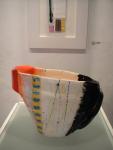
- I love this jug.
-
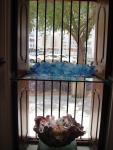
- A view from the front window, displaying glass sculptures, onto the street.
-
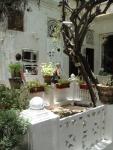
- In the courtyard of majlis of the Majlis Gallery
A few highlights:
- Zanzibar Dreamin’ – A colourful and original collection of cloth items, baskets and jewellery from Tanzania
- Sue Tyson – Elegant and lovingly-made jewellery designed with an artist’s eye inspired by geology and nature.
- Nader Nikmorad – Artisan pieces made of wood including watches that were almost like cartoons in real life.
- Rose Milano – Jewellery made of cloth and thread and other fabric adornments (I adore my woolen necklace and bracelet that I bought 2 years ago)
- The little fair trade shop – A collection of fair trade items from around the world
- And part of the current exhibition vibrant paintings and ceramics by Linda Styles –
The food connection was supposed to be the cup cake stand – a key motivation for my daughters to accompany me – but the cake makers pulled out the night before. I think the icing would have melted. We had to be content with paintings of fruit by John Gregson and ceramic fruit by Nicki Smart.
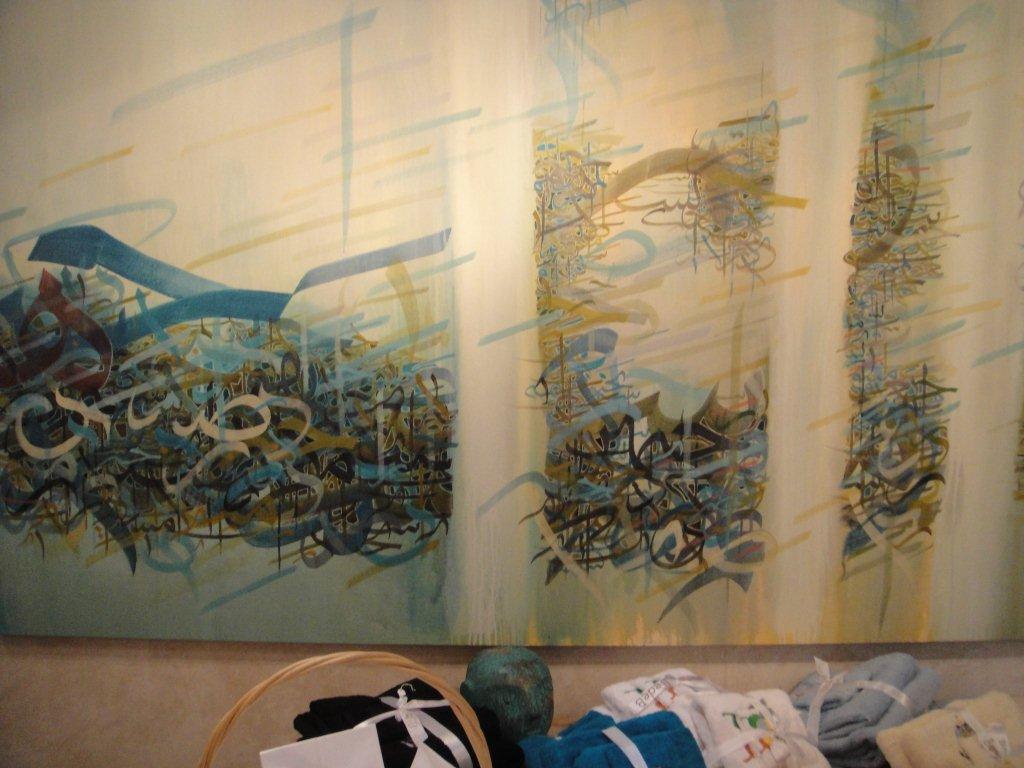
Fabulous calligraphy by Khaled al Saai behind embroidered towels.
The Hummus Diet and zhoug – my new BFF

Ten tons of hummus in Beirut. (Image credit AP via Gulf News)
A new world record was set on May 12th 2010 in Lebanon – the biggest serving of hummus which weighed in at over ten tons. The war over hummus between Lebanon and Israel is set to continue, but I can personally vouch for the quality and quantity of this delectable chick pea dip by the most recent victor. I ate it at least once a day on an seven-day trekking trip for charity a few weeks ago – probably another kind of record and a proto-type of something I will patent as ‘The Hummus Diet’.
Making hummus is easy but getting exactly the right balance of taste and texture can take some practise. I thought I’d stepped up to the next stage of hummus-making recently with the addition of bicarbonate of soda to the soaking water. I was then warned by my ex-Domestic Science teacher Mother-in-law that this would strip out any nutritional value. Some people agree and some say it might actually break down the indigestible elements. Claudia Roden, the high priestess of Middle Eastern cuisine as far as I’m concerned, says that it was used widely especially with old chickpeas. It gives a light, fluffiness which was the sublime common denominator in all the hummus (houmous or hommos) I tried in Lebanon.
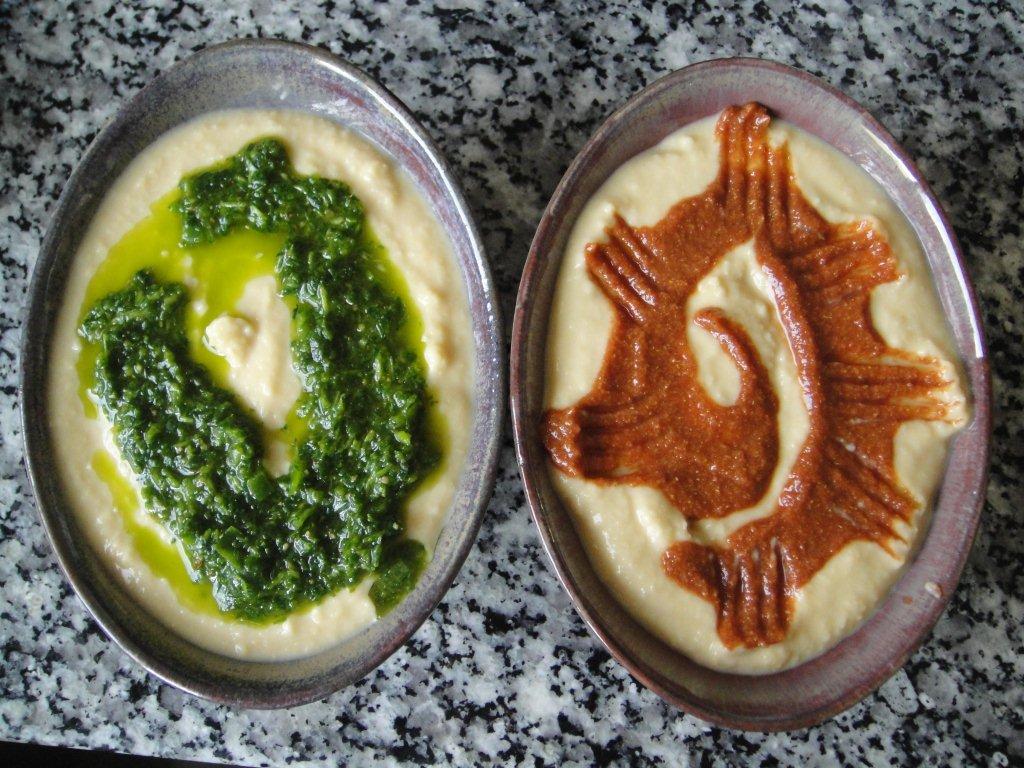
Zhoug and Zhing
I’ve been back for a couple of weeks and was casting around for something to re-energize my hummus-jaded palette when I discovered something called zhoug – a Middle Eastern condiment from Yemen that I had never heard of or tried. Apparently it’s another dish that has been adopted by the Israelis with gusto and it’s often drizzled on hummus. I like the idea of adding the flavour on top rather than incorporating it; I’ve tried adding fresh coriander before and it turns a really unattractive shade of grey-green. I also thought I’d try to make something hot, earthy and spicy too – see what you think of my scarlet, harissa-inspired dressing (zhing?). I love the intensity of fresh green herbs used in abundance – like tabouleh – it makes me feel like I’m getting my entire vitamin intake for the week in a few forkfuls. Do you add any delicious ingredient to hummus? Is this legitimate variation on a theme or utter sacrilege? Recipes and tips on how to make the best hummus below.
-
- A dish of hummus eaten at Byblos – part of the Hummus Diet.
-
- Cooked chick peas. The white husks are separating from the pea.
-
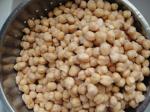
- Drain the chickpeas and reserve the final cooking water.
-
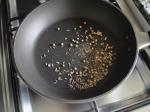
- Dry fry the zhoug spices until lightly toasted.
-

- Green chillies. I avoided using the very tiny hot ones but add more if you like.
-
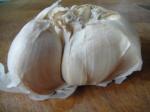
- I’m a garlic addict – so good for you too.
-
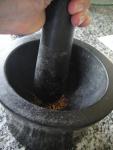
- Pounding the spices.
-
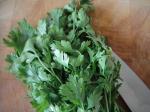
- Fresh flat-leaved parsley
-

- Fresh coriander (cilantro) and sea salt.
-
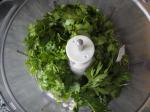
- Leaves, chillies, garlic and spices ready to blend.
-

- Zhoug and Zhing
-
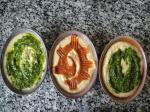
- Parsley-only version for cilantro haters (far left).
Zhoug
1/2 teaspoon coriander seeds
1/2 teaspoon cumin seeds
1/2 teaspoon black peppercorns
2 cardamom pods (green)
1/2 teaspoon sea salt
1 or 2 cloves of garlic
3 fresh green chillies (or to taste)
a few sprigs of flat leaved parsley
a small bunch of coriander (cilantro)
Extra virgin olive oil (about 100-200 ml)
Toasted or fried pine nuts (optional garnish)
Lightly toast the dry spices in a non-stick saucepan until the coriander seeds start to colour. Add the salt and pound in a pestle and mortar until fine (or use a spice blender). Put the spice powder and the rest of the ingredients (apart from the olive oil) into a blender. Put the stalks of the fresh herbs in as well as the leaves ( you could add to the mortar and carry on pestling!) With the motor running, drizzle in the olive oil until the ingredients are chopped finely and it all turns into a grassy emulsion. Store in a jar with a layer of olive oil on top in the fridge. Use as a dip for crudites, falafel or bread, spread over fish before cooking, or smear artistically onto a dish of hummus with toasted pine nuts if you like. I stirred it into yoghurt with a squeeze of lime juice and some salt for a delicious raita to go with poppadoms and curry.
I also made an all parsley version for coriander (cilantro) detesters. Use a small bunch and follow the recipe as above but add a spritz of lemon juice and a bit more salt (taste until you get the right blend of fresh, sharp and salty for you).
Zhing
2 teaspoons ground cumin
1 teaspoon ground cayenne (or chilli powder)
Juice of a lime
1/2 teaspoon sea salt
3-4 tablespoons tomato paste (not the tin-tasting stuff from a tube. You could use sun-dried tomato paste).
Extra virgin olive oil
Mix all the ingredients together, drizzling in olive oil until you get a loose sauce consistency.
How to make the best hummus:
- Soak chickpeas (garbanzo beans) overnight.
- Throw the soaking water away and wash the chickpeas well.
- Boil for at least 2 hours if not more (4 has been my maximum) changing the water halfway. The chickpeas should be soft and crush easily between your fingers. Skim any foam and peels that float on the water and discard.
- Reserve the cooking water at the end and use to thin the hummus with.
- Rinse the cooked chickpeas well and pick out as many of the husks or skins as you can.
- Do not add salt until after the chickpeas are cooked.
- Blend for at least 3 minutes with the cooking water, garlic and salt until it becomes a velvety cream. Add tahini and lemon juice to taste.
I urge you to try making fresh, if you haven’t already, for the taste and the nutritional value. You can always freeze the hummus in small pots. If you want a more detailed recipe please drop me a line.









 My Custard Pie