How joining Ramblers changed my life

We stand in a circle, six strangers, socially distanced, making tentative introductions. It feels like being parachuted into an alien country. The surrounding moorland is familiar, but meeting up with people away from the limits of our household ‘bubble’, feels illicit. I’m on Dartmoor UK in August 2020, permitted by the new rules after lockdown begins to ease, for my first walk with Ramblers.
I’d caught a plane from Dubai as soon as Emirates airlines started flying again. When the whole world changed as the pandemic hit, KP and I agreed that it made sense for me to take Hazel (our Border Terrier) to the UK for the security of our home country during such uncertain times. Staying in Devon and being a two minute walk from open moorland gave wonderful freedom during lockdown but very limited human contact except via Zoom. I’m comfortable with my own company and often crave solitude but I was missing KP and my friends and wider family. The ordinary routes to making connections in a new place were completely shut down too.


So putting on my walking boots and striding out on a new path, in more ways than one, is liberating. There are clouds overhead as we start the walk, but a hazy light makes the water in the leat* gleam like silver. Tufts of bleached grass stick up like piles of blonde clippings on a hairdresser’ floor. Derek and Christine, the walk leaders, take us along the edge of the moor, we clamber over wooden stiles, cross Willsworthy Bridge, march along country lanes via the village of Zoar to stop eventually for a break near Wheal Jewell Reservoir. The sun comes out and we perch on a circle of granite stones – handily spaced at the regulation 2 metre gaps. Everyone gets out vacuum flasks and drinks tea or coffee while I sip water and vow to be prepared next time. As we begin our return across Kingsett Down, the heavens open in a fierce deluge of rain so intense that shafts bounce off the ground and it puddles within minutes. A strong wind blows it into our faces and we all start to laugh at the absurdity of such a dramatic change in weather. We tread as quickly as possible over exposed, lumpen moorland with no chance of escape. At the end of the six mile hike we are drenched but smiling.
*Leats are small man-made canals on Dartmoor used to transport water for drinking, to power waterwheels and then the mining industry.

On Great Links Tor looking out to Sharp Tor and beyond
The Ramblers Association (known as The Ramblers) is a charity founded in Britain in 1935 to assist people who wanted to get away from towns and cities to walk in the countryside, escaping their polluted environments and the stress of daily life. It has evolved over the years but its central goal is still ‘to protect the ability of people to enjoy the sense of freedom and benefits that come from being outdoors on foot’. For a small annual subscription you have access to a programme of walks throughout the UK led by volunteers, and it helps to support access to land and pathways for all.
I was familiar with a few walks on Dartmoor but joining The Ramblers opened the door to discovering an array of beautiful and interesting places I had never visited, most a short distance away. As lockdown eased I began to meet more people at every hike. Walking through magnificent countryside while getting to know other members, or just letting the bubble of gentle chatter wash over me, became part of the pleasure.

On Ger Tor looking down on Tavy Cleave
Tavistock Ramblers (a local group within The Ramblers) was started in 1976 by Rosemary and Graham who were then youngest members but now are over 70 years old. They still lead walks most weekends (at a brisk pace) and we benefit from their in-depth knowledge of Dartmoor. I’ve learned so much from them and other members of the group that enrich my love of the area. There are the wild moors, peaceful country lanes, numerous types of stiles, bucolic villages with pretty thatched cottages, historic remains going back to the Bronze age (like Grimspound pictured below), the legacy of mining, geology formed 370 million years ago, unique plant and animal life – which I now know so much more about.
After that first meeting, I started to join both walks on the weekend. My ‘lockdown spare tyre’ diminished, I felt stronger, fitter and enthused about the wonderful hikes to KP, my family and anyone else who would listen. The welcome from the group is always warm, inclusive and generous. It gave me a respite from the confinements of lockdown and a degree of loneliness that I hadn’t realised I felt until joining. During the second restrictions, I missed my weekend rambles desperately but met up with individual Ramblers members (as permitted), exploring yet more new territory.
When Rosemary walked over 130 miles (210km) over ten consecutive days along the new Dartmoor Way in aid of Dartmoor Search and Rescue Tavistock, I joined her for two of them. A very special couple of days. I was with a group of other Tavistock Ramblers to welcome this amazing 74 year-old as she ended her hike in Tavistock – in an absolute torrent of Dartmoor rain!


Every time I step out with Tavistock Ramblers my shoulders relax and a sense of contentment floods through me. I take a deep breath and start to grin; I call this ‘The Ramblers smile’.
The Ramblers Association, contacted me (seeing things I’d shared on Instagram) and invited me to be an ambassador for some of their campaigns, which is a pleasure and an honour. I’ve written some articles for the national website (as well as some for our local newsletter). You can read them here (no surprise that one is about food):
The perfect packed lunch for a ramble – my way!
Wild and wonderful: a winter walk on Dartmoor

Grimspound – a Bronze Age stone circle

Bellever Clapper bridge
Walking is free and you don’t need a lot of kit but my last two Christmas lists have included a variety of hiking gear. I swapped my 30 year-old Barbour (too heavy for longer distances) for a Paramo jacket which I love, stocked up on some warm base layers, gloves and hats and have just invested in a rather smart backpack (so my shoulders don’t ache), and some Altberg boots. I really recommend Taunton Leisure for their excellent customer service. I learned from my first experience and always take my lunchbox, flask and distinctive Orla Kiely enamel mug. My fellow ramblers now tease me as I take a picture of it for Instagram before taking a welcome sip of tea.
As the freedom to see family and friends and other activities open up I don’t attend quite as many walks. However, there is always a spring in my step and a smile on my face as I arrive at a meeting place, exchange “hellos” with the delightful bunch of ramblers, and stride out onto a path that leads to yet another wonderful walk.
“I love walking because it clears your mind, enriches the soul, takes away stress and opens up your eyes to a whole new world .” – Claudette Dudley**
I couldn’t agree more. Thank you Ramblers.
** This is quoted widely online but I can’t discover who Claudette Dudley is. Let me know if you do!


Find out more:
The Ramblers – joining as an individual is £36.60 a year which gives you access to the programme of walks across the UK. Worth investing even if you are just visiting the UK.
Tavistock Ramblers – my local branch and a lovely bunch. There are self-guided walks on the website too.
Dartmoor National Park – a wild and beautiful place.
Dartmoor Way – just one of many trails across and round the area.
All images taken on my iPhone 11 plus



River Plym
I share my Ramblers walk on Instagram stories if you’d like to connect there. If you’d like regular updates from me in your inbox sign up here.
The Modern Preserver’s Kitchen cookbook review
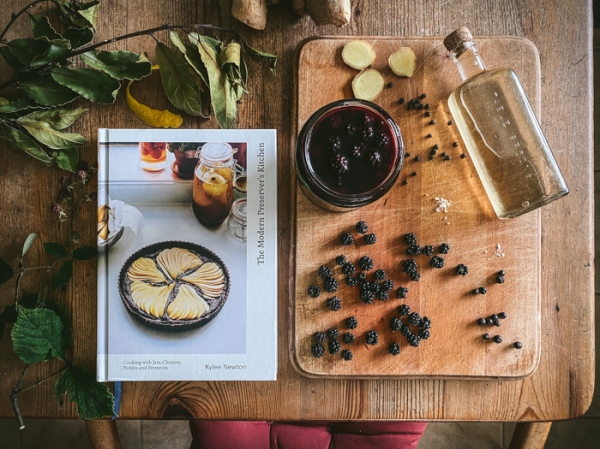
Fruits of the season
Salted runner beans, pickled cucumbers, redcurrants, elderberry wine, blackcurrant jam; gleaming jars stood in rows in our larder – the result of a fruitful garden, thriftiness and no freezer. This was how I grew up. Our spring and summer fruit and veg came from the ground; soil, bushes and trees all tended by my Mum. Pickling and preserving captured the bounty of those seasons and were bright jewels during the fallow winter months.
I remember waiting by the greengrocer’s stall where he would sell bruised, ripe peaches, dripping with juice, cheaply. Back at home they were trimmed of blemishes, scalded and plunged into a fruity syrup in Kilner jars. Divine with a little cream for pudding in front of the fire in February. It was how food was valued rather than wasted. This was decades rather than centuries ago, but seems like another time as our approach to growing, buying, cooking and valuing food is now so dramatically different.
Apart from bottling a huge jar of red chillies from the Dubai farmers’ market, a bit of kimchi and dipping my toe into Seville orange marmalade-making last year (organic from Riverford), I haven’t really kept up the family preserving tradition.
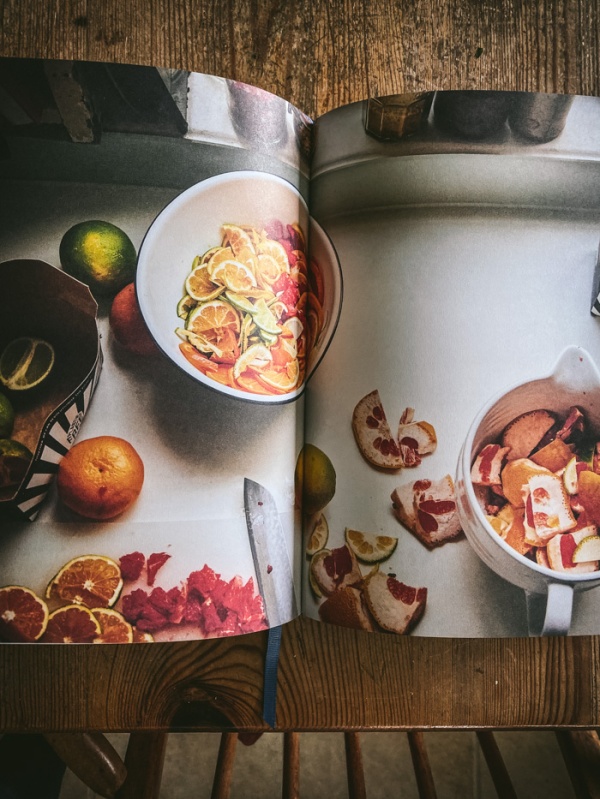
Is there anything new to say about preserving?
I do have quite a few cookbooks about the art of preserving though (surprise, surprise). When I was offered The Modern Preserver to review I was intrigued and a bit sceptical; is there anything new to write about? There are countless books and online articles.
Normally, when I turn the pages of a book on preserving I make a mental list of the lovely jars of things I want to make (usually unfulfilled). With this book it’s the other way round. I’m drawn to tempting recipes with vibrant flavours first, all which use the jams, marmalades and pickles detailed in the book. How about Breakfast kimchi eggs (scrambled or omelette); Roast butternut, pickled beetroot, feta and Puy lentil salad; or Coconut layer cake with lime and tequila marmalade and cream-cheese frosting. This book is about making variations on classics and what happens next.
For every preserve recipe, most with combinations of flavours that are outside the usual preserving canon, there are two to three recipes on how to use it as an ingredient, giving ideas way beyond the obvious (e.g. on toast or with cheese).

The Modern Preserver
The author of the Modern Preserver’s Kitchen is Kylee Newton, a New Zealander who lives in London. She’s described as a preserving guru, a kitchen alchemist, a master in her field of preserving the seasons. A creative who excels in what she can craft with her hands, past jobs include printing Wolfgang Tillman’s analogue photographs (a dying skill), fashion stylist, florist – and DJ. She now describes herself as a writer, teacher, consultant and developer – all the in the realm of food.
Kylee passes on her knowledge in meticulous detail, but not just as recipes. By reading each section you come away with an understanding about what’s important to get right and what can be modified to change the recipes and flavours to your own tastes and ingredients. The base recipes are a springboard rather than prescriptive. “There is a definite craft to making preserves, and rules to follow, but the most important thing is to play and enjoy.” she says.
So where has Kylee’s wealth of knowledge come from? It began with making a few jars to give as gifts at Christmas which received such a great reception that an idea was born. She started selling a limited range at Hackney market which, when demand meant that she was filling jars in her kitchen full-time, became Newton & Pott. Eventually it moved to a commercial kitchen, the range still handmade with seasonal, mainly local and organic ingredients. The reaction from market shoppers and local food businesses was enthusiastic and Kylee spent a few years making and creating jars full of delicious conserves, teaching preserving lessons and writing her first cookbook, ‘The Modern Preserver’.
Newton & Pott is no longer a maker and wholesaler. The production kitchen has closed due to recent pressures from Brexit etc. Kylee returned to her kitchen table recently to stir up a few jars of jams and jellies made with some foraged ingredients. These were dispatched to Taylors of Maltby Street under ‘The Modern Preserver’ label. I suspect they won’t be there for long.
How do I eat it?
Back in our own kitchens, the pleasure of making jams, pickles and chutneys can be tempered when faced with a daunting amount of filled jars. Instead of giving all the fruits of your labours away to friends and neighbours, or stashing them in a cupboard (or what she calls the “condiment graveyard” in the fridge), Kylee want us to look at each preserve as something with vast possibilities.


Waste not, want not
I like this book for the very detailed instructions about making preserves and the wealth of recipes that go with them and more (see below), but there’s something greater that resonates. Kylee was brought up in New Zealand where life was more relaxed and simple. The attitude to food was an ethos of “waste not, want not” and savouring the seasons. Because of my similar upbringing, albeit on the other side of the world and a decade or two earlier, I relate to her approach and agree wholeheartedly with the things she holds important.
Preserving is at the heart of her whole attitude to cooking and using ingredients. Sustainability through considering the impact of what you buy and when or where you buy it and tackling food waste.
In the book Kylee says:
“For me, preserving is sustainable cooking at its best. It makes the most of each season’s offering, giving yield longevity and creating a type of edible time capsule. All of this is good for the planet, which is one of the main reasons I’m so attracted to the process. Reducing waste and making the most of the seasons are at the heart of my moral compass, as pagan as that sounds…”. “…thank you for buying this book. It’s a small step into the world of thinking about food sustainability and how to make the most of natural resources.”
There are practical ways to put this into action and not just by preserving. For instance, advice for using egg whites leftover from custard for the coconut layer cake. I have this problem often and her solution is to freeze them, putting each individual egg white in a square of an ice-cube tray. Instead of pouring it down the sink, there’s a pickle brine salad dressing.
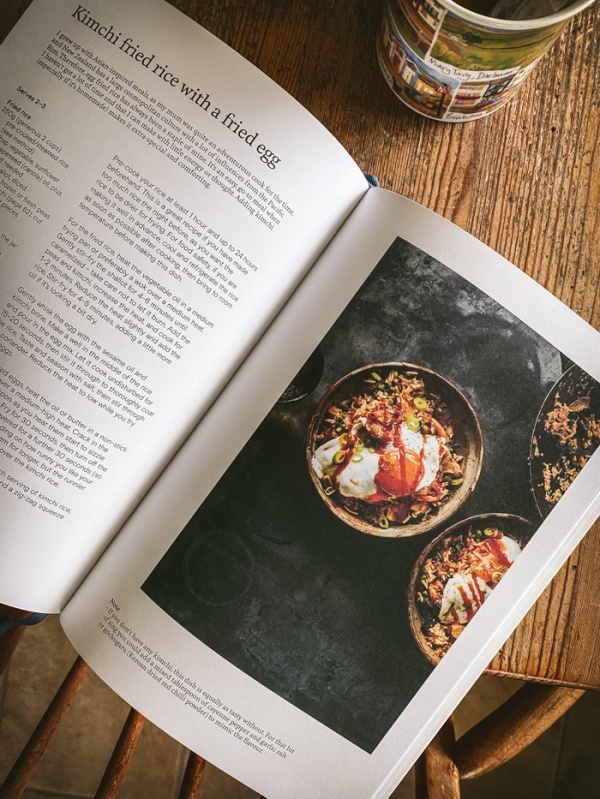
Ancient alchemy, modern flavours
While the title says modern, the design and feel of the book is classic with simple, beautiful pictures of preserving methods and props, produce and recipes. There are pages of unillustrated text, clearly laid out and indexed giving detailed instructions on different types of pickling (in brine and vinegar), lacto-fermentation, and how to make chutneys, relishes, sauces, jams, jellies and marmalades.
“People have preserved food for thousands of years. You can see it in countless countries and cultures across the globe. It’s been a means of feeding people in unfruitful times, and also sometimes relied upon for survival. Like all food, it brings people together: from the passing down of these culinary traditions comes community and identity.” she says
While continuing this ancient alchemy, it’s Kylee’s approach to flavours that are modern. Whisky-pickled carrots, pickled pears, gooseberry chutney, peach and mint jam and how to use them: Chocolate and pickled pear frangipane tart; Grilled kippers with brown butter, poached eggs, gooseberry chutney and crème fraiche; Peach and mint jam galettes.
It’s all terrifically tempting. As a trifle lover, the Pineapple, lime and tequila marmalade trifles recipe had me thumbing back hurriedly to see how to make the latter and (mentally giving out jars of it for Christmas presents). However, there are always alternative suggestions for using up what you have, for example orange marmalade with added Cointreau instead.

Suit your shelves and the seasons
Cooking from a veg box means you to be flexible. It’s very different from going to the supermarket with a fixed list and I find a lot of cookbooks too prescriptive or the recipes unachievable if you want to use all seasonal ingredients. Kylee’s recipes are a jumping off point and she encourages adaptation. In the notes for steak, mushroom and marmalade pie she recommends lime but says you can use any other citrus jam and gives directions on how to cook a slightly different vegetarian beany version.
Even if you’re not going to be making cupboards full of preserves this is a solid book to have on the counter. There’s a whole section on recipes to make from scratch “to make your daily cooking as sustainable as possible”. These include homemade custard, butter, labneh, smoked fish, mayonnaise, cashew nut vegan mayo, mustard and gyoza wrappers. There are buckwheat and pumpkin seed crackers, corn tortillas, pikelets, Japanese brioche burger buns, crumpets, muffins and scones. Instructions on making soft cheese ricotta also produces whey which she uses throughout the book such as Whey potato salad with pickled peas and mint, or Whey cornbread with jalapeños.
Taking the plunge into preserving
As an eager pupil, I’m confident I can learn a lot about preserving from Kylee through this beautiful book. The detailed instructions on making marmalade are bookmarked (love a hardback with a ribbon) for when Seville orange season comes round again. There are tips that weren’t in any of the different recipes I used last year to make three batches. I’m also keen to take a dive into the fermenting world for the flavours and health benefits. Cabbage is my favourite vegetable and Kylee gives many tempting recipes for kimchi, sauerkraut and how to use them. There’s also a salt ratio chart that goes from asparagus to turnips including Brussels sprouts, garlic, okra and more. Reading the book has taken my blinkers off, to use preserves as an exciting ingredient rather than just spreading or pairing and I’m ready to go down an exciting path of discovery.
Kylee says “Anyone can bottle the seasons, avoid waste and add character to family food.” This isn’t just a way of cooking, it’s a way of life.

Pickled blackberries
A different way to preserve these juicy fruits from the hedgerows. A spicy, fragrant ingredient to use with smoked fish, cheese dishes and bake with other fruit, chocolate or ginger .
Makes a 500ml (17fl oz) jar
Ingredients
400g (14oz) blackberries, washed and drained*
250ml (1 cup) white wine vinegar
100ml (1/2 cup) filtered water
80g (generous ½ cup) white/golden granulated sugar
pinch of sea salt
½ cinnamon stick
½ teaspoon black peppercorns
½ teaspoon juniper berries
1 teaspoon yellow mustard seeds
1 bay leaf
2 strips of pared lemon zest
2cm (3/4 inch) piece of fresh root ginger, sliced
Method
Combine vinegar, water, sugar, salt, spices, lemon zest and ginger in a large, non-reactive pan. Place over a medium heat, stirring until the sugar and salt dissolve and the spices infuse. Bring to the boil and simmer for 5 minutes, then allow the brine to cool completely.
Pack your blackberries into a sterilised, cool jar. Try to fit in as many as possible without squashing or forcing too tightly, leaving a par of about 1cm (1/2 inch) from the top rim.
Pour the brine over the fruit. Gently tap out any trapped bubbles, or use a chopstick to manoeuvre the bubble out, making sure you get out as many as you can (this trapped air can encourage fermentation). Top up with brine again so the produce in entirely covered, up to 2-3mm (1/8 inch) from the very top, and seal with a sterilised, dry lid.
*You can use blueberries instead but I don’t have access to them apart from in the supermarket (usually flown in from far away) so haven’t tried.
The Modern Preserver’s Kitchen contains detailed instructions about how to sterilise jars and lids and a section on troubleshooting. This recipe is reproduced with permission from the publishers. I recommend ordering this excellent book for the recipes, all the extra information and a large dose of inspiration.
Thanks to Hardie Grant (Quadrille) who published this book and sent me a review copy. All views my own.

Honey and Ginger Biscuits
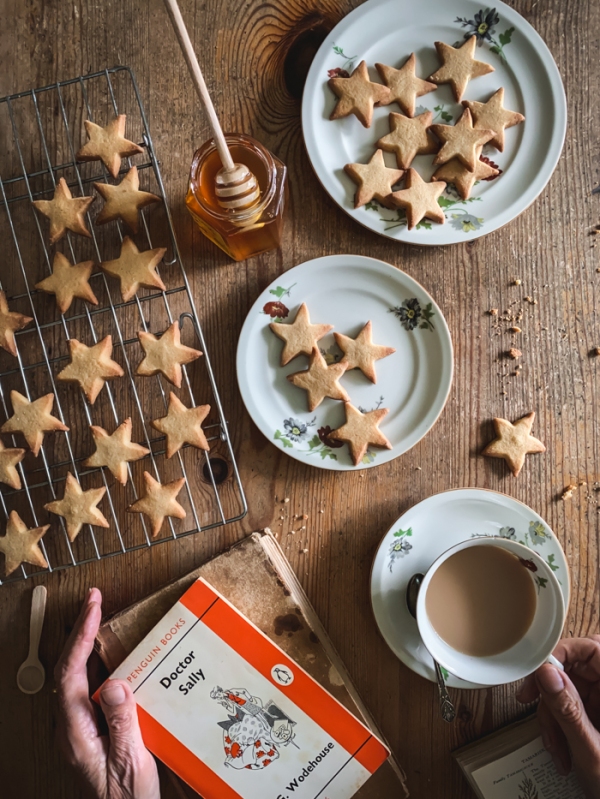
I was doing some food photography for a social media client, and needed some edible stars.
Appearance was the priority, they had to be edible (no food waste) but I wasn’t too worried about the taste; I cobbled something together. You know those types of biscuits that you eat one of, then realise you’re taking another, then another? Yes – these are the ones.
The recipe is quick and simple which means you can put them on your cake stand for afternoon tea, bring out a plateful with morning coffee or fill the biscuit tin to keep the builders happy.
The dough is not quite as forgiving as my favourite gingerbread but would still be good for baking sessions with children. Use any shape you like; you could play around with different spices or flavourings, just don’t overdo it. I made some small thumbprint cookies with a piece of crystallised ginger on them as well as the stars.
Not my usual post but, as I slipped some onto a saucer with my cup of tea, I wanted to share this happy accident. Still reaching for simple pleasures in these strange times.

Honey and Ginger Biscuits
Easy-to-make biscuit dough that's versatile for all sorts of occasions. Ghostly shapes at Hallowe'en, Christmas stars, birthday nibbles or part of afternoon tea. Light, spicy, moreish.
Ingredients
Method
Put in the middle of the oven for 10-15 minutes. Check at around 8 minutes as, depending on how big your shapes are, sharp edges like the tips of stars, can burn quickly.


Let me know if you make some and what shapes you make.

One Pot: Three Ways cookbook review. Why eating vegan doesn’t have to be difficult or boring
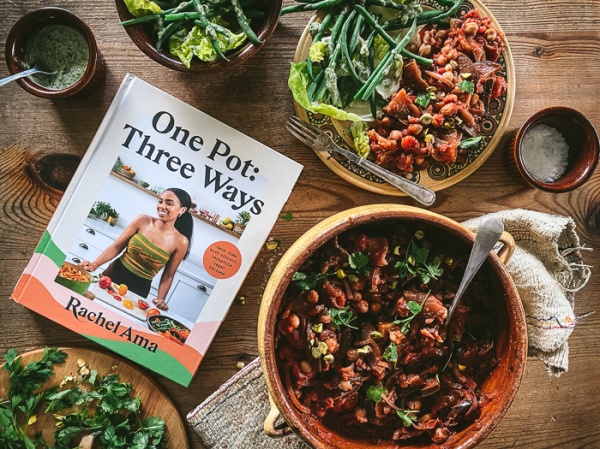
‘Save time with vibrant, versatile vegan recipes’ is the by-line on the cover of One Pot: Three Ways by Rachel Ama.
Cooking for vegans
Both my daughters are vegan. Often when I tell people this they commiserate. “Oh no!” they lament sympathetically and give me a look of pity as though my pet had just died (probably not the most appropriate analogy but you get the picture). The main concern is that cooking for vegans must be a nightmare.
My own experience is very different. I’m proud of my daughters’ choices and supportive, even if my way is different. Both of them cook healthy and delicious vegan food that we’re all happy to eat. When they come and visit, more often than not, they will cook for us.
Treating vegans as a different species has, thankfully, started to wane since they make up over 1% of the population in UK. This makes them attractive in economic terms and the sections of vegan products in the chill cabinet of the supermarket are now familiar. These dairy and meat alternatives are marketed partly as substitutes and partly for their convenience factor. They are processed foods and designed, just like all other processed foods, to be quick and easy to prepare and eat, but specifically by vegans. My daughters would rather cook things from scratch, as I do, but we’re all busy.

One Pot: Three Ways
One Pot: Three Ways by Rachel Ama is a cookbook for busy people who want to eat well. It’s designed around a simple system where you cook a main, one-pot recipe then have the choice of three options to make it into different meals. The main recipe is enough for four portions and the recipe options use two portions so you are already set for a couple of meals that week. They are versatile so you can increase or decrease the quantities.
A few vegan cookbooks have crept onto my shelves and many of the well-known ones seem to be polarised into two categories: recipes for vegan versions of traditional dishes like shepherd’s pie (“you won’t miss meat”), and dietary-related health issues (“being vegan made me feel amazing”). Rachel Ama’s main approach is to devise her own recipes that she enjoys, with big, plant-based flavours, and believes other people will too. There are a few recipes for ‘basics’ at the back of the book that include riffs on Spaghetti Bolognese, Shepherd’s Pie and Moussaka but they are the exception. She mentions the positive impact on her body she found in giving up dairy in the intro, but doesn’t labour the point.
My heritage plays a huge role in the food I make; my immediate family are Welsh, St Lucian and Sierra Leonean, so it’s fair to say I grew up visiting family members with very different-smelling kitchens across London, and each smells like home to me.

Key ingredients
Flicking through the cookbook, the pictures of food are vibrant in reds, oranges, yellows and greens – very different to the beige, lentil-brigade reputation that vegan food is still shrugging off. Some ingredients crop up many times such as mushrooms, red peppers, avocados, kale and cauliflower. There’s the usual range of pulses that are essential eating healthy on a vegan diet (a good source of protein and iron).
Other ingredients are a little less easy to find here in rural Devon. While tinned jackfruit has made it’s way onto supermarket shelves, hearts of palm aren’t often stocked, I haven’t found ackee and getting a fresh, plantain is impossible.
Rachel came into people’s homes via YouTube where she gained avid fans. She’s warm, friendly, attractive and explains things well, all factors that probably contributes to a large following. However, I think it’s her use of spices and flavours that has made the recipes catch on. Tahini, red chilli flakes, lemons and limes, miso paste, harissa, with lots of fresh herbs are on her kitchen counter. Paprika, cumin, garlic powder, allspice, turmeric, Madras curry powder, nutmeg and cinnamon make up the core of her dried spices.
When Rachel outlines these staples of her kitchen in the book, she divides them into three ‘stations’: fridge and fresh top-up essentials; store-cupboard essentials; sauces and flavour-station essentials. The recipes are also in three sections: One pot (a deep casserole); one pan (a good-sized frying pan); one tray (a large roasting pan). You get the impression that while she might dance around the kitchen, Rachel is a highly organised cook.

So how does it work?
You make a centre-piece or main recipe (many of which can be done ahead) then choose from three different sub-recipes to make it into a different meal. For example, I made Harissa Hotpot from the One Pot chapter (recipe below) and served it with Green Tahini and Green Bean Salad. Alternatively I could have made Garlic, Lemon and Kale Wild Rice or Toasted Garlic Sourdough with Rocket to go with it. These themes are repeated so you can eat a healthy and varied menu.
Roasted Cauliflower Curry, from the One Tray section can be served with minty, brown rice and cavolo nero; a coconutty white rice and chutney; or a salad of mixed leaves and cherry tomatoes drizzled with turmeric and tahini dressing.
Jerk-spiced lentils, in the One Pan chapter, can be eaten with Coconut Rice, Patacones and Pineapple Salsa on one day, Jerk Lentil Spaghetti on another or with Plantain Rotis and Salad on another occasion. Patacones are fried, rolled and refried plantain slices which I’ll try to make if I can find this elusive fruit.
Our verdict
One of my daughters had been eager to see the book as she’d watched Rachel’s videos and really liked the concept and the recipes. She thought that sometimes the options were pretty similar (e.g. rice was common) and there were quite a few curries, however they looked good. There are creative ideas that she wouldn’t have thought to make. Her proviso was if you made all the recipes, the ingredient list could stack up (she’s a student cooking mainly for herself).
My other daughter is an experimental and spontaneous cook who doesn’t often use recipes. Her view was if you’re new to being vegan or only have a few meals that you know how to cook, this book would be great. Nothing seems particularly hard or complicated but there are nice flavour combinations that are probably outside some people’s boxes.
I wanted to know what someone who isn’t vegan, and doesn’t have vegans in her immediate family, thought of the book. She liked the photography and simple ingredients with the option to add things. “Not sure if I’m the target – I’d probably buy it for vegans. I like the servings information, it’s amazing how many cookbooks don’t say how many people a recipe will feed. I like the background about why she likes certain flavours, clear simple instructions, highlights in bold and not crazy ingredients.” My friend is an excellent cook and said she would like to cook from it.
KP was less enthusiastic. I asked him to select a few recipes he’d like me to cook and he struggled to choose three. However, he hasn’t tasted any yet.
So what did I think? There’s no seasonality in any of the recipes, they’re designed so you can go into the supermarket at any time of the year and make them. As I cook from my Riverford veg box, I find this a bit limiting. However, using leftovers of something I’ve cooked on one day as the foundation for a different meal is something I do regularly to minimise food waste, so I relate to the concept. This book gives me a different perspective and many new ideas. Some vegan substitutes are included but not often: for instance, vegan mince is used for the Thai-basil plant-based mince recipes, however walnut and cauliflower mince is the basis of others. Overall, it feels like an interesting cookbook that just happens to be vegan.
As well as finding a home on the bookshelf of vegans it could be a great resource when cooking for a mixed group, which happens more and more these days.

The Harissa Hotpot was really simple to make. I was really dubious about adding chopped aubergine into a type of stew without frying them first but they melted into the sauce really nicely. The zest and juice of orange really lifted the whole thing especially paired with the ginger. The green bean salad was a quick addition and the green tahini dressing was so delicious that I’ve made it again to serve with other vegetables.
This recipe is from One Pot:Three Ways and reproduced with permission from the publisher:
Harissa Hotpot
In this hotpot, aubergines and chickpeas are flavoured with aromatic ginger, cinnamon and fragrant harissa and all cooked in one big pot in the oven. This is a simple way to intensify flavours quickly and achieve very happy kitchen smells. The aubergines become deliciously soft and absorb all the flavours.
Ingredients
Harissa hotpot (main recipe)- 1 tablespoon olive oil
- 1 tablespoon rose harissa
- 1 teaspoon sweet smoked paprika
- ½ teaspoon ground cinnamon
- 2 red onions, finely sliced
- thumb-sized piece of fresh root ginger, minced
- 2 aubergines, quartered lengthways, then chopped into triangular slices
- 1 x 400g (14oz) can chickpeas, drained
- 2 x 400g (14oz) cans tomatoes
- zest and juice of ½ orange
- sea salt and freshly ground black pepper
Garnish
- Handful of fresh flat-leaved parsley
- 2 tablespoons shelled pistachio nuts, crushed
Directions
- Preheat the oven to 200°C/180°C fan/400°F/gas 6.
- Heat the olive oil in a deep, ovenproof pot over a medium heat. Add the harissa paste, paprika, cinnamon and onions and cook for 5 minutes until the onions are translucent. If they begin to stick to the pan, add a splash of water to loosen them. Add the ginger and aubergines and mix to combine, then stir in the chickpeas, tomatoes and orange zest and juice. Season with salt and black pepper.
- Cover the pot with a lid and place in the oven. Cook for 20 minutes, then remove from the oven and stir. Return to the oven for another 20 minutes until the aubergines have softened.
- Garnish with the fresh parsley and pistachio nuts before serving with your choice of option dish*. The hotpot is now ready to be used in the recipes (*option one: garlic, lemon and kale wild rice; option two: toasted garlic sourdough with rocket; option three: green tahini and green bean salad – see below) or it will keep in the fridge for 3 days, or in the freezer for up to 3 months.

Green Tahini and Green Bean Salad
Ingredients
- 2 portions of Harissa Hotpot (above)
- 300g (10½ oz) green beans, trimmed
- 1 Little Gem lettuce, leaves separated
- 1 tablespoon extra-virgin olive oil
Green tahini dressing
- ¼ teaspoon ground cumin
- ½-1 teaspoon maple syrup
- handful of fresh flat-leaf parsley, finely chopped
- handful of fresh coriander, finely chopped
- 2½ tablespoons tahini
- 2 garlic cloves, grated
- 1 tablespoon fresh lemon juice
- sea salt
Directions
- Warm the hotpot in a deep saucepan over a high heat. Bring to the boil, then reduce to a low heat and simmer for 6 minutes, stirring occasionally, until piping hot.
- Meanwhile make the dressing. Place all the ingredients for it in a bowl, adding just ½ teaspoon maple syrup at first. Add 2 tablespoons water and mix well until smooth. Some tahini brands can be thicker or more bitter than others, so taste the dressing: if it is too bitter, add a little more maple syrup: if it is too thick, add an extra splash of water to loosen. Set aside.
- Fill a saucepan with salted water and bring to the boil. Add the beans and boil for 2-3 minutes until tender, but still rich in colour and with a slight bite. Drain well, then place in a large salad bowl. Add the lettuce leaves, then drizzle over the dressing and the extra-virgin olive oil. Toss the salad together and season to taste with salt before serving alongside the hotpot.
This bean salad can be eaten warm or at room temperature.
Personal note: I used honey instead of maple syrup as I wasn’t cooking for vegans at the time. Honey is not considered vegan.

Thanks to Yellow Kite Books, Hachette UK (Hodder & Stoughton Ltd.) who published this book and sent me a review copy. All views my own.
What do you think of vegan cookbooks? If you aren’t vegan would you cook from one? If you are vegan are there any challenges you find when cooking or using cookbooks? I’d love to hear from you.
Please forward this review to any cookbook-loving friends you think might be interested or share on social.
Thyme and leek (or onion) tart recipe
 Having a store cupboard tart recipe is deeply rewarding. Whipping one up for supper, lunch or last minute gatherings with little effort is so much better than grabbing something from supermarket shelves. Even delicatessen quiches pall in the fridge and are costly if buying more than one slice. I love to have a few recipes that I can turn to with without a second thought.
The pages of Herb/a cook’s companion are already well-thumbed and I’ve cooked the Lemon Thyme and Leek Tart several times as it’s deliciously simple.
The fiddly part of savoury tarts is baking the crust blind (lining a tart tin with pastry, putting in baking paper and beans, cooking for 15-20 minutes) before adding the filling. My usual standby, mascarpone and bacon, dispenses with this stage without suffering from the now ubiquitous condition of ‘soggy bottom’; fearing having a layer of rather stodgy, almost uncooked pastry underneath your eggy topping. This tart goes a step further in simplicity as you don’t even have to line a tin (meaning the dreaded shrinkage is not a problem either). You just fold the edges in for a rather lovely rustic look. If cooking competition perfection is your aim then this might not be for you – or you could make it in a tart tin.

My herb patch doesn’t include lemon thyme this year. Recipe writer and author Mark Diacono recommends it but also describes the difference that each variety offers in the recipe intro.
Lemon thyme makes the sunniest, orange thyme is altogether more resinous and autumnal, and common thyme gives a tart you could eat for breakfast, lunch and tea and not tire of it.
Even if I’ve had to pull on my wellies and raincoat, I’ve found picking my own leaves fresh from the garden a simple pleasure. The scent of them is deep and sombre. Thyme is a woody herb and withstands the obstacles of the supermarket supply chain pretty well. I’ve found it pretty easy to grow, both in Dubai and the U.K. (Herb has helpful instructions for this too). A pot on your windowsill is a happy medium.
Here’s Mark’s recipe with a few notes from me. Like all good recipes, it’s started to evolve to my kitchen and way of cooking.
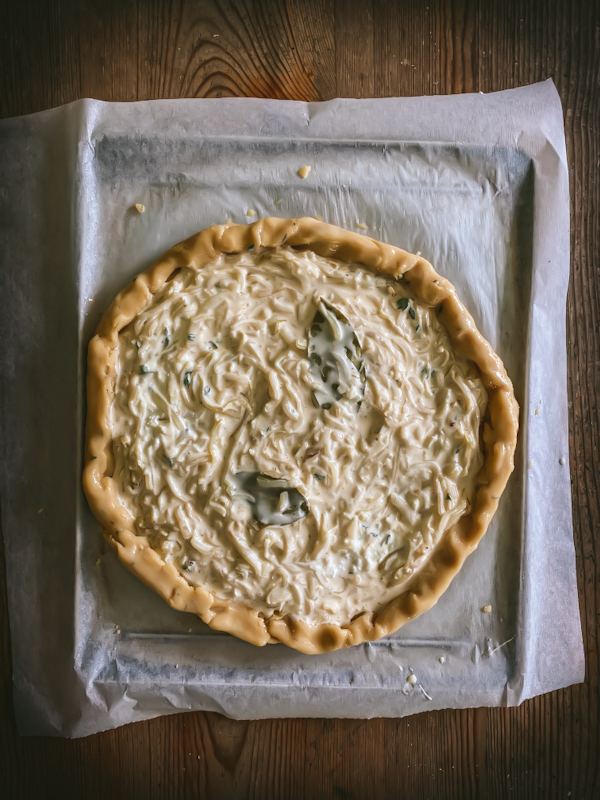
Thyme and Leek Tart
A really simple to make tart that can be tweaked. I made it with common thyme, but lemon thyme and orange thyme all give different characters.
Ingredients
For the pastry- 250g (9oz) plain flour, plus a little more for rolling
- pinch of salt
- 150g (5oz) unsalted butter, cubed
- 1 medium egg, beaten
- 1 teaspoon picked thyme leaves
Ingredients
- 30g (1oz) unsalted butter
- 500g (1lb 2oz) leeks, white part only, thinly sliced or 500g onions (about 2 large) thinly sliced
- 3 bay leaves
- 2 medium eggs
- 150g (5oz) sour cream or crème fraîche
- 1 tablespoon picked thyme leaves
- 1/4 whole nutmeg, or to taste, grated
- freshly grated nutmeg (generous 1/2 teaspoon)
- 20g (1/4oz) Parmesan or Cheddar, grated
- sea salt and freshly ground black pepper
Directions
- For the pastry, put the flour, slat and butter into a food processor and pulse until the mixture resembles fine breadcrumbs. Add the thyme and pulse very briefly to combine. Add the egg and pulse until the mixture just comes together. (Alternatively, mix the butter into the flour and salt in a bowl using your fingertips until it resembles breadcrumbs, stir in the thyme, then add the egg and mix to form a dough.) Bring the dough together with your hands and shape into a round. Wrap the pastry in cling film (or greaseproof paper) and rest in the fridge for 30 minutes.
- Preheat the oven to 200C/400F/gas mark 6.
- Melt the butter in a pan over a low-medium heat, add the leeks and bay leaves and cook until really soft and sweet – about 15 minutes for leeks, 30 minutes for onions.
- Beat the eggs in a bowl, then scoop out a couple of tablespoons of beaten egg to glaze later. Add the sour cream, thyme leaves and nutmeg to the bowl. Stir in the leeks or onions and season to taste.
- Remove the pastry from the fridge and roll out to a circle about 3mm (1/4in) thick, leaving no gaps or holes. Place a sheet of baking paper on a baking sheet, and put the circle of pastry on to it. Spoon the creamy leeks (or onions) on top, spreading it out evenly and leaving a 1-2cm (1/4-1/2in) gap around the edge. Fold the edge of the pastry over to create a lip. Nudge the bay leaves to the top. Glaze all exposed pastry with the reserved egg and sprinkle the cheese over the top of the filling.
- Place the tart in the oven on a middle shelf and bake for 35-40 minutes until the pastry is crisp and pale golden and the tart filling is set. Remove from the oven and leave to cool for 5 or so minutes before cutting into wedges to serve. A swirl of herb oil or picada on top is optional.

Herb – a cook’s companion: cookbook review
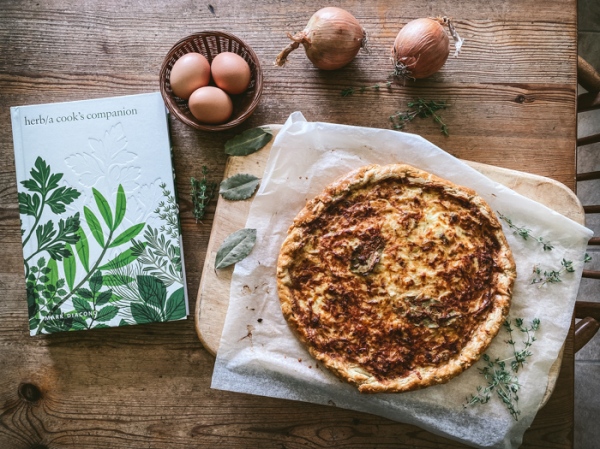 Opening a new cookbook on your kitchen table, tearing scraps of paper to mark the most tempting recipes is such a pleasure. But the cookbooks that you put on your bedside to delve into more deeply, savouring the stories, slowly turning the pristine pages are the ones I treasure most.
Herb/a cook’s companion by Mark Diacono falls firmly into the second category and couldn’t have come at a more perfect time.
Since last Autumn, every time I’ve drawn the curtains I see a large garden. It’s abundant with grassy knolls, wild meadow areas, an apple tree, hedges and flowers, but no edible plants. The unpredictable impact of the pandemic meant that a brief stay turned into a longer one without a firm end date in sight. I made tentative plans for a herb garden, dug out a border and ordered some seeds. In part, this was a longing for the freshness, flavour and profusion I’ve become used to in Dubai. Shoppers – both men and women – inspect every bunch, raising them to check the scent, the buoyancy of the leaves, the crispness of the stems and return them to the shelf with a look of disparagement if they fail the test.
Herb garden is probably a grand name for my tentative steps into horticulture; a small bed with a few aromatic plants might be more accurate. I scrounged a few cuttings, planted a lot of seeds in pots and sprinkled into the ground. The result has been mixed, I’ve learned a lot, some have not thrived, but I have a few herb varieties in abundance. I need inspiration and advice for dealing with quantities that far exceed the sad, limp offerings of British supermarkets.

Herb/a cook’s companion is a beautiful book to handle; the hard cover is embossed with green leaves, it’s solid in my hands and very tactile. To describe Herb as just a cookbook is inaccurate, more a comprehensive guide to growing, harvesting and storing herbs as well as using them in the kitchen. While the recipes and ideas are inspiring for my glut of herbs, it’s the book I wish I’d had before I sent off for a single seed packet or dug my trowel into the soil.
Mark Diacono is a new name to me even though he’s extolled as an ‘award-winning (and green-fingered) food writer‘ on the jacket. Brought up with a reverence for books, I have an aversion to defacing them otherwise my pencil would be underlining great sections of his beautifully crafted passages. By the light of my bedside lamp I’m immersed in a scented border or over a pestle and mortar effusing potent aromas. A few examples (I could easily have included more):
‘Anise hyssop looks like the offspring of a one-night stand mint had with a nettle.’
‘I used to think of dill as I do Peter Cushing: cast in a few specific roles, for which only it will do.’
‘This is the brother of the bulb fennel – both Foeniculum vulgare – this one lanky, the other has the bigger arse: Laurel to the other’s Hardy.’
‘Much as I am unable to pass a football without inclining my foot towards it, I bend to every lavender plant and play the softest tug of war with its flowers to lend my hands its scent. Somehow its perfume matches its colour. It is, like New Order’s ‘Bizarre Love Triangle’, as much uplifting as melancholy.’
‘This is fresher than Mae West after three gins.’
‘Once in a while, an ingredient tugs at your collar. You’ll be watching the match, chatting to a loved one, engrossed at the cinema, and a biplane will fly across your mind trailing a ribbon that says, ‘I wonder what that would be like on hot chips’ or ‘if I sprinkled that on a steak before frying as well as after…’. This salt is one of those.’

The book starts with ‘Herb Skills’. Mark says that this chapter will ‘guide you through all you need to get the best from herbs in the kitchen, to capture their flavour, to preserve them, to know how and when to add them. It has all the principles you need to grow herbs too…’
This would have been so useful when planning and planting my own patch, rather than juggling individual seed packets. It gives an overview of the soil types needed, the aspect, and choosing what to grow. He recommends this is based on your personal preference; what you eat most of, ease of growing, and also a bit of exploring the unknown. Mark invites you into the garden with a clear and comprehensive guide to preparing the soil, planting out, dividing plants, watering, feeding and harvesting.
Once you’ve got them into your kitchen, there’s advice about using fresh or dried herbs, the art and methods of chopping them, capturing and preserving their scents and flavours. He takes you through freezing, drying and infusing into salts, syrups, vinegars, oils, butters and jellies.
In the chapter on individual herbs, listed in alphabetical order, each one is given a dedicated page giving varieties, growing, harvesting and how to use in cooking including a list of things they have an affinity with. I love the heading for the introduction ‘The bouncer at the door’ as Mark explains how he has chosen which herbs to include, ‘…a personal selection, with all the bias, contradiction and inconsistency that implies.’ There are many familiar friends like oregano, thyme, parsley, basil and rosemary. Then there are those I’ve never heard of including shiso, pineapple sage and winter savoury:
Shiso aka perilla, forms a rope bridge of flavour that spans the gap between mint and cumin.
 Recipes are the heart of the cook’s companion starting with some classic, herbal combinations. These have a lot in common but help you learn about the countries they come from in the way they differ. Simple, fragrant blends like French pistou, persillade, Italian pesto, North African chermoula and adjika from the Caucasus plus their punchier relations – chimichurri and salsa verde. Concoctions of salt, butter, oil and vinegar sit alongside interesting chutneys. One simmers nectarines and onions with lime leaves…
What is the collective term for supermarket nectarines…? An impersonation? An apology? A scandal of nectarines; yes that’ll do. Cooking is their only salvation…
The book is then divided into Small Things, Soups and Sides; Bigger Things; Sweet Things; and Drinks. Most have an image of the finished dish opposite the recipe (but not all).
Again Mark brings fresh ideas with the familiar herbs, but unless you have a garden as prolifically stocked as his you may not be able to make several of these recipes.* However, if there weren’t recipes for the wide range of herbs for which he extols the virtues then this would be just another herb recipe book (there are many) and rather miss the point.
Take dried epazote (‘picked fresh [ ] it is a disgrace. You may as well suck your dog’s bed.). Mark uses it in a sumptuous-sounding Mole Verde – a lake of green, sunken with crisply-fried chicken and toasted pumpkin seeds. And there’s Apple, Quartered Charred Little Gems, Pancetta, Shiso ‘Zaa’atar where the plate is strewn with shiso’s spiky, purple leaves.
Chervil and lovage crop up quite often; these are not found in my local Morrison’s. And I don’t have access to the leaves of fig trees, blackcurrant bushes or rose scented geraniums.

For some recipes, only the chosen herb will do, but for alternatives are given for many. I miss the huge bunches of fresh fenugreek that are available in the Middle East for making Methi Paratha, however there’s an option to use dried. For Lamb Dhansak he says that the fenugreek leaf steals all the glory but using mint and coriander instead makes a very different, but very good variation. With others you might have to use the recipe as a guide and tinker a little.
The dishes are fresh and bright, or deeply comforting and the herbs bring old favourites to life. Herb Tempura, Herby Egg Mayo on Toast, Thyme and Parsley Honey Bread and Butter Pudding, Bay Chestnut Chocolate Cherry Cake for instance.
Several recipes are great ideas for assembling herb-laden ingredients especially salads: Spelt with Cucumber, Lemon, Lovage and Mint; Griddled Peaches, Basil, Watercress, Parmesan and Pine Nuts; Cherries, Lancashire Lovage, Honey, Lavender.
While writing this with the windows wide open, fanning myself on one of the hottest days of the year, the prospect of beef that’s been braised in ale with persillade or rosemary and fennel infused porchetta are deeply inviting for later in the year when there’s a nip in the air.
There’s odd quirky recipe; Tarragon and Olive Oil Ice Cream anyone? Intriguing. The drinks range from Raspberry and Lemon Thyme Switchel to a Tarragon gimlet.

Thyme is abundant in my herb patch right now. While thumbing the pages for inspiration I stumbled upon a tart that uses it liberally in the pastry and the filling. As it’s summer I used onions rather than leeks (sanctioned in the intro). It’s a simple recipe and I liked the easy way of folding in the rather ragged edges of my pastry rather than coaxing it into a tart case. The slightly medicinal tone of thyme and bay leaves are the perfect foil for the sweetness of the slow-cooked onion especially with a dusting of cheese that turns golden. It’s vying for first place with my regular favourite onion tart (from Tamasin Day-Lewis – Art of the Tart).
Herb/a cook’s companion has moved into my kitchen but it’ll spend equal time as a bedtime read or out in the garden. This book will definitely earn its keep.
*You can buy an extensive range of herbs seeds and plants online from Mark’s Otter Farm.
Thanks to Hardie Grant – Quadrille who published this book and sent me a review copy. All views my own.
Do you have any favourite herbs? How do you use them?
Please forward this review to any herb-growing friends you think might be interested or share on social.


If hoarding was an Olympic sport my parents would have been in joint gold medal position. I’ve inherited some of these squirrelling away genes and have my fair share of ‘collections’ and things I can’t bear to part with. At the World Tourism Forum in Istanbul I met several people who made my mind whirl with possibilities and a little incredulity. They are full time nomadic travellers who spend their lives on the road with no fixed abode.
What do you do with your stuff? This was thing I couldn’t get my head round in the life of a global nomad. I’d heard of travellers who roam the world without a permanent home but this was the first time I’d met any. Travel tales were casually dropped into conversation; names of cities and countries sprinkled like pebbles on a path.
Did they plan this way of life or drift into it? How do they cope with having all their possessions in one or two suitcases? How about finding clothes for all climates and activities – and what about the washing? Do they miss cooking (this would be a sticking point for me)? And do they ever envisage a future where they own bricks and mortar?
I got to chat with Jane Mountain from My Five Acres as we explored Izmir in Turkey who enlightened me.
Update: I drafted this post several years ago. Since COVID restrictions and lockdown have taken over our world, this conversation and way of life seems so far away. How did it affect Jane and Stephen? Answer at the end.

Jane of My Five Acres
Did you plan this way of life or drift into it?
Our transformation into full-time travellers was partly planned and partly accidental. We had been living in Los Angeles for several years and our work visa was about to expire.
Since we had to sell our house and leave the country anyway, it seemed like the perfect time to do an extended trip. We set out on bicycles from Rome in 2013, not really knowing how long we’d be gone or where home would be when we finished travelling. During the bike trip, Stephen taught yoga all along our route and we blogged every single day (for 19 months!). After we were tired of cycling, it just seemed natural to keep travelling, teaching yoga, and travel blogging.

Stephen in a shower made of a coconut. My Five Acres
How do you cope with having all your possessions in one or two suitcases? Are there any tips – especially about packing and clothing? How about finding clothes for all climates and activities – and what about the washing?
I am a minimalist at heart, so I found that getting rid of all the unnecessary clutter we carry through our lives was very therapeutic and freeing. It filled me with joy! For my husband Stephen, who is a bit of a pack-rat, it was initially a nightmare. But after going through the process, he admitted to feeling lighter, too. We did hang on to some of our most prized possessions (Stephen’s record collection!) which are in a storage unit back in Canada.
My biggest packing tip, if you’re setting out on a long multi-country trip, is to avoid packing for the entire trip. Instead, just pack for the first few months, then pick up and discard clothing you need as you go. For example, I just spent three months in the steamy climate of Vietnam and then flew directly to winter in Europe. On my last stop in Vietnam, I gave away my light trousers and got a couple of pairs of winter trousers tailored there. For expensive items like hiking boots and winter jackets, we do carry them with us, even to the tropics.
Laundry, which is a chore to most people at home, becomes a luxury on the road. The most wonderful sentence you can utter to a full-time nomad is “Feel free to use the washing machine.” The sight and smell of our clean clothes can fill us with joy! We usually do a small hand wash in the hotel room sink every couple of days and then use a laundry service or a laundromat once every couple of weeks.

Food experience. My Five Acres
Do you miss cooking?
Absolutely! We are both food-obsessed and we love to cook and eat. We often imagine opening a vegan cafe when we getting tired of the travel life.
We find that eating in restaurants every day quickly turns from exciting to dull and we find ourselves longing for a home-cooked meal.
To work around this, we stay with friends as often as possible – full-time travel leads to a network of friends worldwide who are very generous with their invitations! We also choose hostels that come equipped with kitchens and we spend some time house sitting for people who we find on TrustedHouseSitters.com.
A trip to the grocery store in a new country is one of our favourite adventures.


(Two pics above from How to spend 2 days in Taipei – My Custard Pie)
Do you envisage a future where you own bricks and mortar?
We do plan to settle down eventually. In every new place we visit, we are constantly asking each other: Would you live here? Could this be the place? How long could we live here before we got bored? Right now, Lisbon, Portugal, Luang Prabang, Laos, Gabriola Island, Canada and Sri Lanka are all on the short list.
Wherever we settle, it will be in a small space just big enough for a few possessions and the two of us. We dream of a tiny house or a small cosy apartment that we can leave for months on end as we travel!
What the best thing about this way of life?
The best thing about travelling constantly is the utter freedom of it. Right now, our plans only extend for the next two days. I know we’ll be in Bucharest for two more nights and I have a vague idea about the other places we’ll visit in Romania while we are here, but that’s it. The lack of planning leaves us wide open to snatch up new opportunities and new adventures as they come along.
…and the worst thing?
The worst thing about being away from home is the lack of community. We really miss having our circle of friends close by and we miss being able to visit with our parents and watch our nieces and nephews grow up. Stephen also misses having a dedicated group of yoga students that he can work with on a day-to-day basis, watching them transform as yogis and people. And sometimes, when I am in a less-than-stellar hotel with a squeaky spring-filled mattress, I really miss my own comfy bed.

Nguyen Shack in Phong Nha, dorms consist of two bunk beds with only three walls. The third is open to the elements. My Five Acres
What advice would you give to someone who wants to travel long-term?
Travelling for long periods is very different from going on a short one or two-week vacation. Instead of filling each day with plans and activities, we let our destinations reveal themselves as we live and work in the area. We move very slowly, often spending ten days in a city that most tourists would give 24 hours. It’s also important to plan rest periods where you stay put for a month or two, to give yourself time to recover and to process all the new experiences and adventures you’ve had.

Jane in Latvia. My Five Acres
What impact has the COVID pandemic and lockdown had on your way of life and future plans?
The pandemic has turned our lives completely upside down. When it hit, we had just settled into a temporary home in Bali. Stephen had a full-time gig teaching yoga but when the tourists went home, that job disappeared. At the same time, the traffic to My Five Acres took a nose dive, shrinking by 90% almost overnight.
We spent the summer staying at home in our Bali villa and planning for the future. It was clear that our income from yoga and blogging was not going to bounce back any time soon. So we made the gigantic decision to move home to Vancouver. We are now settled in a tiny apartment, just like we always pictured, with a spacious kitchen to cook in and Stephen’s record collection to entertain us. We have friends all over the city and family nearby.
Vancouver is a cultural meeting place and its restaurants reflect that, so we can still travel with our tastebuds. Crispy dosas, fragrant noodle soups, crunchy banh mi, perfect pizzas, soft steamed buns… they are all on our doorstep.
I don’t think our nomadic life is over forever but, for now, we are making the most of waking up in the same bed every day and having full access to our own washing machine.
Find out more
Jane is a travel blogger who believes every trip should widen your perspective, challenge your beliefs, and shake you awake into your own life. She knows that know that travel can help you transform into the person you truly are. If you want make your next trip transformational, visit My Five Acres. Follow Jane and Stephen on Instagram too.

Stephen and Jane of My Five Acres
No surprise I think this post is essential reading:
Foodie Travel Tips – How to Find the Best Food While Travelling
Read more about our experiences in Turkey:
Saturday night at the Kemeralti Bazaar in Izmir – My Custard Pie
How to visit Pergamon, Ephesus and the rest of the best Izmir attractions – My Five Acres
So would this way of life suit you? I’d like the adventure but I’m not sure I could give up my permanent base forever.

11 years of food blogging – 11 things I’ve learned

Sitting at my computer, I’m breathless with excitement. Something has dawned on me and it is so compelling that I must to do it immediately. Going to wordpress.com I set up a new blog, choose a theme and click on the ‘new post‘ button. But what should I write? I have no direction, no focus, no purpose; I just know it has to be about food.
That was 11 years ago today. Why did I start My Custard Pie in such a flurry? I’d discovered a world of fascinating food blogs online and wanted to be part of it. That’s the short version. I had a point and shoot camera and a lot of enthusiasm but that was it. How and why I’m still going 11 years later is much more complicated. Something started on a whim without any real rhyme or reason has changed my life in ways I could never have imagined.
But first, regardless of how long you’ve been reading, I want to thank you for being part of the last 11 years. I wish it was possible to pour you a cup of tea, cut you a slice of cake to let you know how grateful I am.
There is so much going on in this online world, there is so much competition for our time and energy but this little corner of the internet has been a constant source of peace, calm, pleasure, excitement and discovery for me and I feel so fortunate that you’re here to share it.
The other things I’d like to share are a few lessons I’ve learned over the last 11 years. It’s definitely a journey and I don’t think there will ever be an ending. Taking this time to look back has made me so grateful and slightly amazed at all that this blog has brought me. So this is about the story so far but also how to prepare for going ahead too:
People who like good food are nice people
I’m digging into a slice of cake that’s deep purple. As my fork cuts through the fluffy cream, its maker explains that the natural colour is due to a yam called ube in the Philippines. Our lives are very different, we live on opposite sides of the city, come from opposite sides of the world, but this cake has connected us. We’ve formed Fooderati Arabia which unites food bloggers in Dubai of all ages and nationalities. We explore so many experiences together over several years, including this afternoon in a cafe sharing homemade cake.
When I wrote my first blog post, in isolation behind a screen, I never dreamed how many people would come into my life. Online and in person, very many of them have become close friends. Meeting people with a shared passion gives immediate common ground especially when it’s around something that can be shared in so many ways. From exchanging recipes, to sitting round a restaurant table, it’s the generosity and openness of spirit; I joined a community of food lovers around the world. That wonderful connection is a driving force – because the joy comes from people to share our thoughts, opinions, recipes, experiences, successes, disasters and enjoyment of delicious things.
Success means different things to different people
Food blogging was an experience rather than something with an end goal when I started out in 2010. These were exciting times as things started to evolve in a whole new online world of voices and opinions. Many of us wanted to learn more about this fascinating and rapidly changing digital means of expression. We had a desire to improve our skills whether it was in food photography and styling, cooking, recipe writing, the tech side of blogging or all of these things.
As blogging became more recognised and established, some stepped out from the crowd. They became food photographers, stylists, published cookbooks, founded review sites, worked for food magazines, moved on to careers in radio and TV.
The internet is now awash with advice about how to create a successful i.e. very profitable, food blog (or Instagram/YouTube/TikTok). Much of the advice is the same, narrowed down to what will get traffic and followers, and there are so many blogs out there that also look the same. I’m not criticising the aim of making money in any way but it seems that aiming towards a single benchmark of success can overshadow the less lucrative, but just as valuable, benefits of sharing your passion for food online.
Enjoy the journey
So I’m probably a bit nostalgic for those early days when we wanted to improve our skills but profit wasn’t the primary motivating factor……and it was fun! And carries on being fun.
As I take this time to look back over my old posts… the really old stuff… I can see eagerness, simplicity, openness (even if I cringe at the quality). There have been so many special moments, events and opportunities over the last eleven years that, without prompts, all blends into one. The thing that does stand out is the amount of joy and laughter. It’s important to remembering how magical this is because….
Find inspiration not comparison
I’ve beaten myself up so many times about not achieving things that others did. Seeing many friends take beautiful food photos while I still struggled to get there. Reading blogs where the amount of posts published were overwhelming in quality and quantity. In recent years Instagram has ramped this up considerably with the perfect creations that ooze from the feed.
“We’re very good at self-criticism in this country (UK). Indeed, I’d say that as a nation we suffer from a crippling dose of insecurity.” Mariella Frostrup.
How this resonates, but I now have some better ways to deal with it:
Limiting how much I consume of the type of online content that makes me feel envious, daunted (i.e. I could never achieve that) or out of my league.
Do I really want to emulate that content at the end of the day? Is that a priority of what to do with my time and energy? Is this really my kind of style anyway? It’s easy to get sucked into a ‘cookie cutter’ trend. I remind myself to do the best that I can with the resources around me.
Instead I visit sites and accounts that make me feel joyful and at ease and follow people who I have a lot in common with or relate to.
Looking for inspiration in totally unrelated places. If I’m getting overwhelmed by it all I go for a walk, reach for a book or, in times before lockdown, go to an art gallery, museum or interesting building.
Instead of looking at my phone when I wake up I keep a pile of books with different artists’ work by the side of my bed. If I immerse myself in one of these, even for five minutes, it sets the tone for the rest of the day and gives me impetus.
Creating something in a totally different way. Splashing about with watercolour paint, trying calligraphy, tearing up paper into a collage, making loose sketches of ordinary things or making something like bread or pasta that involves getting my hands into dough. This takes my brain to a different place.
Do what’s right for you
When I bought a dining table for my new home in Dubai in 2000, it had to be circular so everyone around it could join in the banter and discussions. I started blogging because I wanted to be a part of the conversation about food, and I wanted to spark some of my own too. Sitting at my desk right now I’m imagining us all at one big virtual dinner party around that well-worn round, wooden table.
The blogging model is about ‘influence’ now, being an authority on something and building a tribe. That tribe is full of people who hang off your every word, buy your courses, learn from your wisdom, covet your merchandise. This works for some people and I’m a loyal fan of some who inspire me. I think they are happy being at the head of a long rectangular table sharing their wisdom or opinions. I’m more comfortable exchanging ideas with my community so we can find out what works for us together.
As for paying the bills as a consequence of food blogging, my opportunities came in a slightly different way. Improving my own content and growing my online platforms meant that several food businesses got in touch. They wanted my advice and expertise to do the same for their operations. So My Custard Pie became a shop front, in a way; demonstrating a track record and building trust (that my CV in marketing communications did not achieve). So quietly, behind the scenes, I’ve been advising, creating content and managing digital strategies for artisan food businesses for many years now. Believing in their products is important for me, to deliver something authentic; essential for their success and it taps into that driving force that got me started over a decade ago.
The niche alternative
‘Find your niche’ is the holy grail of all advice for blogs now. If you narrow down and become an authority in that particular area you will have a better chance of success.
Back to the definition of success again. There’s been an explosion of vegan food bloggers/Instagrammers as more people are eating plant-based food and a few have gained a massive following.
Personally, I may dip into these sites randomly when looking for a recipe but the ones that have been constant favourites over many years are less easy to define. For example:
Smitten Kitchen – homecooking recipes (too broad a topic to be a niche)
David Lebovitz – home baking recipes (ditto)
Ms Marmite Lover – “This is my food and travel blog, with recipes, reviews and travel stories. I also stray into politics, feminism, gardening.”
It’s their unique voices, styles of writing, personal perspectives and refusal to be anything other than themselves that sets them apart. They are their own niche.
Readers expect some consistency – nuclear physics one week and jazz artists the next might be a stretch – but knowing what you stand for is more important in my opinion.
With Deb from Smitten Kitchen and David L. it’s their wry sense of humour and the meticulous testing of their recipes. Kerstin gives you a very honest view, and is not afraid to be controversial.
Things will change
In 2010 I had two school children at home, two dogs, juggling freelance work with taxi driving said children all over Dubai (and the traffic was horrendous then). I was cooking for a family that behaved like Masterchef judges (including one fussy vegetarian) and buying from the few supermarkets available. Over that time work changed, the children grew up and left, I travelled a lot more, artisan food producers and an organic farmers’ market were established, I was cooking for two (just one Masterchef judge), I could cycle to get my food from local shops.
In the last decade climate change has become climate crisis, and the entire food system (from agriculture, pesticides, food miles, packaging etc) has a massive impact.
It’s when I follow my instincts, rather than worrying about whether a blog post or content is out of kilter, that it seems to strike a chord with people. Plus I sleep better at night.
Say yes to everything then learn how and when to say no
Yes and No
The first time our little gang of food bloggers were invited to something we were very excited. It was the opening of a pizza restaurant by a slightly alternative brand. We took it very seriously, ate the free pizza, interviewed the founder, discussed and made a record of our opinions and I diligently wrote it up in a blog post.
After that there were a couple more invites, then some more, then it started to snowball. They weren’t all of the pizza kind. Dubai is a city with over 11,000 restaurants and 100 plus 5 start hotels many with several high end dining places inside. Some of the invites were to dine out, some for cooking sessions with their chefs – some with famous ones, others to special events. All of them sounded fantastic and I accepted them with excitement and gratitude. There was a couple of years that passed in a blur as I was going out so much. I don’t expect sympathy, but I was exhausted. Some of the blog posts I wrote then are exhausting to read too – but are they interesting or relevant now? Accepting all the invites was taking me away from what I really loved about food – simple ingredients, artisan producers, home cooking, traditional recipes from a range of cultures. It taught me a lesson – I can’t say the hard way as it was a huge privilege. I began to refuse everything unless it really intrigued me, fitted with what I was really interested in, or I thought would be good to write about.
Yes
Saying yes to things that scare you is something I’ve learned the benefits of – although it often didn’t feel like it at the time.
Sara Tasker says “I’m an introvert in real life, but an extrovert online. I’ve made that category up, but I reckon it’s a thing. Who can relate?”
I certainly can and I never counted on stepping out from behind my screen to do cookery demos in real life, on video and Instagram live; be a regular guest on radio, interview some revered celebrities and culinary icons; be part of expert panels and moderate a discussion between some imminent names in the restaurant world and many other, frankly terrifying, things.
This hasn’t always gone smoothly, but little by little I’ve got better at leaving the sanctuary of my screen, testing myself and developing new skills.
No
Paid collaborations between brands/companies and bloggers was slow to start in Dubai. In food, big brands had the budgets when it happened and this is at complete odds with my whole food, artisan, sustainable, down to earth ethos. When I’ve considered some proposals which might be feasible I’ve felt uneasy so knew I had to refuse. Payment shouldn’t change whether or not I’d endorse something. If I erode the trust you put in me I’m on a slippery slope. Occasionally the stars have aligned and it’s been fun to work on a project with something I use in my kitchen already. For me, sticking to my principles is vital, and while sometimes it’s hard, this is the most important place to be firm on saying no.
Nerves are a good thing
My pulse quickens, there’s a feeling of butterflies in my stomach and slight dread. This happens before everything I do for My Custard Pie. Every blog post, article, Instagram post, photography session, Facebook post, interview – everything. It’s sometimes hard to overcome (hello procrastination) but I’m compelled to push on and do it anyway.
Quoting Katie Piper “I don’t get obsessed with nerves and eliminating nerves, because it’s really important to have that little bit of adrenalin, to have some butterflies, to be present and be quite excited with some nervous energy, enjoying that moment, because I think when that’s gone, that’s when you know it’s time to give up that part of your life because you’ve lost the love” (interviewed by Viv Groskop on this podcast) ”
If My Custard Pie ever disappears you’ll know that the butterflies have flown!
Progress not perfection
This is something I’m still working on and is my mantra for 2021. It’s learning to press publish on a blog post when it’s ‘good enough’. It’s taking many different pics with alternative layouts and food styling using my iPhone rather than spending ages agonising over one image. It’s sharing every day experiences rather than waiting for special events. It’s doing something in the time I have available instead of waiting for the ‘right time’. It’s being brave, taking a leap of faith and saying I will do this (rather than think ‘I might fail’ or ‘this might not work.’
And back to comparison again, it’s about forgetting how everyone else is doing, and giving yourself a pat on the back for how far you’ve come. Looking back on my shaky pics, wobbly writing and wildly varying subject matter of when I started out I think I can see some improvement, one small step at a time.
Your entire life can change course because of a split-second decision
So back to the beginning in that slightly crazy moment when I unleashed some thoughts into the world. I stepped into a world of delicious possibilities that’s taken me so many places.
I’m deeply grateful that you chose to be here, to savour this food-focussed journey with me.
Simple Beef Wellington with Dijon mustard

Beef Wellington was first thing I cooked when I had people round for a ‘proper’ dinner party i.e. sitting round a dining table rather than crammed into the kitchen. Entering the room triumphantly with a generous rounded golden dome of pastry, cutting into it with a satisfying crunch to reveal moist, pink fillet steak surrounded with a soft blanket of Dijon mustard, soft mushrooms and onions, the thrill of serving something to your friends which is definitely not a weeknight meal but something delicious to be shared.
The first cookery book I remember buying was The Cook Book by Terence & Caroline Conran from Habitat. I carried it back on the bus in a carrier bag with a chicken brick (a 1970s trend) which was so heavy my arms ached for days. There were no pictures of the recipes but some lifestyle images of aspirational occasions including one where they broke chunks off a huge slab of Parmesan and floated lighted Amaretti wrappers up to the ceiling after eating Beef Wellington. I longed to be part of this (very affected) world but came down to earth (or modified my dreams) to just the main course.

Some recipes call for some eggy crêpes to be wrapped around the meat which is a bit fiddly. In recent years, a recipe that uses prosciutto instead of crêpes has taken off, promoted by Gordon Ramsey. This is not traditional and the porky saltiness fights with the beautiful beef in my opinion. The classic original calls for pastry, beef fillet, mushroom stuffing and a generous coating of good quality Dijon mustard around the beef to enhance its flavour. I use Maille – this is a French recipe after all.
Making Beef Wellington takes a little bit of courage (rolling the pastry is a knack and getting the temperature in the middle right a bit nerve wracking) but this is a simple recipe where all the ingredients shine. It can be made ahead up to the stage where you wrap the pastry around it and put in the fridge. Just paint it with beaten egg and put in the oven. It might take a little longer to cook as the meat is not at room temperature (but you need to keep the pastry nice and cool).
Try it for your next celebration dinner or as a fantastic thing to share when your friends and family come round.


Beef Wellington or Beouf Wellington
Ingredients
- 1kg centre cut of beef fillet (from a tenderloin)
- 1 tablespoon vegetable oil
- 2 tablespoons of Maille Dijon mustard
- 60g country bread without crusts
- 600g mushrooms (white, chestnut or mixed)
- 1 knob of butter
- 1 red onion, chopped finely
- 1 clove garlic, chopped finely
- 2 sprigs fresh thyme
- 500g puff pastry
- Plain flour (to dust)
- 1 large egg, beaten
- Sea salt and ground, black pepper
Directions
Preheat oven, and a baking sheet, to 200˚C (180˚ fan) and arrange shelf in lower third of oven.
Pat the fillet of beef dry with kitchen paper. Put a tablespoon of oil in a frying pan and heat it until it shimmers. You want it to be as hot as possible. Sear the fillet of beef on all sides and the ends, browning in parts. Turn it regularly so that it doesn’t cook inside.
Remove and, with a brush, liberally coat the fillet with Dijon mustard in an even layer. Leave to cool.
In a food processor blitz some fresh bread into medium-sized crumbs. Remove to a large bowl.
Break the mushrooms into large pieces with your hands and blitz in the food processor. You might have to stop and stir the mixture a couple of times so the mushrooms don’t blend to a mush. The pieces must be quite small but leave some texture. Alternatively, you could chop by hand.
Melt a knob of butter in the frying pan over a medium heat. Sauté the onion and garlic with the thyme leaves until it softens but doesn’t colour.
Transfer the mushrooms to a sieve set over a bowl. Take out the mushrooms a handful at a time, squeezing to remove as much water as possible and put into the pan with the onion mixture.
Cook, stirring frequently, until all the water has evaporated and the mixture holds together. Take the pan off the heat, season the mixture well, leave to cool then stir into the bowl with the breadcrumbs.
Dust your work surface with flour and roll out the pastry evenly to a large rectangle, about 30cm x 40cm. It should be about 3mm thick so you might need to roll it larger. Trim to size (you can decorate the Wellington with the trimmings later if you wish).
Carefully transfer the pastry to a piece of greaseproof paper slightly larger in size. Paint a 5cm margin around the sides and the top edge with beaten egg.
Starting at the edge nearest to you, spread the mushroom mixture evenly over the pastry up to the 5cm margin on three sides but right up to the bottom edge. Put the fillet of beef lengthways in the centre of the pastry. Roll up the pastry away from you around the fillet using the paper to smooth it firmly around the meat. You want to remove any air pockets. Press the overlapped edges together with the handle of a spoon and then position it with the seam underneath (if it overlaps too much trim the excess – a big double layer of pastry may not cook through). Fold the pastry at each end of the Wellington like you are wrapping a present. Use an extra dab of egg wash if you need to, sealing it firmly. Brush all over with the beaten egg.
Transfer the greaseproof paper and wellington onto the hot baking sheet and cook for around 25-40 minutes depending on how well done you want the meat, and the pastry is golden (if it starts to brown too much cover loosely with tin foil. Carefully insert a meat thermometer from the side right into the centre to check the temperature. It should be 50˚C for rare, medium rare 60˚C, medium 65˚C and well done 70˚C.
Remember that it will carry on cooking while resting and the ends might be a little bit more well done.
Remove from the oven and leave to rest for 5 minutes, then cut into large slices. Serve with gravy and lightly cooked greens.
This recipe was commissioned by Maille, and, as I have always used their mustard, this was a pleasure. I only write about things that I genuinely cook with or endorse. All opinions my own.


You might also like:
Your guide to ghee; through the eyes of people who grew up eating it

The golden ghee on the spoon appeared to have more in common with body butter than cooking fat. It smelled a bit like caramel, was soft and grainy, melting on the tongue and tasting like fudge. I wanted more.
This was totally different from the ghee in green tins, piled high in Dubai supermarkets. I now understood why friends back in the Emirates went misty-eyed when talking about ghee and said they only used homemade.
I fried things with my ghee, stirred it into cooked lentils, rice and pasta, roasted potatoes and parsnips in it (fantastic by the way) and tried to resist eating it straight out of the jar. It was a gorgeous game-changer but when I raved about it to friends in the UK there were a lot of questions that I couldn’t answer with conviction.
So I sought help from friends of Indian heritage who grew up with ghee. They shared their knowledge, experience and much, much more. They told me stories that are not just about something delicious to eat; ghee is woven into their lives, memories and culture. This is a guide to ghee through their eyes:
What is ghee?
Used for centuries as a way of preserving cream from the family cow, ghee is a type of clarified butter that can be heated to high temperatures for cooking and will not go off for a long time. It’s known as ghee in India (a Hindi word) and at the heart of all the stories here. So many people I spoke to described it as a pot of gold.
Ghee is used in other countries like Pakistan, Bangladesh, Nepal and Sri Lanka but there are variations of clarified butter in countries around the world. From a type of fermented ghee called smen that is used throughout the Middle East and North Africa to beurre noisette in France. Ghee is also used in UAE cuisine which is a fusion of tradition and trading influences, a topic for another day.

Making ghee
“The ghee parable” as Shiyam called it. He told me that ghee was born out of necessity. Butter has a shelf life of ten days and will become rancid, while clarified fat will keep for up to 100 days or more. Cow or Buffalo milk is soured by lactic acid bacteria into dahi (curd), it is churned to obtain butter, the leftover buttermilk is made into chaas. Souring improves the quality of butter and imparts a unique flavor to the ghee.
Butter from the sour curd is heated between 90-120C, the water evaporates and the milk solids that brown, drop to the bottom of the pan. The clarified ghee is rich in antioxidants which delays the onset of rancidity. 1kg of cultured butter will yield 650-700g of ghee.
Shiyam grew up eating ghee, “We have cows and buffalo at home in India. My grandmother lives in a small town called Udumalipettai, in the foothills of the Western Ghats. She makes homemade ghee and has a ritual; she churns the curd everyday and collects butter in an earthenware pot at six in the morning. She uses a long, wooden churner with a bulbous head attached with string. The rhythmic strokes, and the ray of sun hitting the pot, warm the curd just enough to separate the butter.
This same ritual is passed down through generations. Sarah’s mum was a teacher so juggled prepping ghee for her family with a full-time job where they lived in Pune (Poona). “My mum used to make ghee every two weeks. She would boil milk (from glass bottles) until a thick layer or skin formed. This would be skimmed off and kept in a tub in the fridge, then made into butter. She would cook this slowly until there were 3 layers – milk solids at the bottom, clarified butter in the middle and foam on top. When the milk solids turned golden brown, she would skim the foam off and strain the liquid. She poured it into a jar, left it to cool, then kept it in the fridge. She would use the milk solids in sweet chapatis, with a bit of sugar and some cardamom. They were a lovely treat.”
Devina’s mum shed light on how to adapt traditional ghee-making to a busy life in the city of Dubai. “In India, people first collect the malai (cream) which forms on the milk after it is boiled. After a lot of malai has been collected, it is boiled on a low flame until it turns liquid and translucent. Care must be taken not to burn it at the bottom, and it should be a nice golden colour.

Cooking and eating ghee
“Growing up in an Indian household the use of ghee is the inevitable,” says Delna summing up the thread that is shared by all. “I’d even go one step further to say using ghee is also a sign of extending heart-warming hospitality, love and care for your family and guests. It’s that sudden gush of aroma when food is served that only ghee can achieve, which sets the tone of ‘we’ve prepared the very best for you’. This may be a generous smear of melted ghee on Indian breads (rotis, naans), mini-dollops of ghee as the finishing touch of the biryani before it goes on dum (steam cooking) or even using ghee, instead of oil, in the tadka (seasoning) of spices and herbs as the final step when making dal (lentil curry) or rasam (spiced pepper water).”
“Any roti or any hot or reheated bread with ghee works,” advises Mufaddal, “like good bread with good butter – you don’t need anything else.” This ideal partnership of bread and ghee is eulogised by everyone:
Sarah’s mum would wake up early and make rotis, putting a dot of ghee on each while still warm as she slipped them into lunchboxes for school. Delna remembers that on a rainy day or a cold winter morning her Mom would enjoy her cup of chai along with a toasted slice of bread with a generous spread of ghee sprinkled with sugar.
This was called ‘toop-sakhar’ (ghee-sugar) in Devina’s house and she asked her Mom to make it for a snack as she ran into the house after school. She also has fond memories of her Dadi (her paternal Grandmother) “who used to make the best puran polis in the world”. These are an Indian flatbread that are stuffed with a mixture of dal and jaggery then doused in ghee. She says that every sweet bite is a reminder of her Dadi’s generosity with her time and food.
Using ghee for deep of shallow frying, instead of oil, is a practice that goes back centuries in India. But these days, good quality ghee is prized as too good for using as a cooking medium. It’s eaten as is (as I discovered) or for finishing a dish at the end where it adds a lot of richness and flavour. ‘We drizzle it over everything’ is a phrase I hear again and again. This is either plain ghee or as a tadka, which translates as tempering. Whole or ground spices are briefly roasted in ghee to infuse it with their flavours and aromas.
Ghee is added to dals, khichdi, curries and rice dishes like pulaos (pulavs, pilafs). It would be impossible to imagine a good biryani without this luxurious final flourish. Others have suggested using it to make paneer masala, daal fry, roasting chicken and potatoes, in scrambled eggs, spreading it on toast, mixing it with honey to put on bread and even in baking. Eating ghee is used as a way to ward off hunger by having a spoonful first thing in the morning or stirred into hot milk to prevent midnight cravings. As Sarah says, “That’s the tip of the ghee-berg”.
The caramelisation that makes it golden and slightly sweet, combined with its luxurious aroma and creamy taste is why it’s been popular in Indian cooking for so long and, more recently, gaining wider popularity, explains Delna.
Ghee is also at the heart of many Indian desserts, like semolina pudding and sweets. Sarah loved the smell of ghee when used in “mithai” especially when given Diwali sweets from friends. This aroma is something that divides people however and she says that her family don’t like it.
It’s clear that ghee is fundamental to Indian cuisine. “Using ghee in my cooking is non-negotiable,” confesses Delna.

Other uses of ghee
The role and importance of ghee in Indian culture is as important as in the kitchen. Shiyam sums it up, “From birth to death ghee plays an integral part.
Ghee signifies purity. It is a source of nourishment, energy, power, intellect. Annaprasanam is a ceremony that happens when a child turns six months. This is very significant as the child eats rice for the first time. Rice is cooked with ghee and jaggery and fed to the child.”
I mention smelling the scent of ghee when threading our way through the narrow lanes near the Creek in my post about Diwali in Dubai. This is because cotton wicks are put into small dishes and submerged in ghee to be lit at the Hindu temple or for religious ceremonies in the home.
Ghee is used extensively in Ayurvedic medicines. It’s one of the ingredients allowed in the Sattvic diet (which is based on whole unprocessed vegetarian foods) as it’s said to contain the essence of grass and plants that the cows eat.
Is ghee actually good or bad for your health? Like many ‘superfoods’ there are lots of disputed claims about whether it is beneficial for health conditions such as heart disease, cancer, improving eyesight and boosting the immune system to name a few, or whether it’s a contributing factor to obesity and increased levels of cholesterol in the blood.
In the past it was attributed as a factor in weight loss and, more recently, approved for Paleo, GAPS, FODMAP, Whole30, Banting and Keto diets. Without going down a ghee-health rabbit-hole, my own view is that most whole foods aren’t harmful if eaten in moderation as part of a balanced diet. Really good quality ghee does contain vitamins A, D, E and K and very low or nil levels of lactose and casein (which could be good for those intolerant to them).
It’s also a traditional Indian home remedy. I’m told that it makes a great natural moisturizer (although Mufaddel says that the smell can be an issue for some. Eau de ghee anyone?) “Use it on the soles of your feet, rub them and sleep well” recommends Cherida. Delna agrees with its hydrating effects on lips, knees and elbows and says to mix it with a little bit of gram flour and turmeric powder, for a soothing no-fuss face DIY mask.
She tells me about a visit to an Ayurvedic resort in Mysore, India. “They kick-started our days with a spoonful of ghee, followed with some warm, melted ghee poured down your nostrils to clear stuffy noses followed by a neti pot rinse (the best sleep those days as my nostrils were superbly clear!).”
.

Where to get good ghee
“It’s common to hear many conversations around ghee – from the most recommended and traditional brands in the market to sharing homemade ghee recipes which many mothers will take great pride in,” Delna tells me.
If you’re lucky enough to find some ghee that’s homemade to a family recipe in an Indian kitchen, treasure it. You could also try making your own – there are hundreds of recipes online.
Be discerning if buying ghee as there is a huge difference between the bland mass-produced stuff and the irresistible, small-batch pots of gold.
In Dubai, Cherida recommends buying Natureland A2 ghee from Organic Planet in Karama while Noorin Ansari stocks up on locally made ghee from the Waterfront market in Deira.*
In UK, the one that’s opened my eyes to the ambrosial qualities of the good stuff is Happy Butter Organic ghee** which is handmade in small batches using local, organic milk, by Kate and Rupert, in a Devon village (coincidentally 20 miles from where I am right now).
In your kitchen
Word of the delicious properties of ghee is spreading. While still fundamental, it’s not solely used in traditional Indian cooking any longer. Keen cooks and chefs are exploring how to use it with other ingredients, cuisines and cooking methods. To quote Happy Butter, ‘From bulletproof coffees, frying salmon, roasting chicken and potatoes, frying pancakes, and as the oil in any dinnertime cooking, it deserves centre stage in your kitchen.’
A quick note on storage; ghee is fine kept in the cupboard just as you would olive oil or other cooking mediums. There is no need to refrigerate unless you get water or any other food-stuffs into it. Keep dry and in a dark place – it won’t be there for long once you start using it, trust me.
Delna has the last word: “Before the world claimed and magnified it’s benefits to the world through fancy labels and packaging, our good ol’ Indian grandmas have been propagandizing the use of ghee from times past. I remember a phase when ghee was frowned upon as ‘fats to avoid’ but today, I’m glad to say, it’s the one thing we all embrace and for all the good reasons.”
.

Happy Butter Organic Ghee
Contributors
Many thanks to everyone who helped with my research and were so generous in sharing their personal stories:
- Delna Prakashan – Author of Whip It! A guide to getting sassy and skilled in the kitchen
- Devina Divecha – Writer, speaker and author of FooDee blog
- Mufaddal Husein – Designer and tour guide at Frying Pan Adventures
- Shiyam Nagarajan – Traveller and expert on food and culture
- Sarah Allenby – Key worker with a love of food, trying new recipes and slow living
Thanks also to Cherida Fernandez, Noorin Ansari, Stephanie Mahmoud, Nahlaa Tabbaa, Ritu Chaturvedi, Torie True, Jules and everyone who sent me their suggestions on Instagram.
And there’s a fascinating ‘Deep Fried’ podcast about ghee from Frying Pan Adventures that’s well worth a listen. *Noorin and Cherida are guests and the latter has written a blog post: Ghee-wiz– Discovering the surprise that clarified butter holds.
** Disclosure: Kate and Rupert from Happy Butter Organic Ghee sent me some jars of their ghee. I’m under no obligation to write about it but the quality and taste is extraordinary and they’ve converted me to the ambrosial qualities of ghee. There will be a jar in my kitchen from now on.
Tell me more
If you’d like to share your stories about ghee, your favourite ways to use it and the part it has played in your life, I love to hear from you. Have you used clarified butter from a different origin (I’m especially keen to learn more about how it’s used in the UAE). Please send any questions about ghee too – if I can’t answer them I know someone who can…











 My Custard Pie