Coming home – in my kitchen

Devon countryside and a tin mine on Dartmoor
After two months away, I’m back in my kitchen. I hit the ground running as soon as I return; projects for work, preparation to get the teens back to school and a myriad other tasks of everyday life. This maelstrom of activity is just as well as it stops me from thinking about friends and family, and the great, green outdoors of the English countryside which I miss desperately.
How comforting to measure out the ingredients for a loaf or feel the weight of my favourite knife in my hand as I press it down onto a worn wooden chopping board.
So in my kitchen this month is…
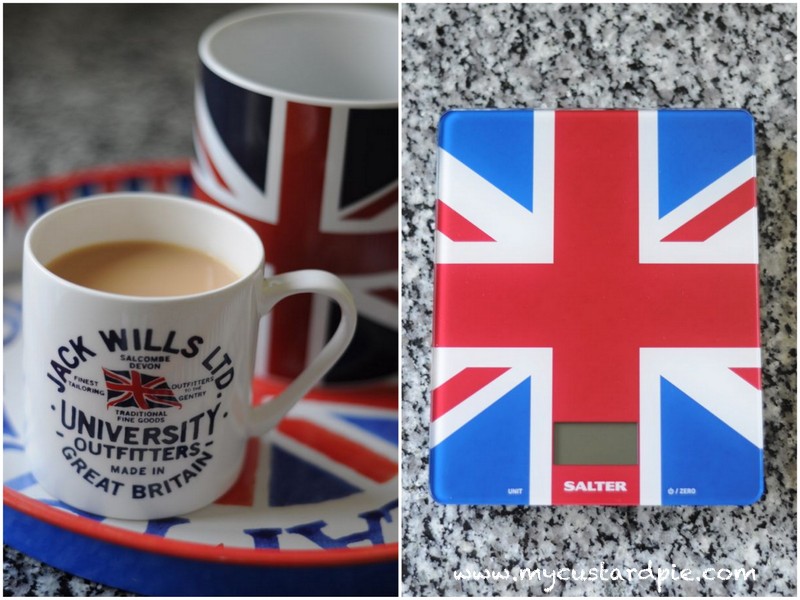
Mugs and weighing scales
The Queen’s Diamond Jubilee celebrations morphed into Olympic fever which is still carrying on with the Paralympics. Union Flags were everywhere we went. I have never seen so much bunting. The atmosphere was electric and we carried a few reminders back in our suitcases.
Also in my kitchen is…

hummus…

…a lot of hummus
Hummus makes a great snack for the teens when they arrive home starving after school, especially the vege teen. So I transformed a 500g bag of chickpeas, some lemons, olive oil, garlic and tahini into a vast bowl of hummus. It freezes well and in dip-sized portions it’ll last for ages…giving me a smug feeling each time I look at the overpriced cartons in the supermarket.
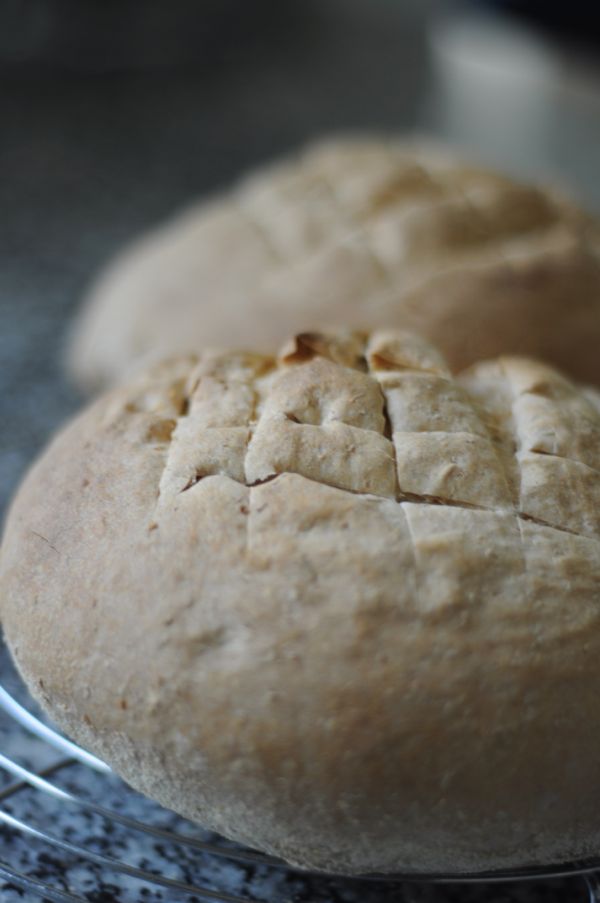
Back to bread making
Not the prettiest loaves I’ve ever made but by using my overnight sponge method (Hugh FW’s cheaty sour dough recipe) there was warm bread for lunch and a spare to freeze. My resolution to bake as much of our bread as possible is renewed….ten-fold!
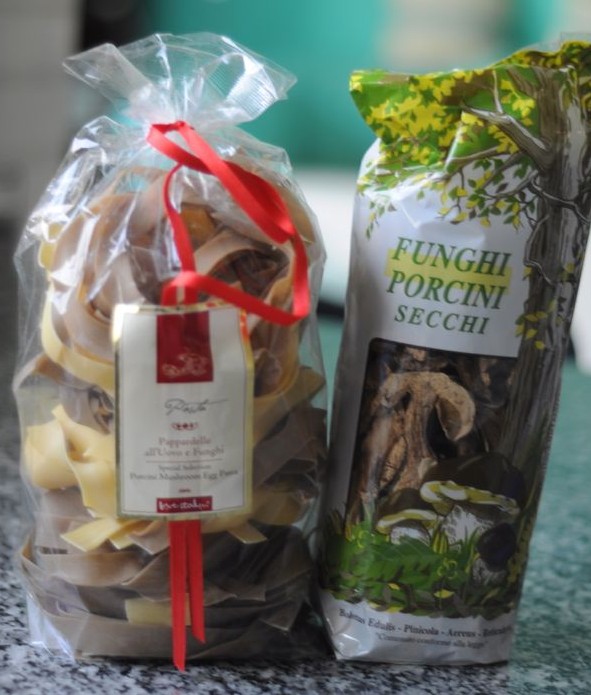
It’s a long story
The story about my visit from two Italian men with a refrigerated van full of cheese with which they proceeded to feed me all afternoon will wait for another time. But I must thank them for these beautiful porcini mushroom and egg pasta flavoured with the same which will be combined very soon…in my kitchen.

Guess what…
Not the most attractive things in my kitchen right now but some of the most exciting – trust me on this. My friend Francine, of Life in the Food Lane, is going to show me how to make my own sausages. So I ordered some sausage casings while in the UK. Where from? Amazon of course!! Francine, get your mincer at the ready, I’ll be over soon.
Oh, and I nearly forgot… My Mother-in-law made the most amazing cheesecake this summer with lemon curd. I’ve started with the first bit of the preparation…

Lemon curd
Thanks as always to Celia of Fig Jam and Lime Cordial for prompting In My Kitchen. She’s sharing all kinds of goodies over here.
What’s in your kitchen this month?
August in a photo a day
This challenge (set by FatMumSlim) has been a snapshot of our month in the UK – a visual memory board. Starting in Berkhamsted in Hertfordshire, via Cheltenham in Gloucestershire and Bath in Somerset to various parts of Devon and Cornwall. The ‘pair’ shot was supposed to be both my teens flying down a zip wire together but I couldn’t work out how to get a still frame from the video so you get single husband instead! Faces should have been two dogs – but have you tried to get two dogs in the same place? The doleful Maurice on his own was a much nicer pic. The home image was the hardest to take as we’ve been away from ours for so long. We fly to back to Dubai today, so September will be a very different collection altogether. To view the gallery just click on the first image.
-

- Often still here at 8 O CLOCK am this summer – luxury
-

- DREAM -like clouds on a walk via Crow Point, Saunton
-

- CLOCK in my Ma-in-law’s house
-

- The path DOWN from Pew Tor
-

- The blooms of these hydrangea (in my Mum’s garden) were almost HIDDEN in the foliage
If you enjoyed these pics I’d love to hear from you. Here’s July if you missed it. What happened to you in August?
The best of British … food
The stove’s been neglected, I’ve chopped barely a handful of onions in the last six weeks, but good food….well my waistline shows the evidence of my gusto for eating, drinking and being merry while in Europe. Leaving the steamy temperatures of a Middle East summer to catch up with my family and friends is something I’ve been lucky enough to do every year as an expat. If you join this exodus, how do you cope in other people’s kitchens? Do you sigh with relief at a break from everyday cooking or long to get back to your familiar pots and pans? Would your perfect holiday be self-catering and well-stocked markets or five-star room service?
When in Europe I gravitate to the markets and small specialist shops. British food has been through its ups and downs. After rationing during the Second World War, the emphasis was on cheap and plentiful, the sliced white loaf was king and in our enthusiasm to try new things we started to neglect the wonderful produce and recipes our islands were famous for. The rise of small producers and an effort to reclaim our own fantastic food culture in the past decade has been really welcome. Although the control of the big supermarkets over our food production, and the nation’s appetite for fast food and pizza chains is the dark side of the story, the culinary diversity and quality of some of our food makes me very optimistic.
As a visitor in my own home country every summer, there are some edible experiences that I would not miss without fail.
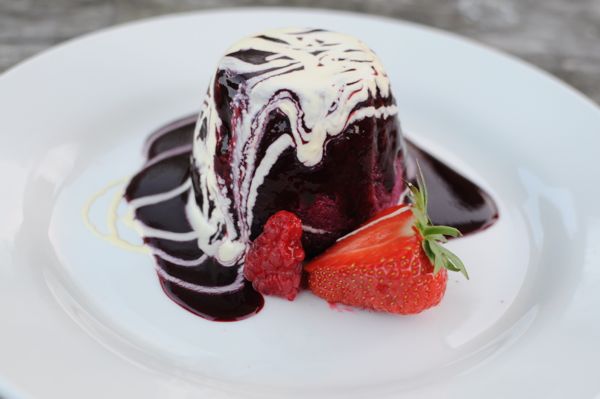
Summer pudding
Best British food experiences top three:
- Having a traditional cream tea
- Eating at a really good country pub
- Visiting a farmers’ market
As always, where you go is of vital importance so here are my recommendations from this year:
A traditional cream tea
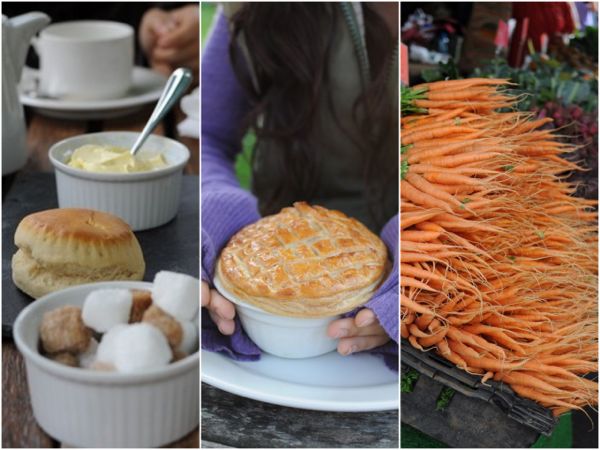
Forget prissy table cloths and fancy doilies, for me a cream tea must include: light, fresh, crumbly plain scones (no sultanas), clotted cream (with a crust), excellent strawberry or raspberry jam (preferably home-made), a china pot of tea (I hate those stainless steel things), a jug of milk and a jug of hot water. Bone china tea cups preferred.

Cream tea at the Swan Hotel, Bibury
Tear open the scone (it should part horizontally), spoon on a generous amount of clotted cream then smear on a layer of jam. Reunite the halves and eat – it will never be dainty. The best time to eat a cream tea is when you’ve earned it. The Swan Hotel in the Cotswold village of Bibury served an excellent cream tea (scones on slate – the ‘in thing’ this summer). There was good service and it was reasonably priced for such a swanky venue (the bar inside is like a Scottish shooting lodge with tartan walls and antlers everywhere). We sat on their front terrace in our scruffy walking clothes after 6 miles of hiking in the beautiful Gloucestershire countryside (read about the hike and see pictures here). For more of my cream tea recommendations see ‘in search of the perfect scone‘.
A cream tea (pot of tea, one scone with jam and clotted cream) at the Swan Hotel bar is £4.35
The Swan Hotel, Bibury, Gloucestershire, GL7 5NW UK Telephone: 01285 740 695
A country pub
After a few hours of exploring the fields and woods around Blockley on foot, I googled on my Blackberry to find a nice pub nearby. The first result had won the Cotswold Life Food and Drink award for the best pub restaurant so we drove over to the Horse and Groom in Bourton on the Hill. The raised garden at the rear backed onto a field of sheep and had an extensive vegetable patch complete with chicken run. I couldn’t decide which of two local ales to choose so was given a bit of both to try. Home-made elderflower cordial mixed with locally bottled spring water was a delicious non-alcoholic option. The pub has an interesting wine list and local lager and wheat beer. I couldn’t resist trying some organic pork scratchings. KP hates the sounds of crackling being eaten, but he wasn’t here to witness the resounding crunching.
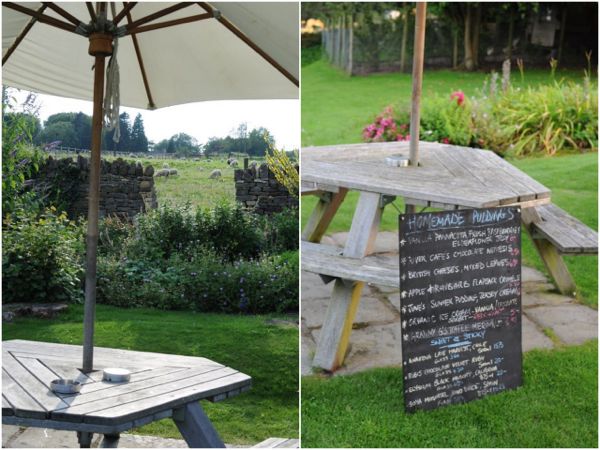
The blackboard menu is a short one – always a good sign. The pub is run by two brothers and one of them explained that most of their ingredients were from the garden and “if we have to compromise we get it up the road” i.e. all produce is fresh and local. We ate in the garden as it was a (rare) nice summer’s evening but the inside of the pub is really cosy with mis-matched wooden chairs and tables. My beer-battered hake and chips came with a lovely pea and mint purée plus home-made tartare sauce, my sister’s slow cooked lamb shoulder could be cut with a spoon and she chose creamy dauphinoise potatoes to go with it, my vegetarian daughter had filo parcels filled with spinach, butter beans, feta and pine nuts. We all oohed and aahed over my other daughters magnificent steak, ale and mustard pie. A dish of fresh vegetables were cooked perfectly.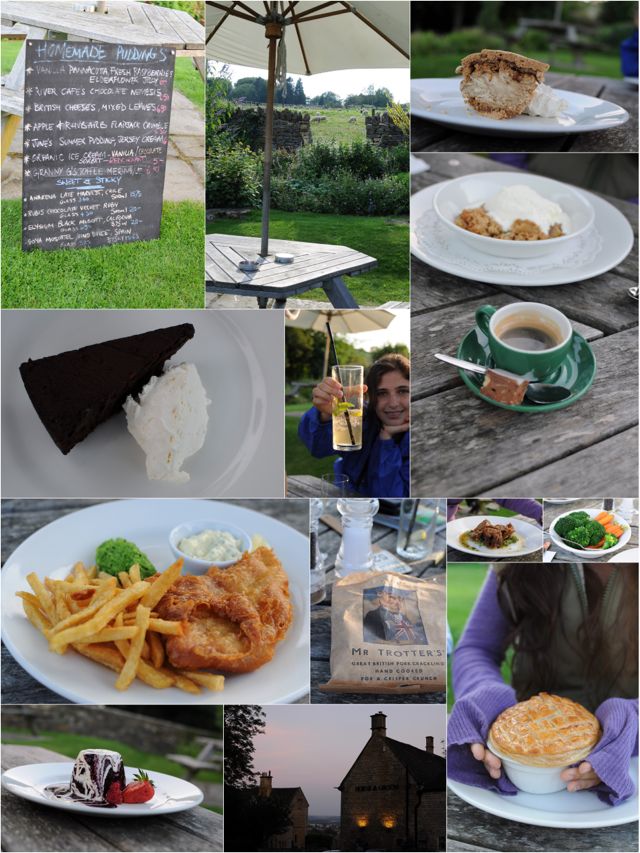
The puddings board was brought out into the garden for us. Spoonfuls of summer pudding, Granny G’s toffee meringue, apple and rhubarb flapjack crumble and the River Cafe’s chocolate nemesis were exchanged between us all. Good old-fashioned puddings at their best – vege daughter was in heaven with the nemesis. We regretfully drove back to Cheltenham, the evening light finally fading over Cotswold stone villages. But as my sister pointed out, they do rooms…
Starters are from £4.75, main courses from £11.50 (which come with fresh vegetables and a choice of potato dishes), puddings from £5 – see latest menu here.
The Horse and Groom, Bourton on the Hill, Moreton in Marsh, Gloucestershire GL56 9AQ UK Telephone 01386 700413
A farmers’ market
The renaissance of farmers’ markets in the UK is one of the most encouraging developments of the past few years and Stroud is a beacon among them. It has been going since 1999 and has grown to over 60 stalls a week including a good range of organic food and drink, local produce, cooked food stalls plus local crafts. It has revitalised the town centre and it’s easy to spend many hours browsing (and tasting) in the market and the surrounding shops – which we did again this summer.
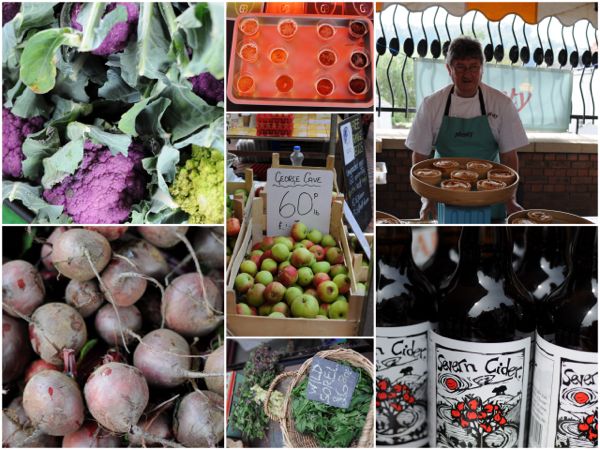
Purple cauliflower, Gloucester Ales, Plenty Pies, Severn Cider, Rupert Burdock’s foraging stall (and walk), local apples and beetroot
My first port of call is always for a Hinton Marsh Farm hot sausage fresh from the grill, in a bun, with mustard. The nice people on the Gloucester Brewery stall gave me a guided tasting of all their ales (which were great with the sausage). My daughter came running over to tell me that she’d tasted the most delicious elderflower champagne – and it was. Jessie’s Ladies (her cows) organic thick and creamy yoghurt and small crunchy, sweet, local apples were also added to our bulging shopping bags.
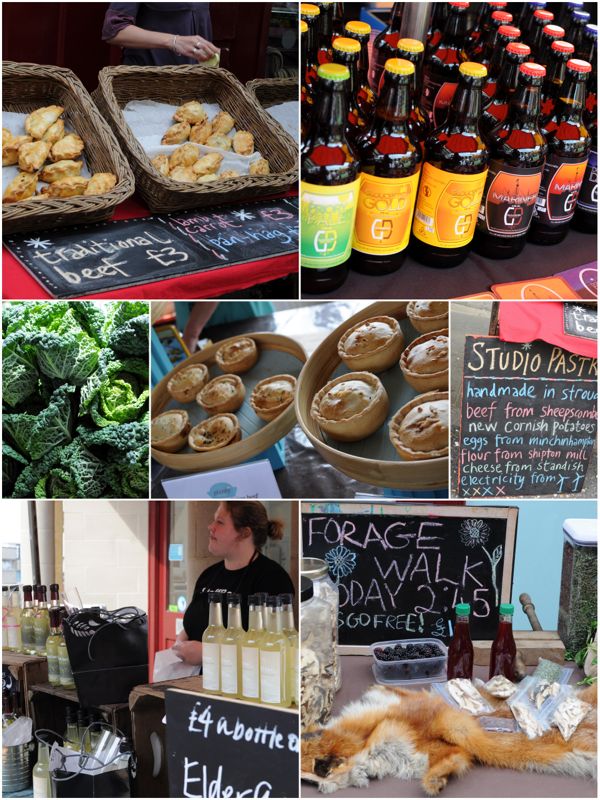
Studio pastry pasties, Gloucester Brewery ales, pies and cabbage, foraging, elderflower champagne
One day I’ll have time to go on a foraging walk, the stall looks so interesting, but the teens were keen to rummage in various vintage shops. I popped one last bottle into my bag. I couldn’t resist some Severn cider. The woodcut label is as attractive as the taste from these traditional hand-crafter ciders made from unsprayed apples of traditional varieties. Their open days at The Old Vicarage, Newnham sound fantastic.
The hours fly by at this market and every visit is different (an account of an earlier visit here).
Stroud Farmers’ Market, Cornhill Market Place (and surrounding streets), Stroud, Gloucestershire, UK Telephone 01453 758060 Every Saturday 9am – 2pm

Do you agree with my top three British food experiences?
P.S. Whether in your own kitchen or someone else’s, you’ve still got time to bake saffron buns (or experiment with another spice) and join me for the Fresh From the Oven challenge this August. Come and join the summer baking bun-fest.
An evening walk and a country pub

Path along a corn field near Blockley
The British are obsessed with the weather. I can say this as a British person. When I lived in Saudi Arabia when it was ‘hot’ or ‘hotter’, British expats still managed to comment on it. The other truism is that Brits long for sunshine but if there are a couple of days when the temperature rises, the news advises people to stay indoors and drink plenty of fluids, we all start saying how ‘muggy’ it is and long for rain. One thing’s for sure, the normal English summer i.e. a bit cloudy and overcast, is perfect walking weather. So on a hot, sunny day when we’d all spent a couple of hours going round Hidcote, we decided to do an easier walk from the Pathfinder book and start it later in the afternoon.

The shop and charming cafe at Blockley next to St Peter & St Paul church
The village centre of Blockey is a no-through road and there is little parking. This probably accounts for the lack of souvenir shops and tourists.

A cottage on the main street and the spring
We parked by the village shop and café (passing the latter a bit wistfully) and were the only pedestrians on most of our way through the main street. Passing a gushing spring, we turned up a lane and, after oggling a fantastic house with a stream and lake, took the steepish track into the woods which turned into a farm track through corn fields.

Poppies in the corn
Somehow we missed the straight on bit of the track, went down the side of a field and clambered through brambles to reach the short section of path through a copse. It would be the day I decided to wear shorts! If you do this walk, pay attention and don’t just keep wandering along as we did. Rejoining open fields dotted with poppies, the sun started to lower and the light made everything look golden.

White and yellow carpet one field, leaves throw patterns on a tree trunk
Crossing a road and finding the welcome shade of Norcombe wood, the path continued downhill. Strange bird noises (large crows?) echoed from unseen depths of green. My older teen revealed blisters on her feet (wellies with no socks!) and walked barefoot for the rest of the way (including through some oozy mud).

Wild flowers in a corn field
The promised gate to a field appeared in view. The forlorn exclamation from my sister meant only one thing. Cows? No worse. The sign on the gate said ‘BULL IN FIELD’. There was no way I was going back up that forest path. Looking left and right I strode purposefully up the field, diagonally upwards as instructed. There was a clutch of young bovines over of the left but they took no notice of us. Heiffers or bullocks, I couldn’t say.
I think we chose the wrong stile but, no matter, it took us through one last glorious corn field back into the village.

Horse and Groom garden with view of sheep and chicken run
Villagers were just arriving to play bowls on the bowling green in the fading early evening light. I would call this walk of 4 1/2 miles (7.25 km) a ramble rather than a hike. We did it easily in the two hours predicted. Perfect for a walk on a summer’s evening with some expansive views of the rolling Gloucestershire countryside. It’s walk 5, Blockley and Norcombe wood in the Pathfinder Guide Cotswold walks.
We drove for about 10 minutes to neighbouring Bourton on the Hill to the Horse and Groom. This is an absolute gem of a country pub, with a short, blackboard menu changing daily, offering hearty food made with local, seasonal produce. We sat in the garden, next to a field of sheep and the Horse and Groom veg patch and chicken run. The wine list was interesting, plus there were guest ales and locally brewed lager and wheat beer. Home-made elderflower cordial (diluted with local spring water) refreshed our walking thirst. A summer day to remember.





Other walks from the same book we’ve done this summer are Bibury and Sapperton. What weather do you prefer for hiking?
Fields of barley
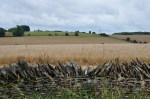
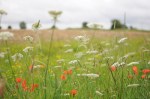
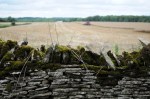
 Moss-encrusted stone walls, open fields with waving ears of barley and corn, swathes of wild flowers, flocks of sheep grazing in meadows beside a lazy, meandering river, an excellent cream tea to finish. If all this strikes a chord, walk no 7, Bibury and the River Coln in the Pathfinder Guides The Cotswolds book provides a showcase for the best of the Gloucestershire countryside.
We embarked on this 6 mile (9.5 km) circular route on a day where light to heavy rain was forecast. Clouds filled the sky as we arrived in the village Bibury which may of accounted for the lack of tourists. During August you often cannot fit another person into one of the three Bs (Broadway, Bourton on the Water and Bibury); we eased into the perfect parking space at the Swan Hotel end of the main street.  Passing Japanese tourists on the footpath along the water meadows and Rack Isle, there was not a single person at ‘the most photographed cottages in England’ Arlington Row. Not a single one.

Our route took us up the hill away from the village and within minutes (past a couple of interesting signposts) we were walking on the edge of freshly tilled fields with views across rolling countryside. A brown notice told us that wild flower seeds had been planted and areas left uncultivated both at the edges and in the middle of the fields to benefit wildlife including grey partridges, lapwings and beetles. We met a lone horse and rider, but this was the only human contact in this vast expanse.

Silky ears of barley made a sea of gold, gnarled trees silhouetted against an orange field, cows peered down on us from a grassy knoll as we started to climb upwards and reach a small road. The field was edged with a Cotswold stone wall upholstered in a mossy coat; one of many we saw along the way.

A large field with sheep far in the distance, flanked by trees, was a good place to sit and eat our sandwiches. The odd, large raindrop fell but it didn’t come to anything. Counting all our blessings we left the sheep behind, made a short acquaintance with some cows and calves then followed a long, straight path through a huge cornfield. The soil was heavy clay and we soon felt about two inches taller with mud-laden boots.

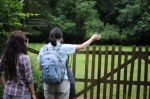
Descending into a valley, the bucolic view of sheep by the meandering river Coln would have inspired Constable to take up his brushes immediately. At this point you could make a detour to the village of Coln St Aldwyn (with a nice church and a pub). We didn’t and followed the course of the river for the next couple of miles leading us back to Bibury. Again we didn’t meet a soul, so had no witnesses for all four of us squeezing into a hollow tree and taking ‘selfies’!

An old mill, a dovecote and some picturesque cottages eased our transition back to civilisation. Eschewing the stately Bibury Court Hotel (it looked too posh for our muddy boots despite a very welcoming sign near the path) we continued into the village.

An excellent cream tea in the garden of the Swan Hotel where the teens could sit comfortably in their stockinged feet made the best end to a miraculously dry and gorgeously scenic (mainly flat) walk.
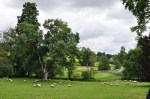
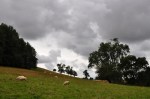
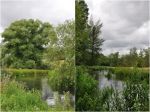
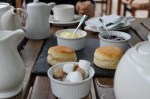
Click on an image to scroll through the gallery.
Any favourite walks to share?
The perfect hike

What makes a perfect hike?
For me it includes:
- A circular route – I don’t want to go back on myself.
- A variety of countryside and views i.e. not all trees, fields or water
- Enough of a challenge to feel you’ve exercised (without being it perilous or too exhausting)
- You get home before dark!
- A few things of architectural or historic interest
- A nice pub near or at the end
My sister and I chose walk no 12 from the Pathfinder walk book The Cotswolds and set out with my teens on a Sunday morning. It definitely ticked all the items on my list for the perfect hike (although it wasn’t the perfect weather).
 Mellow Cotswold stone cottages and St Kenelm church (dating from the 12th Century) form the heart of the pretty village of Sapperton. The church bell was ringing calling parishioners to Sunday prayer. We started the walk, across a grassy footpath opposite the church, behind the red telephone box. The muddy path led between fields and over a meadow before descending into woods and a stream in the Bathurst estate. A fairly steep, stony path flanked by ferns and mossy, crumbling walls led up to open fields.
 When we got to Tunley cottage, the path led through their immaculate garden to more open fields with a view of expansive, lowering clouds and by the time we got near the end to a small copse by the stile they had released their contents liberally. We sheltered, eating slightly damp sandwiches until the rain lessened. Even so I couldn’t risk my camera to capture the carpet of yellow and purple wild flowers of a meadow dotted with architectural thistles or the ivy-clad trees in the Siccaridge Wood Nature Reserve. I was so concerned about it that I wore a fetching yellow poncho over my backpack giving a Quasimodo impression.

We reached the Thames and Severn canal just in time to shelter under the bridge as the heavens opened again. The canal was abandoned in 1927 and 90 years of nature have transformed it to mysterious, almost primeval channel crowded with rampant greenery. When we got going along the canal path, we passed the steep, mossy cavernous walls of old locks; rays of sunlight illuminating the neglected depths – it was truly magical. A man from the village who’d been walking two lurchers quizzed us about our route at The Daneway Inn. Friendly locals, real ale, and an open marquee in the garden so we could sit outside and contemplate the pretty garden and, yes, more rain.
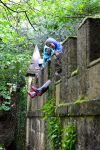
 A final gem was to come; following the canal path again we came across the turreted entrance to a canal tunnel. The sun came out and lit the mossy nooks and crannies and ivy-clad castellations. Looking over the stile into the next field, my sister exclaimed “oh no!” in dismay. “Not more mud?” said I? and yes indeed the path looked sticky and boggy. However it was a herd of cows with their calves that had sis and teens hesitating in trepidation. I tiptoed over the mud and marched towards two nervous looking youngsters across the path who were staring at us and lolloped off to their mothers. A last upward stride up the field with views behind us across the valley and we were soon opening the back gate into the churchyard. Medieval monuments and garden flowers were just two of the things that combined to make this an atmospheric and charming village church.
Click on the first image to view the gallery






The perfect hike? Definitely one of our favourites.
But then nearly all of the walks in the book have been rewarding. So far we’ve done:
- Minchinhampton Common (walk 3) – in the pouring rain
- Northleach and Hampnett (walk 4) – including an exquisite church with painted interior but many impassible fields because of bulls and huge herds of cows
- Brimpsfield and Syde (walk 9) – although we took a wrong turn and cut off the last bit of the route
- The Guitings and Guiting Wood (walk 11) – a favourite after visiting the Cotswold Farm Park
- Cooper’s Hill and Buckholt Wood (walk 16) – including looking down the terrifying Cooper’s Hill, home of the cheese rolling descent.
- Haresfield Beacon and Standish Wood (walk 18) – high up on the perfect hike scale.
- Laurie Lee Country (walk 21) – the epitome of the splendid Cotswold countryside
What makes your perfect hike?
Saffron, tin mines and an accident – Fresh from the oven
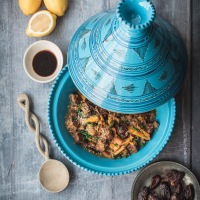
 What have the two things in the picture below got in common?
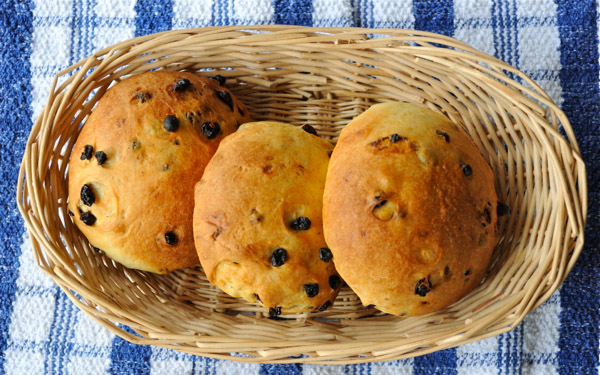
When I visit a bakery in Devon or Cornwall I often see currant-studded, golden, saffron buns. They are bright yellow and sunny (a bit of food colouring enhances this in bakeries!) and perfect for summer tea-time or even for breakfast as they are light, buttery and not too sweet. As I’m here in the South-West of England for a few weeks in August I’ve chosen to make these traditional buns; and hope you will too for the Fresh From the Oven challenge.
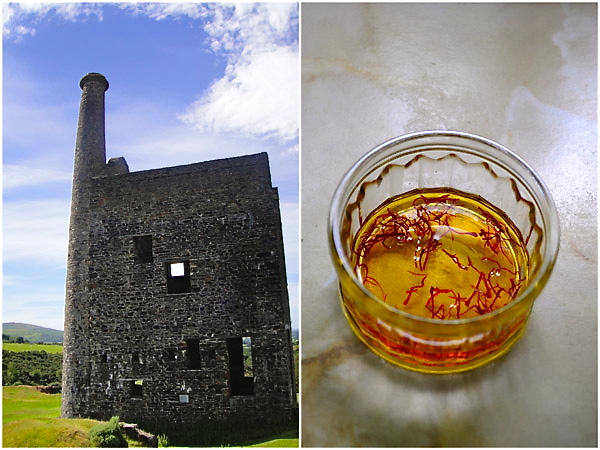
What’s the connection between tin mines in Devon and Cornwall and saffron?
Saffron is a rather exotic ingredient in rural England but apparently traders from the Middle East during the Bronze age exchanged this most valuable spice in the world (by weight) for tin. Mining in Devon and Cornwall began over 2000 years ago and produced most of the UK’s tin, copper and arsenic until mining ceased in the 20th century. Who knew there would be such a historic food link between the counties I love and the region where I now live.
Saffron buns are also known as ‘revel buns’ as they were often baked for special occasions (or revels) especially around Whitsun or Easter. How appropriate for the recent revels that took place in the form of the wonderful, bonkers Olympic opening ceremony. In West Cornwall, they are also called ‘tea treat buns’ as they were often baked for events known as Tea Treats, which were organised by Methodist churches and chapels for the local community.
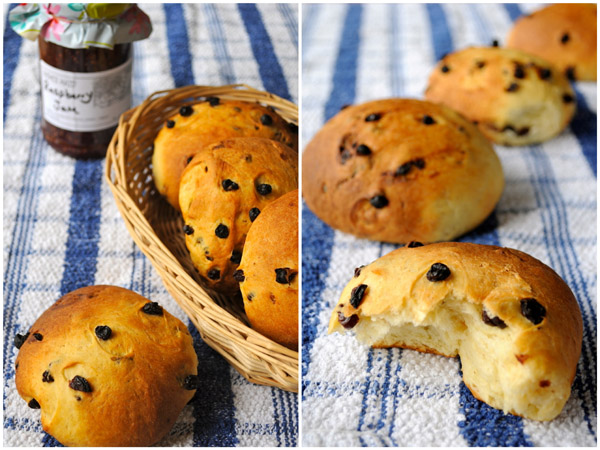
I made these saffron buns in my Mother-in-law’s kitchen. I’m always a bit nervous under her gaze as she was a domestic science teacher and very good baker. She helped shape them and once out of the oven pronounced them very good – praise indeed. They are nice eaten warm, toasted with butter, jam or clotted cream. The saffron (which she had bought in Dubai) taste was subtle, a perfumed astringency in contrast to the sweet currants. I might try soaking the saffron overnight next time to intensify the flavour.

My time in Devon is always spent outdoors in the beautiful countryside as much as possible. One of my favourite walks is around Cholwell Riding Stables and up past Wheal Betsy (an engine house from a tin mine built around 1740) pictured above. While my teens and M-in-law were getting ready to ride across the moor (I prefer to walk the dog these days) I dropped my camera and – disaster – my lens popped off, chipping the mounting ring in the process. An expensive accident and I feel like something vital is missing from my life right now. I took these pictures holding the lens firmly onto the camera body so please excuse the ‘Heath-Robinson’ effect. I’ve ordered a lens mounting ring to try to repair mine; I’d love to know if anyone else has ever tried doing this. In addition, I took the plunge and have ordered a new lens; you may be aware that lenses cost more than cameras in many cases so fingers crossed I’ve made the right decision!
 All that aside, I hope I’ve inspired you to make these easy, light, ‘floofay’ (as my friend Arva calls them) buns. Perhaps you’d like to experiment with a different spice, fruit or flour…or just follow this recipe. The full rules of the Fresh From the Oven challenge are here and Claire from Purely Food will host a round-up at the end of August. If you like the taste of saffron you might also like my panna cotta recipe which I made as part of the Taste of Yellow Monthly Mingle to commemorate the life Barbara Harris of Winos and Foodies.
Do let me know how you get on.
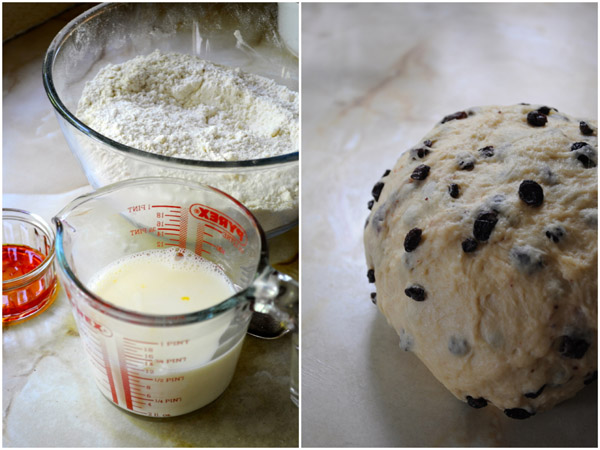
Saffron buns
Ingredients
A large pinch of saffron threads
1 tablespoon water, boiling
600g strong plain flour
½ teaspoon salt
125g butter, unsalted
85g golden caster sugar
7g fast-action (easy blend) dried yeast
1 egg, beaten
150ml milk, lukewarm
200g currants
Method
- Put the saffron into a small bowl. Pour over 1 tablespoon of boiling water and steep until the water has cooled (leave overnight for a more intense colour and flavour).
- Put the flour and salt into a large bowl; rub in the butter until the mixture resembles fine breadcrumbs. Stir in the sugar, yeast and saffron. Beat together the egg, milk, and 100ml water, then stir into the flour and mix to form a soft dough. If using dried active yeast, add this to the milk and water and whisk until dissolved before adding to the rest of the ingredients.
- Turn the dough out on to a lightly oiled surface and knead for 10 minutes (or use a machine with a dough hook) until smooth and elastic. Flatten out the dough, sprinkle over the currants, fold in the edges and then knead to combine.
- Divide the dough into 12 pieces. Shape each piece into a ball and flatten slightly. Place the balls on an oiled or lined baking tray and cover loosely with lightly oiled cling film. Leave the buns in a warm place until they have doubled in size (about an hour).
- Preheat the oven to 220 C (fan 200 C/ 425 F/Gas 7). Bake near the top of the oven for 15–20 minutes until the buns are a light golden colour. Serve slightly warm or cold with butter, jam or clotted cream.
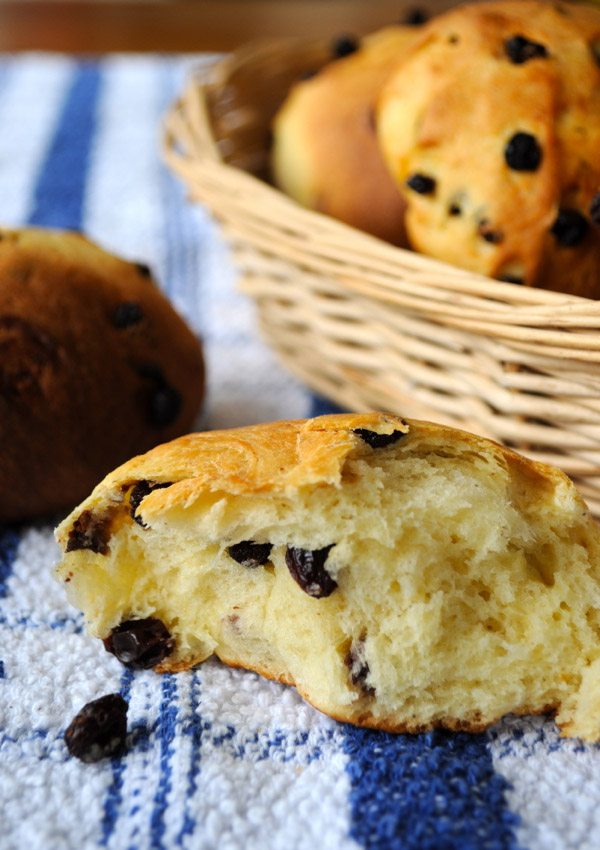 Add a bit of sunshine to your buns this August.
July in a photo a day
Perhaps July wasn’t the best month to start ‘a photo a day’. I’m always seduced by the illusion that I’ll have more time to do things on holiday. It’s never the case (especially when I’m juggling work too) – but the creative side of my brain is definitely up for some more stimulation. So I put my toe in the water for FatMumSlim’s photo-a-day challenge (the catalyst was one of my favourite reads London Bakes). We started in rainy Cheltenham, via Calais to Switzerland, then the sun shone in Devon…. perfect. Until, crash, I dropped my camera and damaged the lens. Hopefully August will be more productive and less accident-prone (with a new lens)!
So an abbreviated and fragmented month’s worth of images:
-

- self portrait – arrive in UK, don mac
-
- Busy – bee on lavender in my Mum’s garden
-

- On the floor – me taking the picture of sunset that is
-

- my favourite colour – blue (in Nyon)
-

- texture – plane tree in Nyon
-

- open – a fantastic open terrace over Lake Geneva at the Montreaux Jazz Festival
-

- my addiction – good wine
-

- upside down – fox-glove from underneath on a Summer’s evening in Devon

Panna cotta two ways for two special occasions

Pictures taken by Reem for Noor TV Dubai
As a non-Muslim living in the United Arab Emirates, Ramadan has little direct effect on me. The roads seem quieter (except just before sun down) it’s a little more difficult to get a coffee in the daytime, a picnic on the beach is not a good idea – but all these things are minor changes to everyday life. A tourist might visit Dubai during the Holy Month and not realise that anything is different. However, having lived here for over 12 years, I’ve grown to welcome the holy month of Ramadan, being in the midst of a nation immersed in an intense month of prayer, reflection and ritual. The city seems calmer, more contemplative, the call to prayer, a backdrop to my daily life, becomes more vivid and poignant and the diners sharing a communal Iftar seated in rows outside mosques after sunset is the public face of a great deal more private charitable generosity. Through friends I’ve learned what Ramadan means to them, their own individual relationship with fasting and how they break it. Having abstained from eating all day the first tastes of foods are savoured. A date is often the first thing that is eaten to restore sugar, along with a drink of water. Family meals are savoured, it’s a time for sharing with friends, with special care being taken to choose intense flavours and textures.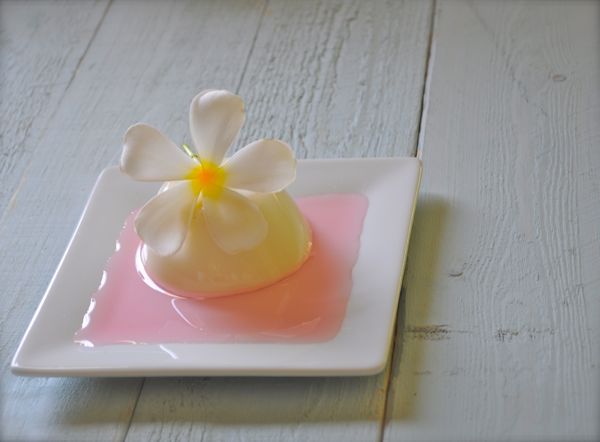
I’m having a fantastic time in the UK with my family at the moment but it feels strange to be away for Ramadan. Some wonderful posts by some of Fooderati Arabia connect me. Awesome chef Dima Sharif is creating an inspiring recipe a day. Holly shared a touching account of suhoor through the years in her family. Reminiscences of Ramadan past by Platetrotter gives another non-Muslim perspective. I also return to an account of breaking the fast in the United Arab Emirates written by one of my favourite writers about Middle Eastern cuisine, Anissa Helou.
My small contribution is to create a special dessert. I’ve made my favourite panna cotta and added flavours from the region, cardamom and rosewater. I’ve left out the cream to make a lighter texture – it should probably be called milk jelly – however you can replace some of all of the milk with cream if you want a richer taste.
Welcome, if you are visiting My Custard Pie for the first time via Noor Dubai TV or Dubai One. I spent a really enjoyable few hours with Reem as she filmed me making this dessert in my kitchen (her pics are above). The results of her filming are stunning – clever lady.

At this time of reflection, I’m also thinking about Barbara Harris. Barbara was one of the first people I ‘met’ on Twitter and I was instantly drawn to her open, friendly communication and easy-going style of writing on her blog Winos and Foodies. I was aware that she was receiving on-going cancer treatment but there was never a hint of ‘poor me’ from Barbara. Her Livestrong with a touch of yellow event, where bloggers had to make a dish that was yellow in the shape of a heart, was something I joined in with and one of the first boards I made on Pinterest in its early days, was with everyone’s entries. When I read Barbara’s last post on her blog on the 1st June – an entry for In My Kitchen on Fig Jam and Lime Cordial – there was no hint that she would live for only a few weeks more. She died on 29th June. As a tribute to Barbara’s memory, Jeanne and Meeta have decided that this month’s Monthly Mingle event will be dedicated to Barbara’s memory, and that the theme will be A Taste of Yellow. I made a saffron-based variation of my panna cotta recipe to honour this very special lady.
Cardamom panna cotta with rosewater syrup
Ingredients – panna cotta
1 ½ tablespoons powdered gelatine*
3 tablespoons water
350 ml milk and 350 ml cream or 700 ml milk**
10 cardamom pods
105g cardamom caster sugar (or plain caster sugar)
½ teaspoon of vanilla extract (optional)
Ingredients – syrup
175 ml water
110g caster sugar
1-2 teaspoons rosewater
*leaf gelatine gives a superior texture and ‘wobble’ but rarely available in the UAE (in the not for Muslims section)
**you can use all milk or up to 80% cream to 20% milk

Method
Put the gelatine and water in a saucepan and stir over a low heat until the gelatine has dissolved. Add the milk, the cardamom pods and cardamom sugar and keep over a low heat for 5 minutes, stirring from time to time until the sugar has dissolved and the flavours infused. Strain into a jug to remove the pods, stir in the vanilla extract and pour into 6 ramekin dishes or small glasses. Leave to cool then put in the fridge for at least 4 hours (or overnight).
Heat the remaining water and sugar in a saucepan and stir until the sugar has dissolved. Then raise the heat and simmer for about 3 – 4 minutes (do not let it brown). Allow to cool slightly, add the rosewater (if it is not pink enough you can add a tiny drop of pink food colouring or rose cordial) and leave to cool.
When ready to serve, dip each dish into a bowl of hot water for a few seconds, run a small knife around the edge of the ramekins to loosen the panna cotta and turn out onto dessert plates or you can serve in the glasses garnished with a rose petal (ensure this is pesticide free). I used a frangipani from my garden. Drizzle with the rosewater syrup.
Vanilla panna cotta with lemon-saffron syrup
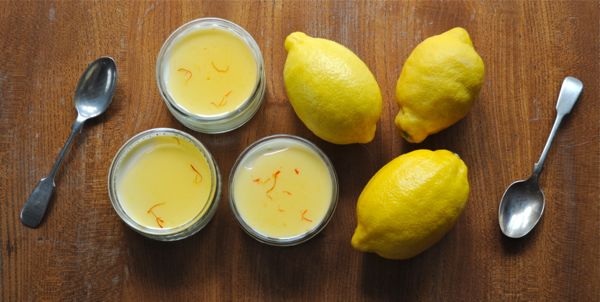
Make the panna cotta as above but replace the cardamom pods with a vanilla pod. Use a higher proportion of cream to milk (approx 575 ml cream). For the syrup, use the juice of half a lemon and top up to 175ml with water. Add a generous pinch of saffron threads. Omit the rosewater.
You could poach some fruit such as slices of peaches, nectarines or apricots in the saffron syrup too. A delicious alternative would be lime and saffron syrup with slices of mango added at the end.
For more on panna cotta, there is an interesting article by Emily Angle on the BBC food blog
 Do you have special memories of Ramadan and what does it mean to you?
Memories of muhammara
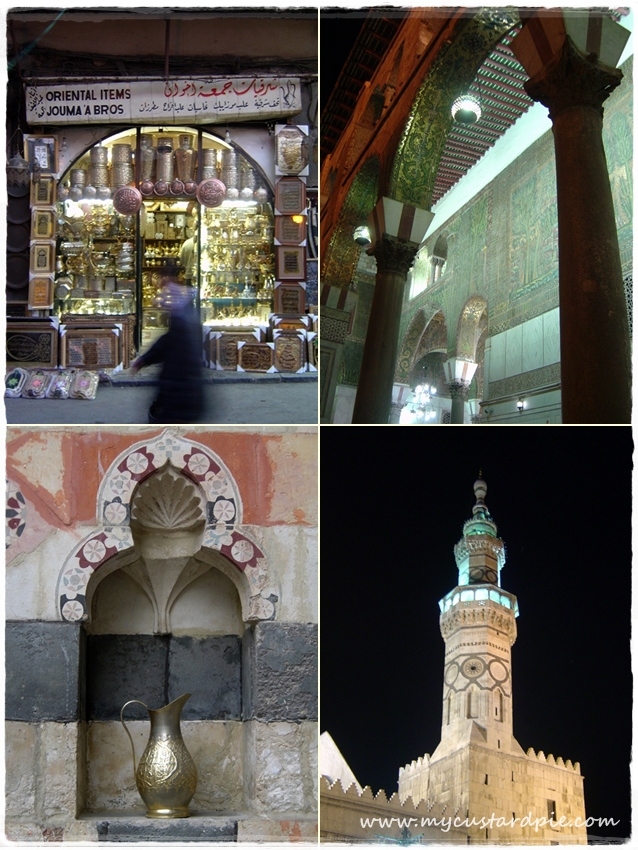
 We stumbled out into the old city as the sun was lowering, the narrow streets were thronging with people all intent on visiting the souk on a Friday night – its busiest evening. Power cables, like vines in the jungle, drooped in twisted arcs above our heads; apart from these and the electric light it felt like little had changed since Medieval times. An area for wooden kitchen implements gave way to shops with piles of nobbly hand-made soaps, then a street entirely devoted to perfume. Dried fruit, wedding attire, a lane of bras and masses of jewellery – we lost all sense of direction and wandered with the crowd through tiny alleyways until stalls packed up, shops closed their shutters and the streets became dark and still.
Old Damascus
This was Syria in March 2007 and during a long weekend, two friends and I explored the old city of Damascus donning strange brown robes to enter the oldest mosque in the world, visited extensive Roman ruins in the middle of the Syrian desert, gazed across to Lebanon from the arched window of a crusader fort and explored a tiny church, thought to be the oldest in the world, in the village of Maalula where residents still speak the nearly extinct language of Arameic (that Jesus would have spoken), and, of course, we sampled a variety of Syrian food and wine.
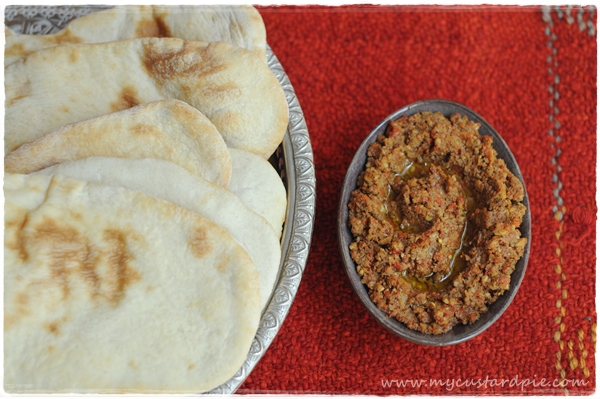
Having lived in the Middle East for over 17 years, I’ve had my fair share of mezze which usually includes olives, hummus, mutabal, fatoush and taboulleh. However the first time I tasted muhammara was during this trip, at a small restaurant in old Damascus, where this brick red, sweet, spicy, sour dip was served. None of us knew what it was and were intrigued when we discovered it was a combination of roasted red peppers, walnuts and pomegranate molasses.
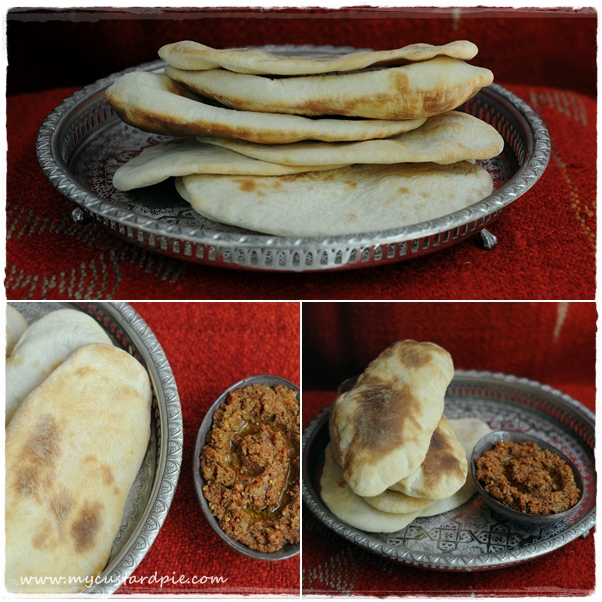 I tried to recreate it on my return but the correct balance of flavours eluded me. With Syria on my mind a lot recently, I had another go and followed Claudia Roden – usually my guru for Middle Eastern recipes. I think I over processed the walnuts and it turned out very solid. Verisimilitude brought a post from another Middle East cookery guru – Anissa Helou. This recipe worked a treat. It doesn’t take long to blacken the peppers on the gas barbecue (I was dodging in and out of the kitchen due to 38 C outside temperatures) and adds a lovely smokiness. Using chilli flakes instead of Aleppo pepper, I ditched the breadcrumb garnish but drizzled with olive oil which gave the silky texture I remember (it also improves overnight).
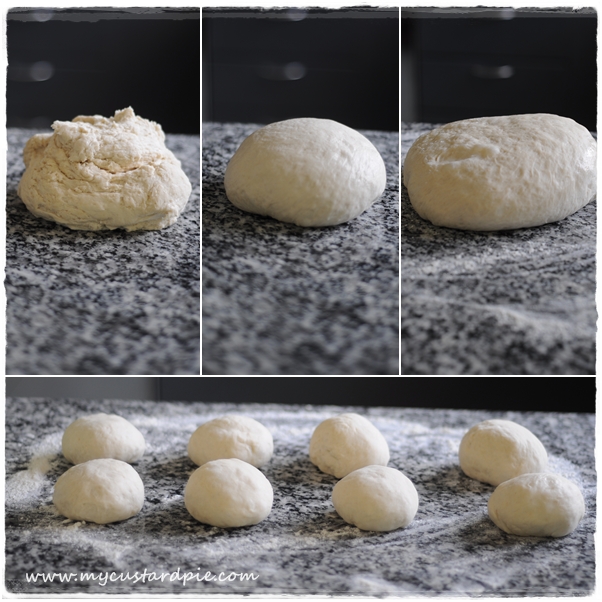
Making dough the Dan Lepard way
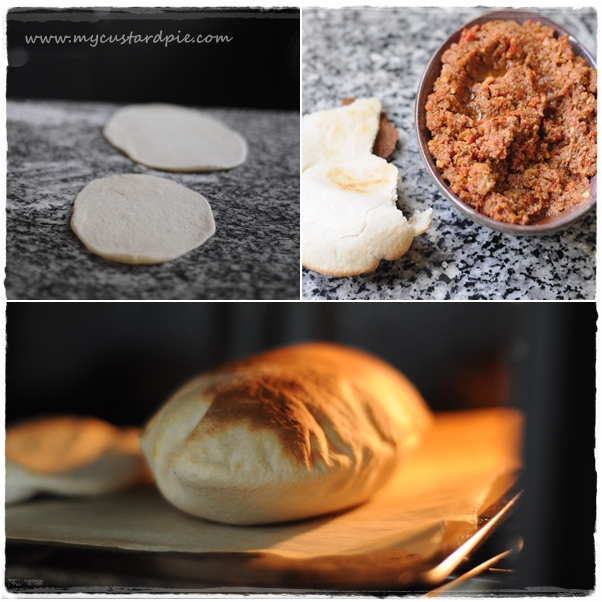
It needed bread so I reached for the pita recipe by Anita on Slice of my Lyfe for this month’s Fresh From the Oven challenge. Her pitas look gorgeous but I’m so enamoured with Dan Lepard’s Short and Sweet book that his recipe was the one I followed in the end, including his gentle kneading method. Using dried active yeast, I stirred it into the warm water first. The dough is very loose at the beginning so I did the initial mixing together with a dough hook in my KitchenAid (I hate sticky dough hands). After that I kneaded on an oiled surface, returning the dough to the clean, oiled bowl every time for resting. I used cardamon sugar (a la Vanessa Kimbell) – not sure I could taste any difference with that small amount.
Warm pita slathered with muhammara is a beautiful thing – for the tastebuds.
 Recipes:
Perfect pita bread – Dan Lepard’s Short and Sweet (the only baking book you ever need in my opinion!)
To see more perfect pitas visit Purely Food at the end of the month for the Fresh From the Oven round up.
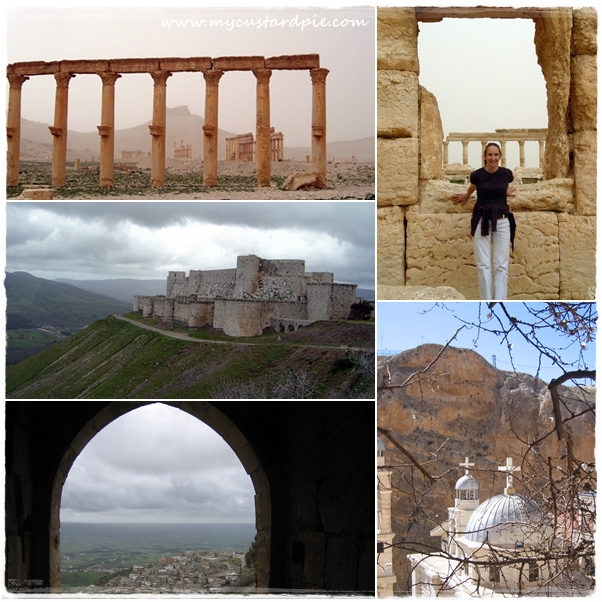
Palmyra, Krak des Chevaliers and Maalula
The recent human rights atrocities in Syria are detestable and I wanted to acknowledge this beautiful country and generous people during this dreadful time. I’ve written more about my 2007 trip here and pray for peace to return.









 My Custard Pie