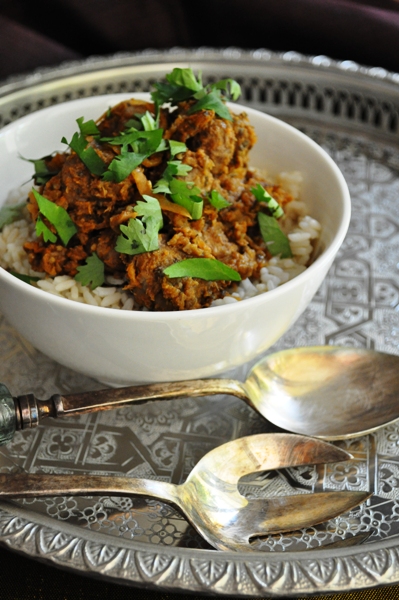
Turkish meat balls with aubergine puree
Poor old Turkey. Is there any more maligned food than the infamous doner kebab? How did the diverse and eclectic range of food from this country become distilled into a questionable piece of meat that is often consumed in the early hours of the morning after a night out on the town (and more than a few to drink)? Where we live, here in Dubai, shawarma places abound and they are usually absolutely delicious. It’s the same concept but somehow the meat is tasty and succulent, the tahini gives an earthiness, the fresh salad balance and, on request, hot sauce a spicy kick. A rose by any other name?
Compare this with the famous culinary export that it arguably knocked off pole position – Turkish Delight. Legends abound about how it was invented, over 250 years ago, from the efforts of a Sultan to tempt his mistress to the rivalry of chefs in the royal court. It gained favour in the West in the 19th century. It appears in Charles Dicken’s The Mystery of Edwin Drood as ‘lumps of delight’. It is the irresistible treat that Edmond succumbs to in The Lion, The Witch and The Wardrobe by C.S. Lewis. Pablo Picasso, consumed a fair amount, regarding it as an aide to his concentration while Winston Churchill and Napoleon gorged on pistachio-filled Turkish Delight.
Why would I like to visit Turkey? To browse the souks and visit the Blue Mosque in Istanbul, to bathe in the dramatic thermal pools at Pamukkale, to marvel at the rock formations in the Goreme National Park and the stark beauty of Lake Van, for a combined trekking and sailing trip along the Mediterranean coast, to add Ephesus to my insatiable demand for incredible Middle Eastern Roman ruins, to visit the beautiful castle at Mamure Kalesi with its Roman, Crusader and Ottoman past and the Sumela monastery. In a nutshell to see the history and influence of many cultures and enjoy the extremes of natural beauty that this diverse land has to offer.
And that just about sums up Turkish cuisine which combines the best produce of land and sea with cooking traditions that have roots in Central Asia, nomadic lifestyle, the Ottoman and Byzantines empires, Persia and Greece.
Claudia Roden is one of my cooking idols and a renowned historian of Middle East food. I found Turkish recipes in A New Book of Middle Eastern Food but also in Mediterranean Cookery.
Maybe one thing unites this country, culture and cuisine – the aubergine. A staple of Turkish cooking it can be found stuffed as the legendary imam biyaldi (the Iman fainted), cooked simply in a tomato sauce or a complement to sumptuous meat dishes.
My daughter described these meatballs as ‘like moussaka but with the aubergine on the outside’. The aubergine is blackened on (or under) the grill to make the flesh soft and smoky. It’s then combined with soft, sweet onions and tomato to make quite a thick sauce. The meatballs are Arabic-style, minced to a smooth paste with spices. It is very filling and this recipe makes enough for 8 if served with rice.
There are many Turkish food writers who share fabulous recipes via their blogs including Almost Turkish recipes which I’m going to be visiting often. I was going to mention Mrs Ergul Cooks but her site seems to have disappeared. I made her delicious Turkish pide (bread) in June. I also found a version of this meatball recipe on one of my favourite sites Foodbridge (after I had made Claudia’s version) – it’s worth bookmarking for Sarah’s intelligent food writing alone and she gives a good explanation of how to choose your aubergine (did you know they have a belly-button?!).
Binnur’s Turkish Cookbook, My Turkish Kitchen, Hayriye’s Turkish Food and Recipes and Turkish Cuisine are also good sources.
I ‘visited’ Turkey as part of Foodalogues’ Culinary Tour around the world. Joan has taken us to Panama, Alaska and next we are off to Japan. Visit Foodalogue for a round-up of other recipes inspired by this virtual visit to Turkey.
-
- Assemble the ingredients
-
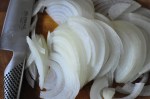
- Slice the onions
-

- Place all the meatball ingredients in a food processor
-
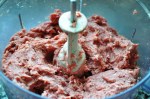
- Whizz into a smooth paste
-

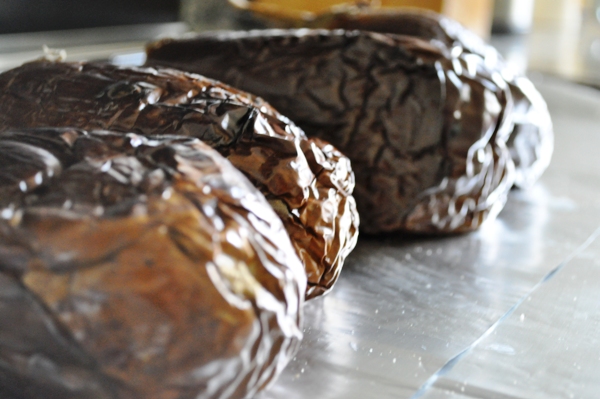
- Grill the aubergines over a flame or under a very hot grill
-
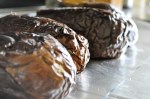
- The skins of the aubergines should blacken and wrinkle
-

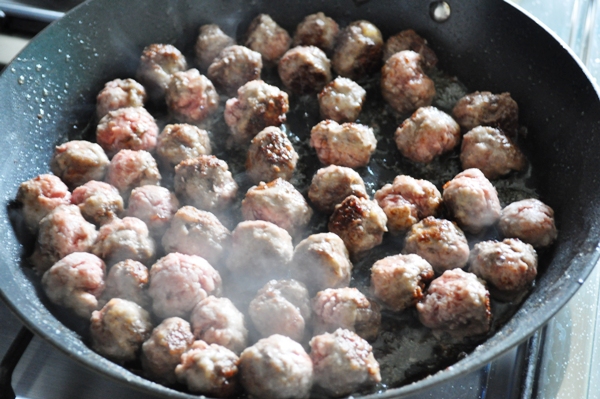
- Roll the mixture into small balls and toss in flour
-

- Fry them in some oil
-
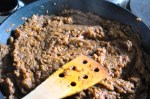
- Combine the aubergine puree with the softened onions and tomato paste
-

- Turkish…
-

- meatballs…
-
- ..with aubergine puree
Turkish meat balls with an aubergine purée (adapted from a recipe by Claudia Roden)
Ingredients
4-6 aubergines (depending on size)
1 kg minced beef or lamb
2 eggs
3 tablespoons of dried white breadcrumbs
1 1/2 heaped teaspoons ground cumin
1 teaspoon ground allspice
1 bunch of parsley, chopped
1 small chilli, chopped
salt and black pepper
Flour
About 3 tablespoons oil
1 large onion, sliced
2-3 tablespoons tomato concentrate
Grill the aubergines over a gas flame (line the cooker top with foil first), under a hot grill or over a barbecue. The first way is quickest. The skins should blacken and blister away from the flesh. Leave to cool then strip the skin away removing all the blackened bits. Squeeze out the juices and leave to drain in a colander. Mash with a fork or blitz in a processor.
Put all the minced meat, eggs, breadcrumbs, parsley, chilli, cumin, allspice, salt and pepper into a food processor and whizz until fairly smooth (alternatively knead by hand to a very smooth mixture). Roll the mixture into little balls, toss in flour and fry in oil until they are browned all over and cooked through (a moderate heat). Remove and drain on kitchen paper.
In the same oil, fry the onion until soft and golden, then add the aubergine puree and tomato paste, season to taste and cook for another 10 minutes. Drop in the meat balls adding a little water if the mixture is very thick. Simmer for another 10 minutes. Serve with plain rice or bread and one or two salads.
I’d love to hear about your memories of Turkey or any must-try recipes from there.
Alaska and how to cheat at sour dough

There couldn’t be much more of a contrast between Alaska and Dubai. Think vast open spaces to high-rise, cold in the extreme versus baking sun up to 50C, mountains compared with flat desert, food caught and foraged for in the wild opposed to a reliance on imports from around the world. While walking my dogs on a patch of desert the other day I met a visitor from Alaska and she urged a visit ‘especially if you like hiking’ – I nearly booked my ticket then and there. While I revel in many of the things that city life has to offer I adore wide open or remote spaces without light pollution, no sign of civilisation and where the sound of the wind and wildlife is all you can hear.

I wish this was me. (Image courtesy of LiveTravelMountains)
There are some very wild parts of Alaska indeed as I found out by listening to actress Imogen Stubbs on Excess Baggage (the podcast is still available at time of writing). She is drawn to the Alaskan wilderness and recounted her experiences there with the vast distances, the extreme weather and the danger from encounters with bears. She stayed at the Ultima Thule lodge which means ‘remote beyond reckoning’.
No one goes to Alaska for the food – you go for the beauty of the landscape, the wilderness and the wildlife – but I didn’t eat badly either. My advice on the food front is to just eat at any eccentric bar or diner you might come across on your travels that’s run by a crazy woman and is full of oddballs, and chat to some of the local characters, who all have such tales to tell. It’s great fishing country, too. I remember flying over a river teeming with salmon, which probably explains how I was able to catch two 34lb salmon, even though I’d never fished in my life. – Imogen Stubbs
Self sufficiency and relying on the fruits of the wilderness form the backbone of Alaskan cooking. Seafood especially salmon, halibut and king crab, game such as moose, caribou, elk and reindeer and wild berries.
Apparently “sourdough” is slang for a person who lives in Alaska and this started during the Klondike Gold Rush when everyone kept a pot of sourdough starter in their kitchens. By “feeding” the starter with a little new flour every few days they kept the wild yeast alive so they could bake bread whenever they wanted. I read that people used to take their starter to bed with them to keep it from freezing overnight.
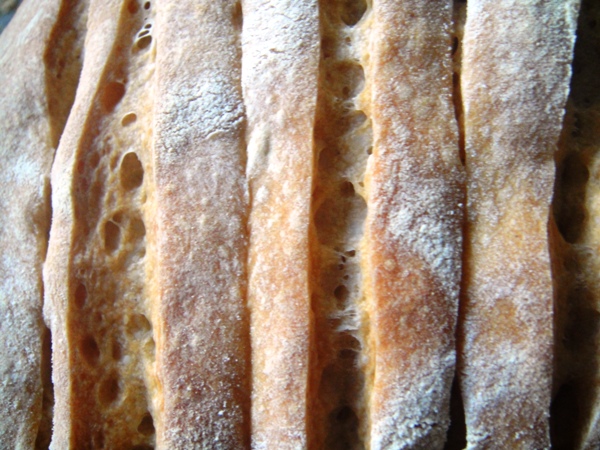
When looking for an Alaskan-inspired recipe I did not want to cook salmon. I choose to eat farmed salmon about once or twice a year due to the chemical content and wild or organic salmon is hard to obtain here in Dubai (not to mention the taste compared to wild line-caught salmon). Sour dough using a proper fermented starter is something that I’ve been meaning to make but haven’t been organised enough to keep it going. The nutritional and digestive benefits of sour dough – and the taste of course – are better than ordinary bread and explained in detail in this post by Artistta. There are good step by step instructions from Belleau Kitchen too.
But if you want a good alternative before your sour dough starter is up and running, my ‘go-to’ recipe for bread making is from Hugh Fearnley Whittingstall’s River Cottage Everyday (and if you have a KitchenAid or machine with a dough hook I’ve honed the process of his cheaty yeasty sponge loaf to make it even easier). It gives a terrific texture and relies on using a ‘sponge’ so you use less yeast than normal. Just measure out a few ingredients the night before, visit it a few times next morning and you can have a warm loaf with a proper crust and a great texture for lunch. If you have a KitchenAid or food processor with a dough hook follow the instructions under the images.
I ‘visited’ Alaska as part of Foodalogues’ Culinary Tour around the world. Joan has taken us to Panama, and next we are off to Turkey. Visit Foodalogue for a round-up of other recipes inspired by this virtual visit to Alaska.
-

- The night before, weigh out 250g of flour
-

- Whisk the water and yeast into the flour
-
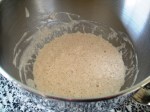
- The sponge develops bubbles overnight. Add the rest of the flour and the salt.
-
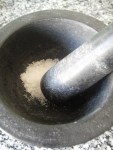
- I quickly grind my sea salt to make it fine
-

- Knead with dough hook
-

- Knead with a dough hook for 10 minutes (or by hand)
-
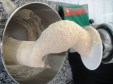
- Remove dough from hook into bowl
-

- Cover the bowl with cling film and leave to rise
-

- Leave until doubled in size
-

- Use a proving basket or make one with a floured tea towel and bowl
-

- Ready for the proving bowl
-

- Put the dough into the proving bowl
-

- Cover and leave to rise again
-

- Put the dough onto the heated baking tray and slash the top
-

- Cheat’s sourdough

-
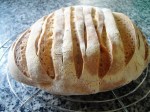
- Cool on a wire rack
-

- Wait for about 20 minutes, if you can, before slicing.
Cheat’s sour dough or sponge loaf – adapted from River Cottage Everyday
Ingredients
500g strong white bread flour (or half and half plain flour and wholemeal bread flour)
325ml warm water (preferably bottled spring water)
10g fresh yeast or 5g dried yeast or fast-action yeast
10g fine sea salt
Method
- Combine 250g of the flour with the fast-action yeast if using it, otherwise dissolve the fresh or dried yeast in the warm water. Beat the water into the flour to form a thick batter. Cover with cling film and leave to ferment overnight.
- The next morning add the rest of the flour and the sea salt. Knead for 10 minutes on a floured work surface (or in your machine fitted with a dough hook).
- Put the dough in a lightly oiled bowl and give it a turn to lightly coat it all over. Cover the bowl with oiled cling film or put the bowl into a very large plastic bag (like a clean bin bag). Leave to rise in a warm place until doubled in size which will take one to two hours.
- Knock back and shape (I form it into a loose ball and put it in a lightly floured tea towel inside a bowl). Leave to rise again for about an hour.
- While it is rising for the second time heat your oven to 250C or its highest limit if lower. Five minutes before you are ready to cook the loaf put a baking tray into the oven to heat up.
- Lightly flour the baking tray (or put a sheet of non-stick foil onto it). Carefully tip the loaf out of the proving basket or bowl onto the tray so it lands upside down i.e. the rounded side uppermost. I like to use my very sharp carving knife to make slashes across the top. You could also cut it with scissors to make a pattern.
- Put the baking tray and loaf into the oven on the middle shelf and immediately after give a few squirts from a spray water bottle over and around it. Alternatively put a roasting tray full of boiling water on the shelf underneath it.
- After 15 minutes, reduce the heat of the oven to 200C and give another squirt of water from the spray. Leave to cook for another 25-30 minutes. The loaf should be well-browned and sound hollow when the base is tapped. Cool on a wire rack for 20 minutes or more before slicing.
Cheats sour dough or sponge loaf – Printable version
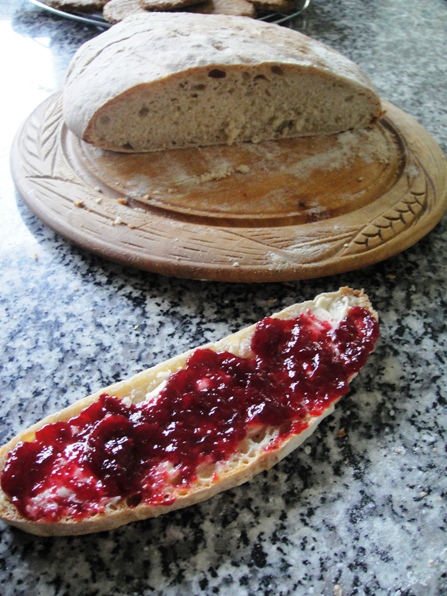
Have you ever been to Alaska? Since ‘visiting’ on this tour it’s one of the places in the world I’d like to travel to most. What did you do? What did you eat?! Where in the world would you like to go to?
World travel, a confession and a mango smoothie

Flat Stanley in Dubai - by a mosque, the Burj Khalifa (the tallest building in the world), the Burj al Arab and in a dhow building yard.
Have you been involved in one of those school travel projects? Recently, I opened a parcel and out popped ‘Flat Stanley’ on his way home to the States via Winchester (UK) and the United Arab Emirates. I gave him the tour, took his holiday pics and sent him on his way, but it did leave me with itchy feet. I wanted to pop myself in the envelope too. Why would I leave Dubai right at the most perfect time of the year though? The weather is balmly like a warm, summer’s day in England. There are even a few clouds and maybe a spot of rain. I might have to put on a cardigan.
But it’s confession time and something about which I’m quite abashed. I have never, ever set foot on the American continent…ever. If I did travel there, where would I start? South American for adventure, New York for excitement, San Fransisco for the food culture alone, Canada for it’s wild splendour and because I know so many nice Canadians. My geographical knowledge of this land mass is very hazy and when a friend moved to Panama all I could think of was the canal and hats.

It turns out that Panama is the southern-most country in Central America of about three and a half million people of very mixed backgrounds with a tropical climate; sounds like Dubai! My friend is a bit of a foodie but her reports weren’t encouraging as she described Panamanian food as ‘uninspiring’. The national dish is sancocho, a chicken soup which she describes as ‘very white – white chicken, white boiled potatoes, white stock and if you are lucky yellow corn and some coriander.’ Given the heritage of the people and the vibrant colours and lushness of every photograph I’ve seen this is very disappointing when looking for cookery inspiration.
There was a silver lining though. She was efusive in her praise of the fresh fruit available especially pineapple and mango – which is exactly what goes into my favourite breakfast smoothie.
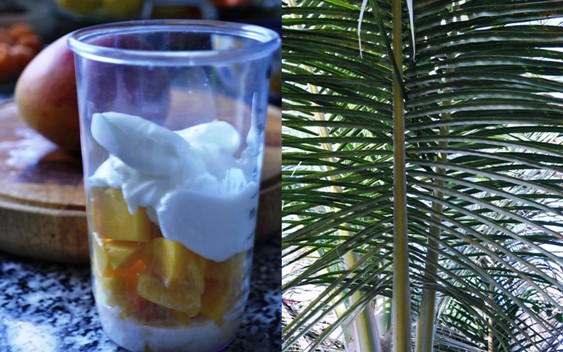
What do you do with all your over-ripe bananas? I peel them, chunk them and freeze them to add to smoothies. They add sweetness, thicken and cool without the watery effect that ice gives. You can toss them straight into the blender (no water content to harden and damage the blades).
Juicy Alphonso mangoes from Pakistan arrive in Dubai later in the year which is when I make this everyday.
 So my wanderlust has taken the form of a virtual culinary tour around the world and I’m joining Joan from Foodalogue and a band of merry foodies as we land on different shores in search of ingredients and recipes to transport our tastebuds and knowledge of other cuisines. No doubt they’ll be able to reveal a few more enticing secrets about Panama’s cooking and culture. The round-up is here).
I’m drinking my cool breakfast smoothie in the garden this morning, looking at the palm trees and dreaming I’m in Panama, dancing the tamborito.
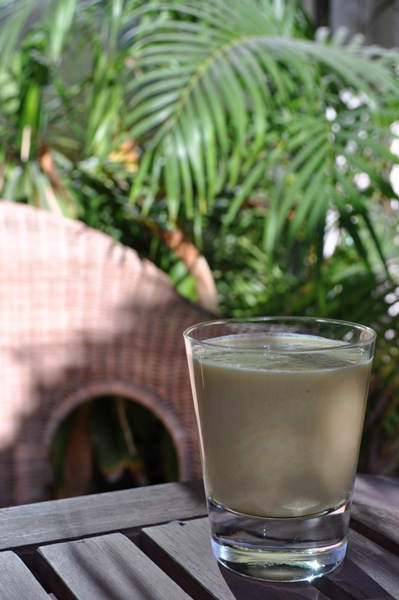 Mango and pineapple smoothie
Ingredients
Makes one smoothie
1 ripe mango or half if small
1/2 frozen banana in chunks
3-4 tablespoons plain yoghurt
approx 200 ml freshly-made pineapple juice (or carton juice)
dash of lime juice
honey or maple syrup (to taste)
Put all the ingredients in a blender (or a deep jug with a stick blender) and whizz until super smooth. Add more juice if it seems too thick to drink. Taste and add honey if you have a sweet tooth.
Have you been to Panama? Any dishes to recommend?
Baking in a lunchtime – jammy muffins
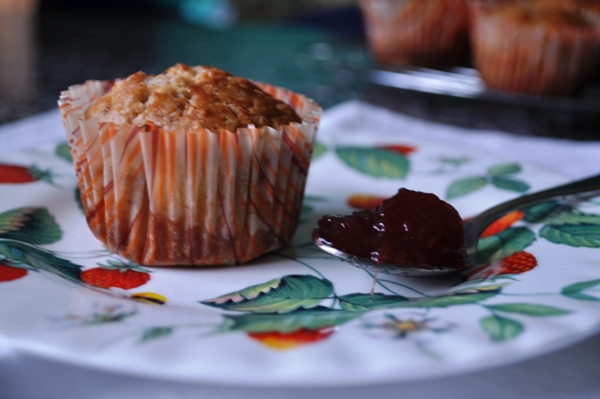
You know when you have such a busy day that you don’t know how you are going to fit another thing in? And then you do. It seems that I’m often at my most productive when under pressure. Working from home means I can snatch time during my lunch break to do a bit of cooking which relieves the stress rather than adds to it.
I’m on the baking list for our school fund-raising commitee and needed something quick for people to buy at parent’s evening. I reached for the jar of Nutella but it was missing so the strawberry jam jar came out instead. Ten minutes to make, 30 to cook and they were still slightly warm when I ran into school to give them to Ashlee who does the hard part – manning the stall. These jammy muffins smell so good and are like a cream tea in muffin form. They are from my well thumbed River Cottage everyday by Hugh Fearnley-Whittingstall. You can see the lemon-curd and Nutella muffins recipe here, just substitute 150g of strawberry jam, well-stirred, for the lemon curd and add it in blobs. Stir lightly with a spatula to marble into the mixture. I’m going to try a peanut butter and banana version next. Eat on the same day but I’m sure you don’t need me to tell you that.
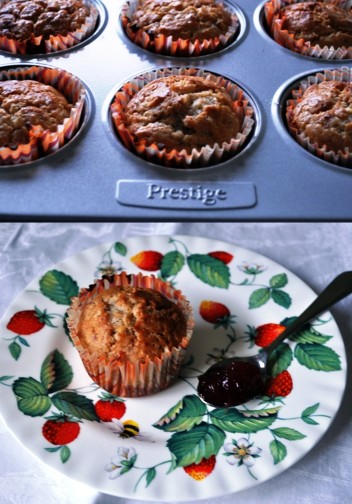
Do you have a quick baking favourite?
Name that fish
A visit to Deira fish market in Dubai and how to cook yellowfin seabream.
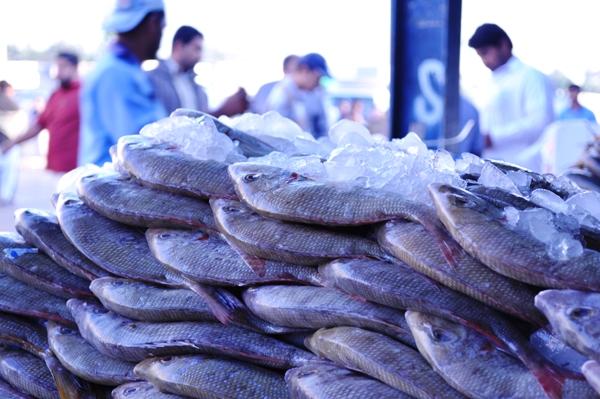
One of my most vivid childhood memories is visiting the fish market in St Peter Port Guernsey where I watched in fascination as my aunt poked a live lobster with the strap of her handbag to make it move. Brought up on battered cod, fish fingers and tinned salmon, I sampled any sea food I could get my hands on once I flew the nest including a sea urchin plucked from the Mediterranean, eaten with a teaspoon like a boiled egg.
Was it these early memories or my extreme curiosity that motivated me to tiptoe out of the bedroom in the pitch-black, early hours, camera in hand, trying not to wake KP? As I opened the door to the kitchen my dogs looked at me with bleary eyes and incomprehension. I walked out into the street to the clear sound of early morning Friday prayers to meet Rajani. Five minutes later we were peering through the dark to see house numbers and Sarah appeared from the shadows of her garden. Although prior to this we had only met each other online, there was no silence from then on as we glided through the deserted streets of Dubai we covered so many topics from wine to India, ending up in a food blogger rendezvous to the pink glow of dawn.
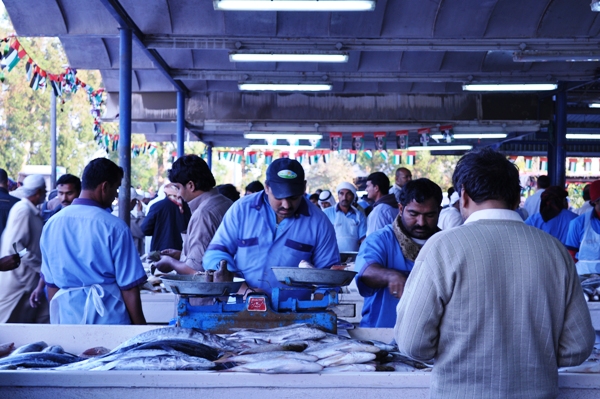
The fish market in Deira was easy to find from the brown information signs and the seagulls circling in huge flocks overhead. As soon as we all emerged from our cars we were beset by men in blue overalls pushing wheelbarrows and one adopted us becoming our friendly shadow for the next hour.
Attractive fresh fruit and vegetable stalls line one side of the market but I was eager to enter the main attraction. The fish market is a covered area with open sides, lit by fluorescent tubes and as I rounded the corner I was completely overwhelmed by the volume of fish. Mounds of silver, shining ones, long thin black ones, blue-tinged crabs, gleaming squid, freckled, pouting hammour (a type of grouper), serried rows of prawns. I can’t imagine the sensory overload of the vast Tsukiji fish market in Japan. This was enough for me.
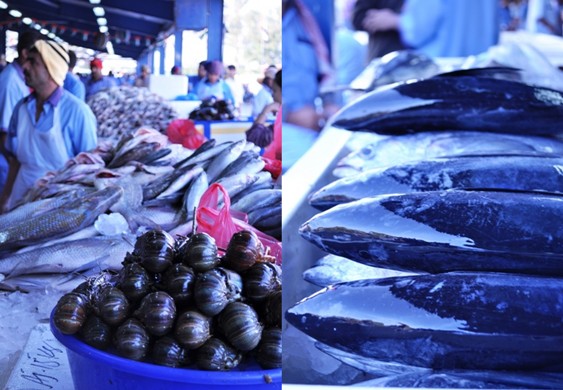
I quickly realised how little I knew about the types of fish accentuated by Sarah’s pretty good knowledge of what things were (comparing things to what she buys in Australia). I suspect in England, because of the almost total demise of fishmongers and the prevalence of buying fish already filleted on a polystyrene tray, we’ve become disassociated from the original beast. Apart from identifying a hammour, some sardines and the odd snapper, I was completely bewildered by the varieties and array. I expected to be knocked out by the smell but it was just like standing by the sea – Carrefour smells three hundred times worse.
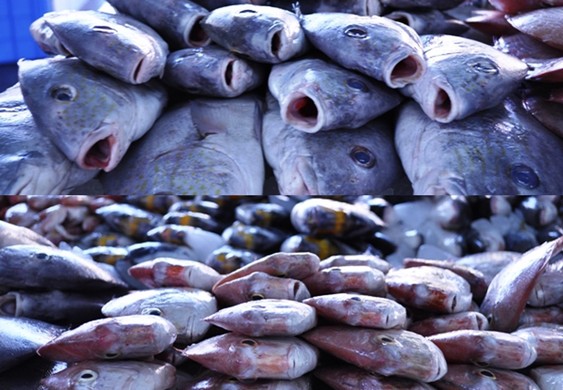
The Choir
We started buying. You agree a price (this is precarious), the fish are weighed on ancient and primitive scales and your wheelbarrow man whisks it away for cleaning, filleting etc. For a group wielding cameras this was a great service. The cameras did attract some interest and merriment – many of the men posed and joked otherwise there was no hassle. The fish sellers were keen for us to buy, shouting out their stall numbers ‘remember stall number 32…come back’ and they helped as much as they could when we asked the names of the fish but I can’t say we were any the wiser most of the time. Many have colloquial names like belt fish (anyone know how to cook one?) but I didn’t spot much that looked like the sustainable choose wisely varieties of ‘pink ear’ emperor or ‘sordid’ sweet lips.
At the end of the market, small trucks were being unloaded, hemmed in by eager crowds – whether they were buying or watching I couldn’t tell but there was the barking shouts and hub-bub that surrounds excitement with the seagulls wheeling overhead. The gills of some of fish on the stalls at this end were still moving and the small baskets in which they lay still stirred with the remnants of life.
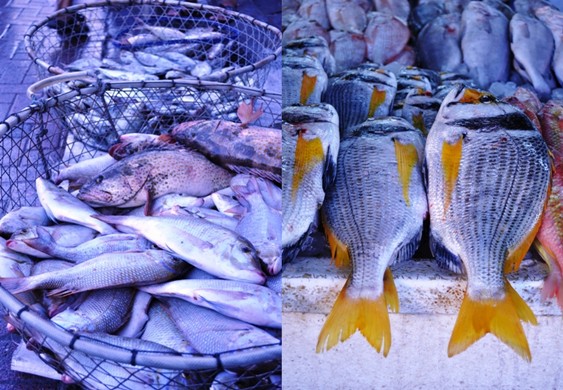
Fish that moved and yellowfin sea bream
One side of the market looked onto a building which advertises an aquarium but we focussed on the stalls displaying tuna, swordfish and other giants of the sea. The men held up the decapitated parts and it was much more gruesome that the piles of little creatures but the meat was gleaming, moist and appealing.
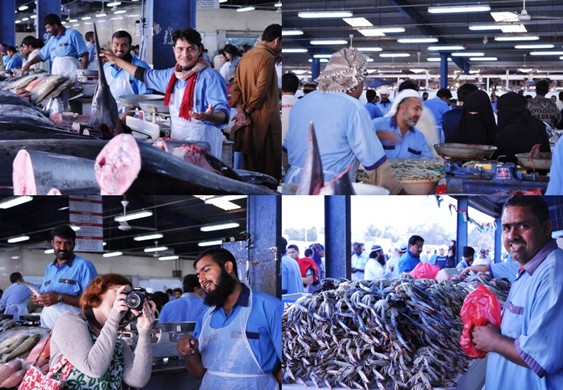
Regimented rows of crustaceans of graded colours and sizes gave way to an area of dried fish, ochre shapes hung in patterns and plastic bags were full of crisp cubes and miniature fishy morsels. I was massively impressed when Sarah bought some for Sri Lankan fish curry.
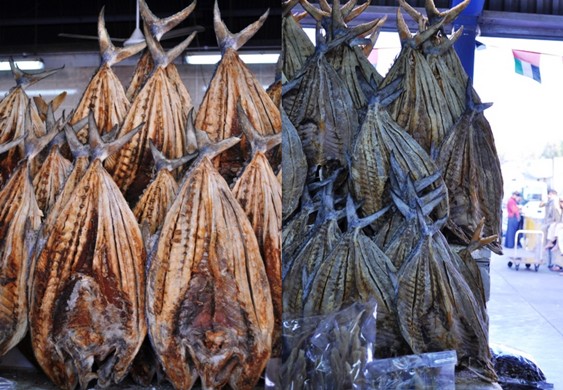
The contrast to manicured Umm Suqeim made me feel I was on holiday, not just 30 minutes drive away. I’m ashamed to say this is my first visit in over 10 years of living in Dubai.
Will I return? You bet. The fruit and vegetables reflect what is in the supermarkets (i.e. mostly imported) but a lot fresher and in some cases cheaper. The dates in the dried fruit section were excellent quality. The fish, if you keep your wits about you, can work out to be great value and if you go at the right time (7am on a Friday morning in this case) it has almost swum out of the sea. I’m planning my next barbecue already so I can cook some of the immense and beautiful prawns and Omani lobster.
I’d have no problem going on my own but it was great fun with such a lovely group and I learned so much from my companions (from which setting to put my camera on to the best way to cook tofu!).
As we drove out of the car park in the full glare of the sun Mr Wheelbarrow walked towards us smiling and waving. Maybe he took a shine to us (it couldn’t be anything to do with our complete naivety and the amount of dirhams we handed over to him could it?).

Things to remember if you visit Deira fish market:
- You need to pay for parking even though it’s a Friday.
- Try to have some idea of what you should pay for the fish before you go (even if it’s a supermarket price) – the stall holders will hold out for the maximum they can get but will accept a fair price.
- You pay extra to have the fish cleaned.
- Expect to get a hang-dog expression from your wheelbarrow man whatever you give him (we totally fell for this, although he was so nice he deserved it and it was part of the experience).
- Despite the choose wisely campaign there was an abundance of fish that are under threat such as hammour and kingfish. The counter dedicated to sharks was a bit disturbing too. Do your homework and help preserve UAE fish stocks. Commonsense is better than quotas – see what is happening in Europe on Hugh’s Fish Fight.
A few more of my New Year resolutions
- To keep discovering (as Emirates Airlines says!). As a long-term Dubai resident it’s easy to feel you’ve seen and done everything.
- Learn more about fish varieties and what to do with them.
- I finally got out my Nikon and some of my pictures are ok but I wish I’d taken these ones. I’ve booked my beginners photography course at Dubai Ladies Club to start next week.
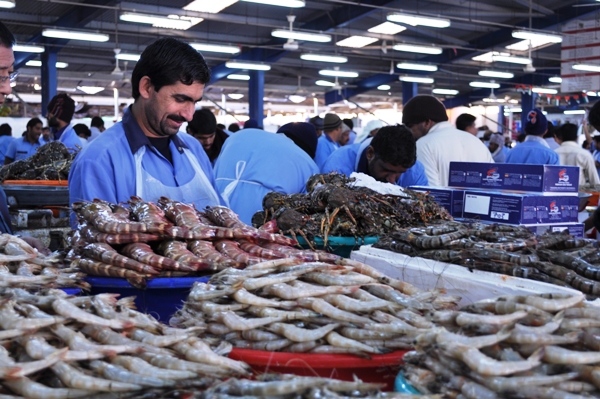
The fish I bought is called the Yellow Fin Bream (see pic above) and belongs to the Sparidae family (similar to the grouper). Maybe I just fell in love with its pretty face and markings. I forgot to tell Mr Wheelbarrow (and our lack of a shared language may have made efforts to communicate this fairly difficult) to keep the skin on the fillets so I covered each fillet with baking parchment and cooked them on top of sliced baked potatoes with the fresh herbs from the market and my garden.
Yellowfin sea bream are good grilled or baked whole (well-cleaned and gutted) and flavours like capers, lemon or lime, garlic, parsley and ginger offset the slight sweetness of the flesh. A dressing made with lime, lemongrass, chilli and coriander with fried sea bream is just perfect – all ingredients you can buy if you are down in the Deira Fish Market.
In the meantime if anyone can name any more of these fish…(and I don’t mean Freddie)
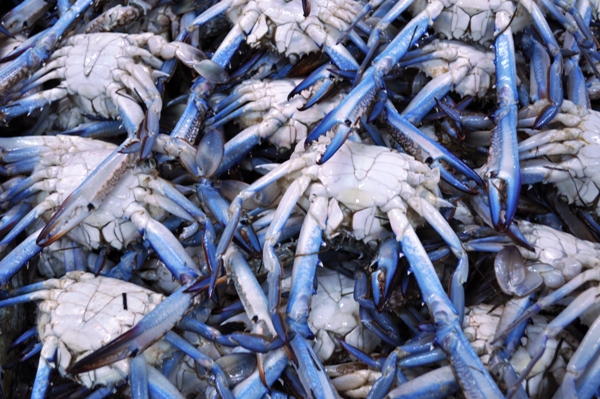
You can view more images here.
Have a great tasting 2011
Cooking with simple, fresh ingredients is an annual resolution
I’ve loved reading through the reviews of 2010 by some of my favourite bloggers, from the homely comforts of Things We Make and Butcher, Baker, the collection of beautiful food photographs by Tartelette to the top dishes (and the worst) by Food Stories. I’ve decided to look ahead instead and share a few foodie resolutions. 2011 is like an open cookery book full of possibilities, recipes to try, skills to learn, tastes to sample.

A sumptuous custard tart made by Hugh F-W
1. Make a custard tart. My love of custard is outdone only by my fear of making it. I am ashamed every time I see that someone has landed here looking for a recipe through the search term custard pie or tart. I promise faithfully to take the plunge in making the eponymous yellow delicacy and to document my success or failure right here.

Another Foodgawker and Tastespotting reject!
2. Take better pictures. The new Nikon DSLR I so hankered after has hardly been out of its box. I need to book a course (more fear of failure…do you see a trend?!) and get on with it!

Keflice - Fresh from the oven
3. Not miss a single Fresh From the Oven post. I’ve learned so much since I joined the monthly baking challenge of this very friendly and supportive group. Kiflice was my most popular post to date and I vow to master croissants (during the Dubai winter to avoid the mega melt that saw me hurling my dough in the bin). You can see what I baked in 2010 here.
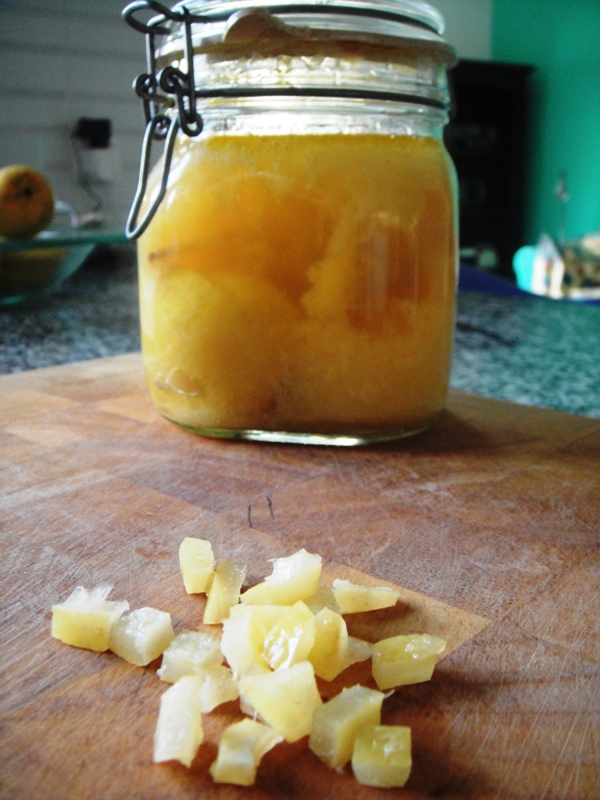
Preserved lemons (home-made)
4. Share my recipe for preserved lemons and make some gifts for my lovely book club chums at the same time. They’re an essential ingredient for Moroccan green pepper and preserved lemon salad and fragrant lemon chicken, so easy to make and like a jar of sunshine in the kitchen.

The pursuit of the perfect pasty
5. To find the perfect Cornish pasty recipe for my pasty-obsessed husband. A labour of love ♥
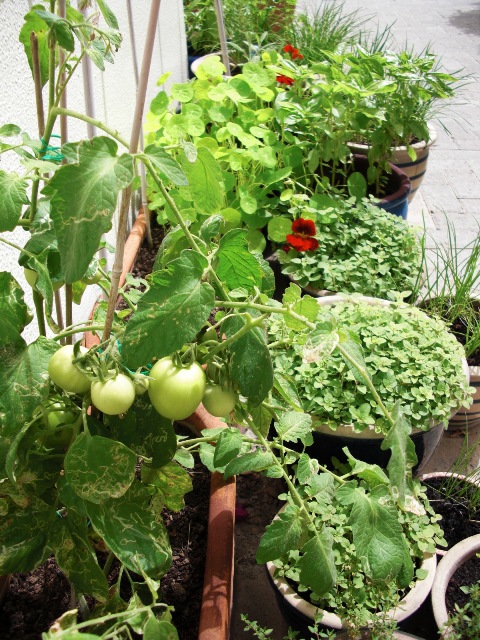
My potted garden in the desert
6. To cook as much as I can using simple, fresh ingredients including more recipes from Plenty by Ottolenghi, if possible using herbs and vegetables from my garden. Even more ambitious is to convert my vegetarian daughter to like aubergines in some form.

Dhow building yard in Dubai where fresh fish is sold every morning
7. I really want to cook and eat more fish – using the UAE Choose wisely guidelines about which fish to eat sustainably. This may involve a bit of research and experimentation as I’m not sure what to do with a ‘pink ear emperor’ or a ‘sordid sweetlips’. With two daughters who start to complain at the merest whiff of fish (even though as toddlers they loved it) it may involve investing in a gas barbecue to make this a reality.
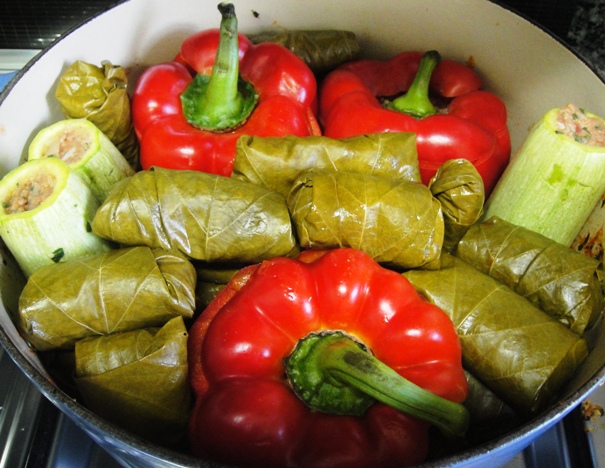
Irresistable stuffed veg
8. Sharing some of my husband’s family recipes, passed down by his Grandmother who had the best Greek restaurant in Plymouth (and whose brother opened the White Tower on Percy Street, London) via his Mother, domestic science teacher and fab ‘cooker’ (to quote my children when they were small). Oh her stuffed veg….

Macarons - image from Nerissa's ring
9. Is it too ‘last year’ to attempt to make macarons? The blogosphere is already awash with these elusive-footed, pastel beauties made by far more competent pastry chefs than me (see Mactweets for example). However my youngest daughter may never forgive me if I leave it off the list.
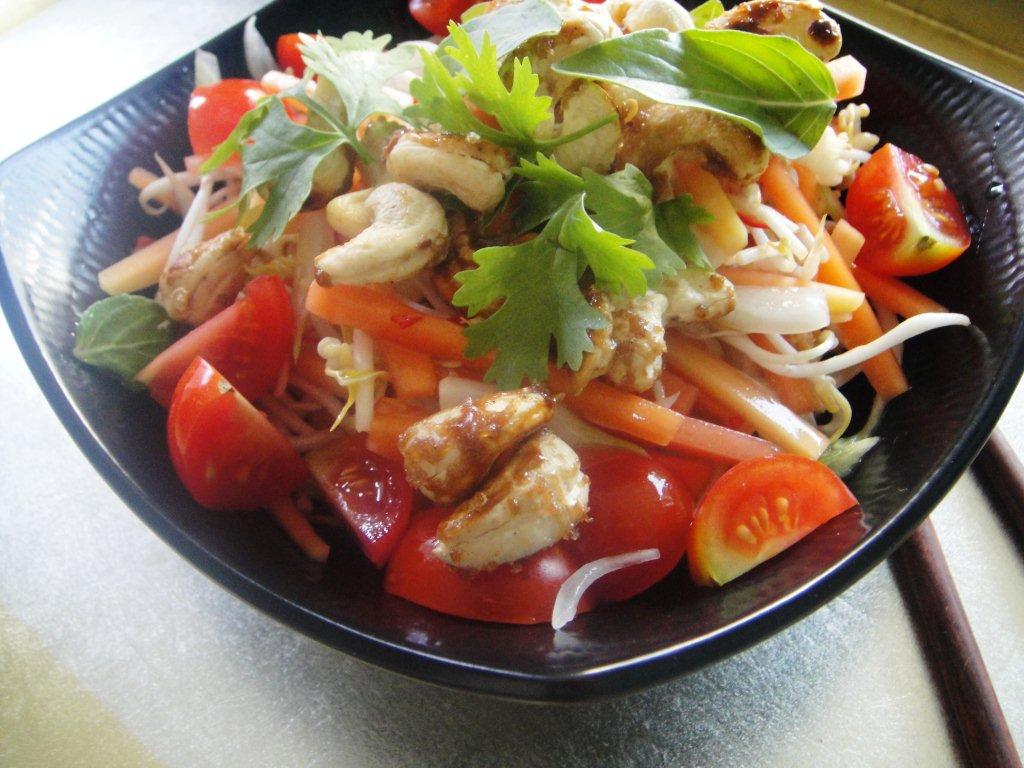
Thai papaya salad
10. To explore other cuisines. I’m learning so much already from our group of UAE food bloggers Famished in Arabia and would really like to know more about Emirati cooking in particular. Sid would you be willing to share some secrets?
And finally to help me on my way I’m keeping this very inspirational pdf open on my desktop. It’s called The Path of a Doer and I love that it quotes Dick Dastardly – “don’t just stand there, do something!”
Happy New Year. I hope that you get all the things done that you’d like to in 2011 in a joyful, rewarding and satisfying way.

P.S. Have you made any foodie resolutions?
Thyme-scented oatcakes and the pursuit of the perfect cheese board
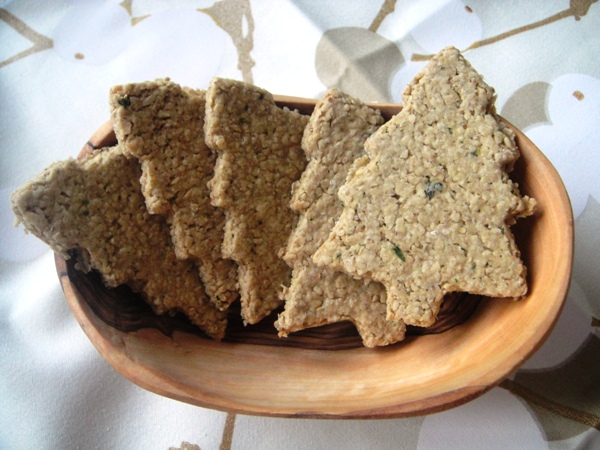
Thyme-scented oatcakes
Do you visit supermarkets when you go on holiday? Do you thrill to the news of a street market or food stall opening up? Do you make a detour to find a shop rumoured to stock a much longed for ingredient? You may not be surprised that I answered yes to all those questions and when I found out that a) Galleries Lafayette had opened a food hall and b) that it had been open for months without an encounter from me; something had to be done.
Dubai has a large and varied expat community which means that most foods can be found. I know that if a recipe calls for a fairly obscure ingredient I am usually able to find it. The limiting factor is that most of the food is imported and air-freighting fresh ingredients is expensive (so small importers tend to ship packaged goods with long-shelf life) and meat must be halal. That is why, for instance, there is a large range of frozen meals at Waitrose or Marks and Spencer but they are all fishy. Fresh, local, seasonal produce of good provenance can be a challenge to source as well as foods from artisan producers so new sources of food shopping are always an attraction.
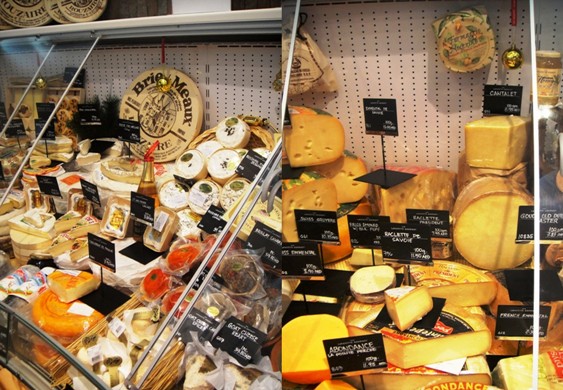
Part of the cheese display at Lafayette Gourmet, Dubai
I’d already popped into Harvey Nichols (in Mall of the Emirates) for some foodie stocking fillers for KP and expected something similar from Lafayette Gourmet i.e. a small section of premium teas, coffees, biscuits, chutneys, chocolate, oil, vinegar and the like.
As I rounded the corner (on the second floor) I was astonished to find cafes and counters of dishes and delicacies flanked by everything you need to do a really comprehensive food shop from yoghurt and biscuits, to a great selection of pasta, to meat, fish, a walk in cavern of pork products and cheese. The assistant picking out over-ripe tomatoes for disposal confirmed my initial impression that the copious array of fruit and vegetables, would not be bought in sufficient quantities to ensure a fast turn over of fresh goods. The meat and fish looked superb however, and I made my way with excitement to the cheese section.
With my slight obsession with cheese well documented, no surprise it was this counter I made a bee-line for and the helpful staff were enthusiastic and knowledgable, letting me taste my way through many. French and Italian cheeses dominated but I also bought a small truckle of cheddar and tasted a variety of really interesting Italian sheep’s cheese including one that reminded me of a farm produced Caerphilly (Gran cru di grotta). Clutching my parcels of beautifully wrapped bounty I knew these would make a wonderful Christmas cheese board and that they deserved some special biscuits to go with them.
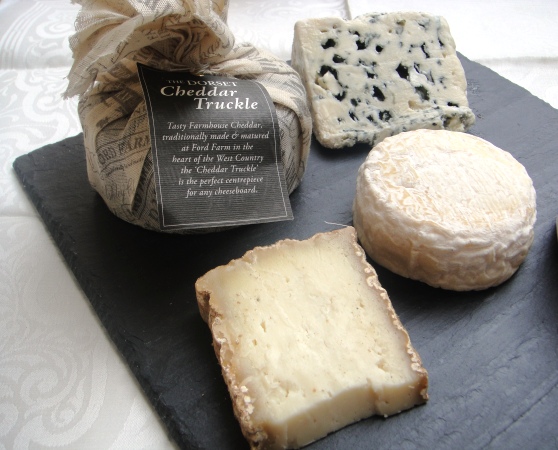
Some of my cheese haul
My pots of thyme are doing well in the garden and I did a fairly comprehensive raid on the leaves. Christmas cutters came out of the cupboard once again. These oatcakes are a doddle to make and keep for 2-3 weeks in an airtight tin. Fresh rosemary makes a great alternative or any woody herb. They were a great partner for the soft cheeses in particular – especially an oozing Vacherin Mont d’Or (which I bought from Carrefour).
During my blogging dearth, I also prepared a batch of one of my favourite stuffings, lemon, herb and pistachio, which you can read all about on Femina – an online womens’ magazine. Thank you to fellow UAE food blogger Rajani from Eat,Write, Think for helping me relive happy memories of Christmas past.
I hope that, if you celebrated, you had a very Merry Christmas and a relaxing and happy time with friends, family and delicious food.
Just call this cheese porn
Thyme-scented oatcakes
Adpated slightly from BBC Good Food Magazine
Makes about 20 oatcakes
Ingredients
200g (8oz) fine oatmeal
2 tablespoons of extra virgin olive oil
1.2 teaspoon sea salt
3 tablespoons of fresh thyme leaves (or 2 teaspoons dried thyme)
approx 8 tablespoons boiling water
Method
Preheat the oven to 180C. Measure the oatmeal, oil, salt and 2/3rds of the fresh thyme into the bowl of a food processor. Whizz until everything is combined well and keeping the motor running, pour in the boiling water. After 30-45 seconds the mixture will begin to come together and look sticky and thick (switch off, scrape down and repeat if it doesn’t). Add the remaining thyme and pulse a few times to chop it roughly.
Gather the dough up into a ball, with your hands or a spatula. Place on a floured board and roll out, while still warm, to about 2mm thick. Cut out 6.5cm rounds or any festive shape and place on baking sheets lined with parchment. Bake for 15-17 minutes until lightly coloured. Cool on a wire rack then store in an airtight container.
Thyme scented oatcakes – printable version
-
- Gourmet display
-

- more cheese…
-
- …and more cheese.
-
- My cheese haul
-
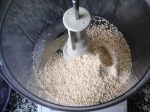
- Blending the ingredients
-

- Olive oil, sea salt and fresh thyme
-

- Raiding my thyme pots
-
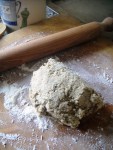
- Oatcake dough
-

- Cooling oatcakes
-
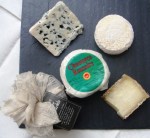
- A melting roquefort among others
-
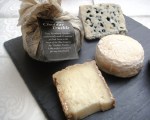
- Italian sheep cheese at front
-
- Close-up on cheese heaven
-
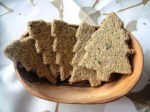
- Thyme-scented oatcakes
-

- Vacherin Mont d’Or cheese
-
- Mmmmm
Mince pies and mulled wine (with a secret)
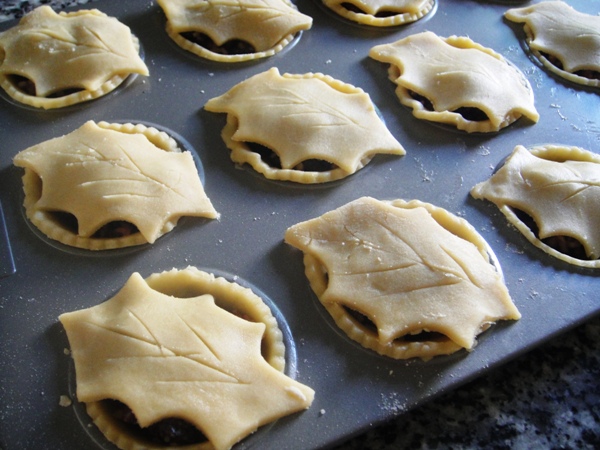
The best laid plans and all that….. November came in like a train and left at speed, December hard on its tail. Exciting but manic events at work and frustrating internet disconnectivity at home for weeks on end blew a crater in my schedule including my Christmas preparations. The knowledge that my puddings were made, my cake neatly wrapped and maturing and Christmas cards dispatched were a massive comfort. I snatched a day off for Islamic New Year and headed for the kitchen to make mince pies, then my girls and I put up the tree and decorations, Handel’s Messiah providing the musical backdrop and easing us all into a more relaxed state. I tinkered with the mincemeat – I wanted oranges and spice. My dried fruit-hating children breathed in the aroma – ‘it smells like Christmas, Mum’ – reward enough. Forget Prozac – this is how I de-stress.
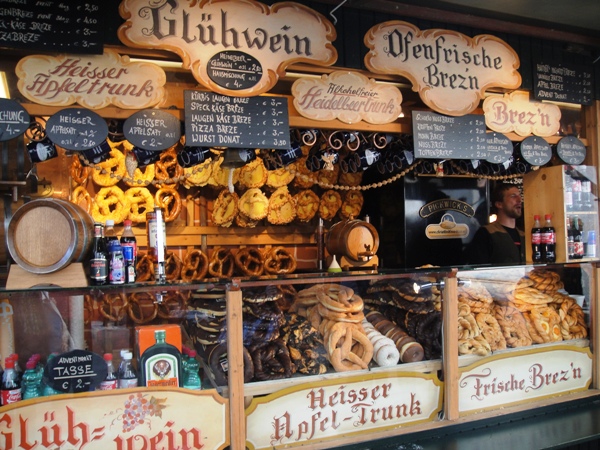
This time last year we posted our cards from the special Christmas post office in the Marienplatz in Münich. Emerging from the brightly lit underground railway station straight into the twinkling lights and stalls around the Rathaus was like entering a fairy land. We loved every minute of our pre-Christmas get away to Bavaria (plus a little detour to Salzburg). The street food of pretzels, every kind of ‘wurst’ you can imagine, sauerkraut, mustard, crepes, cream filled meringue-like confections and glüwein made up the bulk of our shopping experience. We joined tourists and Münichers alike to pause for a moment to warm and sustain ourselves with these delicious morsels (all served on china plates or mugs returned for a deposit).

My own take on vin chaud or glüwein is an orange-scented and spiced mulled wine. I can’t remember where I found the recipe but I have been asked for it many, many times over the years. The secret ingredient is Cointreau which boosts its fragrance (and alcohol content, so beware!). It is strange how as expats we cling to our traditions – the warmth of this delicious drink is not really required during the balmly December evenings in Dubai, but it is always consumed with gusto whenever I serve it.
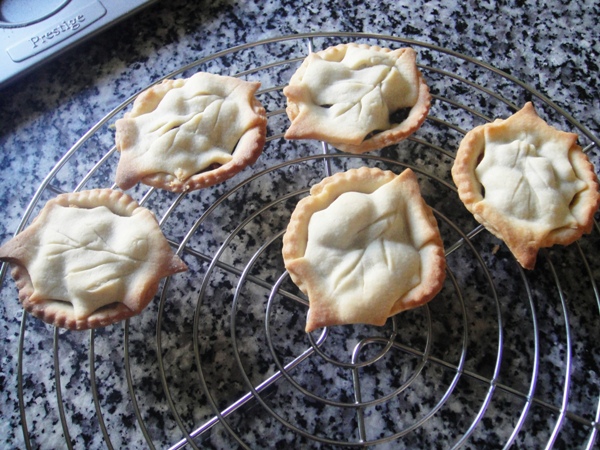
My pastry-making is not always as light as a feather but even the most heavy-handed should have success with this crumbly almond-flavoured version. I was really pleased how the holly shapes on the top turned out – much easier than sealing on little round tops and more forgiving if you, like me, are not the neatest of bakers. The quantity is for a crowd (great after carol-singing or, as we did here in Dubai, with neighbours by the pool) but you can eat some now and freeze the rest, unbaked, until you are ready to whip them out for planned (or spontaneous) visitors over Christmas.
Note to regular readers: I find posts that start with ‘sorry I haven’t blogged for ages’ quite irritating to read, (although I made an exception with Scattered from Christie’s Corner) but when a very busy time in my day job coincided with patchy then zero internet connection at home for over 3 weeks I found that not being able to fulfil the posts I had planned very worrying. As well as missing the creative outlet I was overwhelmed by a feeling of letting regular readers down. The telephone company engineer finally visited and full service restored. If you’ve read this far, thank you and let’s just say I’m glad to be back. I did manage to grab some cooking interludes and have lots of lovely Christmas recipes that I will just have to nurture until 2011. If you are celebrating, I hope you have a wonderful Christmas.

Mulled Wine
Mulled Wine – Printable version
Serves 8
125g (4oz) caster sugar
1 cinnamon stick
6 crushed juniper berries
Pinch of freshly grated nutmeg
1 orange, studded with cloves then cut into slices
1 lemon, thinly sliced
150ml (1/4 pint) orange liqueur, such as Cointreau or Triple sec
75cl bottle of red wine
- Put the sugar in a pan with 450ml (3/4 pint) water. Add the cinnamon stick, juniper berries, nutmeg, one orange slice and the lemon slices. Heat gently to dissolve the sugar. Bring to the boil, then turn off the heat and stand for 10 minutes to allow everything to infuse.
- Add the liqueur and red wine and heat through gently, then pour into a jug. Add the remaining orange slices and serve.
NB. If you heat for too long or have too high a heat at stage 2 the alcohol will evaporate and you will have a fruit cocktail. A good boxed wine will do very well here especially if you are multiplying the quantities for a party. I’ve found that Drostdy-Hof claret select goes down very well.
For the homemade orange-scented mincemeat and crumbly almond mince pies recipes read on…
Little soft, cheesy buns – kiflice
Every month I join in an online baking gathering called Fresh From the Oven. Apart from learning new recipes and honing my baking skills, it’s great getting to know other food blogs and sharing the experience with people who are equally enthusiastic about cooking. There is real warmth and immense generosity about swapping advice and knowledge within the group.
This month’s recipe comes from Maja from Serbia who, as well as posting her blog Cooks and Bakes in two languages, is an expert baker. She’s one of the first blogs I look at in the round-up as her comments give an in-depth knowledge of the baking process and I have learned a lot from her posts.
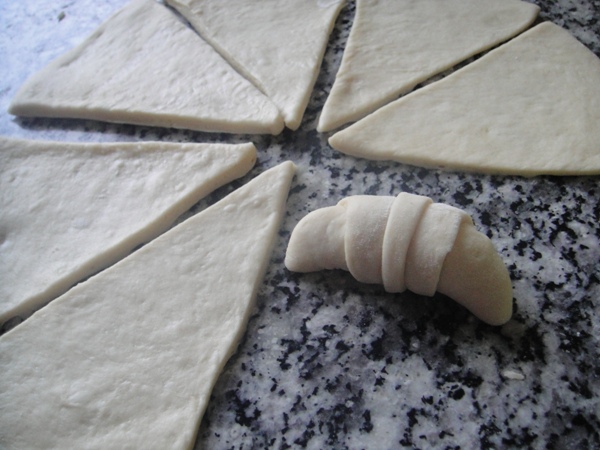
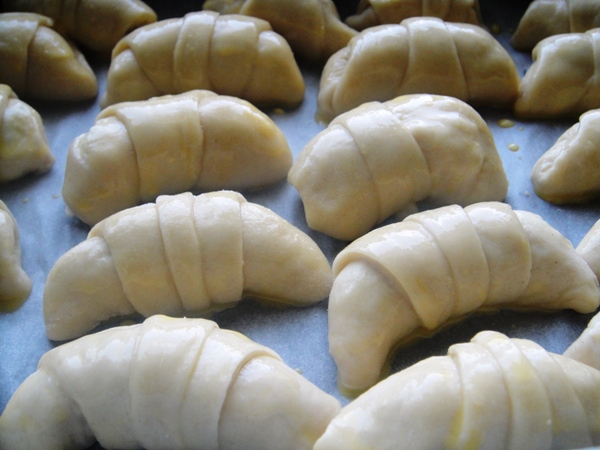
I was a little daunted when I saw 40 little beautifully crafted kiflice in her instructions but, although mine are not quite as perfect as Maja’s, this was a simple and rewarding recipe to make. By the time I got to the end I’d mastered wrapping the little point of dough round and round.
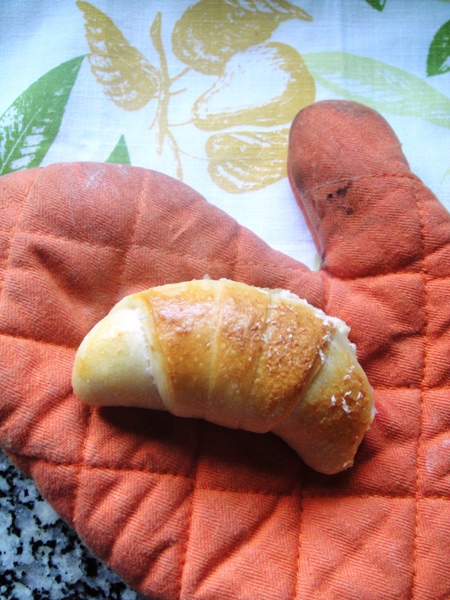
We ate half of these warm from the oven and I let the rest cool and popped them in the freezer as they’ll make great snacks with drinks in the run up to Christmas. I added some grated parmesan with cottage cheese and sprinkled on some of the rolls which worked really well. I’m planning to add bit of salami or Parma ham or chopped mint leaves next time too. Just don’t over-fill them (a scant teaspoon) and try to stretch the dough evenly – as you can see, a few of mine leaked although this didn’t really matter. I urge you to try these – even just for the delicious, warm, cheesey, buttery smell that fills the kitchen. Do pop over and see Maja’s kiflice on Cooks and Bakes and also have a look at what we all got up to on Fresh From the Oven. Here’s Maja’s family recipe:
Kiflice
Dough:
500 g all purpose flour (plain)
1 tsp salt
20 g fresh yeast (2 tsp instant yeast or 2.5 tsp active dry yeast)
1 tsp sugar
250 ml milk
75 ml sunflower oil
1 egg
Filling:
200-250 g cottage cheese (you may use feta or other fresh cheese)
1 egg white (optional)
And more:
1 egg yolk
1 tbsp milk
100 g margarine (or butter)
Directions:
1. Crush the cheese using a fork. Add some salt if it tastes neutral. Stir the egg white in, if the cheese is too crumbly. Filling shouldn’t be runny, but thick and compact, thicker than the cream cheese, and pretty salty.
2. For the starter – dissolve yeast with some lukewarm milk in a cup, add a teaspoon of sugar and a tablespoon of flour, stir to get smooth batter. Set aside at room temperature, or near the stove top, to let the yeast activate and fill the cup.
3. Sift the flour, add salt. Add activated yeast, egg, oil and milk, then combine using a wooden spoon to get smooth dough. The dough seems like too soft and too sticky at the beginning, but don’t worry, continue with kneading, and soon your dough should start to separate from the bowl, and thicken. It is not necessary to knead the dough by hands, the wooden spoon works just fine (you may use any spoon, of course, the wooden spoon is common tool for all stirring and kneading works here at the Balkans). Grease the cling film with oil, cover the bowl, and set aside for at least an hour, at lukewarm place, to let the dough doubles in size.
4. Re-knead the dough, divide into 5 equal parts, shape them into balls. Each part should make 8 rolls, so you’ll end up with 40 rolls, which should perfectly fit the regular oven pan, if lined in 5×8 order. Flatten each ball by hands over the floury working surface, then use a rolling pin to roll the dough out in a circle, a few millimeters thick. Use a sharp knife to cut the circle into 8 triangles. Take one triangle, stretch it in the air with your hands, to get it extended as much as you can, gently. Put some filling at the triangle base, then fold the edges of the base to avoid the filling leak out during baking. Roll. Arrange the rolls at the pan (5×8).
5. Lightly beat the egg yolk with a tablespoon of milk, then brush the top of each roll with the mixture. This is used to prevent forming thick crust, and to improve the color of baked rolls. Sprinkle with some sesame seeds, if you like.
6. Arrange the small pieces of margarine (or butter) between the rolls, then bake in the oven preheated to 180°C for about 20 minutes. Be careful not to overbake them. Let them cool a bit, be careful as the filling is always more hot then the dough, take a seat in your favorite armchair, and start enjoying the softest cheese rolls ever. And don’t think of calories, please.
Sally’s note: I used butter in between the rolls and two roasting tins as my oven is a different size to Majas. Using cottage cheese I didn’t need to add the egg white because it’s quite runny – even using 250g I ran out near the end. I made the dough (with the dough hook on my KitchenAid rather than a wooden spoon) let it rise a bit and put it in the fridge overnight. I rolled, stuffed and baked the rolls the next day. I’d love to hear what you think of these.

Kiflice - fresh from the oven
Portable food – pear and almond cake
Now the weather has cooled down here in Dubai, everyone heads for the beach, the park or the desert on the weekend. In this multi-cultural society it is fascinating to see how much food everyone brings and how they bring it. I have often seen people hauling huge vats (this is an under-statement) of rice over the railings at Safa Park and long skewers of meat are barbecued on the grills that line the perimeter of the park.
Our family and a group of friends went out to the desert to camp for one night. While proper cooking is reserved for breakfast (bacon, eggs, sausages on the camp stove), it makes sense to take portable food for the evening feast. I made a big batch of baked potatoes which I halved, mashed the insides with spring onions, sour cream, cheddar and lots of black pepper and sealed into foil parcels. These were heated in the embers of the fire to accompany pots of chilli con carne (and chilli con vegetables).

Yes, we did have a martini bar in the desert!
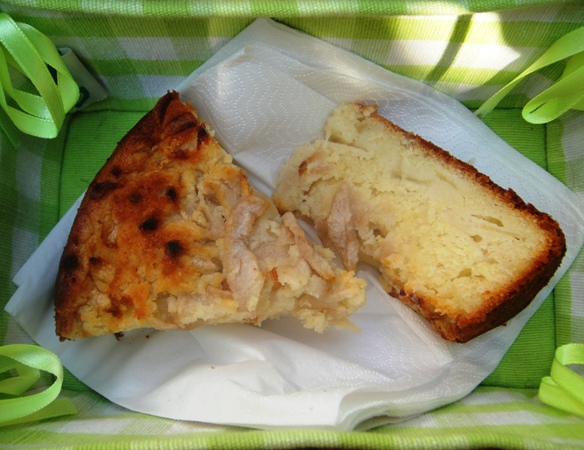
Portable pudding is usually best in cake form, but something moistly redolent of a dessert, so baking with fruit is ideal. I made some fudgy chocolate brownies for the children and they topped up their sugar excess with smores (marshmallows toasted and then sandwiched with chocolate digestives). I prefer a traditional spicy fruit cake or a one with fresh fruit like this pear and almond cake which is really simple to make. If there is some left over you can eat it for breakfast too.
If you like the sound of this, take a look at Passionate About Baking where Deeba is hosting the Monthly Mingle (brainchild of Meeta from What’s for lunch honey). There will be a host of recipes using apples, pears and all kinds of ‘Fruit in Baking’.

Pear and almond cake
Ingredients
550 – 600g (1lb 3oz) pears, peeled, cored and cut into very small pieces
50g (2oz) ground almonds
175g (6oz) softened butter
175g (60z) caster sugar
3 large eggs
175g self-raising flour
zest and juice of 1 lemon
A few drops to 1/2 teaspoon almond essence (use less if you grind your almonds freshly)
Heat the oven to 180C/160C fan/gas 4. Butter and line a 20 cm (8 inch) cake tine with baking parchment.
Put all the ingredients except the chopped pear, into the bowl of a food processor or mixer. Process or mix with the paddle attachment for 1-2 minutes until the mixture is light and fluffy.
Spoon half the cake mixture into the tin and level. Scatter half the chopped pear evenly over the surface. Repeat with the remaining cake mix and top with pear.
Bake for 50-60 minutes until golden brown on top, firm to the touch and a skewer inserted in the middle comes out clean. Allow to cool in the tin for 5 minutes (it will shrink from the sides) then turn out to cool on a rack (unless you are taking to a picnic, leave in the tin and cut into slices once there). Sift a light dusting of icing sugar over the top if you like. You could serve with creme fraiche mixed with a little Eau-de-vie de poire William or Amaretto and some sifted icing sugar.
What’s your favourite food on the move?









 My Custard Pie